How To Anchor A Pergola Without Drilling (Easy Guide)
Anchoring a pergola without drilling involves using specialized hardware and construction techniques. Common methods include concrete footings, deck blocks, or specialized anchoring systems that attach to existing structures without penetrating them. Choosing the right method depends on your pergola’s size, location, and local building codes.
Understanding Pergola Anchoring
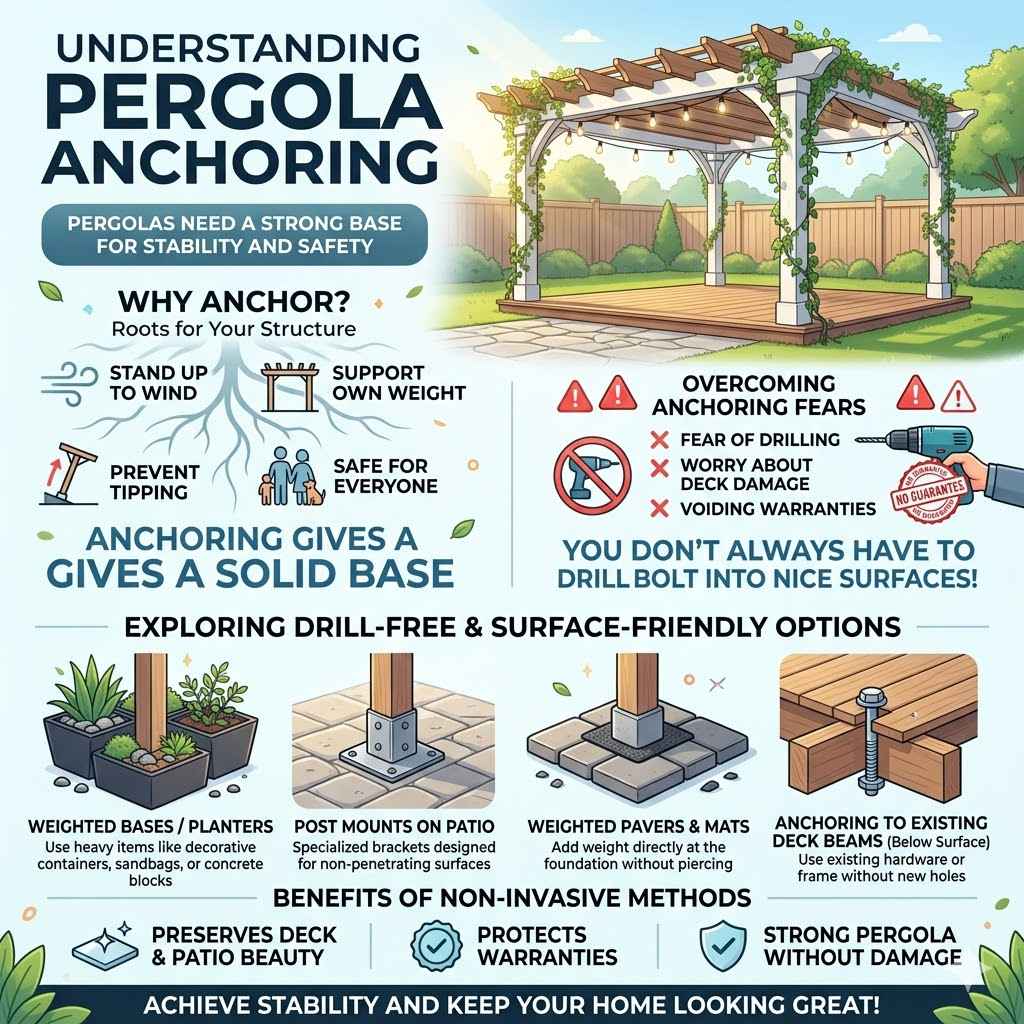
A pergola is a structure. It has posts that hold up a roof. This roof is often open.
It might have beams and rafters. Pergolas add beauty and shade to a yard. But they need to be strong.
They must stand up to wind. They also need to support their own weight. Anchoring is how we keep them steady.
It connects the pergola to the ground or another surface. This connection prevents it from tipping over. Or from being blown away by strong winds.
Safe anchoring is super important for safety.
Many people think you must drill. You have to put bolts through your deck. Or screw into the side of your house.
This can be scary. You might worry about damage. Or about voiding warranties.
Good news! There are other ways. You can have a strong pergola.
You can do it without drilling into your nice surfaces. We will look at these options. They keep your pergola safe.
They also keep your home looking great.
The main goal of anchoring is stability. It stops movement. It makes the structure safe for everyone.
Think about how a tree grows. Its roots hold it firm. Anchoring is like the pergola’s roots.
It gives it a solid base. This base fights against forces like wind. It can also fight against the weight of the pergola itself.
And anything you put on top of it. Like plants or lights.
My Experience with a Wiggly Pergola
I remember one summer. My neighbor, Dave, put up a beautiful pergola. He was so proud of it.
It looked fantastic. He had spent weeks picking out the wood. And planning the design.
But after the first big storm, it looked different. One of the corner posts seemed to lean. Just a little bit.
He hadn’t used the right anchors. He thought he could just set the posts in the ground. And it would be fine.
He didn’t want to dig up his new patio.
Dave was upset. He knew it wasn’t safe anymore. He had to take it apart.
And start the anchoring process all over. It was a huge pain. And a lot of wasted time and money.
He told me, “I learned my lesson. You can’t skip the important steps. Especially the part that keeps it from falling over.” He ended up using concrete footings.
He had to break up a small part of his patio. But he said it was worth it. His pergola has been rock solid ever since.
That story stuck with me. When I built my own pergola, I was determined not to make the same mistake. I had a lovely deck.
I did not want to drill into it. Not at all. I spent a lot of time researching.
I looked at different ways to anchor it. I talked to builders. I read lots of guides.
I found out there are great methods. They work without any drilling into the main structure. This meant I could have my shade structure.
And my deck could stay pristine. It’s all about choosing the right plan.
Anchoring Options: A Quick Look
Concrete Footings: Dig holes, pour concrete, set post anchors in wet concrete. Very strong. Usually requires digging up ground.
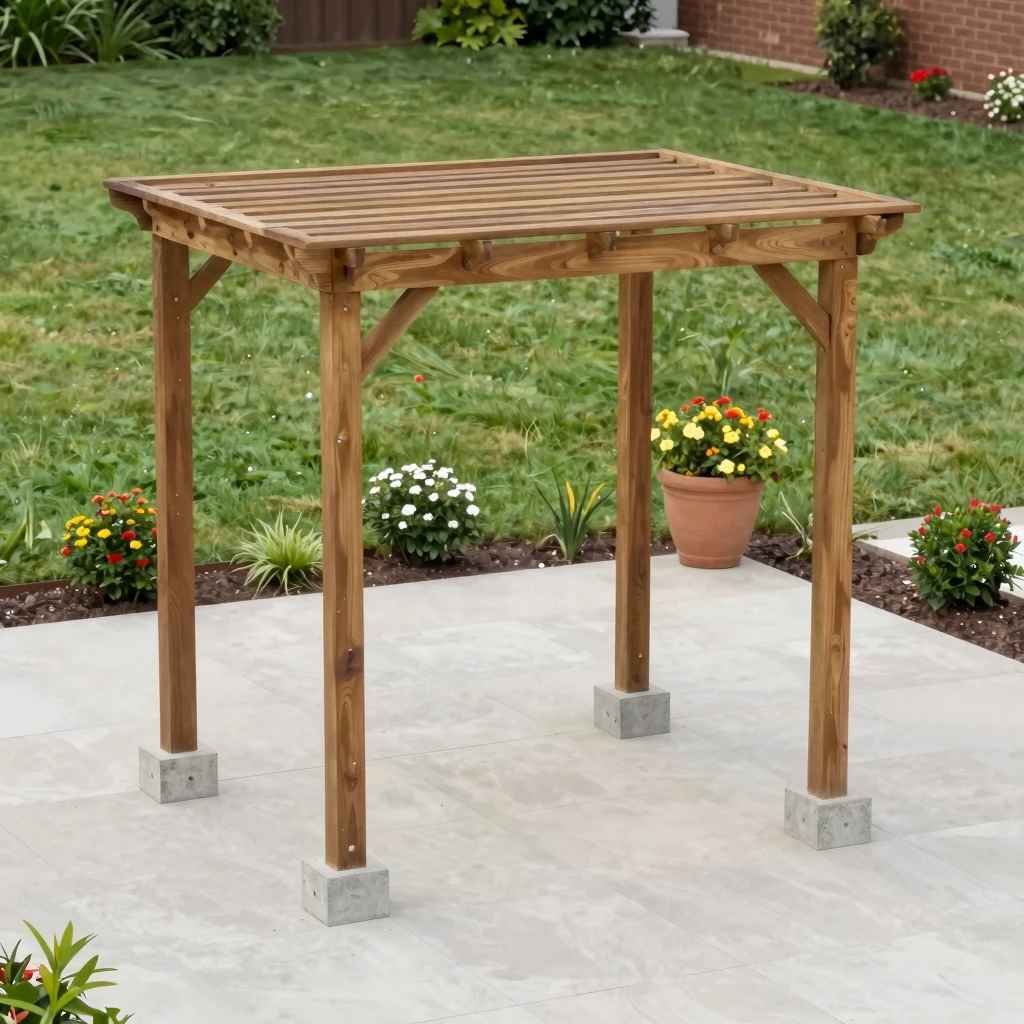
Deck Blocks: Pre-made concrete blocks with slots for posts. Simple. Good for smaller pergolas.
May not be strong enough for large ones.
Surface Mount Anchors: Metal brackets that bolt to a solid surface like concrete or a strong deck. Often requires some screws.
Post Anchors with Sleeves: Similar to surface mounts but can sometimes attach to ledger boards without going through them. Requires careful selection.
Weight Anchoring: Using heavy bases or sandbags. Best for temporary structures or very light ones. Not for permanent, large pergolas.
Method 1: Concrete Footings – The Gold Standard
Concrete footings are a top choice. They are very strong. They dig deep into the ground.
This gives your pergola a solid base. It’s like building a house. You need a good foundation.
For a pergola, this means digging holes. You dig them where your posts will go. The depth of these holes matters.
It depends on your local climate. And soil type. You also need to think about frost line.
Frost can push things up. This can damage your pergola.
After digging, you fill the holes with concrete. You set metal post anchors into the wet concrete. These anchors stick out of the ground.
Your wooden posts then attach to these anchors. This keeps the wood off the ground. This stops rot.
It also makes the connection super strong. You will need tools for digging. A post hole digger is best.
You’ll also need bags of concrete mix. And water. And the metal post anchors.
This method is excellent for large pergolas. Still deciding between materials before you anchor anything? See our metal vs. wood pergola lifespan comparison first, since the anchoring method above works for both. It is also good for windy areas. It provides the most stability.
The downside is that it requires digging. You might need to dig through grass. Or even through existing patio stones.
If you have a beautiful patio, this might not be ideal. But if you’re building on a lawn, it’s a great option. It’s a bit more work.
But the result is a very secure structure. It’s the most reliable way to anchor a pergola long-term.
How it works:
- Dig holes: Make them deep enough. Check local building codes.
- Add gravel: A layer at the bottom helps drainage.
- Pour concrete: Fill the hole.
- Set anchor: Place the metal post anchor in wet concrete. Make sure it is straight.
- Cure: Let the concrete harden fully. This takes a few days.
- Attach post: Bolt the wooden post to the anchor.
When Concrete Footings Shine:
Best for: Large pergolas, windy areas, new construction on lawns.
Requires: Digging, concrete, post anchors.
Benefit: Maximum stability and longevity.
Method 2: Deck Blocks – Simple and Quick
Deck blocks are a popular choice. Especially for DIY projects. They are pre-made concrete blocks.
They have special slots in them. These slots are for your wooden posts. You just place the block on a firm surface.
Then you slide the post into the slot. It’s that simple. No digging is usually needed.
This is a big plus if you have a deck or patio.
These blocks work best for smaller pergolas. Or for pergolas in areas that don’t get very strong winds. They sit on top of the ground.
Or on top of your deck. They rely on the weight of the pergola. And the blocks themselves.
To keep things stable. Some people add gravel under the blocks. This helps with drainage.
And stops the block from sinking into soft ground.
You still need to make sure the blocks are level. And that they are positioned correctly. If you use them on a deck, you need a deck built to support a pergola’s weight.
The deck joists must be able to support the weight. You might also want to anchor the blocks to the deck. Some deck blocks have holes for screws.
This adds extra security. Always check the weight limits. And the recommended use for your specific deck blocks.
They are not always suitable for very tall or heavy pergolas.
How they work:
- Choose location: Decide where your posts will stand.
- Level the ground: If on grass, level the area. Add gravel if needed.
- Place block: Put the deck block on the prepared spot.
- Insert post: Slide the wooden post into the block’s slot.
- Secure (optional): Screw the post to the block if holes are provided.
Deck Blocks In Action:
Best for: Small to medium pergolas, decks, patios.
Requires: Level surface, deck blocks.
Benefit: Easy installation, no major digging.
Method 3: Surface Mount Anchors – For Solid Bases
Surface mount anchors are great. They are metal brackets. They attach directly to a hard surface.
Think concrete patios. Or concrete slabs. You bolt the bracket down.
Then your pergola post attaches to the bracket. This is a very secure method. It does not require digging new holes.
It also keeps the wood post elevated. This helps prevent rot. It’s a clean look too.
The key here is the surface. It must be strong. A thin concrete patio might not be enough.
You need a solid base. Like a thick slab. If you’re attaching to a deck, it’s more complex.
You usually can’t just bolt these to the deck boards. You would need to bolt them to the deck joists. Or to the house’s ledger board.
This can involve drilling. But it’s drilling into framing. Not just surface boards.
Some surface mount anchors are designed to go over deck boards.
These anchors are also called post bases. Or post anchors. They come in many shapes and sizes.
Some have a wide, flat plate. This plate gets screwed into the concrete. Others have a flange.
That wraps around the bottom of the post. You need to choose the right one for your post size. And for the surface you are mounting to.
Make sure you use the correct screws or bolts. They need to be long enough and strong enough.
How it works:
- Prepare surface: Ensure the concrete is clean and level.
- Position anchor: Place the surface mount bracket where the post will go.
- Mark holes: Use a marker to show where to drill.
- Drill holes: Drill pilot holes into the concrete.
- Secure anchor: Use anchor bolts or concrete screws to fix the bracket.
- Attach post: Mount your wooden post to the bracket.
Surface Mounts: Key Points
Best for: Concrete patios, slabs, strong deck framing.
Requires: Solid surface, appropriate anchors and fasteners, drill.
Benefit: Strong connection, keeps wood off surface, minimal ground disturbance.
Method 4: Specialized Anchoring Systems (No Drilling!)
Now, let’s talk about methods that truly avoid drilling into your existing deck or house. These are often more specialized. But they are fantastic solutions.
One type uses heavy-duty brackets. These brackets are designed to clamp onto things. Like the edge of a deck.
Or a railing post. They don’t require screws or bolts going through your deck boards.
Another system might involve using weights. Like large, heavy planters. Or specially designed concrete weights.
You place the pergola posts into these heavy bases. This is best for smaller pergolas. Or for temporary setups.
It works well if you don’t want permanent changes. Or if you plan to move the pergola later. But be aware, this is less stable than other methods.
Some advanced systems use tension. Or leverage. They might anchor into the ground near your deck.
But not attach to the deck itself. Think of systems with angled supports. That go into the ground.
They then connect to the pergola posts. It’s a bit like building a freestanding unit. Close to your house.
But separate from it. These can be very effective.
For example, I saw a system once. It used large metal frames. These frames sat on the ground.
They had uprights. The pergola posts attached to these uprights. The frames themselves were anchored into the ground.
With stakes or screws. But none of the hardware touched the deck. It looked clean and strong.
It was perfect for someone who wanted their deck untouched.
Key aspects to look for:
- Clamping mechanisms: Brackets that grip existing structures.
- Weight-based systems: Heavy bases for temporary or light pergolas.
- Freestanding designs: Structures built separately from the house.
- Ground anchors: Systems that secure into the ground nearby.
Truly Drill-Free Options:
Look for: Clamps, heavy bases, freestanding kits.
Best for: Renters, historical homes, sensitive decks/patios.
Consider: Stability for larger structures may vary.
Real-World Context: Your Backyard Matters
The best way to anchor your pergola really depends on your specific backyard. Think about your ground. Is it soft soil?
Is it a hard, packed surface? Is it a wooden deck? Is it a concrete patio?
Each surface needs a different approach. For instance, soft soil might require digging deeper. Or using wider footings.
To prevent sinking.
What about the weather where you live? If you get strong winds often, you need the strongest anchor. Concrete footings are usually best for this.
If you live in a very mild climate, maybe a simpler method will work. But it’s always better to be safe. A pergola that’s too light can be dangerous in a storm.
It can fall over. Or its parts can break off.
Consider the size of your pergola. A small, lightweight one might be fine with deck blocks. A large, heavy one needs a more robust system.
Like concrete footings. Or very sturdy surface mounts. The design of your pergola also plays a role.
Some have very wide roofs. These catch more wind. They need more secure anchoring.
Your existing structures are also important. If you have a brand new, expensive deck, you don’t want to damage it. This pushes you towards methods that don’t drill.
If your deck is older, you might have more flexibility. But always check its condition. Make sure it can handle the extra load.
And any potential stresses from the pergola.
Finally, check local building codes. Some areas have rules. About how pergolas must be anchored.
Especially if they are close to property lines. Or if they are a certain height. Getting this wrong could mean having to redo the work.
Or even facing fines. It’s a small step that saves big headaches.
Matching Anchors to Your Yard:
Soft Soil: Dig deep, consider wider footings. Concrete footings are strong here.
Hard Ground/Gravel: Deck blocks can work well if leveled.
Concrete Patio: Surface mount anchors are ideal.
Wooden Deck: Specialized no-drill clamps or anchoring to joists (requires screws).
Windy Areas: Prioritize concrete footings for maximum stability.
Light Pergola: Deck blocks or even weight systems might suffice.
What This Means For You: Deciding Your Best Option
So, after all this, what’s the best choice for your pergola? Let’s break it down. First, think about your priorities.
Is keeping your deck or patio untouched your absolute top concern? If yes, then you’ll focus on Method 4 (Specialized Systems) or clever uses of Method 3 (Surface Mounts, if you can bolt to framing under the deck boards, not through them).
If you’re building on a lawn, and don’t mind a little digging, Method 1 (Concrete Footings) is hard to beat for pure security. It’s the gold standard for a reason. It’s the most permanent and robust solution.
It gives you peace of mind for years to come.
For smaller pergolas or simpler setups, Method 2 (Deck Blocks) is a fantastic middle ground. It’s easy, affordable, and offers decent stability. Just make sure your deck can handle it.
And that the blocks are level. It’s a very common DIY choice for a reason.
Here’s a simple way to decide:
- Can’t drill into deck/house at all? Focus on specialized clamp-on or freestanding systems.
- Building on lawn, want maximum strength? Go with concrete footings.
- Small pergola, on deck/patio, want easy install? Try deck blocks.
- Have a solid concrete pad, want strong surface anchor? Use surface mount anchors.
It’s also wise to consider the long term. Will this pergola be permanent? Or might you want to move it later?
If you might move it, a temporary anchoring solution might be better. Maybe weight-based systems or lighter deck blocks. But remember, permanence often equals greater stability.
Quick Tips for Secure Anchoring
No matter which method you choose, a few tips will make your anchoring job better:
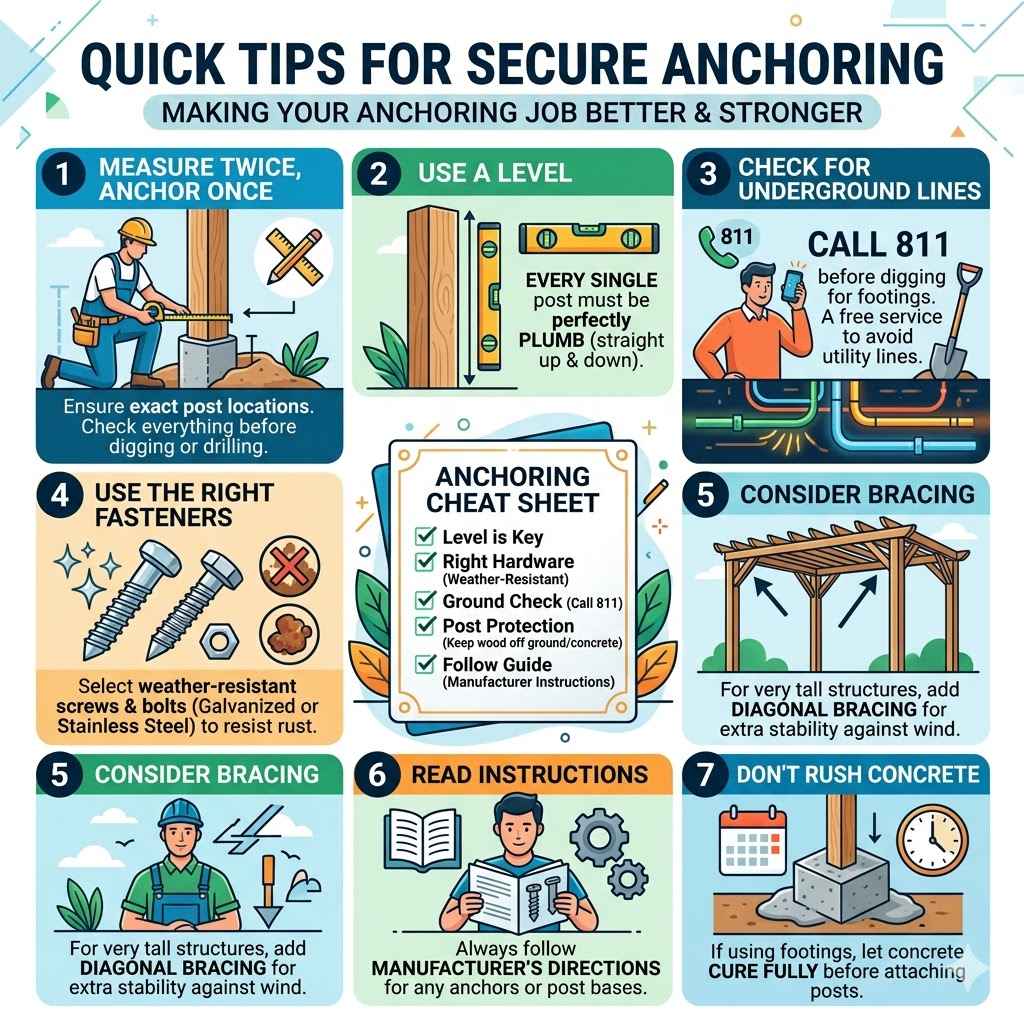
- Measure twice, anchor once: Make sure your post locations are exact.
- Use a level: Every single post must be perfectly plumb (straight up and down).
- Check for underground lines: Before digging for footings, call 811. It’s a free service.
- Use the right fasteners: Galvanized or stainless steel screws and bolts resist rust.
- Consider bracing: For very tall pergolas, diagonal bracing can add extra stability.
- Read instructions: Always follow the manufacturer’s directions for any anchors or blocks.
- Don’t rush concrete: If using footings, let the concrete cure fully before attaching posts.
Anchoring Cheat Sheet:
Level is Key: Always use a level.
Right Hardware: Use weather-resistant fasteners.
Ground Check: Call 811 before digging.
Post Protection: Keep wood off direct contact with ground/concrete.
Follow Guide: Manufacturer instructions are your friend.
Frequently Asked Questions
Do I really need to anchor my pergola?
Yes, absolutely. Anchoring is crucial for safety. It prevents the pergola from tipping over.
It protects against wind damage. A properly anchored pergola is stable. It’s safe for you and your family.
Can I just use heavy planters to hold my pergola posts?
For very small, lightweight pergolas, heavy planters might offer some stability. However, this is generally not recommended for permanent structures. Wind can easily move them.
Or they can tip. It’s much safer to use dedicated anchoring methods like concrete footings or proper anchors.
How deep should concrete footings be for a pergola?
The depth depends on your local climate and frost line. In many areas, 24 to 36 inches is common. Always check your local building codes.
They will have specific requirements to prevent frost heave.
What is the easiest way to anchor a pergola without drilling?
Deck blocks are often considered one of the easiest methods. They require no drilling. Just placing them on a level surface.
Specialized clamp-on brackets are also very easy. And they truly avoid drilling into your existing structure.
Can I attach a pergola to my deck without drilling into the joists?
Yes, if you use specialized clamping systems designed for decks. These grip the edge of the deck. Or attach to railing posts.
They do not require drilling into the deck joists themselves. Always ensure these systems are rated for the weight of your pergola.
How do I anchor a pergola to a concrete patio?
The best way is to use surface mount anchors. These are metal brackets. You bolt them directly into the concrete patio.
Then you attach your pergola posts to the brackets. Make sure the concrete is thick enough and level.
Conclusion: Building Your Stable Oasis
Anchoring your pergola without drilling is totally achievable. You have several great options. From strong concrete footings to simple deck blocks.
And clever specialized systems. The key is to understand your needs. And your backyard’s features.
Choosing the right method means peace of mind. It means a pergola that stands strong. And looks beautiful for years.
Now you can build your stable outdoor oasis!
Sponsored / affiliate links. As an Amazon Associate I earn from qualifying purchases. I may earn additional commission from eligible campaigns.