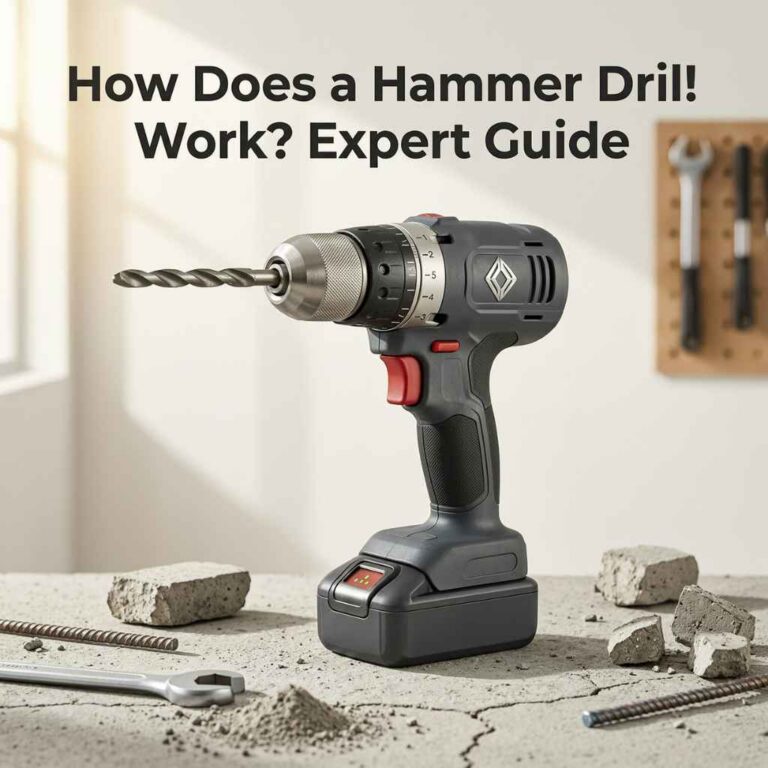
How Much Is A Power Drill? Price Guide (2026)
A power drill’s price depends on its type, power, brand, and special features. Cordless drills range from $50 for basic models to over $300 for professional ones. Corded drills are usually cheaper, starting around $30. Specialty drills for tasks like masonry or impact driving can also cost more.
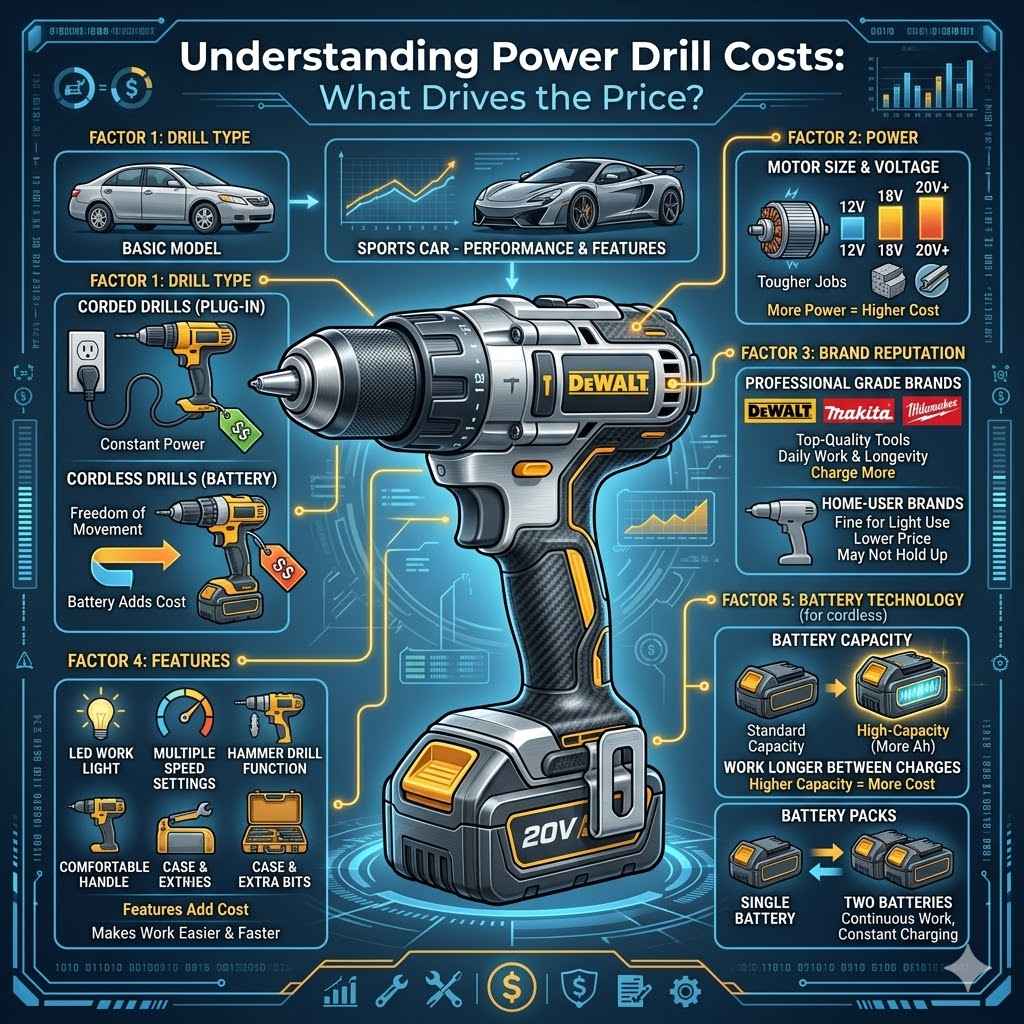
Understanding Power Drill Costs: What Drives the Price?
When you look at power drills, you’ll see a big range of prices. It’s not just the brand name. Many things make one drill cost more than another.
Think about it like buying a car. A basic model gets you from point A to point B. A sports car offers more speed and features.
Drills are similar. They all drill holes. But some do it faster, easier, or handle tougher jobs.
The first big difference is the type of drill. There are corded drills and cordless drills. Corded drills plug into the wall.
They offer constant power. Cordless drills use batteries. They give you freedom to move anywhere.
Batteries add to the cost of cordless drills. This is a major reason they often cost more upfront.
Next, we look at power. This relates to the motor size and battery voltage. Higher voltage batteries (like 18V or 20V) usually mean more power.
This is good for tougher materials like concrete or thick wood. More power usually means a higher price tag. This makes sense because a more powerful motor and battery system cost more to make.
The brand also plays a role. Some brands are known for top-quality tools that last a long time. These brands often charge more.
Think of companies like DeWalt, Makita, or Milwaukee. They are professional-grade. Cheaper brands might be fine for light home use.
But they may not hold up to daily work. We’ll talk more about brands later.
Then there are the features. Does the drill have an LED light? Does it have multiple speed settings?
What about a hammer drill function for drilling into brick? Is the handle comfortable? Does it come with a case or extra bits?
All these extras add to the cost. More features usually mean a higher price. But they can make your work much easier and faster.
Finally, the battery itself is a big factor for cordless drills. High-capacity batteries (more amp-hours, or Ah) cost more. But they let you work longer between charges.
If you plan to do a lot of work, this is worth the extra cost. Some drills come with just one battery. Others come with two.
Two batteries mean you can always have one charging. This keeps your work going without breaks.
Drill Types and Their Price Ranges
Let’s dive into the different kinds of drills you’ll find. Each type serves a purpose. Knowing this helps you choose the right one without overspending.
Corded Drills
These are the traditional drills. They plug into a wall outlet. They are usually less expensive than cordless models.
You can get a decent corded drill for $30 to $100. For basic tasks like hanging shelves or assembling furniture, this is often enough.
The main advantage is constant power. You don’t have to worry about batteries dying. The main disadvantage is the cord.
It can get in the way. It limits where you can work. For small DIY jobs around the house, a corded drill is a good choice if budget is tight.
We saw a really good deal on a corded drill from a well-known brand. It was around $50. It had two speed settings and a keyless chuck.
This is great for home repairs. My neighbor uses his all the time for small projects.
Corded Drill Quick Scan
Pros:
- Lower initial cost
- Constant, reliable power
- No need to buy or charge batteries
Cons:
- Limited by cord length
- Can be cumbersome
- Less portable
Cordless Drills (Drill/Drivers)
These are the most popular type today. They use rechargeable batteries. Prices for cordless drills vary a lot.
A basic 12-volt drill might cost $50 to $150. These are good for lighter tasks and tight spaces.
More common and versatile are 18-volt or 20-volt models. These can range from $70 to $250. This price often includes a drill, one battery, and a charger.
Higher-end models with more power and features can go up to $300 or more.
What influences the price here? The battery. A drill with a 2.0Ah battery will be cheaper than one with a 4.0Ah or 5.0Ah battery.
If the drill comes as a kit with two batteries and a charger in a case, expect to pay more. This is often called a “bare tool” price if you don’t get the battery and charger.
I remember buying my first cordless drill. It was a basic 18V kit for about $90. It came with one battery.
It was okay for simple things. But soon I was wishing for more power and a second battery. That’s when I realized the value of a good kit.
Cordless Drill Price Factors
- Voltage: 12V (lighter) vs. 18V/20V (standard) vs. 36V+ (heavy-duty). Higher voltage usually means higher cost.
- Battery Capacity (Ah): More Amp-hours mean longer run time and higher cost.
- Number of Batteries: Kits with 2 batteries are more expensive but more convenient.
- Charger Type: Fast chargers cost more.
- Included Accessories: Cases, extra bits add to the price.
Hammer Drills
A hammer drill adds a “hammering” action. This is like a rapid forward-and-back impact. It’s great for drilling into hard materials like concrete, brick, or stone.
They can also function as regular drills. You’ll find hammer drills costing from $80 to $300+.
The price difference comes from the strength of the hammering action and the overall power of the drill. For occasional use on tough surfaces, a less expensive model might work. If you’re doing a lot of masonry work, invest in a more robust one.
Impact Drivers
These are different from hammer drills. An impact driver delivers rotational force with short, powerful bursts of torque. This is ideal for driving screws, especially long ones into hard wood.
They don’t drill holes as cleanly as a regular drill. Impact drivers usually start around $100 and can go up to $300+. They are often sold in kits with batteries and chargers.
When I was building a deck, an impact driver was a lifesaver. Driving dozens of long screws by hand or with a regular drill would have been brutal. The impact driver made it fast and easy.
It was well worth the extra cost over just a drill/driver.
Drill vs. Impact Driver: Quick Look
Drill/Driver:
- Action: Rotation only.
- Best For: Drilling holes, driving screws with less torque.
- Control: More control over torque.
Impact Driver:
- Action: Rotation + rapid impacts (torque bursts).
- Best For: Driving screws, especially long or into hard materials.
- Power: More powerful for driving fasteners.
Specialty Drills
There are also drills for very specific jobs. These include right-angle drills for tight corners or powerful drill presses for precise woodworking. These can range from $150 to over $500, depending on their size and capability.
Factors Affecting Power Drill Prices
Beyond the type of drill, several other things make prices go up or down.
Battery Voltage and Capacity
For cordless drills, voltage is key. Common voltages are 12V, 18V, and 20V. Some brands use “20V MAX,” which is essentially the same as 18V under load.
Higher voltage means more power. A 20V drill will typically cost more than a 12V drill.
Capacity is measured in amp-hours (Ah). A 2.0Ah battery holds less charge than a 4.0Ah or 5.0Ah battery. You can drill more holes or work longer with a higher Ah battery.
This is why drills bundled with higher capacity batteries cost more. A single 4.0Ah battery can add $50-$100 to the price of a kit.
I learned this the hard way. I bought a cheap drill with a small battery. It felt like I was always waiting for it to charge.
Spending more on a drill with a bigger battery or an extra battery made a huge difference in my productivity.
Battery Lingo Explained
Voltage (V): The electrical “pressure.” Higher voltage means more potential power.
Amp-Hours (Ah): How much “fuel” the battery holds. Higher Ah means longer run time.
Bare Tool: Just the drill itself, no battery or charger.
Kit: Includes drill, battery(ies), charger, and often a case.
Brand Reputation and Quality
Brand names matter in tools. Some brands are considered professional-grade. They are built to last through tough jobs.
These brands include:
- Milwaukee: Known for innovation and powerful tools.
- DeWalt: Very popular, reliable, and durable.
- Makita: Offers a wide range of tools, often with good battery systems.
- Bosch: Known for quality and often more ergonomic designs.
These professional brands often have drills starting around $100-$150 for basic kits and going up to $300+ for high-end models. They use better materials and have stronger motors.
Then there are DIY or homeowner brands. These are often less expensive. Examples include brands found at big box stores or online retailers.
They might be perfectly fine for occasional use. You might find their kits starting around $50-$100. However, they might not be as durable or powerful.
My dad always said, “Buy it once, buy it right.” For tools you’ll use a lot, investing in a good brand pays off in the long run. They break less often and perform better.
Brand Tiers (General)
Professional/Premium: Milwaukee, DeWalt, Makita, Bosch. Higher price, highest durability and performance.
Mid-Range/DIY: Ryobi, Craftsman, Porter-Cable. Good balance of price and performance for home users.
Budget/Entry-Level: Brands found at discount retailers or lower-end lines. Lowest price, suitable for very light use.
Included Features and Accessories
The bells and whistles add to the cost. What features might you find?
- LED Work Light: Very handy for dark spaces.
- Variable Speed Trigger: Lets you control speed precisely.
- Clutch Settings: Prevents over-driving screws.
- Brushless Motor: More efficient, longer-lasting, and more powerful than brushed motors. Drills with brushless motors are usually more expensive.
- Keyless Chuck: Makes changing bits easy without a tool.
- Onboard Bit Storage: Keeps a spare bit handy.
- Ergonomic Grip: Improves comfort during long use.
- Carrying Case: Protects the drill and keeps accessories organized.
A drill that comes with two batteries, a fast charger, and a sturdy case will naturally cost more than a “bare tool” or a kit with just one basic battery. The brushless motor technology, while more expensive, is worth considering for its performance and longevity.
I was looking at two drills. One was $120 and had a brushed motor. The other was $180 and had a brushless motor, two batteries, and a nice case.
For the extra $60, I got a tool that felt much more powerful and a lot more convenient. That was a no-brainer for me.
Kits vs. Bare Tools
Manufacturers often sell drills in different ways. A bare tool is just the drill itself. You need to already own batteries and a charger from that brand, or buy them separately.
This is a good option if you’re expanding your tool collection from a brand you already own.
A kit includes the drill, at least one battery, and a charger. Kits are usually the best value for someone starting out. They can range from $70 to $300+ depending on the drill and battery specs.
Sometimes, you’ll see a “combo kit.” This includes a drill/driver and an impact driver, often with multiple batteries and a charger. These can be a great deal if you need both tools. They might cost $200 to $500+.
Kit Components and Cost
Bare Tool Only: Lowest price, but requires existing batteries/charger.
Basic Kit (1 battery, charger): Good entry point, price varies by drill specs.
Premium Kit (2+ batteries, fast charger, case): Higher price, offers best convenience and value for heavy use.
Combo Kit (Drill + Impact Driver): Best value if you need both tools, significant upfront cost.
Average Power Drill Prices in 2026
Let’s put some numbers to it. These are estimates and can change based on sales and new models.
Budget Drills (Under $100)
For this price, you’ll likely find:
- Corded drills with good power for their price.
- Basic 12V cordless drill/drivers, sometimes with one small battery.
- Entry-level 18V/20V cordless drills with one basic battery and charger. These might have brushed motors and fewer features.
These are suitable for occasional home repairs, hanging pictures, and light furniture assembly. They might not stand up to heavy or frequent use.
Mid-Range Drills ($100 – $200)
This is where most DIYers find their sweet spot. You can expect:
- Better quality 18V/20V cordless drill/drivers.
- These often feature brushless motors.
- They come with one or two batteries (often 2.0Ah or 3.0Ah).
- Good build quality and more ergonomic designs.
- Some may include a basic hammer drill function.
These drills are great for most home projects, woodworking, and medium-duty tasks. They offer a good balance of power, durability, and price.
High-End/Professional Drills ($200 – $400+)
If you need top performance and durability for professional work or demanding DIY projects, this is your range.
- Top-tier 18V/20V cordless tools from leading brands.
- Powerful brushless motors.
- Higher capacity batteries (4.0Ah, 5.0Ah, or more).
- Advanced features like multiple clutch settings, better gearboxes, and improved ergonomics.
- Robust construction for daily use.
- These prices can include drill/drivers, hammer drills, impact drivers, or combo kits.
These tools are built to last and perform at the highest level. They are an investment for serious hobbyists or pros.
Price Point Breakdown (Cordless 18V/20V)
Under $100: Basic brushed motor, 1 battery (small Ah), basic charger.
$100 – $200: Brushless motor, 1-2 batteries (medium Ah), better charger, more features.
$200 – $300: High-performance brushless, 2+ larger batteries, fast charger, premium case, advanced features.
$300+: Top-tier professional models, specialized features, highest power and battery tech.
Real-World Context: When to Buy What
The price of a drill really depends on how you plan to use it. Here’s a look at common scenarios.
The Weekend Warrior Who Fixes Things
If you’re someone who tackles DIY projects on weekends, hangs pictures, assembles IKEA furniture, and maybe fixes a leaky faucet, you don’t need a top-of-the-line professional drill. A mid-range cordless drill/driver kit for $100-$200 is likely perfect. It will have enough power and battery life for these tasks.
Brands like Ryobi or Craftsman offer good value here. A drill with a brushless motor is a nice upgrade if your budget allows.
The Serious Hobbyist or Woodworker
For those who spend a lot of time in their garage workshop, building furniture, doing renovations, or working with tougher materials, a higher-quality drill is essential. You’ll want something from a reputable brand like DeWalt, Makita, or Milwaukee. Expect to spend $150-$300 for a kit with a brushless motor and decent battery capacity (like 4.0Ah).
An impact driver might also be a valuable addition for driving screws efficiently.
I’ve seen friends who are serious woodworkers. Their drills look and feel different. They’re heavier, more powerful, and they use them for hours.
They chose brands known for durability because they can’t afford downtime. They often buy batteries in packs of three or four.
The Pro Contractor
If you use a drill for your job every single day, you need the best. Durability, power, and battery life are paramount. Professional-grade tools from Milwaukee, DeWalt, or Makita are the standard.
Expect to spend $250-$500+ for a high-end drill/driver, hammer drill, or impact driver kit. These tools are built to withstand daily abuse. They often come with the longest warranties and the most advanced battery technology.
I worked with a contractor once who swore by his Milwaukee fuel line. He said the batteries lasted all day, and the drills had more torque than anything he’d ever used. He treated them like the essential tools they were.
The First-Time Homeowner
Just moved in? You’ll need a drill. For basic tasks like mounting shelves, assembling a bed frame, or minor repairs, a budget-friendly corded drill (around $40-$70) or an entry-level 12V cordless drill (around $50-$100) could suffice.
However, investing a little more in an 18V/20V cordless drill kit (around $70-$150) offers more versatility and power as you tackle more projects around your new home.
Scenario-Based Pricing
Occasional Home Use: $50 – $150 (Basic Cordless Kit)
Frequent DIY Projects: $100 – $250 (Mid-Range Brushless Kit)
Woodworking/Serious Hobbyist: $150 – $300 (Premium Brushless Kit, possibly with Impact Driver)
Professional Use: $250 – $500+ (Top-Tier Professional Tools)
What This Means for You: When to Splurge vs. Save
Understanding the costs can help you make a smart choice. It’s about matching the tool to your needs.
When Saving Money Makes Sense
You can save money if you only need a drill for very light, infrequent tasks. Hanging a few pictures a year? Assembling a single piece of furniture?
A basic corded drill or a very inexpensive cordless drill might be enough. You won’t break the bank. Plus, these smaller drills are often lighter and easier to handle for those with less strength.
Just make sure the drill you choose still has enough power for the job. A drill that struggles too much will be frustrating. It might even strip screws or damage the material.
When Investing Is Worth It
It’s worth spending more if:
- You plan to use the drill often.
- You’ll be working with tough materials (hardwood, concrete, metal).
- You need to drive many screws or fasteners.
- You value comfort and efficiency during longer work sessions.
- You want a tool that will last for many years.
In these cases, a higher-quality cordless drill with a brushless motor, a good battery system, and solid construction will save you headaches down the road. It will perform better, feel better in your hand, and last much longer. That upfront cost becomes a smart investment in your projects and your tools.
The biggest mistake I see people make is buying the cheapest thing available when they know they’ll be using it a lot. Then they end up buying another one a year later because the first one broke or wasn’t strong enough. That often ends up costing more in the long run.
Simple Checks Before You Buy
Before you commit to a price, check a few things:
- Battery Count: Does it come with one or two? Two is much better for continuous work.
- Battery Size (Ah): Look for at least 2.0Ah for a decent cordless drill. 4.0Ah or 5.0Ah is better for extended use.
- Motor Type: Is it brushed or brushless? Brushless is generally superior.
- Warranty: What kind of warranty does the tool and battery have? Longer is better.
- User Reviews: What do other people say about its performance and durability?
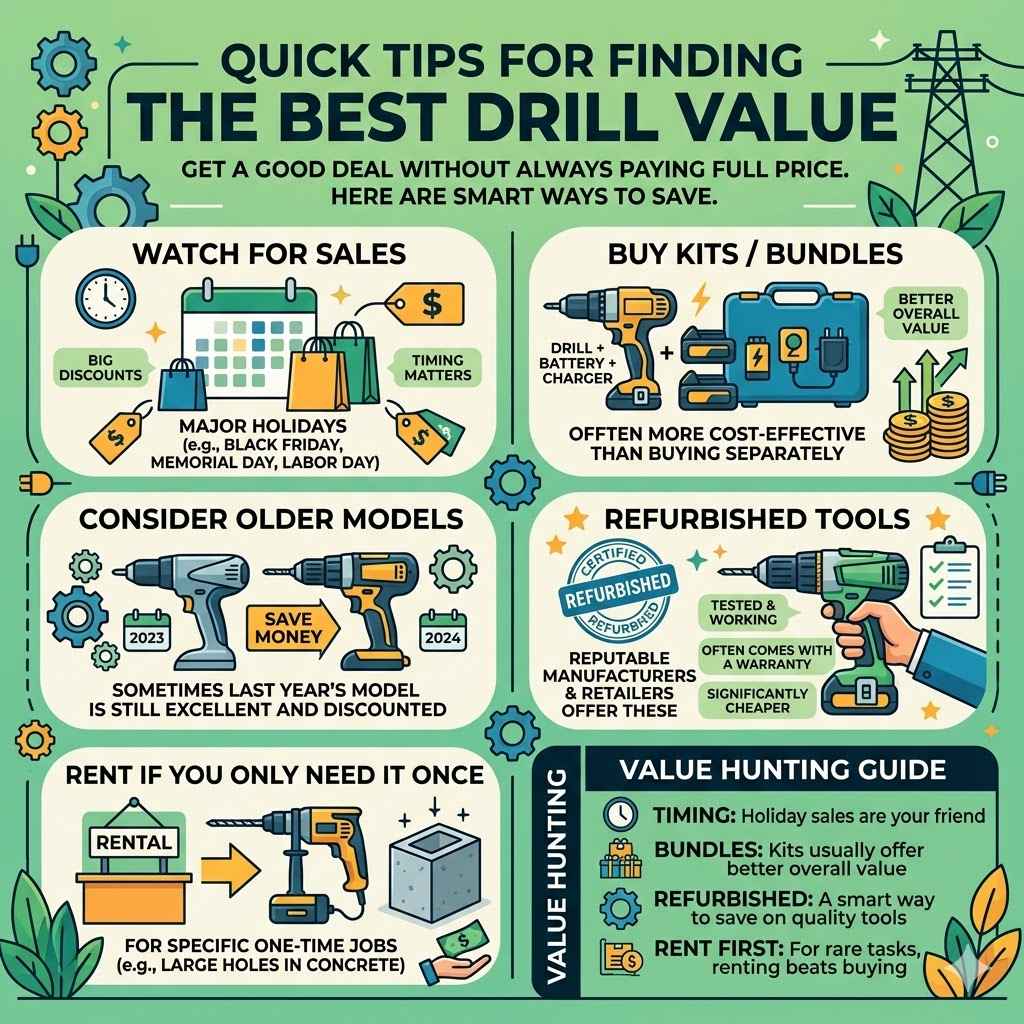
Quick Tips for Finding the Best Drill Value
You don’t always have to pay full price. Here are some ways to get a good deal.
- Watch for Sales: Major holidays (like Black Friday, Memorial Day, Labor Day) often bring big discounts on tools.
- Buy Kits: Often, buying a drill as part of a kit with batteries and a charger is more cost-effective than buying them separately.
- Consider Older Models: Sometimes last year’s model is still excellent and available at a discount.
- Refurbished Tools: Reputable manufacturers and retailers offer certified refurbished tools. They are tested, often come with a warranty, and are significantly cheaper.
- Rent if You Only Need It Once: For a very specific, one-time job (like drilling a few large holes in concrete), renting a specialized tool might be cheaper than buying.
Value Hunting Guide
- Timing: Holiday sales are your friend.
- Bundles: Kits usually offer better overall value.
- Refurbished: A smart way to save on quality tools.
- Rent First: For rare tasks, renting beats buying.
Frequently Asked Questions About Power Drill Prices
What is the cheapest type of power drill?
The cheapest type of power drill is typically a corded drill. You can find basic models for as low as $30 to $50. These are good for simple tasks but lack the portability of cordless drills.
How much should I expect to pay for a good cordless drill for home use?
For good home use, a mid-range cordless drill kit (18V/20V with a brushless motor and at least one battery) usually costs between $100 and $200. This offers a good balance of power, features, and durability.
Are brushless drills worth the extra cost?
Yes, generally brushless drills are worth the extra cost. They are more efficient, run cooler, last longer, and offer more power and torque compared to brushed drills. This means better performance and tool longevity.
How much does a good battery and charger add to the price of a cordless drill?
A good quality battery (like a 4.0Ah or 5.0Ah) and a fast charger can add $50 to $150 or more to the price of a drill, especially if purchased separately. Kits that include these items often provide better value.
Is it better to buy a drill kit or just the bare tool?
If you are new to a tool brand or don’t have batteries and chargers, a kit is almost always the better and more cost-effective option. If you already own batteries and chargers from the same brand, buying a bare tool can save you money.
What is the price difference between a regular drill and a hammer drill?
Hammer drills typically cost $20 to $70 more than a comparable regular drill/driver. This is because they have a more complex mechanism to provide the hammering action, which is useful for drilling into masonry.
Conclusion: Finding the Right Drill for Your Budget
Choosing a power drill involves balancing cost with your specific needs. Whether you need a simple tool for occasional fixes or a robust workhorse for daily tasks, there’s a drill out there for your budget. Understand the types, power, features, and brands.
This knowledge empowers you to make a smart purchase. You’ll get a tool that serves you well for years to come.
Sponsored / affiliate links. As an Amazon Associate I earn from qualifying purchases. I may earn additional commission from eligible campaigns.