Can You Glue Wood to Stucco Walls? What Homeowners Need
You can sometimes glue wood to stucco for light-duty use, but only on sound, dry stucco and only for small pieces; for thicker trim or anything load-bearing, mechanical fasteners are usually safer. Weak bonds can let trim peel off, trap water, and crack the stucco. This guide shows when adhesive can work, when it will fail, and what wall conditions change the call.
Can you glue wood to stucco walls?


Sometimes, yes. Adhesive can hold small, light trim on a dry, solid stucco surface, but it is not a structural anchor and it is not the right answer for shelves, rails, ledgers, overhead pieces, or anything that must resist people pulling on it. The wall condition matters more than the glue tube.
What adhesive can and cannot do on an exterior stucco wall
Exterior-rated construction adhesive can help with temporary tack or light decorative trim, especially when the wood is small and the stucco is flat and sound. It cannot fix a weak bond surface, bridge movement, or replace fasteners where the load must pass into framing or approved backing.
Attaching wood to stucco is also a waterproofing problem. Stucco itself is not a structural anchor. If the bond lets go, water can follow the gap and sit behind the wood.
According to thestuccoguy.com — Fasteners for open stud walls should be at least 2 inches long in one example.
What kind of stucco wall are you dealing with?

The wall assembly decides the risk. Three-coat stucco over lath behaves differently from one-coat stucco or EIFS, and each sits over a different backing path. If the substrate, WRB, or sheathing is unknown, treat the job as a moisture-management problem first and a fastening problem second.
Three-coat stucco over lath and framing
Three-coat stucco is commonly about 7/8 inch thick over lath. That finish can hide framing, sheathing, and a water-resistive barrier behind it, but the stucco layer itself still does not carry real loads. A surface bond may stick well at first, then fail when the wood moves or the wall moves.
One-coat stucco over sheathing
A one-coat stucco system often uses 1 inch foam and about 3/8 inch of base coat. That means the outer layer is often thinner and more sensitive to fastener placement, and it can be easier to crush or spall if screws are driven carelessly. Bonding to the finish coat alone is usually a quick route to disappointment.
EIFS and why it needs special caution
EIFS is less forgiving when penetrations are made. It is a proprietary system, and the manufacturer’s details matter more than general stucco advice. Glue alone is usually a poor bet because the outer surface may look solid while the underlying foam and layers are not meant to take abuse like cement stucco.
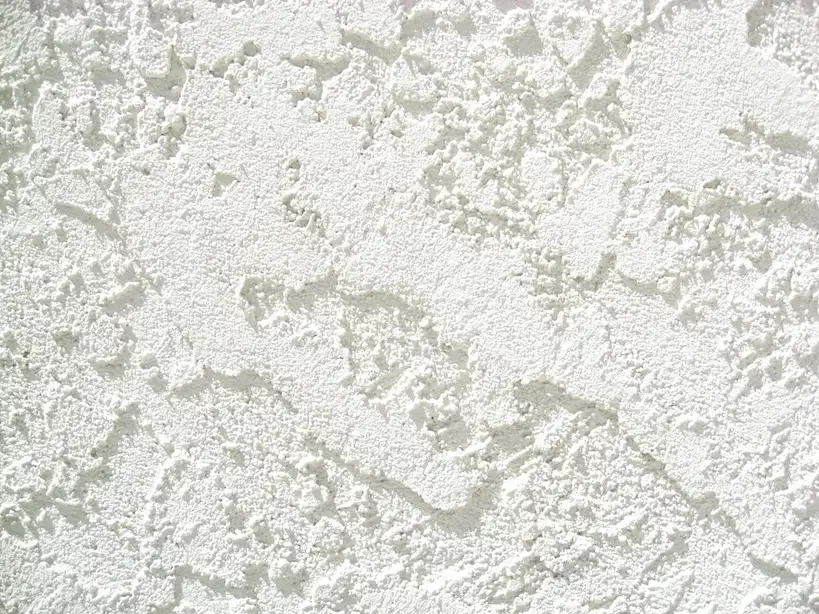
When adhesive can work, and when it will fail
Adhesive can help with light decorative wood, but it fails quickly when the joint must fight gravity, weather, or movement. Dust, chalk, old paint, sealers, moisture, and rough finish texture all weaken the bond. For medium or heavy pieces, glue is a helper at best, never the whole answer.
Light decorative wood trim and low-stress attachments
Light accessories may be mounted with appropriate exterior anchors and sealant. Small trim boards, thin appliques, or short decorative blocks can sometimes be bonded if the stucco is clean, dry, and stable. Even then, the piece should have low exposure and no job that depends on the adhesive alone.
Why medium and heavy pieces should use fasteners
Once the piece has real mass, adhesive becomes a weak link. Wood expands and shrinks with moisture. Stucco microcracks with temperature swings. Those movements work the joint until it creaks, opens, or separates. Heavy attachments like deck ledgers should not be improvised.
Failure modes that show up in the field
- Dust or chalk on the stucco face.
- Paint, sealer, or old coating between glue and mineral surface.
- Damp substrate during cure time.
- Rough or uneven finish coat with small contact area.
- Thermal expansion and contraction across the joint.
- Wood moisture movement after rain or seasonal humidity.
Do you need to find studs behind stucco before attaching wood?
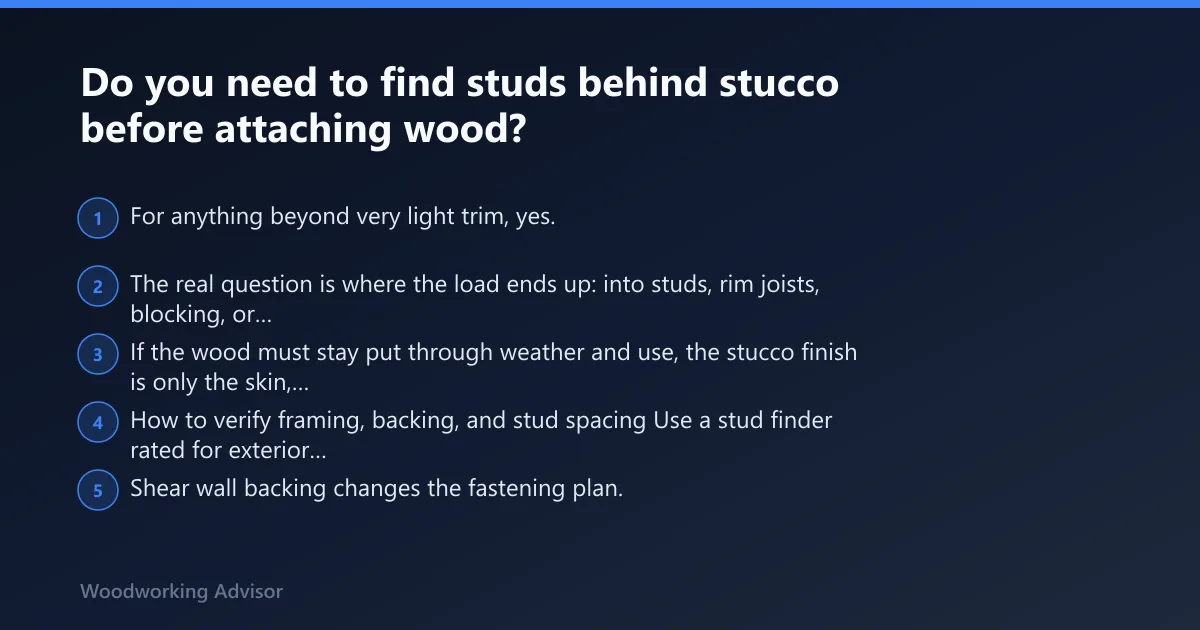
For anything beyond very light trim, yes. The real question is where the load ends up: into studs, rim joists, blocking, or approved backing. If the wood must stay put through weather and use, the stucco finish is only the skin, not the support.
How to verify framing, backing, and stud spacing
Use a stud finder rated for exterior walls, check interior layout if accessible, and confirm whether the wall has 16-inch spacing, a rim joist, or blocking behind the location. Shear wall backing changes the fastening plan. If the backing cannot be verified, choose the conservative route and reduce the load.
When anchors help and when they are the wrong answer
Anchors can help for light attachments into solid backing or masonry, but they are not a shortcut for missing framing. Direct-to-stucco fastening is not the same as fastening into structure. If the item matters, the fastener needs a real load path, not just grip in the finish coat.
Why load path matters more than the stucco finish
The fastening must send load through the stucco and into something that can hold it. That can be framing, blocking, a rim joist, or approved backing. A wood piece that feels tight on day one can still be a bad installation if the wall below it cannot take the load.
How to attach wood to stucco the right way
Start with prep, then fasteners, then water control. If the wall is dirty or damp, the bond and the seal both suffer. If the penetration is unsealed, the wall becomes a leak path. Good work here looks plain, but the hidden details decide whether it lasts.
Surface prep: clean, dry, and dust-free
- Brush off loose dust and chalk.
- Wipe the contact area so the surface is dry.
- Scrape away paint flakes, sealant residue, and friable material.
- Test the finish coat for soundness before drilling or bonding.
- Do not bond to a damp wall or one that sheds powder.
Pilot holes, corrosion-resistant fasteners, and screw length
Pre-drilling helps prevent spall and crack damage in stucco and in the wood. Use corrosion-resistant exterior fasteners and keep pressure controlled while driving them. For open stud walls, one example recommends fasteners at least 2 inches long; for shear walls, one example recommends at least 2 1/2 inches. Those are starting points, not a guess.
Sealant, flashing, and shingle-fashion water control
Seal penetrations, but avoid trapping water. Flashing should shed water in shingle-fashion, with upper layers lapped over lower layers so water moves back out. Avoid reverse-lap flashing. Keep a drainage path so the wall can dry. If wood hides the stucco face completely, make sure water can still escape.
Wood attachment to stucco: use this decision matrix
Use the matrix below as a field check. It maps load, stucco system, and exposure to the safest method. If the situation falls in the right-hand column more than once, adhesive is probably the wrong choice and the job should move to framing attachment or a pro-level detail.
| Attachment type | Stucco system | Exposure level | Safest method |
|---|---|---|---|
| Small decorative trim | Sound three-coat stucco | Sheltered | Exterior adhesive plus modest mechanical support and sealant |
| Small decorative trim | One-coat stucco | Exposed to rain and sun | Mechanical fastening into verified backing; adhesive only as secondary help |
| Medium bracket or trim assembly | Three-coat stucco | Moderate exposure | Fasten into studs or approved backing with sealed penetrations |
| Medium bracket or trim assembly | EIFS | Any exterior exposure | Manufacturer-specific detail; avoid glue-only attachment |
| Heavy attachment | Any stucco type | Any exposure | Fasten to framing, blocking, or engineered backing; do not rely on adhesive |
| Overhead or life-safety item | Any stucco type | Any exposure | Professional installation into structure with code-appropriate detailing |
When to stop and call a pro
If the piece hangs overhead, supports weight, protects a door or window, or could injure someone if it falls, pause and reassess. If the wall is EIFS, stop earlier. If you cannot verify framing, backing, or drainage details, the safest move is to step back and bring in a qualified installer.
Common mistakes that make stucco bonds fail
Most failed bonds are not mystery failures. They come from bad surface prep, wrong load assumptions, or water trapped behind the wood. The repair usually costs more than doing it right the first time, especially once the stucco has cracked or the WRB has been breached.
Bonding to dirty, chalky, painted, or damp surfaces
Adhesive needs a compatible, dry surface. Dust and chalk reduce contact. Paint and sealer can block bond to the mineral face. Damp stucco can stop cure or weaken the bond line. A glue-only repair on those surfaces is usually a short-term patch, not a durable fix.
Trapping water behind the wood
Wood fixed tight against stucco without a drainage path can hold moisture against the wall. That is where rot, staining, and concealed damage start. If the attachment has to sit on the wall, seal the penetrations and arrange the details so water can shed outward instead of pooling.
Cracking stucco with over-tightened fasteners or poor placement
Driving screws too hard can crack or crush the stucco. Pilot holes reduce that risk. So does placing fasteners with care around edges, joints, and weak patches. A fastener that tears the finish coat is not stronger; it is just more likely to fail later.
Frequently asked questions
Can you glue wood directly to stucco walls?
Yes, but only for light-duty, small pieces on sound, dry, unpainted stucco. Glue is a poor choice for anything load-bearing or anything that must survive repeated moisture and temperature cycling. If the surface is dusty, chalky, painted, or damp, the bond is much less reliable.
What kind of adhesive works on stucco outdoors?
Use an exterior-rated construction adhesive that lists masonry or mineral surfaces as compatible. Even then, the bond depends on clean, dry stucco and adequate cure time. Adhesive helps with small trim, but it is not a structural fastener and should not be the only support for important pieces.
Will construction adhesive hold wood on stucco long term?
It can hold light decorative wood for a while, but long-term performance is the weak point. Wood movement, stucco microcracking, sun, rain, and temperature swings all work against the bond. For medium or heavy pieces, use fasteners into framing or approved backing instead.
How do you keep water from getting behind wood attached to stucco?
Seal every penetration, flash in shingle-fashion, and avoid reverse-lap details that send water inward. Leave a drainage path so water can escape instead of sitting behind the wood. If the piece covers the wall face, the detailing must still let the assembly dry.
Can you attach wood to EIFS stucco with glue?
Usually not as a stand-alone method. EIFS is less forgiving when penetrations are made, and its layers are proprietary. Glue may seem to stick to the surface, but the system beneath it is not something to treat like standard cement stucco. Follow the manufacturer’s details or use a different attachment plan.
When should you use screws or anchors instead of adhesive?
Use screws or anchors whenever the piece is medium, heavy, overhead, exposed, or safety-related. Also use them when the stucco is painted, chalky, rough, damp, or part of EIFS. Adhesive can help with light trim, but mechanical fastening is the safer choice for real loads.
Sponsored / affiliate links. As an Amazon Associate I earn from qualifying purchases. I may earn additional commission from eligible campaigns.