Can You Glue Wood to Concrete Blocks? Fasteners vs Adhesive
You can bond wood to concrete block, but I treat adhesive as support rather than the main hold unless the job is light-duty, non-structural, and kept dry. A poor match can leave trim loose, shelves failing, block faces crushed, or water trapped behind the wood. This guide compares fasteners with adhesive options and shows how to attach wood to concrete block safely.
This guide is part of our Wood glue essentials: types, uses, and cure times series.
| Decision factor | Can You Glue Wood to Concrete Blocks? Fasteners | Adhesive Options | Winner |
|---|---|---|---|
| Load capacity | High load capacity with drilled pilot holes and the right anchor | Moderate load capacity; best as a supplemental bond | Fasteners |
| Code-sensitive work | Better fit for framing, ledgers, brackets, and other structural jobs | Usually too weak for structural approval on its own | Fasteners |
| Removability | Concrete screws are easier to remove and rework | Removal usually damages the wood or block face | Fasteners |
| Best performance in dry, light-duty work | Works, but often more hardware than needed | Useful for trim, light cleats, and non-structural pieces | Adhesive options |
| Outdoor and damp exposure | Anchors have excellent weather resistance | Outdoor-rated versions can work, but moisture control is harder | Fasteners |
| Rework and labor | More drilling, layout, and cleanup | Faster install when loads stay light | Adhesive options |
What you’ll need
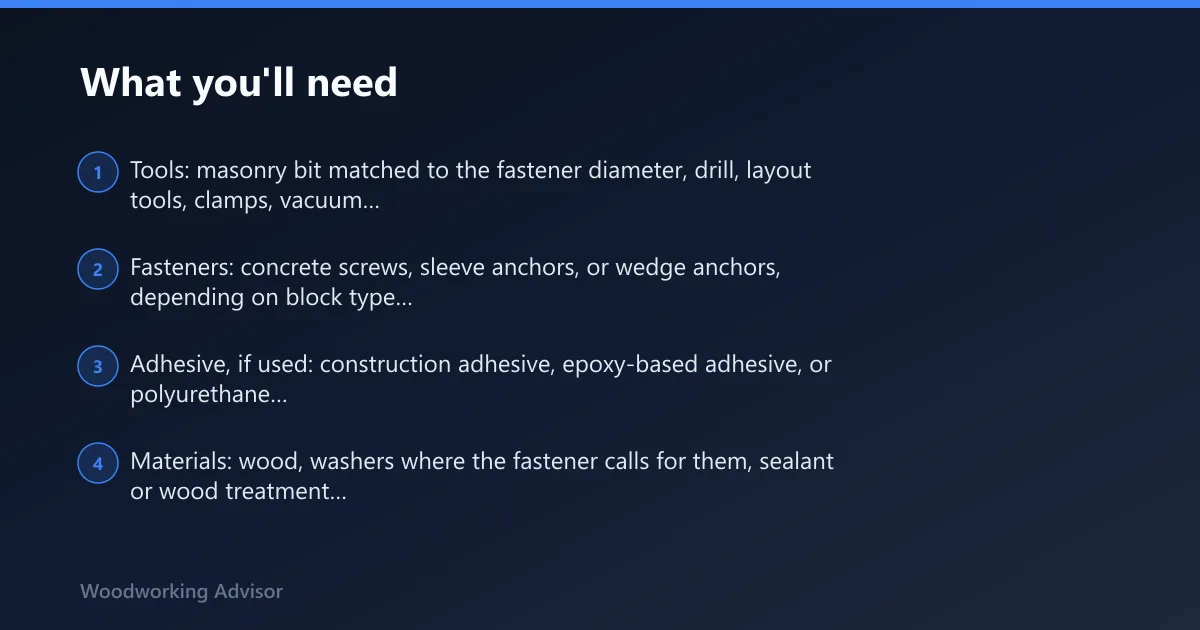


- Tools: masonry bit matched to the fastener diameter, drill, layout tools, clamps, vacuum or brush for dust cleanup
- Fasteners: concrete screws, sleeve anchors, or wedge anchors, depending on block type and load
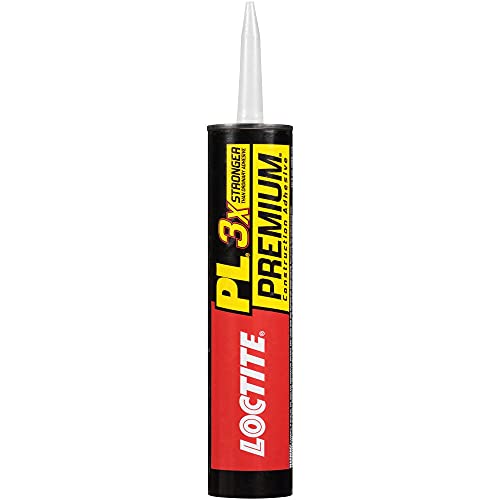
- Adhesive, if used: construction adhesive, epoxy-based adhesive, or polyurethane construction adhesive
- Materials: wood, washers where the fastener calls for them, sealant or wood treatment for damp-prone jobs
Can you glue wood to concrete block?
Yes, but only for light-duty, non-structural work where the block is dry and the wood stays stable. Adhesive alone is usually the wrong choice for shelves carrying substantial weight, framing, or anything tied to code requirements. Movement, moisture, and block porosity drive failure faster than brand names do.
When adhesive alone can work
Use adhesive only for trim, light cleats, or small interior pieces on sound, dry block. The joint should stay out of standing water and away from repeated vibration. Concrete block porosity still matters, because a dusty or friable face weakens the bond even if the adhesive itself is good.
When fasteners should lead the job
Fasteners should lead when the piece will carry load, may need removal, or sits in a location tied to building codes. Concrete screws are a secure option for attaching wood to concrete blocks and are a good choice when a removable joint matters. For fixed masonry attachment, sleeve anchors are often the better masonry fastener.
Why moisture and movement change the answer
Wood expands and concrete block can hold moisture. That combination breaks many adhesive-only joints, especially when both materials are not dry enough before assembly. Outdoor work magnifies the problem, so adhesive alone is rarely the safer path unless the duty is light and the exposure is controlled.
Choose the attachment method first
Choose the method by load, exposure, and whether the joint must be removable. Adhesive only fits dry, light-duty, non-structural work. Mixed loads or outdoor use often call for adhesive plus fasteners. Structural or code-sensitive work should generally rely on mechanical anchors rather than adhesive alone.
Decision table
| Scenario | Block type | Load level | Exposure | Removability | Best choice |
|---|---|---|---|---|---|
| Trim strip inside a basement | Solid block | Light | Dry indoor | Low need | Adhesive only |
| Small ledger for a utility shelf | Hollow block | Moderate | Dry indoor | Medium need | Adhesive plus fasteners |
| Framing for a partition or bracket support | Solid or sound-filled block | High | Indoor or outdoor | Low need | Mechanical anchors only |
| Outdoor cleat on damp masonry | Hollow block | Light to moderate | Outdoor, damp-prone | Medium need | Mechanical anchors only |
| Removable shop fixture | Solid block | Moderate | Dry indoor | High need | Concrete screws |
Fasteners win when the job can fail hard
Any attachment that supports body weight, stored materials, or fixed framing belongs in the fastener column. Adhesive can help fill slight gaps, but it should not carry the whole load. If the connection needs inspection, replacement, or code review, mechanical anchors are the safer default.
What are the best fasteners for wood on concrete block?
Concrete screws, sleeve anchors, and wedge anchors each suit different block conditions. Concrete screws work well for removable installs and strong holding power. Sleeve anchors suit fixed masonry attachment in concrete block. Wedge anchors grip very well in solid masonry, but they are not ideal for every hollow block condition.
Concrete screws
Concrete screws require drilled pilot holes and a masonry bit sized to the fastener. They are a practical choice when the wood may need to come off later, and they are listed as a secure option for attaching wood to concrete blocks. The tradeoff is careful hole sizing and clean dust removal.
Sleeve anchors
Sleeve anchors expand in the block and are another concrete-block fastening method. They are a solid pick for fixed attachments where the joint is not meant to move much. In hollow block, the holding behavior depends on the web thickness and the exact anchor location, so layout matters.
Wedge anchors
Wedge anchors are heavy-duty anchors with high holding power, and they are recommended for gripping concrete securely. They perform best in solid masonry, not in every hollow block condition. On weak or thin-walled block, the expansion force can do damage where a different anchor would be safer.
Which adhesive options are worth using?
Construction adhesive, epoxy-based adhesive, and polyurethane construction adhesive all have a place, but none should be treated as a universal fix. Construction adhesive works best with fasteners and has moderate load capacity. Epoxy and polyurethane can be better choices for specific conditions, especially when the surface is prepared well.
Construction adhesive
Construction adhesive is a supplemental bonding method. It works best with fasteners, and outdoor-rated versions are preferred if the joint sees weather. It helps stabilize the joint and reduce squeaks or small gaps, but it should not be asked to carry the whole load on block.
Epoxy-based adhesive
Epoxy-based adhesive is often the strongest adhesive option when the surfaces are clean, dry, and fairly rigid. It fills small gaps better than many standard adhesives. It can bond wood to concrete block, but only when moisture content is controlled and the block surface is free of dust and loose grit.
Polyurethane construction adhesive
Polyurethane construction adhesive is a flexible adhesive and is recommended for concrete-to-wood projects. That flexibility helps when the wood and block move a little differently. It is suitable for outdoor use, but it still works best when paired with fasteners rather than used as the only hold.
How do you prepare concrete block before gluing wood?
Clean, dry, and sound surfaces matter more than a product label. Concrete block porosity affects adhesion, and moisture content can ruin the bond even when the adhesive is strong. Roughen the contact area lightly, remove dust, and treat the wood if the piece will live against masonry or in damp conditions.
Prep that changes bond quality
Start by clearing loose grit from the block face and brushing out the pores as much as possible. Then check both materials for moisture before applying adhesive. If the wood will sit against masonry, treat it or seal it first so trapped moisture does not weaken the joint from the back side.
Why porosity and dampness matter
A porous block can drink adhesive into the face instead of letting it build a bond line. Damp masonry does the same job in a different way: it blocks reliable cure and weakens the hold. That is why a dry, clean, slightly rough surface beats a raw, dusty one every time.
Step-by-step installation
Choose the fastening method before you drill. The sequence changes depending on whether you are using adhesive only, adhesive plus fasteners, or anchors only. Drilling precise holes with the right masonry bit is part of the prep for the fastening methods, and it matters as much as the anchor itself.
- Mark the layout and confirm the fastening plan.
- Inspect the block type and choose the anchor or adhesive system that matches it.
- Drill pilot holes with the correct masonry bit for concrete screws, sleeve anchors, or wedge anchors.
- Clear dust from the holes and the block face.
- Dry-fit the wood and check alignment before applying adhesive or setting anchors.
- Apply adhesive only where it supports the plan, then install the fasteners in the correct order.
- Tighten the fasteners without crushing the block face.
- Allow the adhesive or anchor system to cure before loading the joint.
If that didn’t work, try this next
If the joint still feels weak, check the hole size, dust removal, and moisture content first. Then move from adhesive-only to adhesive plus fasteners, or from light-duty hardware to anchors sized for the block type. If the job is structural, stop and switch to a code-appropriate mechanical anchor plan.
Common mistakes
Most failures come from load, moisture, or the wrong fastener for the block. Adhesive alone on a loaded joint is the biggest one. Wet lumber, dusty block, and a hollow block that gets treated like solid masonry are close behind. Code-sensitive work also gets people into trouble when it is treated like trim.
- Relying on adhesive for a loaded joint
- Ignoring damp block or wet lumber
- Using the wrong anchor for hollow block
- Skipping building code checks on structural work
Prevention: Match the method to the block type before buying hardware, and use a masonry bit sized for the exact fastener you plan to install.
Choose fasteners if the joint carries weight; choose adhesive options if the job is light
Choose concrete screws, sleeve anchors, or wedge anchors when the wood must hold weight, stay put outdoors, or satisfy code. Choose adhesive only for small, dry, non-structural work. For mixed loads, use adhesive plus fasteners so the bond helps while the anchor carries the real load.
Fasteners win on durability, weather resistance, and rework. Adhesive wins on speed and simpler cleanup. For framing, brackets, shelves, or ledgers, mechanical anchors should lead. For trim or light cleats in a dry room, a well-prepared adhesive joint can be enough.
Frequently asked questions
What is the best adhesive for wood to concrete block?
Polyurethane construction adhesive is a strong general pick for concrete-to-wood work, and epoxy-based adhesive is better when the surfaces are clean, dry, and rigid. Construction adhesive is useful too, but it works best as a helper with fasteners, not as the only hold.
Do I need fasteners instead of adhesive for wood to cinder block?
For shelving, framing, ledgers, and other loaded work, yes. Concrete screws are a strong choice when you want removal later, while sleeve anchors fit fixed attachment. If the joint is purely decorative and dry, adhesive can be acceptable, but it should not carry a real load.
Will construction adhesive hold wood to concrete block outdoors?
Only for light-duty use, and only if the product is outdoor-rated and the surfaces are dry and clean. Outdoor exposure, temperature swings, and moisture weaken bond reliability. For anything more than trim or a small cleat, add mechanical fasteners so the adhesive is not doing all the work.
What anchors work best with wood on concrete block?
Concrete screws are the first choice for removable installs and strong hold. Sleeve anchors are a good fixed masonry option for concrete block. Wedge anchors fit solid masonry best and are less suited to many hollow block conditions, where expansion can damage the block face.
Can epoxy bond wood to concrete block?
Yes, epoxy can bond wood to concrete block when the surfaces are clean, dry, and fairly rigid. It also fills small gaps well. The catch is surface prep: dust, dampness, and porous block faces cut performance fast, so epoxy works best in controlled indoor conditions or paired with fasteners.
Is pressure-treated wood required against concrete block?
It is a smart choice whenever the wood will sit against masonry or see damp conditions. Treating wood to resist moisture is part of the prep advice because trapped moisture shortens bond life and can damage the wood. Sealing the cut ends helps too, especially on outdoor or basement jobs.
Sponsored / affiliate links. As an Amazon Associate I earn from qualifying purchases. I may earn additional commission from eligible campaigns.