Is OdoBan Safe for Hardwood Floors? Only One Product Is
OdoBan’s No Rinse Neutral pH Floor Cleaner is the only OdoBan product safe for sealed hardwood floors — the original purple OdoBan Disinfectant and Odor Eliminator concentrate explicitly excludes finished hardwood and laminate from its own label instructions. Using the wrong OdoBan product, or oversaturating either one, risks discoloration, dulled finish, or warping. This guide covers which product to reach for, how to dilute and apply it, and what to avoid on wood floors.
Which OdoBan Product Is Actually Safe for Hardwood?
Best Hardwood-Safe OdoBan Pick
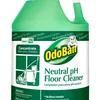
OdoBan Neutral pH No Rinse Floor Cleaner, 1 Gal – $13.99
This is the specific OdoBan formula whose own label covers sealed hardwood — not the general disinfectant spray — and one gallon of concentrate makes up to 128 gallons of cleaning solution.
- Best for: Routine mopping of sealed hardwood, laminate, and vinyl floors
- Why we picked it: The only OdoBan formula whose label explicitly includes hardwood, not just “hard surfaces” in general
- Main drawback: Not labeled for unfinished, oiled, or wax-finished wood — confirm your floor’s finish first
As an Amazon Associate we earn from qualifying purchases.
OdoBan sells more than one formula, and they are not interchangeable on wood. No Rinse Neutral pH Floor Cleaner is formulated for sealed hardwood, laminate, vinyl, sealed concrete, and glazed tile (not for unfinished or oiled wood). The original OdoBan Disinfectant and Odor Eliminator concentrate — the classic multi-purpose spray — is labeled for sealed flooring like vinyl, stone, tile, and ceramic, but its own instructions exclude laminate and finished hardwood floors.
If the bottle in your cabinet is the general-purpose disinfectant/odor eliminator rather than the neutral pH floor cleaner, don’t use it on hardwood — switch products instead of assuming “OdoBan” is one interchangeable thing.
How to Apply OdoBan on Hardwood Floors
A neutral pH cleaner still needs the right dilution and a light touch on wood — too much water is the actual risk, not the cleaner’s chemistry.
- Sweep or vacuum first: Remove loose dirt and grit so it doesn’t scratch the finish while mopping.
- Dilute the concentrate: A common ratio is about 5 oz of concentrate per gallon of water for routine cleaning — check the label for your specific bottle’s ratio.
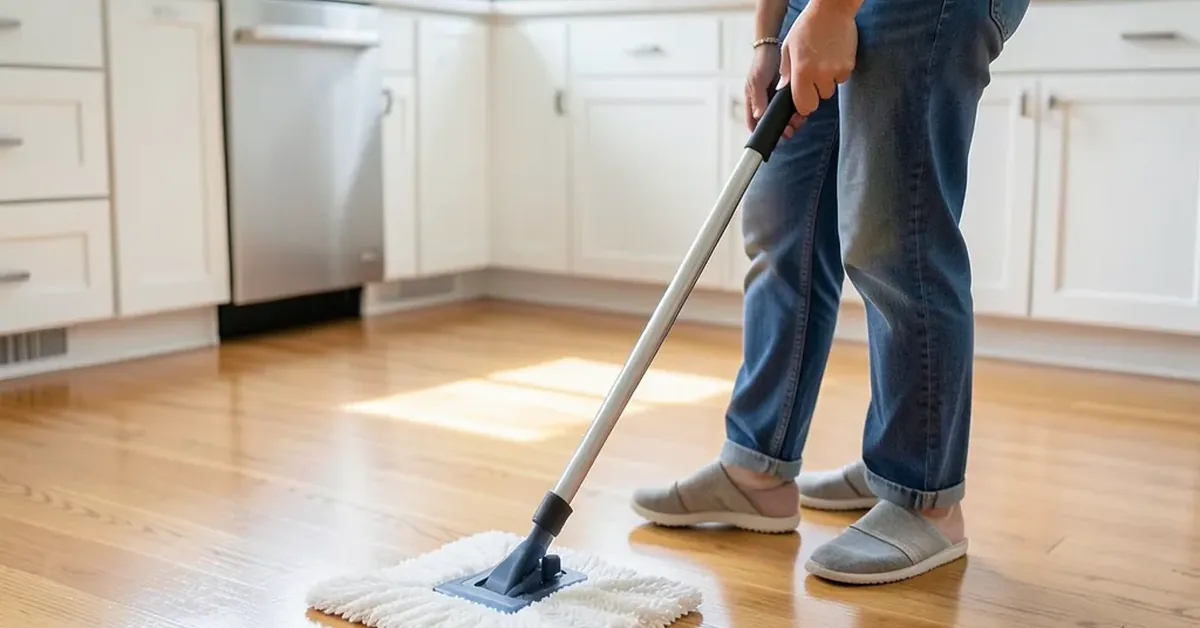
- Damp-mop, don’t soak: Wring the mop until it’s damp, not dripping, before it touches the floor.
- Work in small sections: Mop a small area, then move on rather than leaving standing solution on the wood.
- Let it air dry: The formula is no-rinse, so there’s no need to go over it again with plain water.
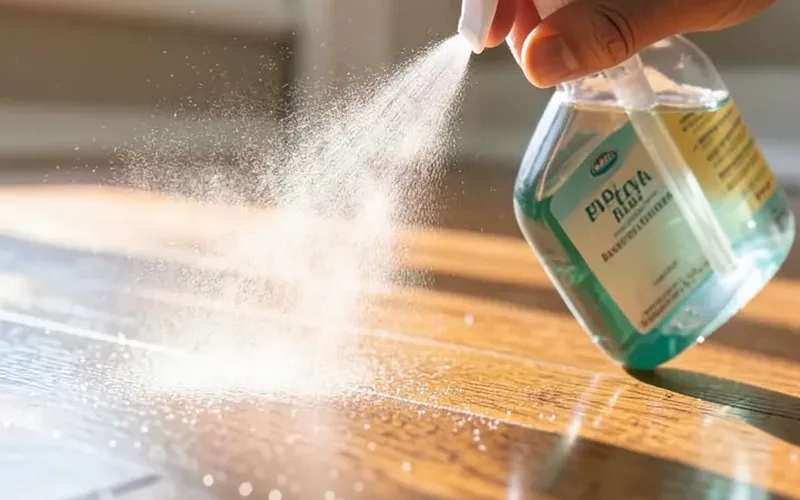
Avoiding Overwetting and Finish Damage
Standing water is what actually damages hardwood, not a neutral pH cleaner used correctly. Excess moisture can seep between boards and cause swelling, cupping, or a cloudy finish over time.
- Wring the mop thoroughly — it should feel damp, not wet, when you press it against your palm.
- Never let cleaning solution pool in one spot; wipe it up immediately if it does.
- Spot-test in an inconspicuous corner first if you have an unfamiliar or older finish.
- Skip it entirely on unfinished, oiled, or wax-finished wood — the neutral pH formula’s own label excludes those.
OdoBan Alternatives for Hardwood Floors
If you don’t have OdoBan’s neutral pH formula on hand, a few common household options exist — with real caveats worth knowing before you reach for them.
- Vinegar and water: A popular DIY choice, but several flooring manufacturers actually warn against regular vinegar use — its acidity can dull a polyurethane finish over repeated use. Fine occasionally and heavily diluted, not as a daily routine.
- A dedicated hardwood floor cleaner: Purpose-built neutral pH cleaners avoid the vinegar debate entirely and are the safer default.
- Plain water, well-wrung: For a quick daily pass, a barely-damp microfiber mop with just water is close to zero-risk.
A Simple Maintenance Schedule
- Daily/as needed: Sweep or dry-mop to remove grit before it scratches the finish.
- Weekly: Damp-mop with a properly diluted neutral pH cleaner, wrung well.
- As spills happen: Wipe up immediately — standing liquid is the real enemy of any hardwood finish, regardless of which cleaner caused it.
Frequently Asked Questions About OdoBan on Hardwood
Can you use OdoBan on hardwood floors?
Yes, but only OdoBan’s No Rinse Neutral pH Floor Cleaner — its label specifically covers sealed hardwood. The original OdoBan Disinfectant and Odor Eliminator concentrate excludes finished hardwood and laminate from its own instructions.
Is OdoBan safe for all hard surfaces?
No single OdoBan product is labeled for every hard surface. The neutral pH floor cleaner covers sealed hardwood, laminate, vinyl, and sealed concrete, but is not recommended for unfinished or oiled wood or for marble.
How do you use OdoBan for mopping hardwood floors?
Dilute the neutral pH concentrate per the label (commonly around 5 oz per gallon of water), damp-mop in small sections without oversaturating, and let the no-rinse formula air dry.
Can overwetting hardwood floors with any cleaner cause damage?
Yes. Standing moisture — from any cleaner, including water alone — can seep between boards and cause swelling, cupping, or a cloudy finish. Wring the mop well and avoid letting solution pool.
Is vinegar a safe alternative for cleaning hardwood floors?
Only in moderation. Vinegar’s acidity can dull a polyurethane finish with repeated use, according to several flooring manufacturers. A dedicated neutral pH cleaner avoids that risk entirely.
Conclusion
OdoBan is safe for hardwood floors when you use the right formula — the No Rinse Neutral pH Floor Cleaner, not the general disinfectant spray — diluted correctly and applied without oversoaking the wood. Check which bottle you actually have before you mop, and standing moisture, not the cleaner itself, is what causes real damage.
Sponsored / affiliate links. As an Amazon Associate I earn from qualifying purchases. I may earn additional commission from eligible campaigns.