Can You Use Pressure-Treated Wood for a Vegetable Garden? ACQ vs. CCA Explained
Short answer: it depends on which pressure-treated wood you mean. Old CCA-treated lumber (the kind with arsenic in it) has no business in a vegetable garden. Modern ACQ or copper-azole-treated lumber, the kind sold at every home center since 2004, is a different chemical product entirely, and most university extension research says it’s a reasonably low-risk choice for a raised bed. The two get lumped together constantly online, and that mix-up is where most of the fear comes from.
The Real Answer: It’s Not One Chemical, It’s Two Different Eras
Almost every warning you’ll read about “pressure-treated wood in the garden” traces back to chromated copper arsenate, or CCA. That’s the greenish-tinted preservative that dominated residential lumber for decades. It works by driving copper, chromium, and arsenic deep into the wood fibers under pressure. Arsenic is the part that matters here: it’s a known carcinogen, and the EPA and the treated-wood industry voluntarily agreed to phase CCA out of residential lumber by December 31, 2003. Since 2004, virtually all pressure-treated lumber sold for decks, fences, and garden beds at U.S. retailers has used a different preservative system: alkaline copper quaternary (ACQ) or copper azole (sometimes labeled CA-B or CA-C on the end tag). Both rely on copper as the main fungicide/insecticide, with no arsenic at all.
This is the detail most articles on this topic skip entirely, and it’s the whole ballgame: “pressure-treated wood is dangerous near food” is largely leftover folklore from the CCA era. If you’re buying new lumber today, you’re almost certainly looking at ACQ or copper azole, not CCA, unless you’re reusing old boards salvaged from a pre-2004 deck or fence.
Best Liner for Treated-Wood Raised Beds
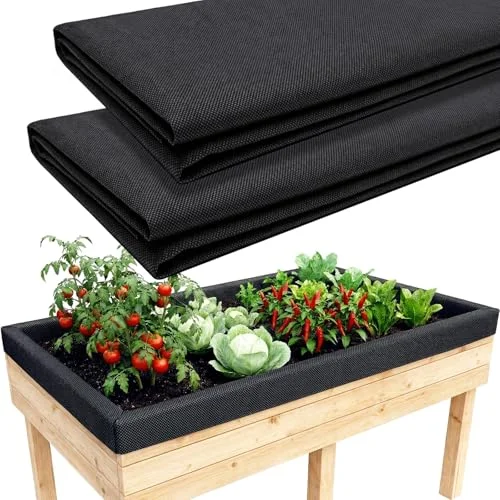 |
EcoBrisa Raised Garden Bed Liner – $24.39 If you’d rather not worry about which treatment chemical your lumber uses, a liner between the wood and the soil removes the question entirely.
|
What the Research Actually Shows About Copper Leaching
Copper does leach out of ACQ and copper-azole lumber, mostly right at the point where the wood touches wet soil. That’s not in dispute. What matters is how much, and whether it ends up in anything you eat. Oregon State University Extension has run multi-season trials growing vegetables and herbs directly against copper-azole “ground contact” rated lumber, and the researchers found the crops came out chemically indistinguishable from produce grown in beds with no treated wood at all. Any copper increase in the soil stayed localized to a narrow band right against the board and didn’t show up in measurable amounts in the plant tissue.
That’s a meaningfully different picture than the CCA-era concern, where arsenic uptake by root vegetables grown close to the wood was the worry. With copper-based preservatives, the mainstream extension-service position is that the risk is low enough that most home gardeners don’t need to take special precautions, though it isn’t literally zero. Copper is still a metal you’d rather not concentrate in soil indefinitely, and a small number of studies note trace uptake at the wood/soil interface, so “low-risk” is the honest phrase here, not “risk-free.”
Why Organic Growers Still Can’t Use It, Even the Modern Kind
Here’s the part that confuses a lot of gardeners: the USDA National Organic Program’s rules aren’t actually written around arsenic risk. They prohibit any synthetically treated lumber, arsenical or not, from contacting soil, crops, or growing media on certified-organic ground. That means ACQ and copper-azole wood are both off-limits for a certified-organic bed, right alongside old CCA lumber, even though the safety research on the two treatments is completely different. If you’re growing for home use and don’t care about organic certification, that rule doesn’t apply to you directly, but it’s worth knowing why some gardening guides say “never” while extension researchers say “generally fine.” They’re often answering two different questions: is it certifiable as organic, versus is it a health risk.
How to Tell What Kind of Treated Wood You’re Actually Looking At
Color alone isn’t a reliable way to tell CCA from ACQ. Old CCA lumber is often remembered as having a green cast, but ACQ can also look greenish when it’s fresh, and both fade to gray with age. Two things work better:
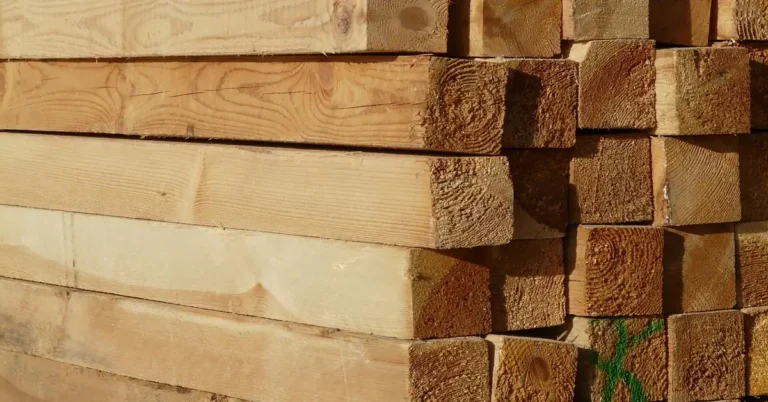
- Read the end tag. New lumber from a retailer carries a stamped or printed tag near the end of the board listing the treatment chemical (look for “ACQ,” “CA-B,” “CA-C,” or “MCA”) and a use category such as UC4A (ground contact) or UC3B (above ground). If you don’t see a tag and can’t confirm the chemical, don’t use that board for a garden bed.
- Know the age. If a board came from a structure built or lumber purchased before 2004, in particular reclaimed deck boards, fence posts, or landscape timbers pulled from an older yard, treat it as likely CCA and keep it out of food-growing soil. The safer move with wood of unknown origin is to assume the worst and not use it, rather than guess from appearance.
It’s Not Just Raised Beds: Stakes, Trellises, and Nearby Fence Posts
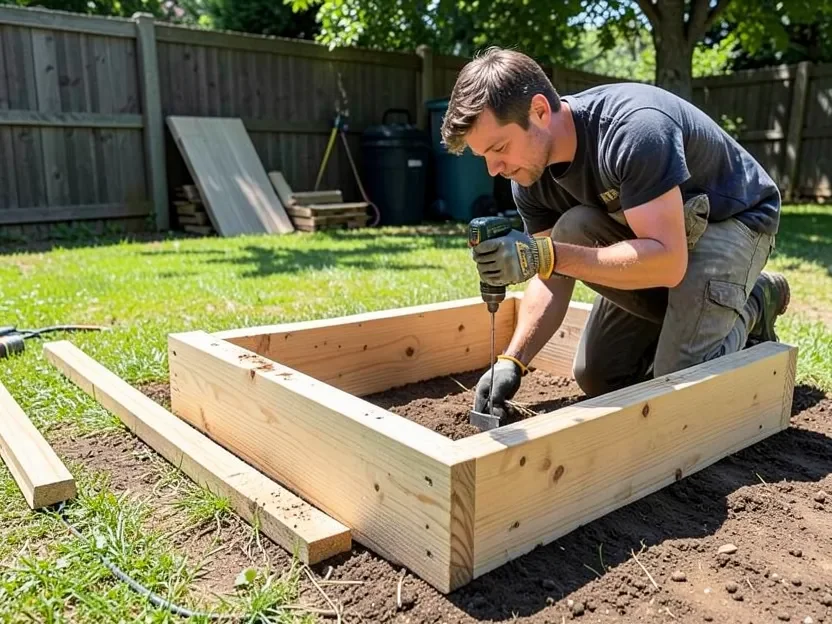
Most articles on this topic only talk about raised bed frames, but a vegetable garden touches treated wood in more places than that. Tomato stakes, trellis posts, arbor legs, and the fence posts running along the edge of the plot are all common spots where pressure-treated lumber ends up planted directly in garden soil, sometimes closer to root vegetables than the bed frame itself.
The same CCA-versus-ACQ distinction applies to all of it. A treated 4×4 fence post set a few feet from your carrots carries the same modern, low-arsenic chemistry as a treated 2×6 used for a bed frame, so there’s no reason to treat one as riskier than the other based on shape or use. Where it matters more is depth and duration of soil contact: a post buried in ground contact for years has more cumulative exposure at that narrow interface than a stake that gets pulled and stored over winter. If you want to be extra cautious, reserve treated lumber for perimeter posts and fencing set back from the actual planting rows, and use untreated stakes, bamboo, or metal for anything going directly into the bed among the vegetables.
If You’d Rather Not Take the Chance: Practical Alternatives
You don’t have to resolve the ACQ debate to build a garden bed today. A few practical options:
- Add a liner. A heavy-duty poly or fabric liner stapled inside the frame keeps soil from directly touching the treated boards, which is the same barrier approach extension services recommend for anyone who wants extra peace of mind regardless of which preservative the wood uses.
- Build with naturally rot-resistant wood. Untreated cedar or redwood resists decay on its own thanks to natural oils in the heartwood, with no added chemicals at all. It costs more up front and won’t last quite as long as ACQ lumber in ground contact, but it sidesteps the whole question.
- Go with an inert material. Concrete block, natural stone, or food-grade composite lumber won’t leach anything chemically related to wood preservatives.
If you’re weighing lumber types more broadly, our guide to wood treatment chemicals and AWPA use-category codes breaks down how to read those end-tag stamps in more detail. And if you’re specifically framing out a dedicated raised bed rather than just deciding on wood near an in-ground plot, our full raised garden bed construction guide covers board selection, bed height, and assembly.
Frequently Asked Questions
Is pressure-treated wood safe for a vegetable garden?
Modern ACQ or copper-azole treated wood, the kind sold since 2004, is considered low-risk by most extension-service research for general home vegetable gardening. Older CCA-treated wood, identifiable mainly by its age rather than its color, contains arsenic and should not be used near food crops.
What’s the difference between CCA and ACQ treated wood?
CCA (chromated copper arsenate) contains arsenic and was phased out of residential lumber by the end of 2003. ACQ (alkaline copper quaternary) and copper azole are the preservatives used in its place today, and neither contains arsenic; both rely on copper as the primary active ingredient.
Does copper from ACQ-treated wood get into vegetables?
Research from Oregon State University Extension found copper leaching stays concentrated in soil immediately next to the board and did not produce a measurable difference in vegetables and herbs grown in the bed compared to those grown without treated wood present.
Can I use treated wood if my garden is certified organic?
No. USDA National Organic Program rules prohibit any synthetically treated lumber, including modern ACQ and copper-azole wood, from contacting soil or crops on certified-organic ground, regardless of whether the preservative contains arsenic.
What’s a good alternative to treated wood for raised beds?
Untreated cedar or redwood, a plastic or fabric liner installed inside a treated-wood frame, or inert materials like concrete block and stone are the most common alternatives for gardeners who’d rather avoid the question entirely.
Bottom Line
Don’t treat “pressure-treated wood” as one single material. New lumber from a home center today is almost certainly ACQ or copper-azole treated, and the research on that specific chemistry points to low risk for home vegetable gardening, not the arsenic-era danger that most of the internet is still repeating. If you’re reusing old boards of unknown age, or you want zero uncertainty either way, a liner between the wood and your soil, or a switch to untreated cedar or redwood, settles the question without needing to identify the chemical at all.
Sponsored / affiliate links. As an Amazon Associate I earn from qualifying purchases. I may earn additional commission from eligible campaigns.