Can You Wash a Wood Cutting Board in the Dishwasher?
No — a wood cutting board should never go in the dishwasher. The combination of sustained high heat, prolonged water exposure, and detergent strips the board’s natural oils and swells the wood fibers, which warps the board, opens seams in glued-together boards, and cracks the surface. A single accidental cycle probably won’t ruin it, but repeated runs will.
What makes a dishwasher especially bad for wood, compared to just washing it in a hot sink, is the combination of factors happening at once for an extended cycle: sustained heat well above hand-washing temperature, a long soak time, and forced water spray hitting the same spots repeatedly. Each one alone is manageable for wood; together, for 60-90 minutes, they’re a near-guaranteed way to warp or crack a board that would otherwise last for years.
Why The Dishwasher Actually Damages Wood
KEEP YOUR BOARD OUT OF THE DISHWASHER FOR GOOD
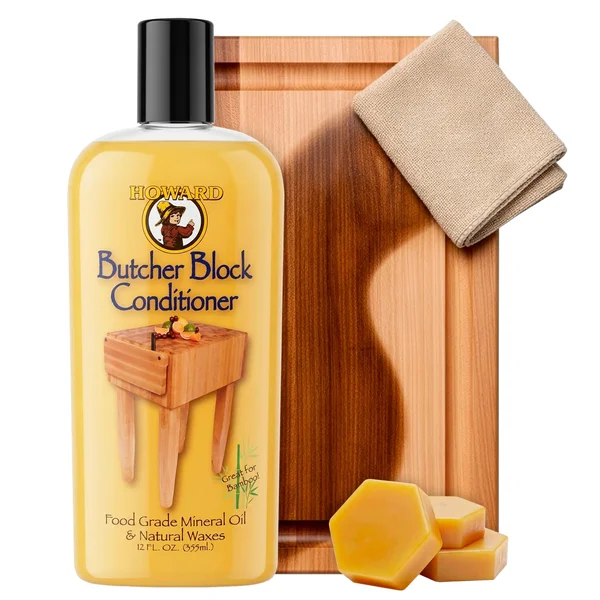 |
Howard Butcher Block Conditioner – $9 Hand washing keeps a board out of the dishwasher’s heat, but it still dries the wood out over time — regular oiling is the other half of keeping it crack-free.
|
Wood is hygroscopic — it absorbs and releases moisture based on the surrounding humidity, expanding as it takes on water and shrinking as it dries. A dishwasher cycle forces a huge amount of moisture into the wood very quickly, and the heated dry cycle then pulls it back out just as fast. That rapid swell-and-shrink cycle is what causes warping, cupping, and surface cracks — it’s the same physics as leaving a board to air-dry too fast in direct sun, just far more intense and repeated with every wash.
If your board is made of multiple pieces glued together (which describes the vast majority of cutting boards, including most bamboo ones), the risk compounds. Wood glue is somewhat water-resistant but not designed for sustained submersion at dishwasher temperatures — repeated cycles can soften the glue lines enough that seams separate, sometimes visibly, sometimes as a slow failure you only notice once the board has split. Bamboo boards are actually more vulnerable here than solid hardwood, despite being marketed as more water-resistant: bamboo cutting boards are always laminated from thin strips, so there’s simply more glue surface area exposed to that heat and moisture cycle.
The Bacteria Myth, Corrected
A common reason people reach for the dishwasher is the assumption that wood is less sanitary than plastic and needs a hotter, more thorough clean. Food-safety research actually points the other way on this: wood’s natural capillary action tends to draw bacteria down below the surface, where it dies off rather than sitting on top where it can transfer back to food, while plastic boards develop knife grooves where bacteria can survive and multiply on the surface. That doesn’t mean a wood board is self-cleaning — you still need to wash it properly after every use — but it does mean the dishwasher isn’t solving a real hygiene gap that hand-washing leaves open.
The Right Way To Wash A Wood Board
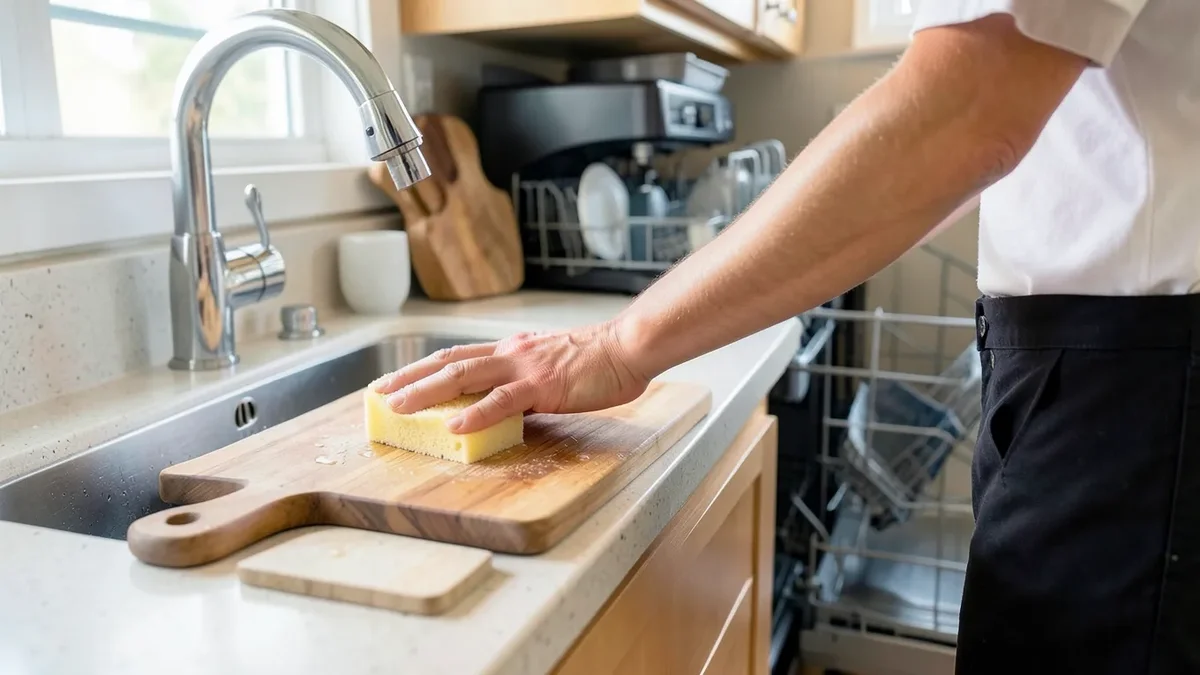
Wash it by hand immediately after use with warm (not scalding) water and a few drops of dish soap, scrubbing with a sponge or brush rather than letting it soak. Rinse thoroughly and dry it right away with a towel, then stand it on edge so air reaches both faces — laying it flat to dry traps moisture against the counter on one side, which is exactly the uneven-drying scenario that causes warping over time.
For deeper cleaning or odor removal, a mix of equal parts white vinegar and water disinfects without the harshness of bleach, and a coarse salt scrub with half a lemon works well on stains and stubborn smells — the acid and abrasion lift residue without soaking the board the way a long vinegar bath would. Skip bleach and other harsh chemicals entirely; they can degrade the finish and, on some boards, leave a taste behind.
Keeping It Conditioned
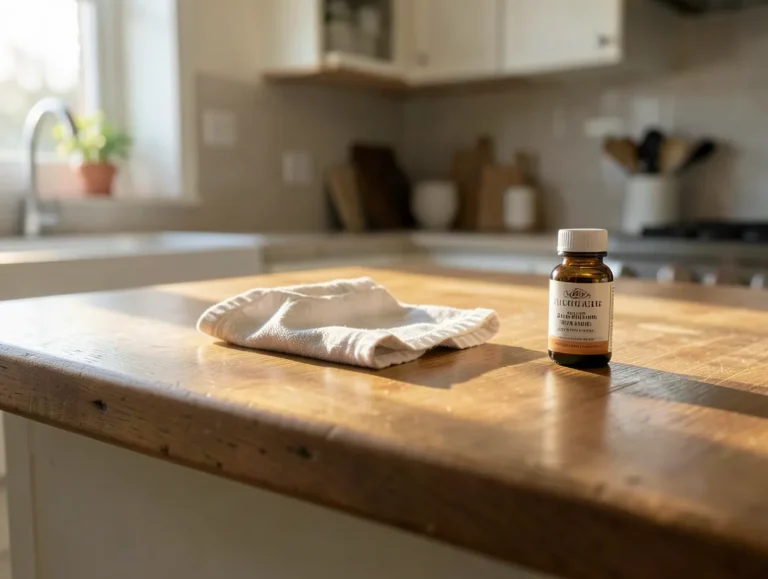
Oil the board every few weeks with a food-grade mineral oil, more often if you’re washing it daily or it sees a lot of use. Apply a generous coat with a clean cloth, let it soak in for a few hours or overnight, then wipe off any excess before use. This is what actually keeps the wood from drying out and cracking under normal hand-washing — the oiling schedule matters more to a board’s lifespan than the wood species it’s made from.
Store it standing up in a dry cabinet away from heat sources like a stove or a sunny window, both of which pull moisture out unevenly. Avoid stacking heavy items directly on top of it, which can press warping into a board that’s already slightly uneven from normal use.
Frequently Asked Questions
Are Wooden Cutting Boards Dishwasher Safe?
No. The sustained heat and water exposure warps and cracks wood, and can soften the glue joints on boards made from multiple pieces. Hand wash with warm water and mild soap instead.
What Is The Best Way To Clean My Wooden Cutting Board?
Hand wash with warm water and mild soap right after use, rinse, and dry immediately. For deeper cleaning, use a vinegar-and-water mix or a coarse salt and lemon scrub, then oil the board every few weeks with food-grade mineral oil.
Can You Put A Wooden Board In A Dishwasher?
You can, but it’s not recommended even once in a while as a habit — the heat and prolonged moisture warp the wood and can separate glued seams. One accidental cycle usually won’t ruin a board; repeated cycles will.
Can Bamboo Cutting Boards Go In The Dishwasher?
No — bamboo boards are actually more vulnerable than solid hardwood, since they’re laminated from thin strips with more glue surface exposed to the dishwasher’s heat and moisture cycle, despite bamboo often being marketed as the more water-resistant option.
Conclusion
Skip the dishwasher for any wood cutting board, bamboo included — the heat and moisture cycle is exactly the combination that warps wood and breaks down glue joints. Hand washing takes an extra minute and, paired with regular oiling, is what actually makes a wood board last for years instead of one season.
Sponsored / affiliate links. As an Amazon Associate I earn from qualifying purchases. I may earn additional commission from eligible campaigns.