Is Your Deck Slippery in Winter? How to Treat It
If a wood deck is slippery in winter, fix the source first: remove ice, clean mildew, algae, or leaf stains, and check finish failure if water no longer beads. If the deck feels slick after a thaw, the problem is usually moisture, surface growth, or worn protection rather than one single cause.
Why your deck gets slippery in winter
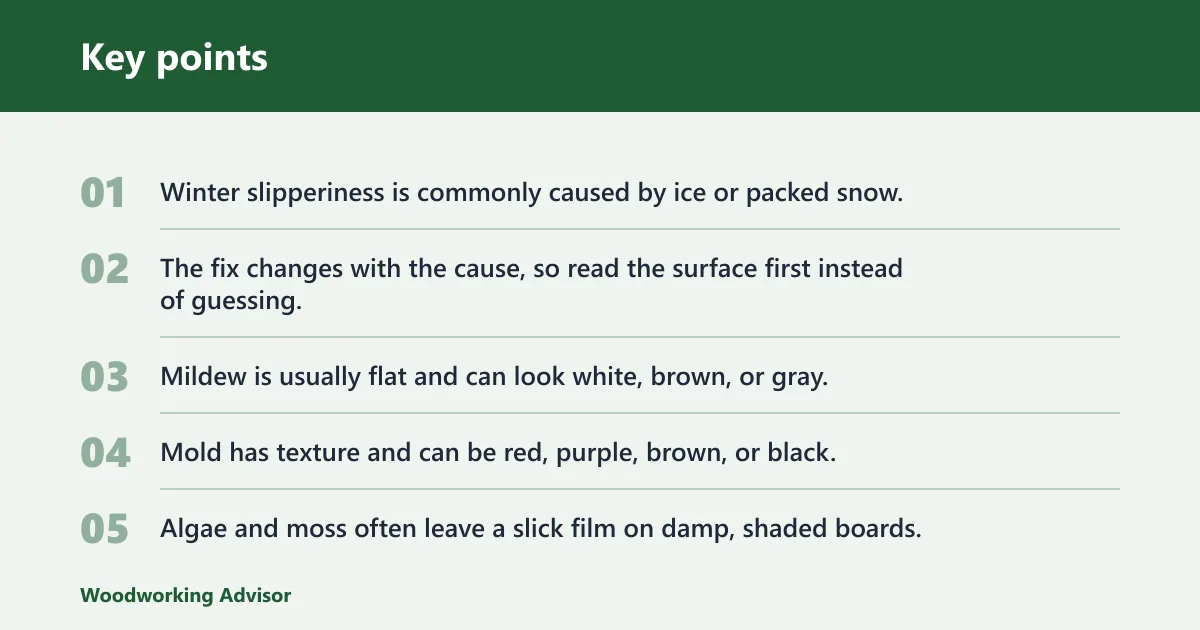

Winter slipperiness is commonly caused by ice or packed snow, biological growth on damp shaded boards, a worn finish that holds moisture, or drainage problems that keep the surface wet. The fix changes with the cause, so read the surface first instead of guessing.
How to tell the cause
Mildew is usually flat and can look white, brown, or gray. Mold has texture and can be red, purple, brown, or black. Algae and moss often leave a slick film on damp, shaded boards. If water beads poorly and the deck darkens fast after rain, finish failure or wood damage may be part of the problem.
When it is a repair issue
Loose boards, soft spots, cupping, cracks, splintering, or pooling water suggest the issue goes beyond cleaning. If the surface flexes underfoot or stays damp long after weather clears, repair the deck first. Cleaning alone will not fix a board that has started to fail.
📊 This Old House recommends holding the nozzle about 18 inches from the wood. Source: Thisoldhouse.
What you’ll need
- Broom or leaf blower for dry debris
- Plastic shovel and a stiff nylon brush
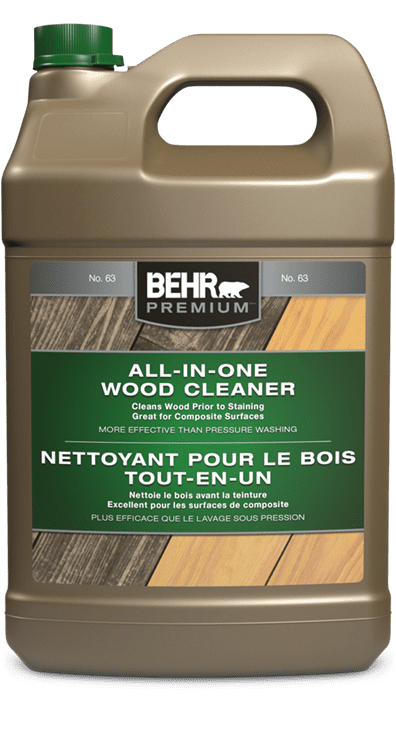
- Oxygenated bleach deck cleaner, bucket, and garden hose
- Fan-tip pressure washer, only if the deck is sound enough for it
- Wood deck brightener
- Water-repellent sealer or penetrating sealant
- Work gloves, slip-resistant footwear, and good lighting
Slippery deck treatment matrix
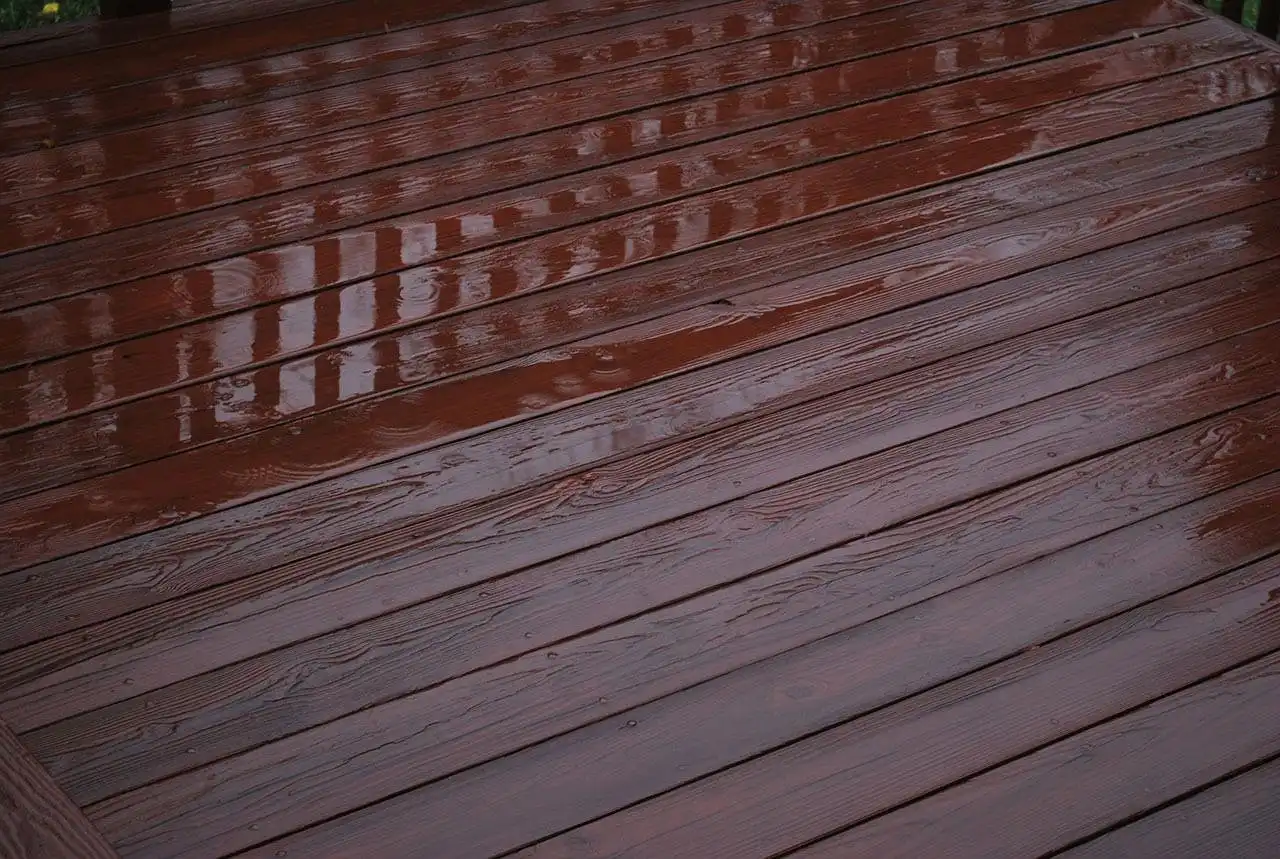
| Hazard type | Common symptoms | Safest immediate action | What not to use | When to call a pro or repair first |
|---|---|---|---|---|
| Algae or mildew | Slick film, green or dark staining, flat growth on damp shaded boards | Sweep, then clean with oxygenated bleach and rinse well | Chlorine bleach, wire brushes, harsh scrubbing pads | If boards are soft, splintered, or the stain keeps returning after cleaning |
| Snow or ice buildup | Crunchy layer, glazed patches, packed corners, thaw-refreeze sheen | Clear snow first with a plastic shovel or broom; use traction, not heavy scraping | Metal shovels, chisels, sharp tools, rock salt | If ice forms because water pools in one area every thaw cycle |
| Surface finish failure | Dull gray boards, water soaking in fast, rough feel, patchy wear | Clean gently, let dry, then sand or reseal as needed | Applying new sealer over dirty or damp wood | If the finish failure is paired with cracking, checking, or exposed soft wood |
| Drainage or rot | Standing water, soft spots, cupping, decay, fast repeat slipperiness | Keep traffic light, mark hazards, and stop using that section | Sealer, de-icer, or more cleaner as a first fix | Immediately; structural repair comes before any anti-slip treatment |
How do you treat a slippery wood deck?
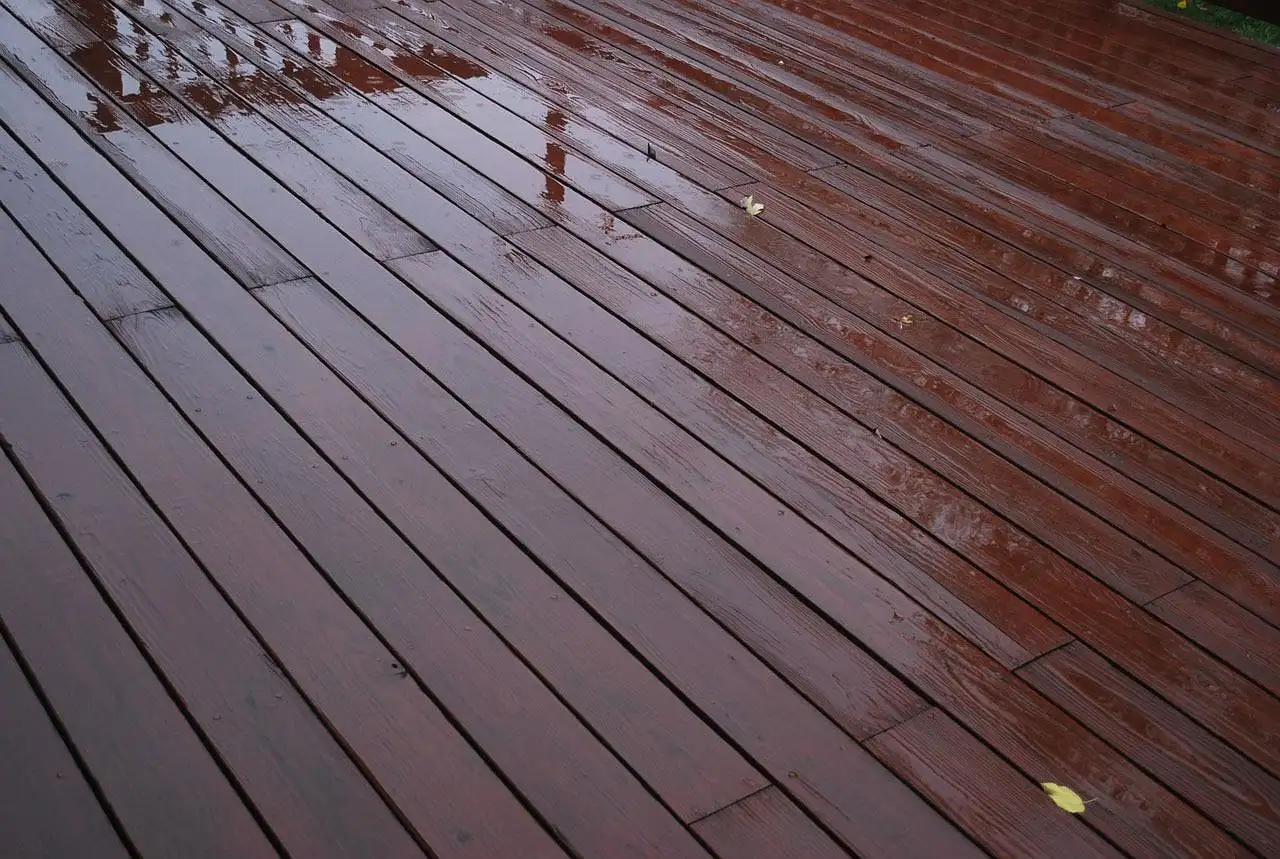
Start with dry debris, then remove snow or ice, then clean only what remains. If the deck is just dirty or lightly filmed, an oxygenated bleach cleaner is usually the right next step. If water has stopped beading or the surface still feels slick after cleaning, finish work or repair comes next.
- Sweep or blow off leaves, grit, and twigs before they trap moisture.
- Use a plastic shovel for snow; push with the grain and leave a thin layer rather than scraping hard.
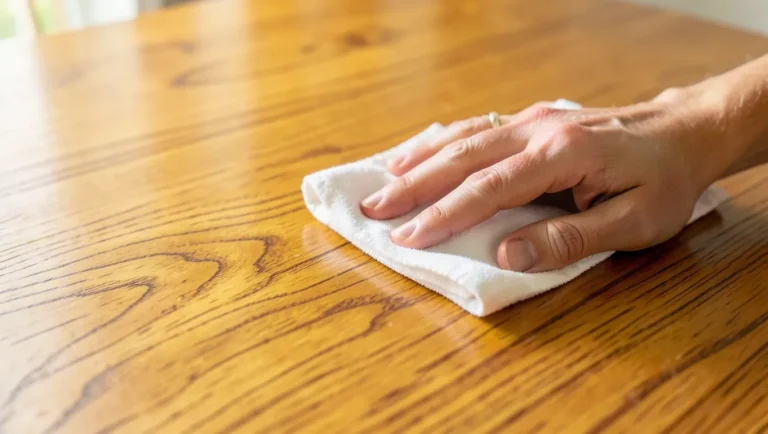
- Mix oxygenated bleach cleaner according to the label, apply it evenly, and let it dwell for the listed time before brushing.
- Rinse thoroughly with a hose so cleaner residue does not dry on the boards.
- Let the deck dry for 24 to 48 hours before any sealer or stain work.
- Apply wood deck brightener if the cleaner left residue or if the wood needs a pH reset before coating.
- Seal only after the deck is fully dry and ready for coating; a penetrating sealant or water-repellent sealer can help protect against moisture.
Say a deck of roughly that size stays slippery only on one side after a thaw. That points to shade and dampness, so the first fix is cleaning, not sanding the whole deck. If the same boards still bead poorly after drying, treat the finish as worn in that zone.
Can you pressure wash a slippery deck?
Yes, but only on sound wood and only with restraint. Deck washing should stay in a wood-safe range, use a fan tip rather than a pinpoint stream, and follow the grain. On a deck that is already splintered, soft, or lifting, pressure washing can do more harm than good.
- Set the washer in the 1500 to 2000 PSI range if the deck condition allows it.
- Fit a fan tip; This Old House recommends a 40-degree fan nozzle.
- Keep the nozzle moving and hold it about 18 inches from the wood as a starting point, then adjust for the surface condition.
- Spray with the grain to reduce fiber damage and stop if the wood furs up.
- Rinse cleaner off fully, then let the deck dry before brightener or sealer.
Suppose a cedar deck has dark buildup in the gaps but the boards are still firm. A lower-pressure wash with an oxygenated-bleach cleaner can work. If the same deck has raised grain, cracks, or softness, skip the washer and move to repair first.
What ice melt is safe on a wood deck?
Many de-icers that work on concrete are poor choices on wood. Rock salt and harsh chemical ice melts can damage wood, leave residue, and make later slip problems worse when the surface dries with a film. If you need traction fast, removal and mechanical grip are safer than relying on a chemical fix.
- Clear snow first with a plastic shovel or broom so less product is needed.
- Use sand or another grit material for temporary traction on a walking path, then sweep it off when the weather clears.
- If thaw cycles keep returning, remove the water source by improving drainage instead of adding more de-icer.
- Recheck the deck after refreeze; residue from repeated applications can become part of the slip problem.
Common mistakes
Using the wrong tool or product often creates a second problem. The safest treatment can fail if the deck is already damaged or the cleaner is left behind on the surface.
- Using a metal shovel or wire brush that scratches the wood
- Applying cleaner or sealer to wet wood
- Skipping the rinse after cleaner or brightener
- Trying to seal over rot, soft spots, or drainage failure
- Using rock salt as a default ice fix
- Expecting one product to handle algae, ice, and worn finish at the same time
How do I stop a deck from getting slippery again?
Prevent repeat slipperiness with a late-fall and thaw-cycle routine: sweep debris, remove snow promptly, inspect drainage, and clean before buildup hardens. A water-repellent sealer or penetrating sealant should go on only after the wood is clean and dry. Reapply when wear returns, not just by the calendar.
- Inspect the deck every time weather changes from wet to freezing.
- Clear leaves, seed pods, and dirt before they stain or hold moisture.
- Remove snow quickly so it does not compact into ice.
- Check shaded areas and entry paths for recurring film.
- Repair loose boards, cracks, and drainage faults before the next coating cycle.
Picture a back step that turns slick every time the temperature swings above and below freezing. If drainage is poor, no cleaner will hold the fix for long. Correct the water path first, then clean and coat the wood after it dries fully.
Frequently asked questions
Why is my wood deck slippery in winter?
Winter slipperiness usually comes from moisture, algae or mildew, compacted snow, or a worn finish that no longer sheds water well. If the deck stays slick after a thaw, check for drainage problems and soft wood. Those issues need repair before any coating or cleaner will make a lasting difference.
What should I use to treat a slippery wood deck?
Use a broom, plastic shovel, oxygenated bleach cleaner, and, if needed, a wood deck brightener before a penetrating sealant or water-repellent sealer. Start with the mildest step that matches the symptom. A deck that only has snow buildup does not need the same treatment as one with mildew or finish failure.
How do I remove algae or mildew from a deck?
Clean with an oxygenated bleach solution, not chlorine bleach. Apply it evenly, let it dwell per the label, scrub with a stiff nylon brush, and rinse well. This Old House notes that mildew can be white, brown, or gray and flat, while mold is textured and can be red, purple, brown, or black. (Thisoldhouse)
What kind of shovel should I use on a wood deck?
Use a plastic shovel. It is less likely to gouge the wood than metal blades, and it is the safest default for snow removal on finished boards. Push snow along the grain and avoid chopping at packed ice. A broom can help with light snow and dry grit.
Should I use salt on my deck in winter?
No, not as a routine choice. Rock salt can damage wood and leave residue that worsens slip risk later. If you need short-term traction, use sand or another grit material and remove it after the thaw. If ice keeps returning, fix the drainage problem that feeds it.
Sponsored / affiliate links. As an Amazon Associate I earn from qualifying purchases. I may earn additional commission from eligible campaigns.