Carpet Tape for Wood Floors: When It Damages the Finish
Reach for a removable, residue-free rug gripper before you reach for permanent double-sided carpet tape. Standard carpet tape is built to bond hard, and pulling it off a wood floor months later can lift the finish right along with it – the safer fix for a sliding rug is almost always a non-slip rug pad or reusable gripper, not tape.
Most articles on this topic treat carpet tape as a simple, low-risk fix and only mention finish damage as an afterthought. In practice, finish damage from old tape is one of the most common wood-floor repair questions flooring pros get asked about – and it’s avoidable if you pick the right product for the job in the first place.
Why Old Carpet Tape Is A Real Risk To A Wood Floor’s Finish
Safer Than Tape: Reusable Rug Grippers
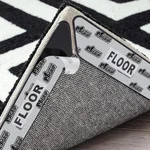 |
Gorilla Grip Rug Grippers (8-Pack) – $11.98 These reusable corner grippers hold a rug flat without the long-term bonding risk of permanent carpet tape – peel, rinse, and reuse instead of scraping up residue later.
|
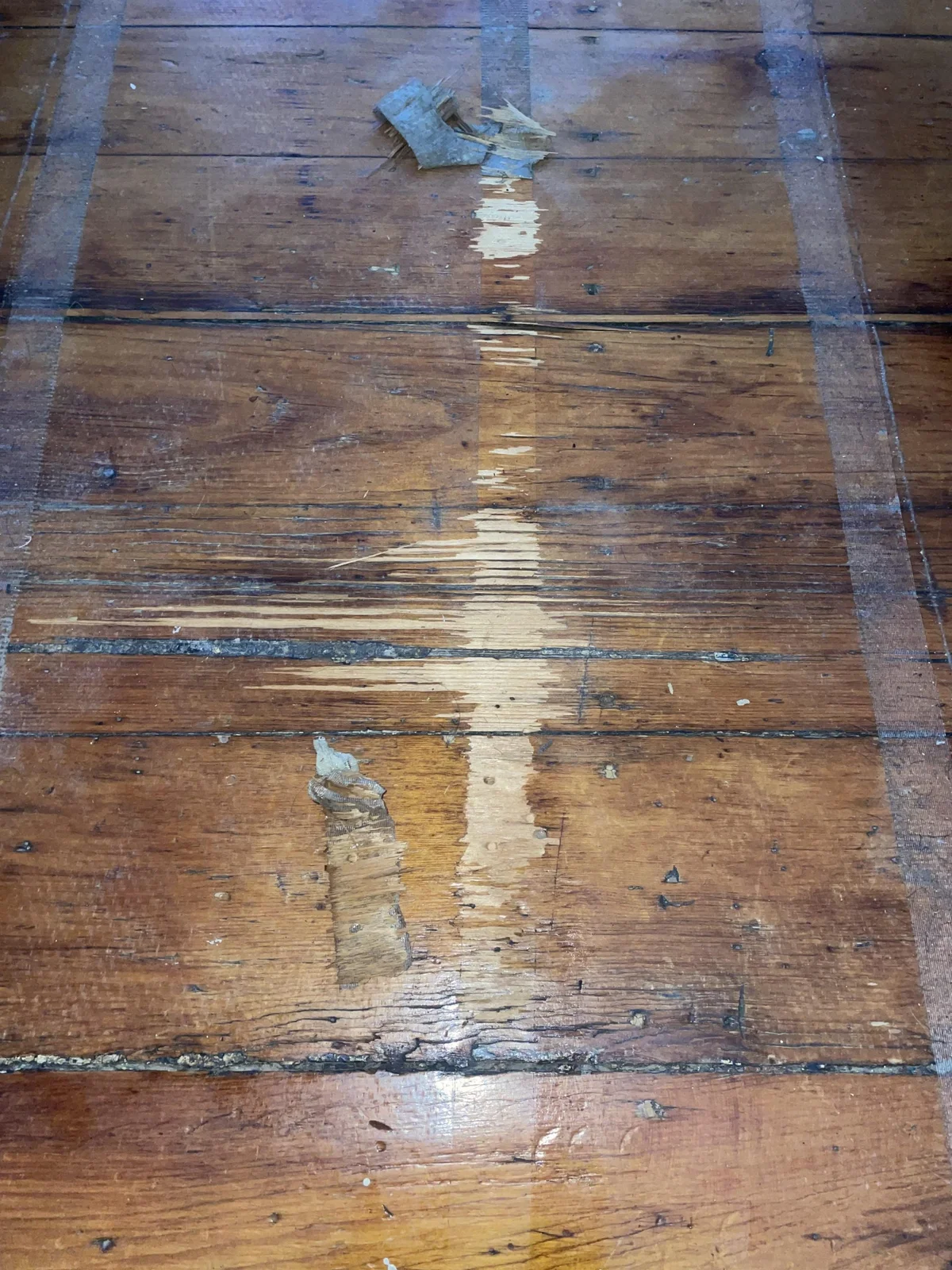
Most wood and engineered wood floors have a thin, hard finish coat (polyurethane, in most modern homes) sitting on top of the wood itself – that finish is what gives the floor its shine and protects the wood underneath. A strong, permanent adhesive doesn’t just sit on top of that finish; over weeks or months, especially in a sunny or warm spot, it can bond to it. When you finally peel up old tape, the adhesive can pull up thin flakes of the finish with it, leaving a stripped, dull patch that no amount of cleaning will fix – only refinishing that section will.
Rug Pad, Gripper, Or Tape? Matching The Fix To The Job
For a full-size area rug, a non-slip rug pad cut to size is usually the better long-term answer – it grips the floor through friction and weight distribution rather than adhesive, adds cushioning, and never touches the floor’s finish with any bonding agent at all. Reusable corner grippers are the next best option, especially for a rug you’ll want to lift for cleaning or move seasonally. Permanent double-sided carpet tape is really best reserved for narrow runners and stair treads that need a firmer hold and won’t be moved often – and even then, only a tape explicitly labeled safe for finished wood floors, never a generic mounting or duct-style tape.
If You Do Use Tape: How To Apply It Without Damage
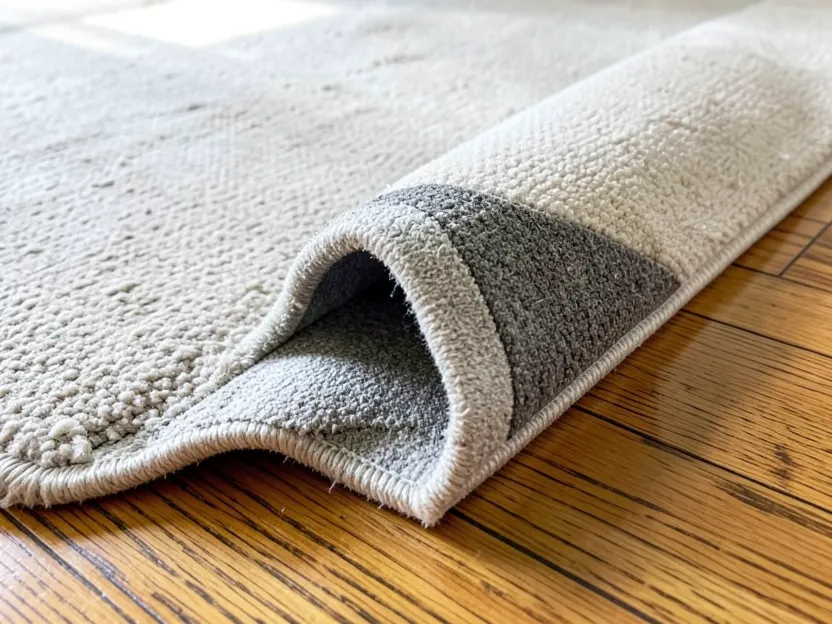
Clean and fully dry the floor first – dust and cleaner residue both weaken adhesion and can trap grit against the finish under the tape. Apply short strips at the corners and center points of a rug rather than a continuous perimeter of tape; less adhesive contact means less risk if you ever need to remove it, and it’s usually enough to stop sliding. Press the tape down firmly but avoid overlapping strips or doubling them up, which just adds more adhesive than the job needs.
Set a reminder to check and replace tape every few months rather than letting it sit indefinitely. Tape that’s been down for a year or more is far more likely to have bonded into the finish than tape that’s replaced regularly, and fresh tape actually grips better than old tape that’s collected dust along its edges anyway.
Removing Carpet Tape Without Stripping The Finish
Start by peeling slowly at a low, shallow angle rather than pulling straight up – a shallow angle puts less stress on the finish underneath. If the tape resists, warm it gently with a hairdryer on low heat for 15-20 seconds; heat softens most adhesives without needing to scrape. Never use a metal scraper or blade directly against the finish to pry up stubborn tape – that’s how a tape problem turns into a scratch problem. For leftover sticky residue, a small amount of mineral spirits or a dedicated adhesive remover made for wood floors on a soft cloth will usually lift it; test it on a hidden corner first, and always dry and buff the spot afterward so residue doesn’t attract new dust.
Frequently Asked Questions
Can Carpet Tape Damage Wood Floors?
Yes, especially if it’s left down for months and then pulled up quickly. Standard double-sided tape can bond into the floor’s polyurethane finish over time, and removing it can pull up thin flakes of that finish along with the tape. Using a tape specifically labeled safe for wood floors, replacing it regularly, and removing it slowly at a low angle all reduce that risk significantly.
Is Carpet Tape Safe For Hardwood Floors?
It can be, if you choose a tape made for wood floors and don’t leave it down indefinitely. That said, a non-slip rug pad or a reusable, residue-free rug gripper is generally the safer choice for a full-size area rug, since neither one relies on a permanent adhesive bond to the floor’s finish.
How To Remove Carpet Tape From Wood Floors?
Peel slowly at a shallow angle rather than pulling straight up, and warm stubborn tape with a hairdryer on low heat for about 15-20 seconds to soften the adhesive before it lifts. Avoid scraping with anything metal, since that risks scratching the finish underneath. Clean any leftover residue with mineral spirits or a wood-floor-safe adhesive remover, testing on a hidden spot first.
What Type Of Carpet Tape Is Best For Wood Floors?
If you’re set on tape rather than a rug pad, choose a double-sided tape explicitly labeled residue-free and safe for finished wood floors, and apply it only at the corners and center of the rug rather than around the full perimeter. For most area rugs, though, a cut-to-size non-slip rug pad or a reusable gripper avoids the long-term adhesive risk entirely and is worth trying first.
Conclusion
A sliding rug on a wood floor is a real problem, but permanent carpet tape isn’t the only fix and often isn’t the best one. Start with a non-slip rug pad or a reusable, residue-free gripper, save tape for runners and stair treads that need a firmer hold, and if you do use tape, replace it regularly and remove it slowly. Your floor’s finish will outlast the rug either way.
Sponsored / affiliate links. As an Amazon Associate I earn from qualifying purchases. I may earn additional commission from eligible campaigns.