What Is DOC PS 1 Plywood? Grades, Stamp Meaning, PS 1-22
DOC PS 1 is the U.S. Department of Commerce’s Voluntary Product Standard for Structural Plywood, administered by NIST, and its current edition is PS 1-22, effective October 2, 2023, which replaced PS 1-19. The stamp tells you the glue bond and veneer grades were certified, but not that a panel is rot-proof outdoors. This guide covers the PS 1-22 veneer grade limits, Exposure 1 versus Exterior, how to read the stamp, and span ratings.
What Does “DOC PS 1” Actually Mean?
“DOC” stands for the U.S. Department of Commerce, and PS 1 is one of its Voluntary Product Standards, developed under procedures published in Title 15 of the Code of Federal Regulations, Part 10. The National Institute of Standards and Technology (NIST) coordinates and publishes the standard but has no regulatory power to enforce it. PS 1 itself was initiated by APA, The Engineered Wood Association (formerly the American Plywood Association), and PS 1-22 is a revision of PS 1-19. Every grade limit, bond-test figure and span-rating number below was checked against the full text of PS 1-22 on NIST’s site.
Because the standard is voluntary, the stamp’s weight comes from certification. Under PS 1-22, plywood represented as conforming must carry the mark of an Accredited Certification Agency (accredited to ISO/IEC 17065), backed by inspections from an accredited inspection agency and periodic testing by an accredited laboratory. The mark has to stay legible after weather exposure during construction.
Best Plywood Moisture Check Pick
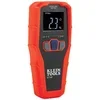 |
Klein Tools ET140 Pinless Moisture Meter – $49.14 PS 1-22 caps panel moisture content at 18% when a sheet ships, so a wet sheet is a real defect. A pinless meter lets you screen sheets for damp spots before you fasten them, without leaving pinholes in the face veneer.
|
As an Amazon Associate we earn from qualifying purchases.
Which Edition of PS 1 Is Current?
PS 1-22 is the current edition, effective October 2, 2023. Each edition changed something a buyer can still run into, and the history explains why older labels read “softwood plywood” and why you will not see an “Interior” bond type today.
| Edition | Effective | What changed |
|---|---|---|
| PS 1-66 | Nov. 1, 1966 | First edition, titled Softwood Plywood, Construction and Industrial; consolidated three older standards for Douglas fir, western softwood and southern pine plywood |
| PS 1-74 | Aug. 1, 1974 | Added more than 20 species, mostly Southeast Asian hardwoods |
| PS 1-83 | Dec. 30, 1983 | Added performance-based test methods for span-rated panels |
| PS 1-95 | Sept. 7, 1995 | Added a performance method for species not in the table; dropped Structural II grades |
| PS 1-07 | Feb. 26, 2007 | Retitled Structural Plywood; eliminated the interior and intermediate bond types |
| PS 1-09 | May 2010 | Created Performance Category thickness labels |
| PS 1-19 | Dec. 1, 2019 | Added the “sized for spacing” term and more detail on measuring dimensions |
| PS 1-22 | Oct. 2, 2023 | Added quality-assurance requirements and certification-agency rules; added 5/16 and 11/16 categories |
The 2007 retitle matters for one more reason: PS 1 is no longer a softwood-only standard. Its species table sorts woods into five groups, and Group 1 alone includes southern pine, Douglas-fir, western larch, beech, birch and sugar maple. A panel can be fully PS 1 compliant and still not be softwood.
What PS 1 Actually Covers
PS 1-22 covers the wood species, veneer grading, adhesive bonds, panel construction and workmanship, dimensions and tolerances, and moisture content of structural plywood, plus the marking and certification rules. It exists so a builder in one state and a supplier in another share one definition of a “C-D” or “Exposure 1” panel. Plywood is one of several engineered products covered in our types of wood guide, but PS 1 is the one that defines how the sheets themselves are graded and glued.
Two numbers in the standard are easy to miss. Panels may not exceed 18% moisture content at the time of shipment, and panels must be square within 1/64 inch per foot measured along the diagonals, with edges straight to within 1/16 inch. Thickness is handled through Performance Categories, created in PS 1-09 after complaints about thickness labeling, and the allowed ranges overlap more than most buyers expect.
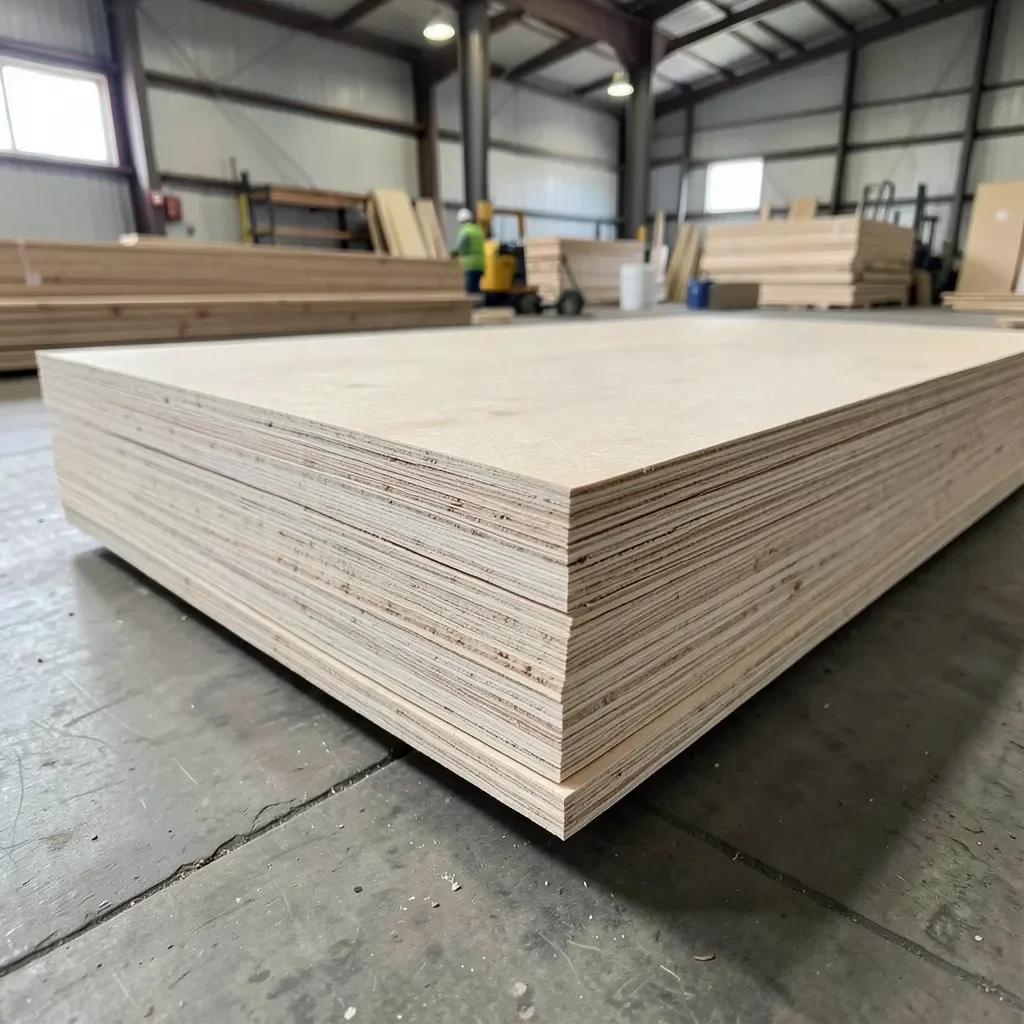
📊 PS 1-22, Section 5.11: moisture content of panels at time of shipment shall not exceed 18%. Source: NIST, Voluntary Product Standard PS 1-22, Structural Plywood (2023)
| Performance Category | Unsanded panel thickness (in) | Sanded panel thickness (in) |
|---|---|---|
| 1/4 | 0.219 to 0.281 | 0.234 to 0.266 |
| 1/2 | 0.469 to 0.531 | 0.484 to 0.516 |
| 19/32 | 0.563 to 0.625 | 0.578 to 0.609 |
| 23/32 | 0.688 to 0.750 | 0.703 to 0.734 |
| 3/4 | 0.719 to 0.781 | 0.734 to 0.766 |
Notice that the 23/32 and 3/4 categories overlap, so a nominal 3/4-inch label does not tell you the real thickness. PS 1-22 requires the Performance Category and the thickness in thousandths of an inch on the panel, so read the decimal number, especially when fitting dados or hardware. If you are pricing 3/4-inch sheets before you buy, our guide to 3/4-inch plywood prices and options covers what the big box stores charge.
Veneer Grades A Through D
PS 1-22 grades every veneer in the panel, not just the faces, using six grades from N (highest, intended for natural finish) down to D. Panels are named by face grade then back grade, so C-D means a C face and a D back. Older guides often call grade A nearly repair-free, but the standard permits up to 18 repairs on an A face, excluding shims.
| Veneer grade | Knots and knotholes allowed | Other limits |
|---|---|---|
| N | None | 100% heartwood or 100% sapwood, no more than two pieces in a 48-inch width, no stain |
| A | None (free of knots, pitch pockets and open splits) | Suitable for painting; up to 18 repairs, excluding shims |
| B | Sound, tight knots up to 1 inch | Splits no wider than 1/32 inch; slightly rough grain permitted |
| C Plugged | Sound, tight knots up to 1-1/2 inches; knotholes and borer holes up to 1/4 by 1/2 inch | Splits up to 1/8 inch; plugs, patches and shims allowed |
| C | Tight knots up to 1-1/2 inches; any number of knotholes up to 1 inch | Occasional knothole up to 1-1/2 inches if aggregate-width limits are met |
| D | Any number of tight knots and knotholes up to 2-1/2 inches | Occasional knot or knothole up to 3 inches if aggregate-width limits are met; up to 3-1/2 inches in veneers two or more plies below the surface of five-ply or thicker C-D, D-D and C-D Plugged panels |
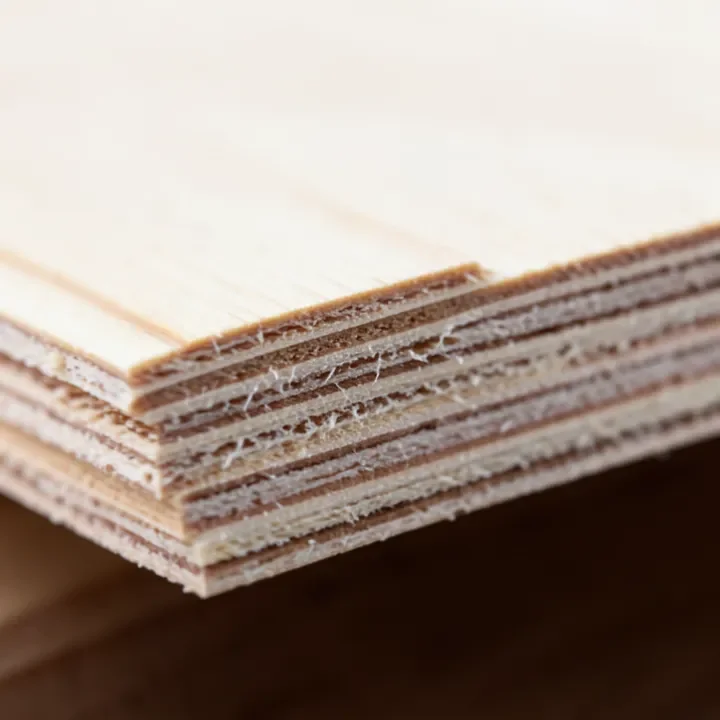
Grade D veneer is permitted only in Exposure 1 panels. The Exterior grade table does not allow D veneer at all, which is the practical difference you can see on a cut edge: an Exterior panel has no D-grade knotholes hiding in the inner plies.
Bond Classification: Exposure 1 vs. Exterior
Bond classification describes how well the adhesive bond holds up to moisture, not whether a panel can be left outdoors indefinitely. PS 1-22 says this directly in Section 4.2:
The bond classification is related to the moisture resistance of the adhesive bond under intended end-use conditions and does not relate to the physical (erosion, ultraviolet, etc.) or biological (mold, fungal decay, insect, etc.) resistance of the panel.
PS 1-22, Section 4.2 (NIST)
Exposure 1 panels are suitable for uses not permanently exposed to the weather and are intended to resist moisture effects during construction or conditions of similar severity. Exterior panels are suitable for repeated wetting and redrying or long-term exposure to weather. APA makes the consequence explicit: panels commonly called CDX are Exposure 1, not Exterior (APA plywood standards).
| Panel grade | Face | Back | Inner plies | Bond classification |
|---|---|---|---|---|
| A-A (sanded) | A | A | D permitted | Exposure 1 |
| A-A (sanded) | A | A | C or better | Exterior |
| C-D (unsanded) | C | D | D permitted | Exposure 1 |
| C-C (unsanded) | C | C | C or better | Exterior |
The same letters can appear in both tables, so the grade name alone does not tell you the bond class; the stamp must state it. The glue gap is also smaller than people assume. Both classes are tested with vacuum-pressure and boil specimens (4 hours boiling, 20 hours drying at about 145°F, then 4 more hours boiling), and the difference is that Exposure 1 needs an average of 80% wood failure while Exterior needs 85%. The bigger practical gap is the veneer: Exterior allows no D grade and requires C or better inner plies.
How to Read a PS 1 Grade Stamp
Section 7.5 of PS 1-22 lists what the panel mark must show. Checking these items against your project takes about ten seconds at the lumber rack:
- Species group number or span rating: panels without a span rating show a species group; sheathing and single-floor panels show a span rating instead.
- Bond classification: either Exposure 1 or Exterior.
- Grade: the grade name, the face and back veneer grades, or the certification agency’s mark.
- The symbol “PS 1-22”: conformance with the current edition.
- Performance Category and thickness: a fraction such as 23/32 plus the decimal thickness in thousandths of an inch.
- Butt-Jointed Center: only on panels built with butt joints in the center plies.
A span rating is two numbers separated by a slash. The left number is the recommended maximum center-to-center support spacing in inches for roof use, and the right number is the spacing for subfloor use, so a 32/16 panel is rated for rafters 32 inches apart or floor joists 16 inches apart. PS 1-22 requires a span rating only on C-C, C-D, D-D, Structural I and single-floor panels, so a sanded A-A cabinet panel will not carry one.
| Span rating | Roof spacing (in) | Floor spacing (in) | Performance Categories (prescriptive route) |
|---|---|---|---|
| 32/16 | 32 | 16 | 1/2, 17/32, 5/8 |
| 40/20 | 40 | 20 (designed for 19.2) | 5/8, 21/32, 3/4, 25/32 |
| 48/24 | 48 | 24 | 3/4, 25/32, 7/8, 29/32 |
These spacings are recommendations built into the panel rating. The standard states that actual maximum spans are established by local building codes, so check your code before you size a roof deck. If you are deciding whether a thinner panel can work overhead, our guide on using 1/2-inch plywood for a roof walks through that choice.
Common Applications for PS 1 Plywood
- Wall, roof and floor sheathing: span-rated C-D (Exposure 1) or C-C (Exterior) panels, chosen by the spacing of your framing.
- Single-floor and underlayment panels: touch-sanded panels with C Plugged faces, rated by a single floor-spacing number such as 16, 20 or 24 inches on center.
- Anything permanently exposed to weather: Exterior bond classification is the minimum, and it still needs a finish and good detailing because bond class says nothing about UV or decay.
- Marine and Special Exterior grades: A-A, A-B, B-B, HDO or MDO panels with B-grade or better inner plies in Marine grade, which is limited to Group 1 Douglas-fir and western larch.
- Cabinets and furniture: sanded N, A or B faces. Grade N is intended for natural finish and grade A for painting, and Exposure 1 sanded panels may have D inner plies, so edges can show more voids than Exterior A-A. When you glue two sheets together, see how to join plywood together.
Common Misreadings of the PS 1 Stamp
- “Exterior means it will not rot.” Section 4.2 says bond class does not cover erosion, UV or fungal decay, so an Exterior panel still needs finish and edge sealing.
- “CDX is exterior plywood.” APA states CDX panels are Exposure 1, to be used only where long-term weather exposure is not expected.
- “PS 1-19 is the current version.” It was replaced by PS 1-22 on October 2, 2023.
- “The span rating is the code limit.” It is a recommended maximum spacing, and local building codes set the actual spans.
Frequently Asked Questions
What does DOC PS 1 mean on plywood?
DOC PS 1 means the panel was manufactured to Voluntary Product Standard PS 1, Structural Plywood, published by the U.S. Department of Commerce and administered by NIST. It is not a brand name. It is a standard covering veneer grading, glue bond type, panel construction, dimensions and moisture content, and the panel mark must come from an accredited certification agency.
Is PS 1 plywood safe to use outdoors?
Only if it carries the Exterior bond classification, not Exposure 1. Exposure 1 panels are meant to survive construction-stage moisture, while Exterior panels are rated for repeated wetting and redrying. Even Exterior panels need a finish, because PS 1 bond classification does not cover UV erosion or fungal decay.
What is the difference between PS 1 and PS 2 plywood?
PS 1 is the plywood-only standard with prescriptive veneer grade, species and glue-bond rules, plus a performance-testing alternative. PS 2-18 is a performance standard for wood structural panels, covering plywood and oriented strand board (OSB). Panels qualify by tested strength and stiffness, which is how OSB earns the same span ratings as plywood.
What does the span rating on a PS 1 panel mean?
The span rating is two numbers separated by a slash, such as 32/16. The first is the recommended maximum support spacing in inches for roof use and the second is for subfloor use. A 32/16 panel suits rafters 32 inches apart or joists 16 inches apart, though local building codes set the actual allowable spans.
What is the current version of PS 1 plywood?
The current version is PS 1-22, Structural Plywood, effective October 2, 2023. It replaced PS 1-19, which took effect December 1, 2019. PS 1-22 added quality-assurance requirements and new accredited certification, inspection and testing agency rules, plus 5/16 and 11/16 Performance Categories.
Who certifies that plywood meets PS 1?
An Accredited Certification Agency, accredited to ISO/IEC 17065 with PS 1 in its scope, certifies the manufacturing process. An accredited inspection agency samples the product and an accredited testing laboratory tests it. The certifying agency’s mark, such as the APA trademark, appears on the panel next to the PS 1-22 symbol.
Conclusion
DOC PS 1 is a government-administered construction standard, not a specific product, and PS 1-22 is the edition to look for. For anything facing permanent weather, confirm the stamp says Exterior, and remember it still needs a finish.
Sponsored / affiliate links. As an Amazon Associate I earn from qualifying purchases. I may earn additional commission from eligible campaigns.