Where Can I Buy Cheap Plywood? 7 Sources That Beat Home Depot
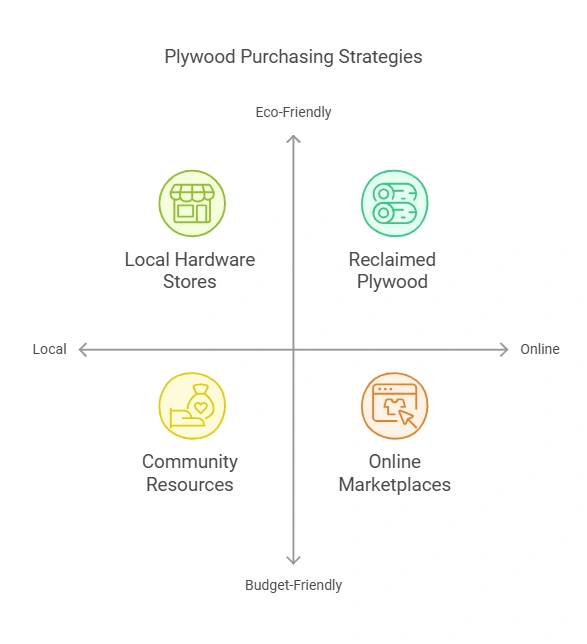
The cheapest plywood usually is not sitting on the main display rack at Home Depot or Lowe’s – it is in the cut-down/shorts bin, at a local lumber yard buying in volume, or at a Habitat for Humanity ReStore. Big-box stores are fine in a pinch, but they rarely have the lowest price on a full sheet once you know where else to look and which grade you actually need.
This guide focuses on the actual buying channels and negotiating tactics that shave real money off a plywood purchase – not just “try Amazon or Home Depot.” If you already know you want a 4×8 sheet and just need to know what a fair price looks like by grade and thickness, our 4×8 plywood price guide breaks that down in detail, including the cut and delivery fees stores often leave off the sticker price.
Where to Actually Find Cheap Plywood
Before you buy a full sheet anywhere, it helps to have a way to get it home without paying a delivery fee that erases your savings. A lot of buyers skip the cheapest source simply because they do not have a truck – a panel carrier lets one person carry a full 4×8 sheet from the store to a car roof rack or a friend’s truck bed without straining a back or chipping an edge.
Best For Hauling Your Own Sheets Home
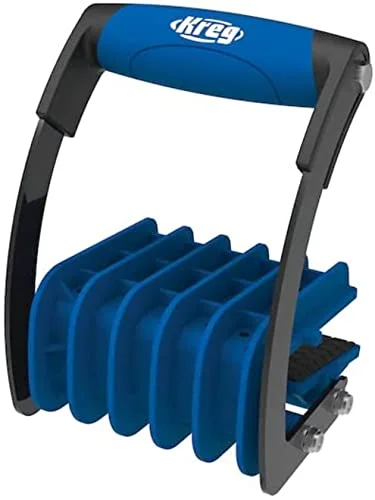 |
Kreg Panel Carrier, KMA3000 – $24.00 Lets one person carry a full 4×8 sheet up to 3/4-inch thick without a second set of hands – useful the moment you find cheap plywood somewhere that does not deliver.
|
With that logistics problem solved, here are the sources that actually beat full retail price on plywood, roughly in order of how much you will save:
1. The Cut-Down, Shorts, or “Seconds” Rack
Most Home Depot and Lowe’s lumber departments keep a rack or cage near the panel saw for sheets that were cut wrong, have a chipped corner, or came off a returned order. These “shorts” or cull sheets are almost never on display near the checkout – you usually have to ask an associate in the lumber department if one exists at that store. Discounts of 20-50% off the regular sheet price are common, since the store just wants the material off the floor. For a project that will be painted, cut into smaller pieces, or used as a subfloor or shop jig, a chipped-corner sheet is functionally identical to a full-price one.
Both major chains also price-match a competitor’s current listed price on an identical SKU if you bring up the listing on your phone at the register – it is not advertised, but lumber associates can usually apply it on the spot.
2. Buy the Grade You Actually Need, Not the One That Looks Nicest
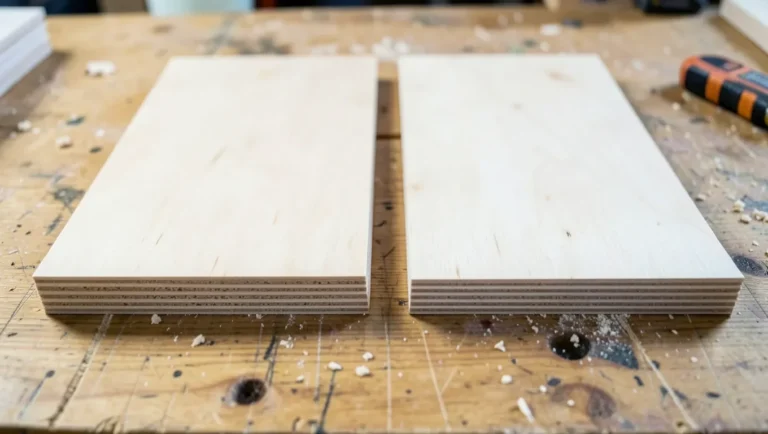
A lot of the “cheap plywood” searches people run are really a grading problem, not a store problem. Plywood is graded by face quality – A (smooth, no knots) down to D (knots and patches allowed) – and sanded “cabinet-grade” sheets can cost two to three times what construction-grade CDX plywood costs. If the piece is going inside a wall, under a floor, behind a cabinet back, or into a shop jig nobody will ever see, CDX or B-grade sheathing does the job for a fraction of the price of sanded BC or cabinet-grade birch. Save the higher grades for surfaces that will actually be visible or finished.
3. Independent Lumber Yards
Local lumber yards buy plywood by the unit (a full bundle, usually 40-50 sheets) instead of by the individual sheet the way a big-box store restocks. That means they can often sell a single sheet cheaper than a home center, especially on hardwood plywood like birch or oak, where big-box markups tend to be highest. Call two or three yards in your area and ask their current per-sheet price on the thickness and grade you need – prices are rarely posted online and change with lumber costs, so a two-minute phone call is worth more than a guess. Ask about will-call or job-lot pricing if you need more than a few sheets; many yards will knock the price down further without being asked twice.
4. Habitat for Humanity ReStore and Architectural Salvage
Habitat for Humanity ReStores resell donated building materials, including leftover and reclaimed plywood and lumber, usually at a fraction of retail. Inventory changes daily and you cannot special-order a thickness, so this works best if your project is flexible on exact size – buy what is there and cut your plan around it. Architectural salvage yards work the same way with material pulled from renovations and demolitions. Before buying reclaimed sheet goods, check for delamination between layers, soft or spongy spots (a sign of past water damage), and ask where the piece came from if it looks like it may have been exposed to pests.
5. Online Marketplaces and Local Classifieds
Facebook Marketplace and local buy-sell-trade groups are usually a better source of cheap plywood than eBay – shipping a 4×8 sheet is expensive, so most listings you will actually find online are local pickup only, which keeps prices honest. Contractors and cabinet shops finishing a job frequently list leftover full or partial sheets for well under retail just to clear space. Search “plywood” plus your city or county name rather than a generic national listing site, and message quickly – good sheet-goods listings do not last long.
6. Ask Contractors and Cabinet Shops for Drop-Offs
Framing crews, cabinet shops, and sign shops regularly end up with plywood offcuts and partial sheets too small for their next job but plenty big for shelving, jigs, drawer boxes, or a small project. Many will hand these over for free or a few dollars rather than pay to haul them to the dump. A short, polite phone call or a stop by a local shop’s front counter costs nothing and can turn up material you would otherwise pay full sheet price for.
7. Time Big-Box Purchases Around Sales
If a big-box store is genuinely your best option for a specific grade or size, timing still matters. Building-material discounts at Home Depot and Lowe’s tend to cluster around Memorial Day, Labor Day, and Black Friday, when both chains run seasonal lumber and sheet-goods promotions. Signing up for a store’s email list or loyalty app is the easiest way to actually see these discounts before they sell out, since they are rarely the same in-store signage from one location to the next.
| Sale Window | Typical Month |
|---|---|
| Memorial Day | May |
| Labor Day | September |
| Black Friday | November |
If Plywood Still Doesn’t Fit the Budget: Cheaper Alternatives
For some projects, a different sheet material costs less than any source of plywood will. MDF is smooth and paints beautifully, making it a good stand-in for painted furniture or trim, but it is heavy and swells badly if it gets wet. OSB is usually the cheapest structural sheet good available and works fine for sheathing or subflooring where looks do not matter, though its rough, speckled face rules it out for anything visible. Particle board is the lightest and least expensive of the three, but it has the least strength and does not hold screws well if it is ever disassembled and reassembled.
| Material | Best Use | Main Downside |
|---|---|---|
| MDF | Painted furniture, trim | Heavy, ruined by water |
| OSB | Sheathing, subfloor | Rough face, not for visible surfaces |
| Particle Board | Budget shelving, flat-pack style builds | Weak, poor screw-holding |
Frequently Asked Questions
Where can I buy cheap plywood?
The cheapest plywood usually comes from a big-box store’s cut-down or “shorts” rack, an independent lumber yard buying by the bundle, a Habitat for Humanity ReStore, or a local classifieds listing from a contractor clearing out job leftovers. Asking a lumber associate directly about discounted or damaged sheets is often more effective than browsing the regular display rack.
Are there discounts for bulk plywood purchases?
Yes. Independent lumber yards in particular will often lower the per-sheet price for a will-call or job-lot order, since they buy full bundles rather than restocking sheet by sheet. It is worth calling ahead and asking for their bulk or contractor pricing rather than assuming the posted price is final.
What types of plywood are cheapest?
CDX and other construction-grade sheathing sheets are the cheapest true plywood, since they skip the sanding and face-veneer selection that sanded cabinet-grade sheets require. If plywood still costs more than the budget allows, OSB or particle board can substitute for non-visible structural or utility uses.
How do I choose the right plywood grade for my project?
Match the grade to how visible the surface will be. A surface that will be painted, hidden behind cabinets, or buried inside a wall or subfloor can use a lower, cheaper grade like CDX. A surface that will be stained or left bare needs a sanded, higher face-grade sheet – paying for that quality only where it will actually be seen is the fastest way to cut the total cost of a project.
Conclusion
The lowest plywood price rarely comes from the first store you check. Working through cut-down racks, independent lumber yards, ReStores, local listings, and contractor leftovers – in that order – and buying the grade the project actually needs instead of the one that looks nicest will save more than any single coupon or sale ever will.
Sponsored / affiliate links. As an Amazon Associate I earn from qualifying purchases. I may earn additional commission from eligible campaigns.