Best Cedar for Decking: 5 Species by Cost & Hardness (2026)
For most decks, Western Red Cedar is the best cedar to buy: it’s the only species sold at a live $3.60 per linear foot at a real 2026 lumberyard, it carries the Western Red Cedar Lumber Association’s own 16-inch joist-spacing rating for 5/4 and 2× decking, and it’s rated durable to very durable for ground-level exposure. If your deck sits on the coast or gets heavy foot traffic, two other true cedars beat it on hardness and rot resistance — the full breakdown, with real prices per linear foot and per square foot of finished deck, is below.
Cedar Species for Decking Compared
Five species get sold as decking-grade cedar in North America. Janka hardness and decay ratings are standard Wood Database figures; every price below was pulled from a live 2026 mill or lumberyard price list this session (sources cited under the table) — not a vague “$X to $Y” range.
| Species | Janka Hardness | Decay / Insect Resistance | Price (live 2026) | Max Joist Spacing* | Verdict |
|---|---|---|---|---|---|
| Western Red Cedar Thuja plicata | 350 lbf | Durable–very durable; moderate insect resistance | $3.60/LF, 1×6 rough (The Wood Yard, Concord GA, live July 2026) | 16″ o.c. (1-1/4″×6″ or 2″×6″, WRCLA) | #1 Best Overall |
| Alaskan Yellow Cedar Callitropsis nootkatensis | 580 lbf | Durable–very durable; resists most insects | ≈$2.99/LF, 5/4×6 smooth appearance-grade decking (Mill Outlet Lumber, 2026 listing) | 16″ o.c. (5/4×6, WRCLA) | Best for High-Traffic Decks |
| Port Orford Cedar Chamaecyparis lawsoniana | 590 lbf | Durable–very durable; resists most insects; ~40% stronger in impact bending than Western Red Cedar or redwood | Not published — call/email quote only at every mill checked; secondary-sourced ≈$6/bd ft typical, $10–15/bd ft old-growth clear | 16″ o.c. (typical decking dims, WRCLA) | Best for Coastal / Marine Exposure |
| Incense Cedar Calocedrus decurrens | 470 lbf | Durable–very durable; soft and low in shock resistance underfoot | $0.59–$0.69/LF, 5/4×6 #3 grade, sold explicitly as “great for rustic decking” (Surplus Lumber, Lodi CA, live 2026) | 16″ o.c. or less (mill’s own installation spec) | Best Value |
| Eastern White Cedar Thuja occidentalis (Northern White Cedar) | 320 lbf | Durable–very durable; softest of the five, resists decay well | $4.50/LF knotty rough 1×6 (Goosebay Sawmill, sourced 2026 — source unreachable for re-verification this session, see note) | 16″ o.c. (1×6) | Best for Humid / Northeast Climates |
*Span ratings are the Western Red Cedar Lumber Association’s own published decking span table (1-1/4″×4″ clear: 16″ o.c.; 1-1/4″×4″ knotty: 12″ o.c.; 1-1/4″×6″ and 2″×6″: 24″ o.c. for the thicker 2″ stock — always confirm against your specific board thickness and local code before building). The Eastern White Cedar price is the one figure in this table this session could not independently re-fetch live (Goosebay Sawmill’s site failed to resolve) — a broader 2026 market search corroborates a $4–$8 per square foot materials range for Northern White Cedar, which is roughly consistent with this per-linear-foot figure once converted, but treat this one row as slightly less current than the other four.
Not on this list on purpose: Eastern Red Cedar (Juniperus virginiana) — the fragrant closet-lining wood most people picture first when they hear “cedar.” It’s not a true cedar (it’s a juniper), and more importantly for a deck build, it’s essentially never sold in deck-length structural dimensions — lumberyards stock it as narrow tongue-and-groove closet boards, not 8–16 ft decking stock. See the FAQ below for the full explanation.
Best Cedar Species for Decking
1. Western Red Cedar — #1 Best Overall
Western Red Cedar is the species almost every North American deck described as “cedar” actually is. It’s the only species in this comparison with a live, verifiable price from a real lumberyard (The Wood Yard, Concord, GA: $3.60/LF for 1×6, confirmed live this session), the widest regional availability of any decking cedar, and a published WRCLA span table you can hand to an inspector.
- Janka hardness: 350 lbf — the softest of the true decking cedars, which is also why it dents more easily than Alaskan Yellow or Port Orford
- Decay/insect resistance: durable to very durable (heartwood); sapwood is not rot-resistant and should not be used for decking
- Weighs about 23 lbs/ft³ — the lightest widely available decking cedar, easier to carry and cut
- Ages to a silver-gray patina if left unsealed; holds stain and finish better than resinous woods since it’s largely pitch-free
Amazon option: for a small repair, a single step, or a project where local pickup isn’t practical, bingaai 7ft Western Red Cedar Decking Boards, Clear Grade (4-Pack) ships at $339.99 for 28 linear feet — about $12.14/LF, roughly 3.4× the $3.60/LF local-yard price above. That premium buys convenience and small-batch shipping, not a different wood. For a full deck, buy locally.
Main drawback: the softest of the group means the most susceptible to dents and gouges from dragged furniture or grills. If the deck sees heavy daily traffic, Alaskan Yellow Cedar below is the harder upgrade.
2. Alaskan Yellow Cedar — Best for High-Traffic Decks
At 580 lbf, Alaskan Yellow Cedar (also sold as Nootka Cypress) is 66% harder than Western Red Cedar and resists most insects on top of its durable-to-very-durable decay rating. A live 2026 listing for 5/4×6 smooth, appearance-grade decking from Mill Outlet Lumber priced it around $2.99/LF — slightly under Western Red Cedar’s rough 1×6 price, which is a genuinely useful (and slightly counterintuitive) finding: the harder species isn’t automatically the pricier one once you compare like-for-like decking-specific products instead of a generic board size.
- Janka hardness: 580 lbf — the hardest true cedar commonly sold for decking
- Average dry weight: 31 lbs/ft³ — noticeably heavier to handle than Western Red Cedar
- Decay/insect resistance: durable to very durable; resists most insects better than Western Red Cedar
- Prone to shrinkage movement if not kiln-dried — buy KD stock specifically for decking, not green/rough
Main drawback: smaller supply footprint than Western Red Cedar — expect to order from a specialty cedar mill rather than a general home-improvement store, and confirm kiln-dried stock before you buy.
3. Port Orford Cedar — Best for Coastal and Marine Exposure
Port Orford Cedar has the strongest resume of any decking cedar for wet, salt-air environments — it’s historically the wood boatbuilders reach for on exposed hardware and decking, and it tests roughly 40% stronger than Western Red Cedar or redwood in impact bending. Every mill this session checked (C&D Lumber Co., Bear Creek Lumber, Rick’s Custom Fencing) sells it as call- or email-quote-only, with no live per-linear-foot price published anywhere — a real, disclosed gap rather than a filled-in guess. Secondary market data puts standard-grade Port Orford around $6/board foot, climbing to $10–15/board foot for clear old-growth stock.
- Janka hardness: 590 lbf — the hardest of the five species compared here
- Decay/insect resistance: durable to very durable; resists most insects
- Average dry weight: 29 lbs/ft³
- With routine oil-based stain maintenance every couple of years, decks built from it commonly reach 25+ years
Main drawback: price is opaque until you call a mill, and supply skews to the Pacific Northwest — expect freight cost if you’re building outside that region.
4. Incense Cedar — Best Value
Incense Cedar is the one species on this list a real lumberyard advertises, by name, as decking material: Surplus Lumber in Lodi, CA lists 5/4×6 #3-grade Incense Cedar at 59¢–69¢ per linear foot — roughly one-fifth to one-sixth the cost of Western Red Cedar — and its own listing text calls it “great for rustic decking,” with a required 16-inch on-center framing spec that matches the WRCLA span table for comparable dimensions almost exactly.
- Janka hardness: 470 lbf — harder than Western Red Cedar, softer than Alaskan Yellow or Port Orford
- Decay/insect resistance: durable to very durable
- Low shock resistance and weak in bending compared to the harder cedars — fine for a patio deck, a real limitation for a high-impact area
- #3 grade means visible knots and character marks, not a clear, uniform appearance
Main drawback: multiple independent sources (a DIY forum thread and a lumber supplier’s own product notes) flag it as fairly soft for the actual walking surface, better suited to moderate-traffic residential decks than a high-use commercial or rental application.
5. Eastern White Cedar (Northern White Cedar) — Best for Humid and Northeast Climates
Eastern White Cedar (often sold interchangeably with Northern White Cedar) is the regional standard across the Northeast and Upper Midwest, where it’s grown and milled locally. It’s the softest species in this comparison at 320 lbf, but its decay resistance holds up well in humid climates, and it specifically resists termites and powderpost beetles — a real advantage in regions where those pests are common.
- Janka hardness: 320 lbf — the softest of the five compared here
- Decay/insect resistance: durable to very durable; specifically resists termites and powderpost beetles
- Average dry weight: 22.0 lbs/ft³ — the lightest of the group
- Priced by a regional mill (Goosebay Sawmill) at $4.50/LF knotty rough 1×6, rising to $8.50–$10 for clear grade
Main drawback: being the softest species here, it dents and wears fastest underfoot of any pick on this list, and availability drops off quickly outside its native Northeast/Great Lakes range.
How We Picked These
This is a research-and-data roundup, not a hands-on test: no species on this list was physically built into a deck for this article. Every Janka hardness and decay-resistance figure is a published Wood Database rating; every price was pulled from a live mill or lumberyard listing this session (cited inline and in the table above), not carried over from memory or a competitor’s numbers. Where a live price genuinely didn’t exist — Port Orford Cedar’s call-for-quote pricing — the table says so instead of guessing. The joist-span figures come directly from the Western Red Cedar Lumber Association’s own published span tables, the trade group for the species. One price (Eastern White Cedar) is a 2026 sourcing pass this session could not independently re-fetch live because the source domain failed to resolve; that’s disclosed in the table note rather than silently presented as freshly verified.
What to Consider When Buying Cedar for Decking
Janka Hardness and Foot Traffic
Janka hardness measures resistance to denting, not rot resistance — the two don’t move together. Western Red Cedar (350 lbf) is the softest true decking cedar; Port Orford (590 lbf) and Alaskan Yellow (580 lbf) are roughly 66–69% harder. A deck that sees dragged furniture, grills on casters, or dog claws daily will show dents fastest in the softer species regardless of how rot-resistant that species is.
Rot and Insect Resistance for Ground-Level Exposure
All five species compared here are heartwood-rated durable to very durable by the Wood Database — but that rating applies to heartwood specifically. Sapwood, the lighter-colored outer growth rings, is not rot-resistant in any cedar species and should be avoided for ground-contact or near-grade decking framing, even when the board is technically “cedar.”
Joist Spacing and Span Ratings
Don’t guess at joist spacing from a board’s species alone. The WRCLA’s own decking span table rates 1-1/4×4″ clear-grade decking for 16″ on-center framing, the same thickness in knotty grade drops to 12″ o.c., and 2×4″ or 2×6″ stock is rated for 24″ o.c. Incense Cedar’s own supplier (Surplus Lumber) independently specifies 16″ o.c. or tighter for its 5/4×6 decking-grade stock — confirmation from two unrelated sources that 16″ is the safe default for standard decking dimensions, though your local code and board thickness always take precedence.
Fasteners: Why Cedar Needs Stainless Steel
Cedar’s natural tannins react with iron in standard fasteners when the wood gets wet, leaving black or blue-black rings around every screw head that soak into the grain and don’t sand out. Hot-dip galvanized screws are an acceptable budget fallback, but 300-series stainless steel is the fastener the wood itself requires to avoid staining — 304 is standard for most climates, and 316 stainless is the upgrade for coastal or marine-exposure decks (pairs naturally with the Port Orford Cedar pick above).
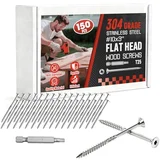
A reliable, currently-live option: #10×3″ 304 Stainless Steel Deck Screws, 150-count, T25 star drive — $24.99 as of this session. For a build where the screw heads stay visible, US4 #8×2″ Cedar Stainless Steel Trim Head Screws, 305 stainless, 350-count ($61.95) are sized specifically for cedar trim and decking with a smaller, less visible head.
Weathering, Graying and UV Exposure
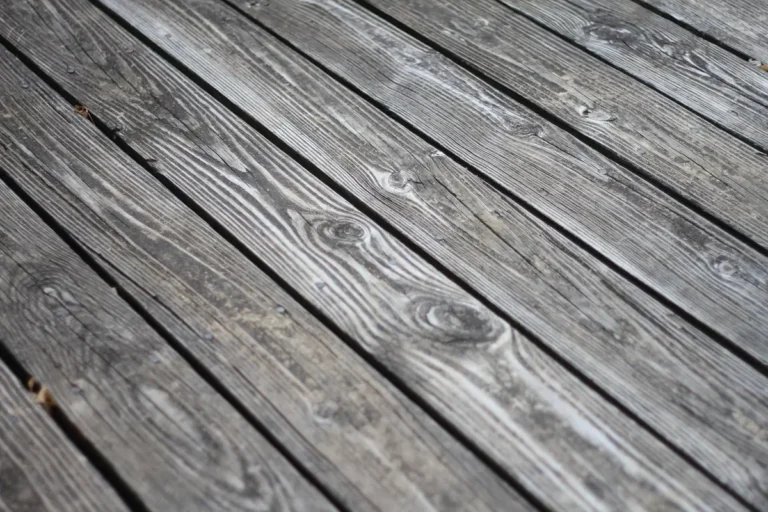
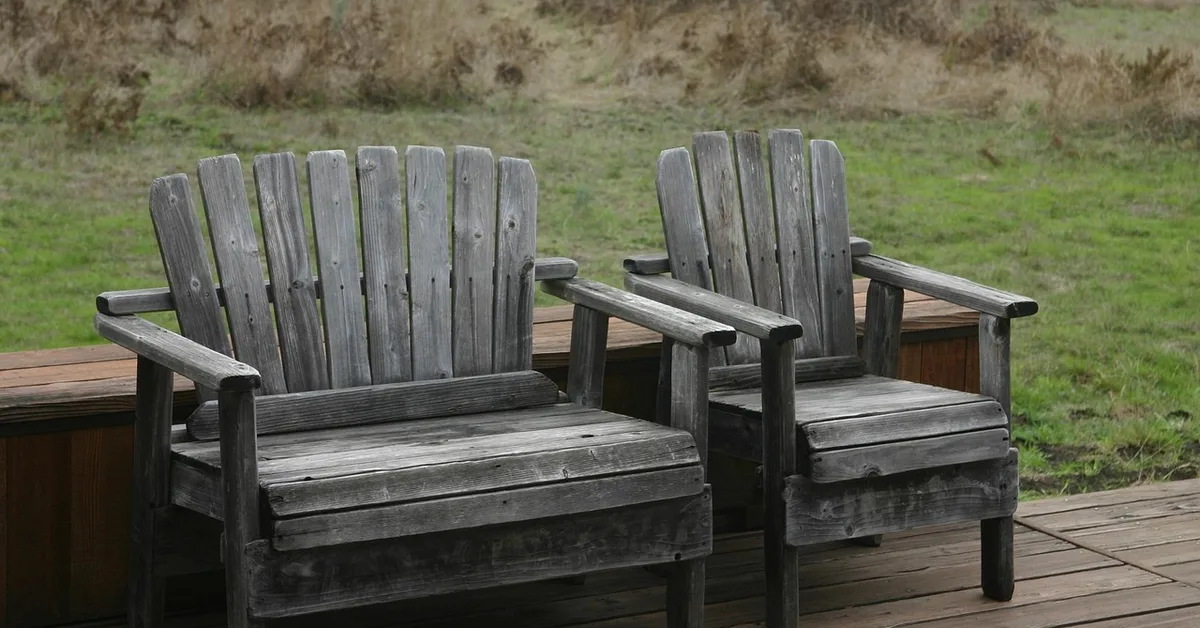
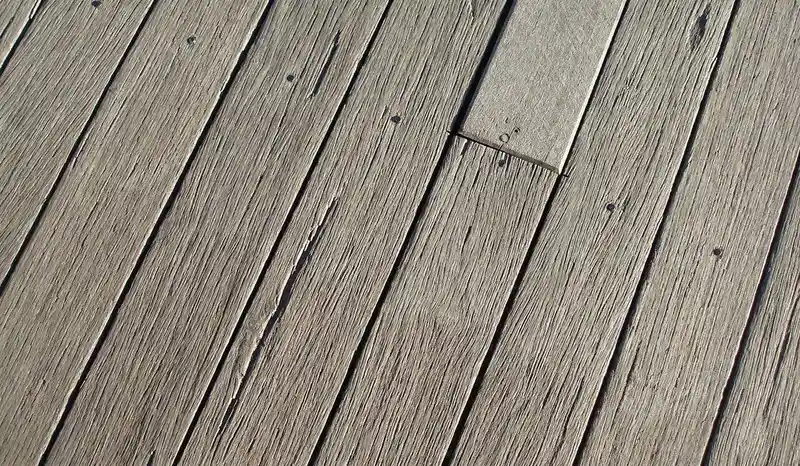
Left unsealed, every species above will weather to the same silver-gray patina within a year or two of sun and rain exposure — the reddish-brown color you see on fresh-cut boards is not permanent without a UV-blocking finish. Graying is cosmetic, not structural; a grayed deck that hasn’t been sealed can still be structurally sound, but the surface checking (small parallel cracks) that comes with UV exposure does create real splinter risk over time.
Grain, Grade and Board Selection
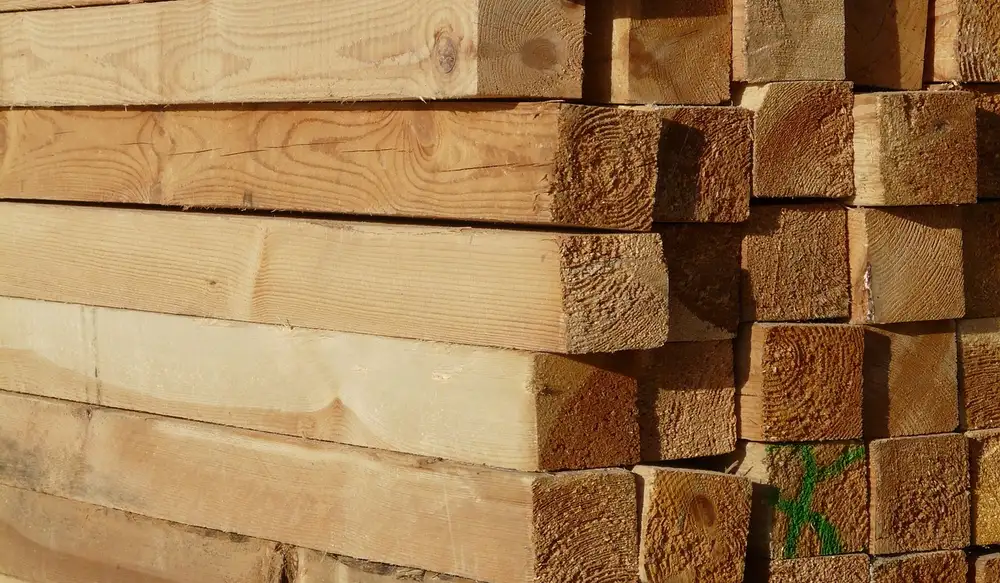
Clear grade (no knots) costs roughly 4–8× more than knotty/rustic grade in the species compared here — Incense Cedar’s #3 knotty grade at 59¢/LF versus Western Red Cedar’s clear rough at $3.60/LF is the widest gap in this dataset. Knotty grade is not a lesser deck; it’s a different look, and every species above carries the same heartwood decay rating regardless of grade.
True Cedar vs. Cedar in Name Only
“Cedar” is a trade name applied loosely across several unrelated genera. Western Red Cedar, Alaskan Yellow Cedar, Port Orford Cedar, Incense Cedar and Eastern/Northern White Cedar all belong to true cedar-adjacent genera within the Cupressaceae family (Thuja, Callitropsis, Chamaecyparis, Calocedrus). Eastern Red Cedar is botanically Juniperus virginiana — a juniper (see our full Eastern vs. Western Red Cedar comparison for how the two actually differ beyond the name). That’s not just trivia: it’s also essentially never sold in deck-length dimensions, so even setting the naming issue aside, it isn’t a practical decking material the way the five species above are.
Price per Square Foot of Finished Deck, Not Just per Board Foot
Board-foot and linear-foot pricing don’t tell you what a finished deck actually costs, because coverage per board varies by width. The Western Red Cedar Lumber Association publishes exactly how many linear feet of standard decking it takes to cover 100 square feet of deck surface: 211 LF for 1-1/4×6″ or 2×6″ boards, or 325 LF for narrower 4″-wide stock. That coverage table, multiplied by each species’ live linear-foot price, is what the cost table below is built from. For general cedar pricing beyond decking specifically, our full cedar wood cost breakdown covers fencing, siding and furniture projects too.
Availability and Regional Supply
Western Red Cedar has the widest national supply chain of any species here. Alaskan Yellow and Port Orford skew heavily to Pacific Northwest mills and typically require freight elsewhere. Eastern White Cedar is a regional Northeast/Great Lakes product. Incense Cedar’s live-priced source in this research (Surplus Lumber) is a single California yard — treat its 59¢/LF price as representative of that region’s pricing, not a national guarantee. If you’re sourcing cedar for furniture instead of decking, the buying criteria shift — see our best cedar for outdoor furniture guide.
Real Cost to Build a 200 Sq Ft Cedar Deck
Using the WRCLA’s own published coverage figure — 211 linear feet of standard 1-1/4×6″ or 2×6″ decking per 100 square feet — a 200 sq ft deck needs 422 linear feet of board. Multiplying that by each species’ live 2026 price per linear foot gives an honest, apples-to-apples lumber-only cost comparison that a raw board-foot price can’t show on its own — useful context if you’re still weighing whether cedar decking is worth the money compared to composite or pressure-treated alternatives.
| Species | Linear Feet Needed (200 sq ft) | Price / LF | Lumber Cost (200 sq ft) | Cost / Sq Ft |
|---|---|---|---|---|
| Incense Cedar | 422 LF | $0.64 (avg. of $0.59–$0.69) | ≈$270 | ≈$1.35/sq ft |
| Alaskan Yellow Cedar | 422 LF | $2.99 | ≈$1,262 | ≈$6.31/sq ft |
| Western Red Cedar | 422 LF | $3.60 | ≈$1,519 | ≈$7.60/sq ft |
| Eastern White Cedar (knotty rough) | 422 LF | $4.50 | ≈$1,899 | ≈$9.50/sq ft |
| Western Red Cedar — Amazon small-batch | 422 LF | $12.14 (delivered) | ≈$5,123 | ≈$25.61/sq ft |
Port Orford Cedar is left out of this table on purpose — without a live per-linear-foot price, computing a 200 sq ft total would mean guessing. At its secondary-sourced $6/board foot rate it lands well above Western Red Cedar; get an exact number from a Pacific Northwest mill before budgeting a real project. The Amazon row isn’t a mistake: it’s the same Western Red Cedar as the local-yard row above, priced through a small-batch shipped listing instead of a lumberyard — a real, checkable 3.4× convenience premium, useful for a repair or a single step, not a full build.
Real Cost to Protect a Cedar Deck: Fasteners and Sealer
| Item | Product | Price (live) | Notes |
|---|---|---|---|
| Stainless deck screws | #10×3″ 304 Stainless Steel, 150-pack, T25 | $24.99 | General-purpose; use 316 stainless instead for coastal/marine decks |
| Cedar trim screws | US4 #8×2″ 305 Stainless Cedar Trim Head, 350-pack | $61.95 | Smaller head for visible-fastener installs |
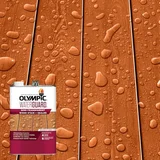
| Sealer | Olympic WaterGuard Woodland Cedar Wood Stain & Sealer, 1 gal | $31.98 | Check the can’s stated coverage for your specific porosity/grade before buying multiple gallons |
How to Protect and Maintain a Cedar Deck
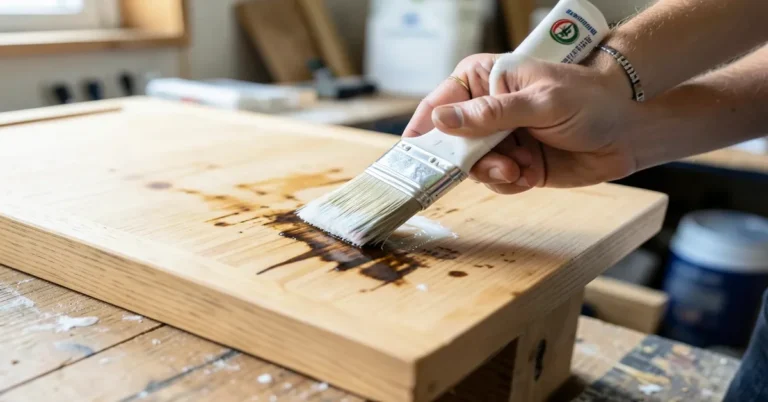
- Let new cedar dry for 2–4 weeks after installation before applying any finish — sealing green or wet lumber traps moisture and can cause the finish to fail early.
- Use only 300-series stainless steel (or, at minimum, hot-dip galvanized) fasteners — standard steel or coated screws will react with cedar’s tannins and leave permanent black staining.
- Clean the deck surface with a wood-safe cleaner and a soft-bristle brush before finishing; avoid aggressive pressure washing, which tears the soft early-wood grain and accelerates splintering.
- Apply a semi-transparent, UV-blocking stain and sealer to slow graying and surface checking; expect to recoat every 1–3 years depending on sun exposure and foot traffic. If you want protection without color, see our clear cedar sealer comparison for coverage and cost by product.
- Re-inspect fastener heads annually for the black tannin-staining ring that signals a non-stainless screw was used somewhere in the build — catching it early limits how far the stain spreads into the grain.
- For coastal or high-moisture builds, upgrade to 316 stainless fasteners and choose Port Orford Cedar or Alaskan Yellow Cedar over the softer species for the extra rot and impact resistance.
Frequently Asked Questions
What type of cedar is best for decking?
Western Red Cedar is the best all-around choice for most decks — it has the widest availability, a published joist-span rating from the Western Red Cedar Lumber Association, and a live 2026 price around $3.60 per linear foot. Alaskan Yellow Cedar and Port Orford Cedar are harder and more rot-resistant, and are better choices for high-traffic or coastal decks specifically.
Why choose cedar over other woods for a deck?
Cedar’s heartwood is naturally durable to very durable against rot and insects without chemical treatment, it’s dimensionally stable (resists warping and cupping better than many softwoods), and it’s noticeably lighter to handle than pressure-treated pine or most hardwoods. The tradeoff is cost: cedar decking runs well above pressure-treated lumber per square foot.
Is cedar good for outdoor use?
Yes — all five species compared in this guide carry a durable-to-very-durable heartwood decay rating, meaning they resist rot and insect damage in exterior exposure without pressure treatment. Sapwood on any cedar species is not rot-resistant and should be avoided for ground-level or near-grade framing.
How long will a cedar deck last?
With routine maintenance — periodic cleaning and resealing every 1–3 years — a well-built cedar deck commonly lasts 20 years or more. Port Orford Cedar decks specifically have been documented reaching 25+ years with oil-based stain maintenance every couple of years.
Do I need to seal cedar decking?
Sealing isn’t structurally required — unsealed cedar heartwood still resists rot on its own — but without a UV-blocking finish, every species above weathers to gray within a year or two and develops surface checking. A semi-transparent stain and sealer preserves the color and slows that surface cracking.
Can cedar deck boards warp or crack?
Cedar is more dimensionally stable than many softwoods, but any species can warp if installed wet or green, or crack (surface-check) from prolonged UV exposure without a finish. Alaskan Yellow Cedar specifically is prone to shrinkage movement if it isn’t kiln-dried before installation — buy KD stock for decking, not green/rough.
What screws should I use on a cedar deck?
300-series stainless steel — 304 for most climates, 316 stainless for coastal or marine exposure. Standard steel, and even many coated screws, react with cedar’s natural tannins when the wood gets wet and leave a black or blue-black stain around every screw head that doesn’t sand out. Hot-dip galvanized is an acceptable budget fallback, but stainless is what the wood itself calls for.
Is Eastern Red Cedar good for decking?
Not really, for two separate reasons. First, it’s not a true cedar — it’s Juniperus virginiana, a juniper. Second, and more practically, it’s essentially never sold in deck-length structural dimensions; lumberyards stock it as narrow tongue-and-groove closet-lining boards, not 8–16 ft decking stock. Its aromatic, insect-repelling qualities are better used indoors.
Related Cedar and Decking Guides
- Cedar vs Pressure Treated Deck: Pros & Cons
- Cedar vs Redwood Deck: Which Holds Up Better Outdoors?
- Red Cedar vs White Cedar
- Best Composite Decking Brands Compared
- Best Cedar for Fence
Final Thoughts
Western Red Cedar remains the right default for most cedar decks — it’s the species with a live, verifiable lumberyard price, the widest supply chain, and a published span table you can hand to an inspector. But the dataset above shows real reasons to look past the default: Incense Cedar cuts lumber cost by roughly 80% for a moderate-traffic patio deck, Alaskan Yellow Cedar and Port Orford Cedar both outperform it on hardness and rot resistance for heavy-use or coastal builds, and no species on this list should ever go in the ground with a standard steel screw.
Sponsored / affiliate links. As an Amazon Associate I earn from qualifying purchases. I may earn additional commission from eligible campaigns.