How to Keep Chairs from Sliding on Hardwood Floors (7 Fixes That Actually Work)
Felt pads and adhesive furniture grippers stop most chair sliding, but only if you match the pad shape to the leg (round vs. square), size it to the actual leg diameter, and replace it before the felt compresses flat and picks up grit. Rugs, rubber caps, and DIY silicone dots cover the cases pads don’t: rolling office chairs, wobbly outdoor sets, and chairs that get dragged across a rug edge dozens of times a day.
Below is what actually works for each type of chair, why pads eventually stop working, and the one mistake (buying pads the wrong size for the leg) that causes most “I already tried felt pads and they didn’t work” complaints.
Why Chairs Slide More Than Other Furniture
Best Felt Pad Pick For Chair Legs
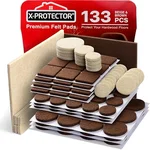 |
X-Protector 133-Pc Felt Furniture Pads – $9.99 Comes in both round and square shapes and multiple sizes in one pack, so you can match the pad to the actual leg instead of guessing.
|
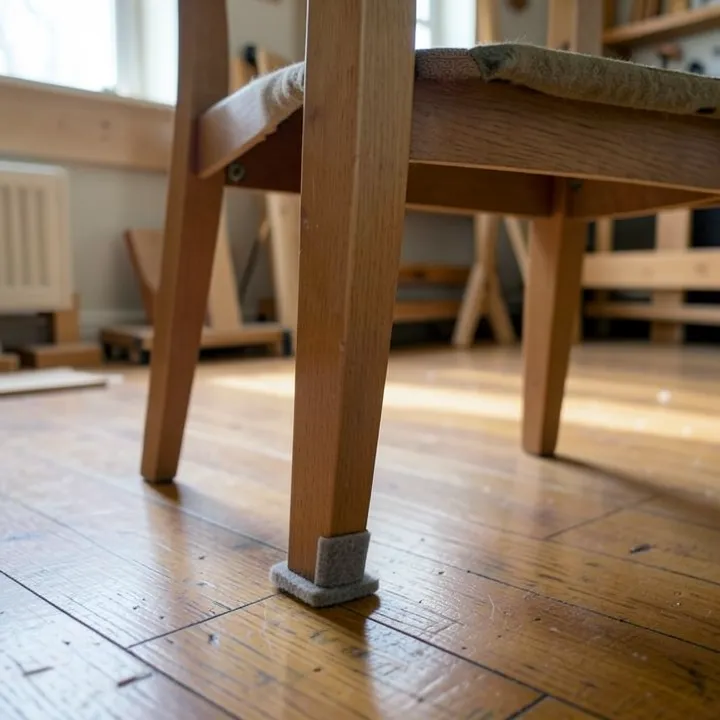
A dining chair concentrates a person’s full weight onto four small contact points, and every time someone sits down, stands up, or scoots in, that weight shifts sideways for a fraction of a second. A couch or dresser sits static most of the time; a chair gets pushed and pulled dozens of times a day. Combine that with a finished hardwood floor’s low coefficient of friction (polyurethane finish is smooth by design, so mopping and dust don’t build up a texture) and a hard chair-leg material – bare wood, metal, or molded plastic – and there’s almost nothing holding the leg in place except the chair’s own weight.
That’s also why fixes that work fine on a bookshelf or table often disappoint on chairs: a static rug pad under a table leg never gets tested by repeated lateral force the way a dining chair leg does at every meal.
Felt Pads and Adhesive Furniture Pads
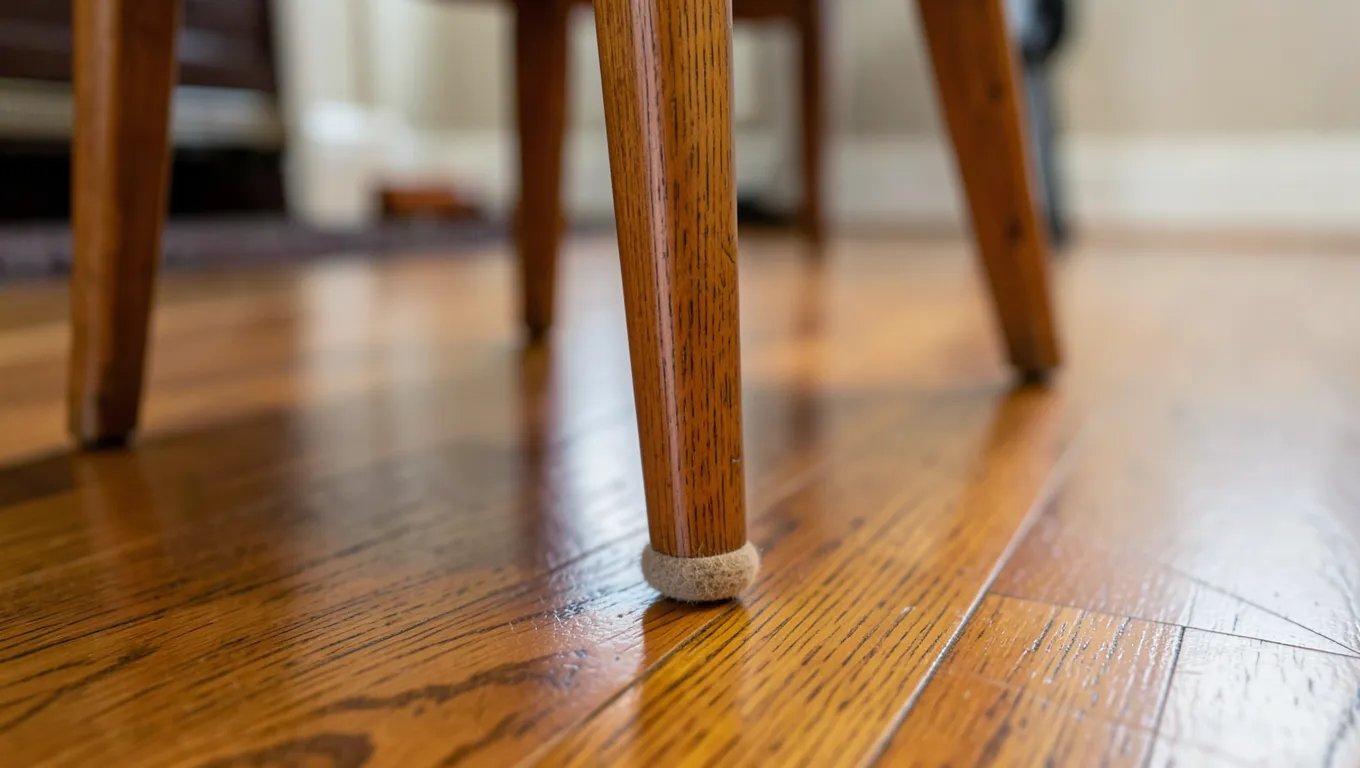
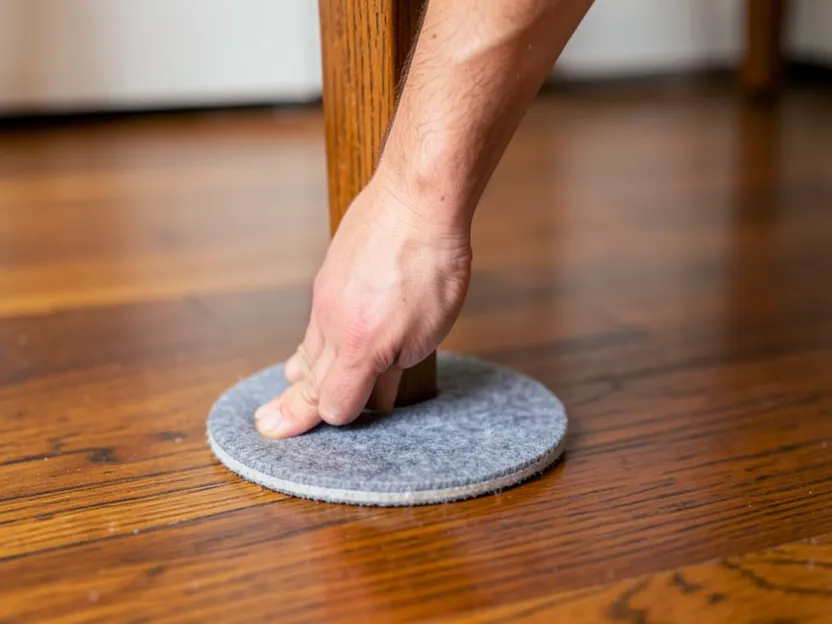
Self-adhesive felt pads are the first thing to try, and for most dining and desk chairs, they’re enough on their own. The part people get wrong is sizing: a round pad on a square leg (or vice versa) leaves corners uncovered, and those exposed corners are what actually scratches the floor and breaks the seal loose. Measure the leg’s actual footprint before buying – most dining chair legs run 3/4 inch to 1-1/2 inches across, while heavier upholstered chair legs can run 2 inches or more.
Felt pads fail for two predictable reasons: the adhesive lets go because the leg wasn’t cleaned and dried before application, or the felt itself compresses and picks up grit until it’s basically sanding the floor instead of protecting it. As a rule of thumb, check pads on daily-use dining chairs every 3 to 4 months and swap any that look shiny, flattened, or gritty on the underside – a worn pad does more floor damage than no pad at all, because compacted dust inside felt acts like fine sandpaper.
Rubber and Silicone Leg Caps
Rubber and silicone slip-on caps trade a little bit of slide-resistance for a lot more durability than felt – they don’t compress or shed the way felt does, so they hold up better on chairs that get moved constantly (a kitchen island stool, a kid’s desk chair). The tradeoff is that rubber caps grip harder, which is good for stability but can make the chair feel like it’s “sticking” when you try to slide it in and out from a table. For chairs you tuck in and out often, a slicker nylon or felt glide moves easier; for chairs that mostly just need to stop wandering (a rocking chair, a chair near a walkway), rubber or silicone caps are the better call. The same furniture feet protectors guide covers sizing these for heavier pieces if you’re outfitting a whole room at once.
Rolling and Office Chairs Need a Different Fix
Everything above is for chairs with fixed legs. A rolling office or gaming chair has a completely different problem: standard casters are designed for carpet and roll too freely on bare hardwood, which reads as “sliding” but is really just the wheel doing its job on a low-friction surface. The fix isn’t a pad, it’s swapping the hard plastic or rubber carpet casters for hardwood-specific casters – these use a softer polyurethane wheel that grips smooth flooring instead of skating across it, and most standard 5-wheel chair bases use a universal stem size that accepts a drop-in replacement set. A chair mat under the whole chair is the other option if you’d rather not swap wheels, but a mat covers a lot more floor and some people find the plastic texture underfoot unpleasant.
Rug and Rug-Pad Placement Under Dining Chairs
If your dining set already sits on a rug, the rug itself is usually the reason chairs slide – a rug without a non-slip pad underneath shifts and bunches every time a chair leg drags across it. A rubber or felt-and-rubber rug pad cut to size (not just relying on the rug’s own backing) does two jobs at once: it stops the rug from creeping, and it gives chair legs something to grip instead of sliding across slick rug fibers onto the hardwood beyond. Size the rug itself generously – as a rough guide, leave at least 24 to 30 inches of rug beyond the table edge on all sides so a chair’s back legs stay on the rug even when it’s pulled all the way out.
DIY Fixes With Household Items
If you need a fix tonight and don’t have pads on hand, a few household substitutes hold up surprisingly well as a stopgap:
- Hot glue dots: a dab of hot glue on the bottom of each leg, cooled and left slightly domed, acts like a mini rubber foot. It’s removable by peeling once cooled and won’t stain most finishes.
- Wine corks: slice a cork into thin discs and glue one to the bottom of each leg – cork has natural grip and a bit of give, which is why it shows up under lamps and picture frames too.
- Silicone caulk beads: a small bead of clear silicone caulk piped onto the leg bottom and left to cure for 24 hours creates a flexible, grippy pad for free, though it wears faster than a real felt or rubber pad.
None of these are a permanent substitute for proper pads or caps, but they’ll get you through until you can buy the right size. If it’s couches or sectionals sliding rather than chairs, the fixes differ enough (weight, footprint, upholstery skirts) that it’s worth reading our separate guide on stopping couches from sliding instead of applying chair-sized pads to much heavier furniture.
Maintenance: Keeping the Fix Working
Whatever solution you land on, the floor and the chair both need occasional attention. Sweep or vacuum under chairs regularly so grit doesn’t get trapped against the pad and grind against the finish. Wipe chair legs before reattaching new pads – oil, wax, or floor cleaner residue is the most common reason adhesive won’t hold. And check pads seasonally, since humidity swings can loosen adhesive backing even if the pad itself still looks fine.
Frequently Asked Questions
How do I stop a chair from sliding on a hardwood floor?
Add self-adhesive felt pads sized to match the leg shape (round or square) for fixed-leg chairs, or swap in hardwood-rated casters if the chair rolls. Clean and dry the leg before applying any adhesive pad so it actually bonds.
What can I put under chair legs to keep them from sliding?
Felt pads, rubber or silicone caps, and self-adhesive rubber grippers all work under fixed chair legs. For a free stopgap, a dab of cooled hot glue or a thin cork disc glued to the leg bottom adds enough grip to hold until you can buy proper pads.
Do felt pads actually stop chairs from sliding, or just protect the floor?
Both – felt has enough texture to add real friction against a smooth hardwood finish, not just cushioning. That said, felt wears down and eventually stops gripping, so pads on daily-use chairs should be checked every few months and replaced once they look flattened or gritty.
Why does my rolling office chair still slide even with a mat?
Standard carpet casters are hard plastic or rubber, built to roll on carpet’s texture – on bare hardwood or a hard plastic mat, that same wheel just skates. Replacing the casters with hardwood-specific polyurethane wheels (a common universal-stem swap on most office chairs) usually fixes it without needing a mat at all.
Conclusion
Most chair-sliding problems come down to using the wrong fix for the chair type: felt or rubber pads sized to the actual leg for dining and desk chairs, hardwood-rated casters for anything that rolls, and a proper rug pad if the chairs sit on a rug. Get the sizing and the pad type right and it’s a five-minute fix per chair – the ongoing part is just checking pads every few months so worn felt doesn’t start working against the floor instead of for it.
Sponsored / affiliate links. As an Amazon Associate I earn from qualifying purchases. I may earn additional commission from eligible campaigns.