Best Pads for Hardwood Floors (2026): Based on Specs and Reviews
The best furniture pads for hardwood floors are felt for stationary legs, rubber or silicone for sliding pieces, and cups or glides for heavy loads, matched to leg shape and movement. Wrong pads can leave scratches, dent boards, or let furniture creep and wobble. This guide compares pad types by furniture movement, leg geometry, floor finish, and common failure modes.
Quick comparison
| Product | Badge | Best for | Price | ||
|---|---|---|---|---|---|
 |
HUAYY 24 Pack Adjustable Furniture Leveling Feet, 1/4-20HUAYY | Our pick | HUAYY Levelers · 1/4-20 · 24 Pack | $23.99
Price as of 15 Oct 2026
|
View |
 |
Smart Surface 8727 Heavy Duty Self Adhesive Furniture FeltSmart Surface | Budget pick | Smart Surface Felt · 1-Inch · 160 Pieces | $15.99
Price as of 15 Oct 2026
|
View |
 |
8 Pcs Clear Furniture Coaster Cups for Hardwood Floor, 2"PROPA | Also great | PROPA Coasters · 2 Inch · 8 Pcs | $13.98
Price as of 15 Oct 2026
|
View |
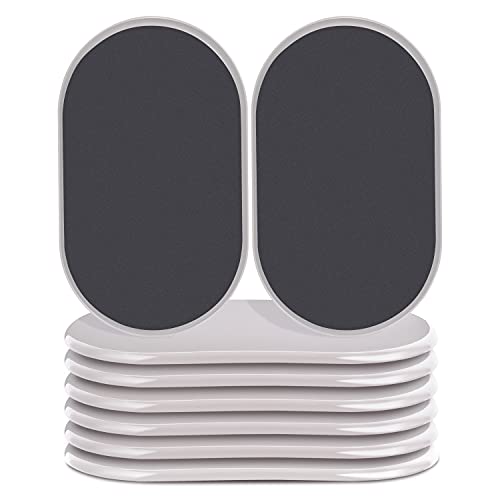 |
Reusable Large Furniture Movers Sliders for Carpet andEzprotekt | Upgrade pick | Ezprotekt Sliders · 9.5 Inch · 8 Pack | $20.89
Price as of 15 Oct 2026
|
View |
For most homes, start with how often the furniture moves. Daily use usually points to felt, while pieces that slide or need to stay planted often call for rubber or silicone. Then match the pad to the leg shape and the finish you need to protect.
How we chose
The ranking here follows four practical filters: pad material and floor contact, attachment method and installation risk, furniture movement pattern, and replacement interval with likely failure mode. Hardwood floors need protection at every contact point, not only at the legs that move most.
High-density felt pads are the first choice for hardwood, and they are the safest everyday option for hard surfaces. Rubber and plastic still matter, mainly when grip or sliding behavior matters more than cushioning.
High-density felt pads: best for dining chairs
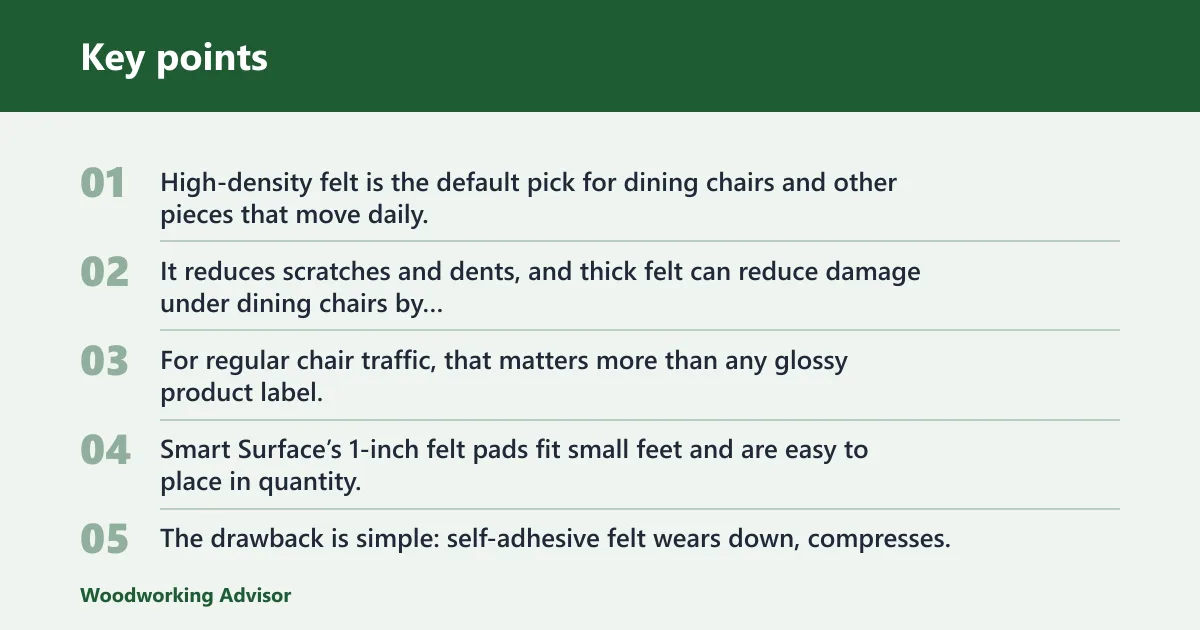
High-density felt is the default pick for dining chairs and other pieces that move daily. It reduces scratches and dents, and thick felt can reduce damage under dining chairs by up to 90% when the pad is sized and attached correctly. For regular chair traffic, that matters more than any glossy product label.
Smart Surface’s 1-inch felt pads fit small feet and are easy to place in quantity, which suits chair sets and mixed furniture. The drawback is simple: self-adhesive felt wears down, compresses, or peels off faster when the pad is undersized or the floor gets frequent drag motion.
Why felt is the default for daily movement
Dining chairs create repeated push-pull motion, so the pad must cushion while still keeping the foot from biting into the finish. Felt does that better than a hard glide because it spreads pressure across a softer contact layer. Families with active dining spaces notice floor wear fastest under dining chairs.
Thickness and density matter. Thin felt flattens sooner, and once it compresses, the leg starts contacting the finish more directly. If the pad does not cover the full footprint, the edge of the leg can still leave wear rings.
Self-adhesive, nail-on, and slip-on versions
Self-adhesive felt works well on clean, flat feet and light-to-moderate chair weight. Nail-on versions hold better on heavier wooden legs, but they need exact placement and an installation that does not split the leg. Slip-on styles suit odd shapes or frequent movement, especially when adhesive is unreliable.
What makes felt fail early
Felt usually fails by compression, edge wear, or adhesive lift. If the chair is dragged rather than lifted, the pad can fold over itself and expose the leg. Once the felt surface gets shiny and thin, replace it before the wood finish starts taking the load.
Rubber pads: best for grip-first furniture
Rubber pads are better when keeping furniture from sliding matters more than letting it glide. That makes them useful for heavy pieces, bed legs, or furniture on a slight slope. The tradeoff is real: rubber or silicone pads can add grip, but they may scuff or discolor some finishes.
PROPA’s clear 2-inch rubber coaster cups fit heavy furniture legs where anti-skid performance matters. The drawback is that grip-first pads are not the best answer for furniture that gets pushed often, since too much traction can make chairs harder to move and can stress finish edges.
Where grip matters more than glide
Use rubber when the furniture should stay put. A sofa that shifts on smooth wood, a bed that creeps, or a chair that keeps skating backward may need more traction than felt can provide. For those cases, rubber acts as a position lock, not a cushion-first protector.
Finish risks to watch
Some wood finishes react poorly to rubber or silicone contact, especially when the pad sits in place for long periods. Heat, pressure, and trapped dust can all increase marking risk. If the floor finish is sensitive, check the contact area often and avoid leaving a pad in the same spot after moisture exposure.
When rubber is the wrong choice
Rubber is a poor fit for dining chairs, office chairs without wheels, and any piece that needs to slide with little effort. It can also create more drag on the floor than the furniture user expects, which leads to jerking movement and extra strain on the joints or legs.
Slip-on covers: best for odd-shaped legs
Slip-on covers are useful for legs with unusual shapes, angled feet, or pieces moved often enough that adhesive feels unreliable. They are less dependent on glue than stick-on pads, which makes them practical for pieces that get repositioned during cleaning or rearranging. The main drawback is shifting if the fit is loose or the leg shape does not match the sleeve well.
Ezprotekt’s large oval sliders are aimed at heavy furniture and repeated movement. That makes them a good fit for occasional repositioning, but not for every hardwood-protection job. If the furniture needs stable grip instead of movement, a slider-style cover is the wrong tool.
Round, square, and angled legs
Slip-on covers work best when the leg profile matches the sleeve shape closely. Round and square feet are easier to fit than tapered or angled feet, and metal feet can need a tighter, more exact match. If the cover twists after installation, it stops protecting the full footprint.
How to size for a secure fit
The cover should seat fully without stretching to the point of distortion. Too loose, and it migrates off center. Too tight, and it can tear or hold the leg unevenly, which concentrates pressure on one corner of the floor contact.
Common shifting problems
Shift happens when the pad slides out of center or when the leg shape changes under load. That is why slip-on styles suit pieces moved often, but only when the fit is checked after the first few uses. If the pad walks to one side, the floor edge gets exposed.
Furniture levelers: best for uneven floors
Adjustable levelers are for furniture that rocks on an uneven floor and needs a fixed contact point. Threaded stems and integrated felt pads can make sense when the main problem is stability rather than everyday sliding. The drawback is installation complexity: threaded hardware must match the leg and be tightened correctly.
This type is better for tables, cabinets, and heavier chairs that should stop wobbling. It is less suitable for renter-friendly quick fixes, and it does not solve every scratch problem if the felt face is too small for the actual foot print.
Why exact installation matters
Levelers work only if the threaded stem fits the leg and the pad lands flat. If the hardware sits off-center, the furniture can still rock, and the felt wears faster on one side. That uneven wear is a common failure mode on heavier pieces.
Where they fit best
Use adjustable levelers when the floor itself is part of the problem. They are especially useful for cabinets, tables, and dining chairs on slightly uneven boards or transitions. They are not a universal substitute for felt pads on every leg.
Which one should you buy?
If your main problem is dining chairs dragging across hardwood every day, start with high-density felt. If the piece slides too easily or must stay planted, use rubber or silicone. If the furniture is heavy and moved only when needed, slip-on covers or levelers can make more sense than a stick-on felt dot.
Say your dining table has square wooden legs and the chairs scrape twice a day at breakfast and dinner. Felt is the safest default, but only if the pad covers the full foot and stays centered; a small dot on a wide leg fails fast at the edges.
Suppose a bed frame keeps drifting on a smooth finish and leaves no dents, only position creep. That is a grip problem, so a rubber-style pad fits better than felt. If the finish is sensitive, inspect the contact area after the first few weeks.
For renters, stick-on felt or slip-on covers usually make the most sense because they are simpler to remove. For homeowners who want a longer-term fix on heavy furniture, nail-on, screw-in, or leveler-style hardware can be worth the extra installation effort.
Lightweight chairs and side tables usually do fine with adhesive felt, as long as the pad fits the full footprint. Heavy furniture benefits from nail-on, screw-in, or larger slip-on formats because load and shear force are higher. If the leg is metal or tapered, measure before you buy.
Furniture pad decision table
| Furniture type | Leg shape | Movement frequency | Finish sensitivity | Safest pad type | Attachment method | Replacement interval | Likely failure mode |
|---|---|---|---|---|---|---|---|
| Dining chairs | Round or square wood | Daily | High | High-density felt | Self-adhesive, nail-on, or slip-on | Check monthly; replace when compressed or peeling | Compression and edge wear expose the leg and create wear rings |
| Dining chairs | Round metal or narrow feet | Daily | High | Slip-on or centered tap-on felt | Slip-on or tap-on only if centered | Check every 2-4 weeks | Shifting off center leaves a hard edge in contact with the floor |
| Sofa or bed | Flat, broad, or caster-adjacent | Rare | Medium | Rubber or large cup-style pad | Set under each foot | Inspect quarterly | Grip can mark finishes or collect grit under the contact surface |
| Cabinet or table | Wooden leg with threaded insert | Occasional | Medium to high | Felt leveler | Nail-on or screw-in | Check every 3 months | Misaligned installation causes rocking and uneven pad wear |
| Odd-shaped accent chair | Angled or irregular | Frequent | High | Slip-on cover | Slip-on | Inspect monthly | Cover twists, loosens, or slides during repositioning |
| Heavy furniture that should stay put | Wide or flat base | Rare | Medium | Rubber pad | Place under load points | Inspect every 3 months | Rubber can discolor some finishes and may trap grit |
Frequently asked questions
What type of furniture pad is best for hardwood floors?
For most hardwood floors, high-density felt is the best all-around choice. It is the safest everyday option for hard surfaces and it handles repeated chair movement better than a hard glide. Use rubber when grip matters more than glide, and use slip-on or leveler hardware when the leg shape demands it.
Should I use felt, rubber, or plastic pads on wood floors?
Use felt when the furniture moves often and floor wear is the main concern. Use rubber when furniture sliding is the problem and some grip is helpful. Use plastic glides only when you want easier movement; they are rarely the first pick for primary hardwood protection.
How do I stop dining chairs from scratching hardwood floors?
Fit each chair leg with a pad that covers the full contact area, then check that the pad stays centered after use. High-density felt is the usual answer for dining chairs because they move daily and create visible wear rings. Replace pads before they flatten enough for the wood to touch directly.
How often should I replace furniture pads on hardwood floors?
Replace them as soon as you see compression, peeling, tearing, or edge wear. For dining chairs, monthly checks are sensible because daily push-pull motion wears pads faster. For lighter or rarer-use furniture, a quarterly inspection is usually enough if the pad is still centered and intact.
Pads for chairs to protect hardwood floors
Chair pads should match the chair’s foot shape and the way the chair moves. Round felt pads work well on many dining chairs, but square legs often need a larger pad that covers the full footprint. Undersized pads fail quickly because the edges get exposed first.
Best furniture pads to protect wood floors
The best choice depends on movement and finish sensitivity, not only material labels. Felt is the main choice for everyday protection, rubber is better for grip-first jobs, and slip-on or leveler hardware is useful when the leg shape or floor level makes adhesive unreliable. Keep an eye on wear and replace early.
Sponsored / affiliate links. As an Amazon Associate I earn from qualifying purchases. I may earn additional commission from eligible campaigns.