Bruce Hardwood Floor Cleaner Green vs White Bottle: The Real Difference
If the Bruce Hardwood Floor Cleaner on your store shelf now comes in a white bottle instead of the green one you remember, you’re not imagining it — and the formula question is a fair one to ask before you spray it on your floor. Here’s the honest answer, straight from what Bruce has actually said about the switch, what’s really in the bottle today, and which current listing to buy.
The Real Difference: A 2020 Packaging Update, Not a New Formula
Bruce’s Hardwood & Laminate Floor Cleaner went through a packaging redesign around 2020 — the old green bottle with a black label was replaced by a white bottle with a red label. According to Bruce, that was a label and packaging change, not a reformulation: the company’s position is that the ingredients, properties, and benefits stayed the same across the switch. There’s no published second “deep clean” formula sold under a different bottle color — green and white were the same product before and after the redesign, at least by Bruce’s own account.
Current-Version Pick (White Bottle, 2-Pack Kit)
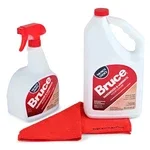 |
Bruce Hardwood & Laminate Floor Cleaner 2-Pack (32 oz Spray + 64 oz Refill) – $31.65 This is the current white-bottle, red-label version sold under the Bruce name today — the same no-wax urethane-finish formula described in this guide, packaged as a spray bottle plus a refill jug.
|
If your local store still has old green-bottle stock, or you already have one under the sink, Bruce’s own statement means there’s no need to hunt down the white bottle specifically — by the company’s account, it’s the same cleaner. That said, a handful of long-time users report the two don’t feel identical in daily use, which is worth taking seriously even without an independent lab test to confirm it. More on that below.
What’s Actually Inside the Bottle
Bruce publishes an ingredient list for its hardwood and laminate cleaner, and it reads like a fairly standard no-rinse floor-care formula: water as the base, isopropanol (an alcohol that speeds up drying so you’re not waiting around for a hazy floor to clear), butoxyethanol and a couple of ethoxylated surfactants (solvents and detergents that lift oily grime without needing you to scrub), a small amount of dimethicone — a silicone that helps the cleaner sheet off evenly instead of streaking — and citrus fragrance components with orange oil terpenes for scent. The solution is close to pH-neutral (around 7), which matters because acidic or alkaline cleaners can etch or dull a polyurethane finish over repeated use.
None of that ingredient list changed with the bottle color, as far as Bruce has stated publicly. It’s also listed at roughly 3.8% VOC content under California’s General Consumer Products rule, and carries a two-year shelf life from the manufacture date — worth checking if that half-used bottle under your sink has been sitting there since before the pandemic.
What Floors It’s Actually Made For (and What It’s Not)
Bruce is explicit that this cleaner is formulated for no-wax hardwood and laminate floors with a urethane or acrylic-impregnated finish — the sealed, factory-finished type used on most hardwood installed in the last few decades. That’s a meaningfully different category from a few other floor types where this cleaner doesn’t belong:
- Wax-finished floors: a solvent-based cleaner like this can strip or streak old-fashioned paste wax finishes. Those need a dedicated wax-safe cleaner instead. If you’re not sure which finish you have, our guide to finished floors covers how to tell the difference.
- Unsealed, oiled, or unfinished wood: liquid cleaners can soak into bare or oil-finished wood and cause staining, warping, or graying over time.
- Vinyl, tile, or stone marketed separately: some listings mention “gloss floors” broadly, but always check your specific flooring manufacturer’s cleaning guidance first, especially on engineered or prefinished lines with their own warranty terms.
Using the right cleaner for your finish matters more than which bottle color you grabbed. If your floor is a specific Bruce hardwood line, it’s worth checking the finish notes on a page like our Bruce is known for its affordability and efficiency on hardwood before assuming any floor cleaner is safe to use.
Do the Green and White Bottles Really Perform the Same? What Customers Say
Here’s where it gets less clear-cut. Bruce’s official position is “same formula, new packaging,” but customer reviews on the current white-bottle listings are mixed. A good share of longtime buyers say they can’t tell any difference in how it cleans or dries. Others report the newer bottle leaves more of a hazy film behind, or that it feels thinner or more watery than the green-bottle version they used for years. A few reviewers note the opposite — that the white-bottle version cuts through grime faster.
We were not able to independently verify a formula change through lab testing, and Bruce’s own published statement says there wasn’t one. It’s entirely possible the perceived difference comes down to normal batch-to-batch variation, a different sprayer nozzle changing how much product lands per pump, or people simply noticing an old favorite product more once the packaging looks unfamiliar. If your floor develops a haze after using either bottle, the fix is the same regardless of formula: buff it out with a dry microfiber cloth, and cut back on how much you’re spraying per pass — a light mist goes further than it looks like it should.
If you want a firm answer rather than relying on secondhand claims (ours included), the most reliable way to settle it for your specific bottle is to check the ingredient list printed on your current label against Bruce’s own published safety data, or contact Bruce’s customer service directly and ask whether your batch’s formulation has changed since the packaging update.
Which One Can You Actually Buy Today?
In practice, this is close to a moot point for new purchases: current retail and Amazon listings for Bruce Hardwood & Laminate Floor Cleaner are, at the time of writing, the white bottle with the red label. The green bottle has largely aged out of new inventory, so unless you’re using up an old bottle you already own, you’ll be buying the current white-bottle version either way. It’s sold as a ready-to-use 32 oz spray, a 64 oz refill jug for topping off the spray bottle, and in multi-packs that bundle both.
For general hardwood cleaning routines beyond this one product, our broader guide to cleaning hardwood floors covers mopping frequency, water amount, and other cleaner brands if Bruce isn’t what you have on hand.
How to Use It the Right Way
- Sweep or vacuum first so you’re not grinding grit into the finish while you clean.
- Spray a light, even mist directly onto a small section of floor — don’t flood it, and don’t spray so much that puddles form in the seams between boards.
- Wipe with a dry or slightly damp microfiber mop or cloth, working with the grain of the boards.
- Let the floor air-dry; it’s formulated to not require rinsing, and a properly applied light coat should dry within a few minutes without a dulling film.
- Skip it entirely on wax, oil-finished, or unsealed wood — use a product made for those finishes instead.
Between cleanings, floor mats at entry points and felt pads under furniture legs do more for long-term shine than any cleaner brand choice — grit under furniture and shoes is what actually scratches a urethane finish over time, not the wrong bottle color.
Frequently Asked Questions
Is the green Bruce hardwood floor cleaner bottle still sold?
Mostly no. Bruce switched its packaging to a white bottle with a red label around 2020, and current retail and Amazon listings are almost entirely the white-bottle version now. You may still find old green-bottle stock in some stores, but it’s not the current production packaging.
Did Bruce change the cleaner’s formula when it switched to a white bottle?
According to Bruce’s own statement, no — the change was described as a packaging and label update, with the same ingredients, properties, and benefits carried over. Some customers report noticing a performance difference between the two, but that hasn’t been independently confirmed as a formula change.
Can I still use an old green-bottle Bruce cleaner I already have?
Yes, as long as it’s within its shelf life (Bruce lists roughly two years from manufacture) and your floor has the no-wax urethane or acrylic-impregnated finish the product is made for. Give it a sniff and a look first — if it’s separated, discolored, or smells off, it’s past its useful life regardless of the bottle color.
Is Bruce hardwood floor cleaner safe for wax-finished floors?
No. Bruce Hardwood & Laminate Floor Cleaner is formulated for no-wax, urethane or acrylic-impregnated finishes. Using it on a paste-wax or oil-finished floor can strip or streak the wax layer — those floors need a wax-specific cleaner instead.
Bottom line: the green-versus-white debate is really a packaging story, not a performance one, at least by Bruce’s own account. What actually determines whether this cleaner is right for your floor is your finish type — no-wax urethane or acrylic-impregnated, not wax or oil — not which color bottle happens to be on the shelf.
Sponsored / affiliate links. As an Amazon Associate I earn from qualifying purchases. I may earn additional commission from eligible campaigns.