What Kind of Wood Is Yellow Inside? Osage Orange, Yellowheart & More
If you cut into a board and found bright yellow wood underneath, you’re most likely looking at Osage orange, yellowheart, or freshly milled yellow poplar – three species with genuinely yellow interiors, each for a different reason. Osage orange is the boldest of the three and darkens to brown with age; yellowheart is a South American import literally named for its color and holds its hue far longer; yellow poplar’s yellow-green streaking is a temporary phase that fades within months of light exposure. Here’s how to tell them apart, plus a couple of common mix-ups (yellow birch, we’re looking at you) worth clearing up first.
Quick Answer: Which Woods Are Actually Yellow Inside
Six species come up most often when someone finds yellow wood on a job site or in the shop – a small slice of the much bigger types of wood you will run into as a woodworker. Three (Osage orange, yellowheart, canarywood) are true “yellow interior” woods; two (yellow poplar, Alaska yellow cedar) are yellow but in a more subdued or temporary way; and one (yellow birch) is a name that misleads people into expecting yellow heartwood that isn’t actually there.
- Osage orange – electric yellow-orange when fresh, fades to golden brown over years of UV exposure
- Yellowheart (Pau Amarelo) – clear lemon-yellow, holds its color much longer than Osage orange
- Yellow poplar (tulip poplar) – yellow-green streaking in the heartwood that mellows to tan/brown within weeks to months
- Canarywood – bright yellow-orange when freshly cut, ages toward reddish-brown
- Alaska yellow cedar – pale, even butter-yellow throughout, not just the heartwood
- Yellow birch – despite the name, its heartwood is light reddish-brown, not yellow (the bark is yellow)
Best Yellowheart Lumber Pick
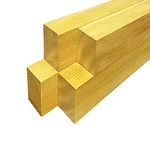 |
Barrington Hardwoods Yellowheart Turning Blanks (4-Pack) – $24.95 Real, kiln-dried yellowheart lumber if you want to see (and work with) this article’s brightest, longest-lasting yellow wood yourself.
|
Osage Orange: The Boldest Yellow Wood in North America
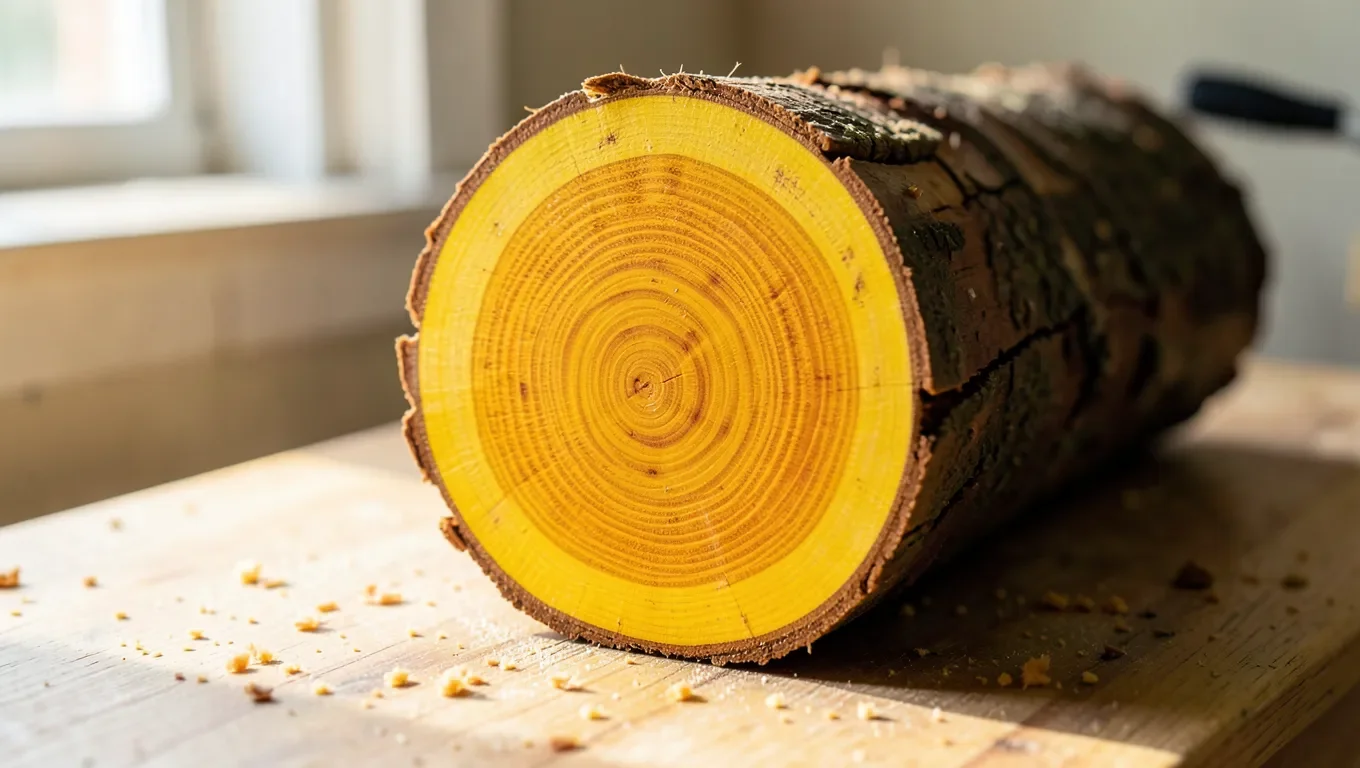
Osage orange (Maclura pomifera) is about as unmistakable as wood gets. Split a fresh log open and the interior is an almost fluorescent yellow-orange – genuinely one of the most distinctively colored woods native to North America. It goes by several regional names, including hedge apple, horse apple, bodark, and bois d’arc (“bow wood” in French), the last of which points to its most famous historical use: Comanche, Osage, and other Plains tribes prized it above all other woods for hunting bows because of its exceptional combination of strength, flexibility, and shock resistance.
Beyond bows, Osage orange has a long track record as fence posts and hedgerows across the Midwest – it’s naturally rot-resistant enough that posts cut a century ago are still sound in the ground. Woodturners and furniture makers use it today for the same bright color that made it famous, in bowls, inlay strips, and small accent pieces.
One thing worth knowing before you build with it: that bright yellow is not permanent. Osage orange is highly reactive to ultraviolet light, and a freshly cut piece will noticeably darken toward a warm honey-brown within months of sun exposure, continuing to deepen toward a rich brown over several years. A fence post or turned bowl won’t look anything like the fresh-cut photos you see online once it’s had a summer outdoors – which is normal, not a defect, but it’s worth planning for if the bright color is why you picked the wood in the first place.
Yellowheart (Pau Amarelo): Named for Its Color
Yellowheart, also sold under its Brazilian name Pau Amarelo (“yellow wood”), comes from Euxylophora paraensis, a tree native to the Amazon basin in Brazil. Unlike Osage orange, which gets its common name from its fruit, yellowheart is named specifically and directly for its color – a clean, saturated lemon-yellow that’s fairly uniform throughout the heartwood, without the streaking you see in poplar or canarywood.
It’s a dense, hard wood (comparable to hard maple) with a fine, even texture, which makes it a favorite for inlay work, marquetry, decorative turning, and accent strips in cutting boards and musical instruments, where a small amount of pure yellow provides contrast against darker woods like walnut or wenge. Like most wood, it does mellow slightly with UV exposure over time – typically toward a deeper gold rather than brown – but it holds its yellow character far longer than Osage orange does, which is part of why it’s popular for pieces meant to stay indoors and keep their color.
Yellow Poplar (Tulip Poplar): The Fresh-Cut Green-Yellow Streak
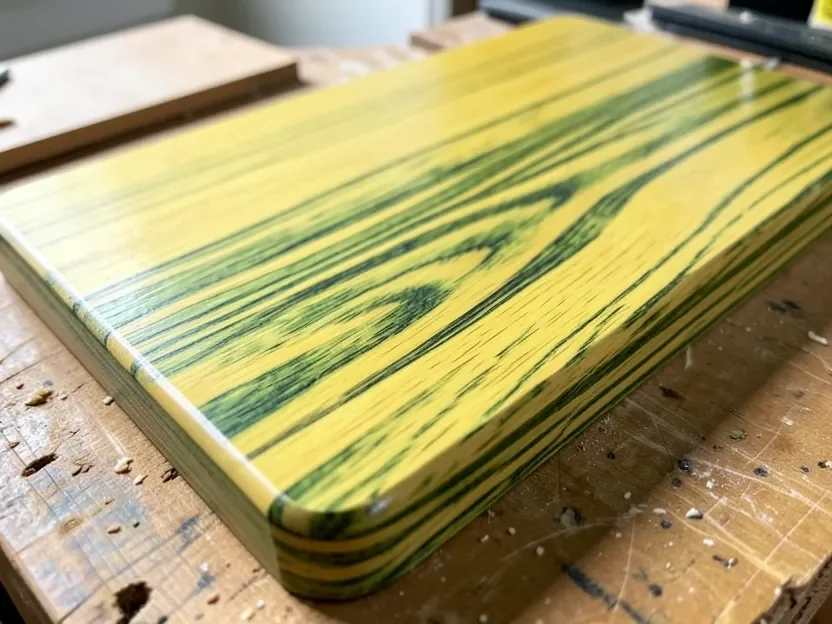
Yellow poplar, or tulip poplar (Liriodendron tulipifera), surprises a lot of first-time users. Mill a fresh board and the heartwood can show streaks of olive-green shading into yellow – a genuinely well-known identifying feature among woodworkers, even though poplar is more commonly thought of as a plain, pale utility wood. That green-yellow color comes from natural extractives in the heartwood and is completely normal; it isn’t mineral staining, fungal discoloration, or a sign of anything wrong with the tree.
Here’s the part that trips people up: that color is not stable. Both the green and yellow tones in poplar heartwood oxidize and fade under UV light, typically mellowing toward a plain tan or light brown within weeks to a few months of being exposed to daylight. A board that looks vividly green-yellow fresh off the mill will not look that way in a finished piece a year later – which is exactly why poplar is one of the most popular “paint-grade” hardwoods for cabinet parts, drawer boxes, and painted trim. Since the color is temporary anyway, painters and builders don’t worry about matching or hiding it long-term; they just paint over it and let poplar’s real selling points (cheap, stable, easy to machine) do the work.
Canarywood: Vivid When Fresh, Warmer With Age
Canarywood (Centrolobium species, native to Central and South America) is another genuinely yellow wood, though it’s less commonly stocked than Osage orange or yellowheart because of limited, irregular supply. Freshly cut canarywood shows a vivid yellow to orange background color, often streaked with darker reddish-brown or black stripes running through the grain – a combination that makes each board look distinct rather than uniform.
Like Osage orange, that bright color shifts with time and light exposure, deepening toward a warm orange-brown to reddish-brown over a period of months to years. Because of its striking figure, canarywood shows up most often in small-scale work – pens, knife handles, jewelry boxes, and accent inlays – rather than large furniture pieces, partly due to cost and partly because a little of that bold color tends to go a long way.
A Common Mix-Up: Yellow Birch Isn’t Actually Yellow Inside
This one causes real confusion, so it’s worth correcting directly: yellow birch (Betula alleghaniensis) does not have yellow heartwood. The name comes from its bark – young yellow birch has a distinctive yellowish-bronze, peeling, curly bark that’s one of the easiest ways to identify the tree in the forest. Cut into the wood itself, though, and the heartwood is a light reddish-brown to pale brown, closer to birch or cherry tones than to anything you’d call yellow.
It’s still a genuinely good furniture and flooring wood – hard, strong, and takes a finish well – but if you’re specifically hunting for a yellow-interior wood because of the name “yellow birch,” you’ll want one of the species above instead. This mix-up is common enough that it’s worth double-checking before you buy a board expecting a color it doesn’t have.
Alaska Yellow Cedar: A Paler, More Even Yellow
Alaska yellow cedar (Callitropsis nootkatensis, also sold as Nootka cypress) takes a different approach to “yellow” than the others on this list. Instead of a colored heartwood contrasting with paler sapwood, the entire tree is a fairly uniform, pale butter-yellow, with very little visual difference between heartwood and sapwood. It’s naturally rot- and insect-resistant, which combined with its stability has made it a long-time favorite for boat building, exterior siding, and outdoor furniture on the Pacific coast. One quirky identifier: freshly cut Alaska yellow cedar has a distinct, somewhat unpleasant raw-potato or sour smell that fades as the wood dries – a useful confirmation if you’re not sure what you’re looking at.
Why Freshly Cut Yellow Wood Doesn’t Stay That Color
A pattern shows up across almost every species on this list: the color you see the moment a board comes off the saw is rarely the color it settles into. Wood color changes with exposure to ultraviolet light and oxygen through a natural chemical process, generally moving toward darker, warmer, or more muted tones over time. Osage orange goes from electric yellow-orange to brown; canarywood shifts from yellow to reddish-brown; yellow poplar’s green-yellow streaking fades to tan. Yellowheart is the most color-stable of the bunch, but even it deepens slightly with age.
The practical takeaway: if you’re choosing a wood specifically for a fresh-cut yellow color you saw in a photo or at the lumberyard, plan for that color to shift once the piece is finished and living under normal light for a few years. A UV-inhibiting finish can slow the process somewhat, but it won’t stop it entirely – none of these species stay exactly as yellow as the day they were milled.
How to Identify Yellow Wood Yourself
If you’ve got an unmarked board or a mystery log and want to narrow it down, a few quick checks help:
- Cut a fresh face: color fades with age and light, so an old cut edge won’t tell you much – slice a small fresh section to see the true color.
- Check for streaking vs. uniform color: yellowheart and Alaska yellow cedar are fairly uniform; yellow poplar and canarywood typically show streaks or contrasting stripes.
- Weight and hardness: yellowheart is notably dense and hard for its size; yellow poplar is comparatively light and soft.
- Smell a fresh cut: Alaska yellow cedar has a distinctive sour smell that other yellow woods don’t share.
- Consider the source: a fence post or old hedgerow tree in the central U.S. is far more likely to be Osage orange than an imported exotic.
Frequently Asked Questions
What kind of wood is yellow inside?
Osage orange, yellowheart, canarywood, and freshly milled yellow poplar are the woods most commonly found to be genuinely yellow inside. Osage orange is the brightest and most distinctive of North American species; yellowheart is a South American import named specifically for its yellow color and holds it the longest.
Why does wood turn yellow inside?
The yellow color comes from natural pigments and extractives that build up in the heartwood of certain tree species as they mature – the same category of natural compounds responsible for other heartwood colors like the reds in cherry or the purples in purpleheart. It’s a normal, species-specific trait, not a sign of damage or disease.
Does yellow wood stay yellow after it’s cut?
Not for most species. Osage orange, canarywood, and yellow poplar all noticeably darken or fade with UV exposure – Osage orange toward brown, canarywood toward reddish-brown, and poplar’s green-yellow streaking toward tan. Yellowheart is the most stable of the bunch and keeps its yellow tone the longest, though even it deepens slightly over years.
Is yellow birch actually yellow inside?
No – this is a common mix-up. Yellow birch is named for its yellowish, peeling bark, not for its heartwood, which is actually a light reddish-brown to pale brown. If you’re looking for a species with genuinely yellow heartwood, Osage orange, yellowheart, or canarywood are better matches for the name.
Conclusion
Yellow wood almost always narrows down to a short list: Osage orange for the boldest, most fade-prone yellow-orange; yellowheart for a lemon-yellow that holds up over time; and freshly milled yellow poplar for a green-yellow streak that’s more of a temporary phase than a permanent feature. Canarywood and Alaska yellow cedar round out the list with their own variations, while yellow birch is worth remembering as the exception – a name that promises yellow heartwood it doesn’t actually have. Whichever one you’re working with, keep in mind that the vivid color you see fresh off the saw is a starting point, not a final answer – plan for it to mellow with time and light.
Sponsored / affiliate links. As an Amazon Associate I earn from qualifying purchases. I may earn additional commission from eligible campaigns.