Best Wood for Butcher Block Countertops (Maple vs Walnut vs Oak)
Hard maple is the best wood for most butcher block countertops: it is the hardest common choice at 1,450 lbf on the Janka scale, with small, tight pores. Walnut looks richer but dents sooner, and only white oak among the oaks handles moisture well. This guide compares six species on hardness, seasonal movement and real Amazon listing prices per square foot, then explains why your finish matters more than the species on most kitchen counters.
What Is the Best Wood for Butcher Block Countertops?
Best Maple Countertop Pick
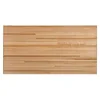 |
CONSDAN 42 x 25 in. USA Grown Hard Maple Butcher Block Countertop, $209.99 Solid hard maple, 1.5 inches thick and prefinished with food-grade oil, which is the species and thickness this guide recommends for an island or peninsula section.
|
As an Amazon Associate we earn from qualifying purchases.
Hard maple is the safe default, and the reason is more specific than “it is hard.” Maple is diffuse-porous, meaning its pores are small and spread evenly, so there are no large open channels for water or food residue to sit in. Per the Wood Database, it measures 1,450 lbf on the Janka scale. That is harder than every other species in the comparison below, which is why maple is the standard for commercial butcher block.
Most “best wood” articles rank species as if you will chop on the counter every night. In most kitchens you do not: a cutting board does the chopping, and the counter spends its life being wet, wiped and dented by pots. For that job, the ranking shifts toward dent resistance, how the wood moves with humidity, and how well it takes a finish. Those three factors are what the next sections compare.
If you need a different look or a lower price, the choices narrow quickly. Walnut is the premium look, cherry darkens attractively with age, and birch is the budget option covered in our birch vs maple butcher block comparison. If you want to see how the colors differ before you buy, our guide to butcher block colors shows the range.
Wood Species Compared: Hardness, Pores and Seasonal Movement
The table pulls hardness and shrinkage figures from the Wood Database species pages. The T/R ratio is tangential shrinkage divided by radial shrinkage. A higher ratio means the wood shrinks more unevenly across the board as it dries, which is a rough predictor of cupping.
| Species | Janka hardness | Pores | Tangential shrinkage | T/R ratio |
|---|---|---|---|---|
| Hard maple | 1,450 lbf | Diffuse, small | 9.9% | 1.9 |
| American beech | 1,300 lbf | Diffuse | 11.9% | 2.2 |
| White oak | 1,350 lbf | Ring-porous, plugged by tyloses | Not checked | Not checked |
| Red oak | 1,220 lbf | Ring-porous, open | 8.6% | 2.2 |
| Black walnut | 1,010 lbf | Semi-ring-porous | 7.8% | 1.4 |
| Black cherry | 950 lbf | Semi-ring to diffuse | 7.1% | 1.9 |
Two things stand out. First, walnut has the lowest T/R ratio of the group at 1.4, so it is the most evenly behaved board as humidity changes, but it is also one of the softest common choices. Second, the shrinkage numbers describe wood going from green to oven-dry. A kitchen only swings a few percentage points of moisture, so real movement is a fraction of those figures, and a glue-up of narrow strips with alternating grain reduces it further. Use the table to compare species against each other, not to predict how many millimeters your top will move.
This is why a counter beside a dishwasher or in a dry-winter climate deserves more thought than a quick species pick. If you are worried about cupping specifically, our guide on whether butcher block countertops warp over time covers the installation side, including leaving room for expansion.
Is Oak a Good Butcher Block Wood? It Depends Which Oak
The common advice is that oak is a poor butcher block wood because of its open grain. That is true of red oak and wrong for white oak. According to the Wood Database, red oak heartwood has few or no tyloses, so its large earlywood pores stay open channels that you can see with the naked eye. White oak heartwood has abundant tyloses, bubble-like structures that plug those pores, which is why white oak has long been used for barrels that hold liquid.
White oak measures 1,350 lbf, close to maple, and red oak 1,220 lbf. So white oak is a legitimate moisture-resistant option for a counter, with a bolder grain pattern than maple. For a surface you will chop on, maple is still the better pick because the grain is easier to keep clean. For a counter used for placing, wiping and rolling dough, white oak is a good choice.
Edge-Grain vs End-Grain vs Face-Grain Construction
Species is half the decision. The other half is how the strips are glued up, and it changes how the top looks and wears.
- Edge-grain: long narrow strips glued side by side with the long grain facing up. It is the most common and least expensive construction, and the one in most prefinished tops. Knife marks show over time, but you can sand them out.
- End-grain: short blocks stood on end so the fiber ends face up. A blade slips between fibers instead of cutting across them, so it hides marks best. It costs the most to make, and the exposed fiber ends drink up oil faster, so it needs more frequent oiling.
- Face-grain: wide boards laid flat, showing the broadest grain pattern. It looks the most like a table top and shows knife marks fastest, so it suits decorative surfaces.

For most kitchens, edge-grain is the practical choice. Pay for end-grain only if the top is your main cutting surface. Our deeper comparison, should butcher block be end grain or not, works through the cost trade-off, and using butcher block as a cutting board covers the knife-care side.
What Do Butcher Block Countertops Cost by Species?
Cost is where species choice becomes concrete. The table lists real Amazon listings checked on October 7, 2026, converted to price per square foot. Each row is a single listing, brands differ, and finish and edge treatment vary, so treat it as a snapshot of the market rather than a guaranteed price.
| Species and size (as listed) | Listing price | Price per sq ft |
|---|---|---|
| Birch (60 x 25 in) | $155.99 | $14.98 |
| Hevea (60 x 30 in) | $269.00 | $21.52 |
| Acacia (96 x 25 in) | $399.99 | $24.00 |
| Walnut (60 x 25 in) | $239.84 | $23.02 |
| Hard maple (72 x 25 in) | $379.99 | $30.40 |
| Hard maple (96 x 25 in) | $499.99 | $30.00 |
The pattern is useful even with those caveats. Birch and hevea (rubberwood) sit at the low end, with birch the cheapest of the listings checked at roughly $15 per square foot. Maple clusters around $30 per square foot, about double the birch listing. Walnut and acacia vary a lot by brand and finish. For a full price breakdown including installation, see our guide to how much butcher block countertops cost, and the reasons butcher block is so expensive.
If a budget-friendly alternative appeals, hevea (rubberwood) and acacia vs birch each get their own comparison.
Pick the Wood by Where It Goes in the Kitchen
- Island or prep zone: hard maple, edge-grain, oil finish. Hardest option, easiest to refresh by sanding and re-oiling.
- Sink run: maple or white oak. Seal every cutout edge and the underside before installing, and wipe standing water promptly.
- Bar or display top: walnut or cherry. They are softer, so keep them for surfaces that see less abuse.
- Laundry room, workshop or budget top: birch or hevea. Fine where looks and long-term dent resistance matter less.
Your Finish Matters More Than the Species
A butcher block that gets wet and is left unfinished will stain and eventually split, whatever the wood. There are two finish families. Penetrating finishes such as food-grade mineral oil or a mineral oil and beeswax blend soak in, keep the surface repairable, and are the right choice anywhere you might cut or prep food. Film-forming finishes such as polyurethane sit on top and resist water better, but once a knife cuts through the film you get chips and a surface that is awkward to repair, so reserve them for counters you will not cut on.
Oil is not a one-time job. Follow your top’s manufacturer instructions for the break-in period, then plan to re-oil whenever water stops beading on the surface. Our step-by-step guides cover how to oil butcher block, whether it needs a finish at all and the full range of butcher block finish options.
On food safety, wood has a better record than many people expect. UC Davis food microbiologist Dean Cliver’s cutting-board research is widely cited for finding that bacteria applied to wood tended to be drawn into the wood and die off, while bacteria survived in the knife grooves of plastic. Good cleaning habits still apply, and our guide on whether butcher block countertops are food safe goes through them.
Frequently Asked Questions
Is walnut good for butcher block countertops?
Yes, if you value looks over toughness. Black walnut is rated 1,010 lbf on the Janka scale, well below maple at 1,450 lbf, so it dents more easily. It has the lowest T/R shrinkage ratio of the species compared here at 1.4, which makes it relatively stable. Walnut suits bars and low-traffic spots better than a main prep zone.
Is red oak a good butcher block countertop?
Red oak works as a counter but is a weak choice for food prep. Its heartwood has few tyloses, so large open pores stay exposed, and it measures only 1,220 lbf. White oak is the better oak for countertops because tyloses plug its pores, which improves moisture resistance. For chopping, choose hard maple instead.
What is the most durable butcher block countertop wood?
Of the species compared here, hard maple is the most durable at 1,450 lbf Janka hardness. For the best resistance to knife marks, add end-grain construction. For a counter you will not cut on, a tough oil or varnish finish adds more day-to-day durability than switching to a different species.
Does butcher block come in wood other than maple?
Yes. Common alternatives are walnut, cherry, white and red oak, birch, beech, acacia and hevea (rubberwood). Maple dominates because it combines hardness with a plain, light color. Walnut and cherry are chosen for color, while birch, acacia and hevea are chosen for lower price.
Can you cut directly on a butcher block countertop?
Yes, on an oil-finished top. Hard maple in edge-grain or end-grain construction handles it, and you can sand out marks and re-oil. Do not cut on a top sealed with polyurethane or another film finish. A separate cutting board also keeps the counter looking newer for longer.
Final Pick: Which Wood Should You Choose?
Choose hard maple for a counter that sees real kitchen use, white oak if you want more grain character and good moisture resistance, and walnut or cherry when appearance comes first and the surface is not a work zone. Pick edge-grain unless the top is your main chopping surface, finish with food-grade oil, and seal every cutout edge before you install.
Sponsored / affiliate links. As an Amazon Associate I earn from qualifying purchases. I may earn additional commission from eligible campaigns.