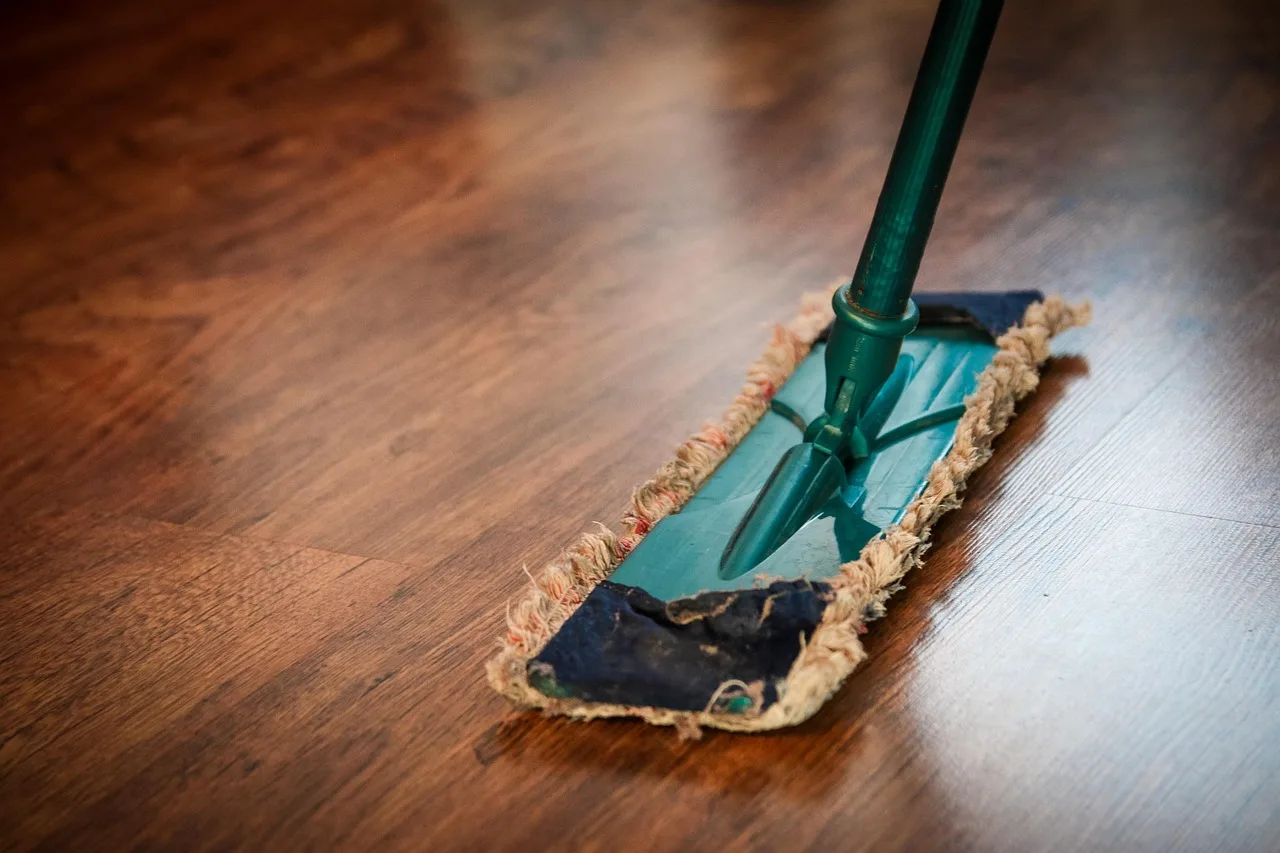
Spray Mop vs. Bucket Mop for Hardwood Floors
For sealed hardwood floors, a Spray Mop is usually safer because it limits moisture. A Bucket Mop works only if you wring it nearly dry and clean fast. Too much water can swell boards, dull finish, or leave streaks and residue that pull in grime. This guide compares both methods by moisture control, residue risk, and the failure cases that matter for hardwood.
| Decision factor | Spray Mop | Bucket Mop | Winner |
|---|---|---|---|
| Moisture control | Built-in trigger releases a light mist from a small refillable or replaceable solution container. | Depends on the bucket, wringer, and how dry the head is after wringing. | Spray Mop |
| Residue risk | Lower when used with a water-based, pH-neutral cleaner and a clean microfiber pad. | Higher if rinse water turns dirty or the mop head stays too wet. | Spray Mop |
| Cleaning power on heavy soil | Good for light soil, sticky spots, and daily footprints, but limited for greasy buildup. | Better for heavier scrubbing if the floor is sealed and the head is kept nearly dry. | Bucket Mop |
| Speed and convenience | Fast for quick touch-ups and small cleanup jobs. | Slower because you fill, wring, and often change rinse water. | Spray Mop |
| Hardwood safety margin | Usually the safer routine choice for finished hardwood. | Acceptable only with careful wringing and a sealed, stable finish. | Spray Mop |
Moisture control and residue risk
The trade-off is plain. A Spray Mop gives you low-moisture control for routine cleaning, while a Bucket Mop can remove heavier soil but raises the chance of over-wetting and dirty-water residue on finished hardwood.
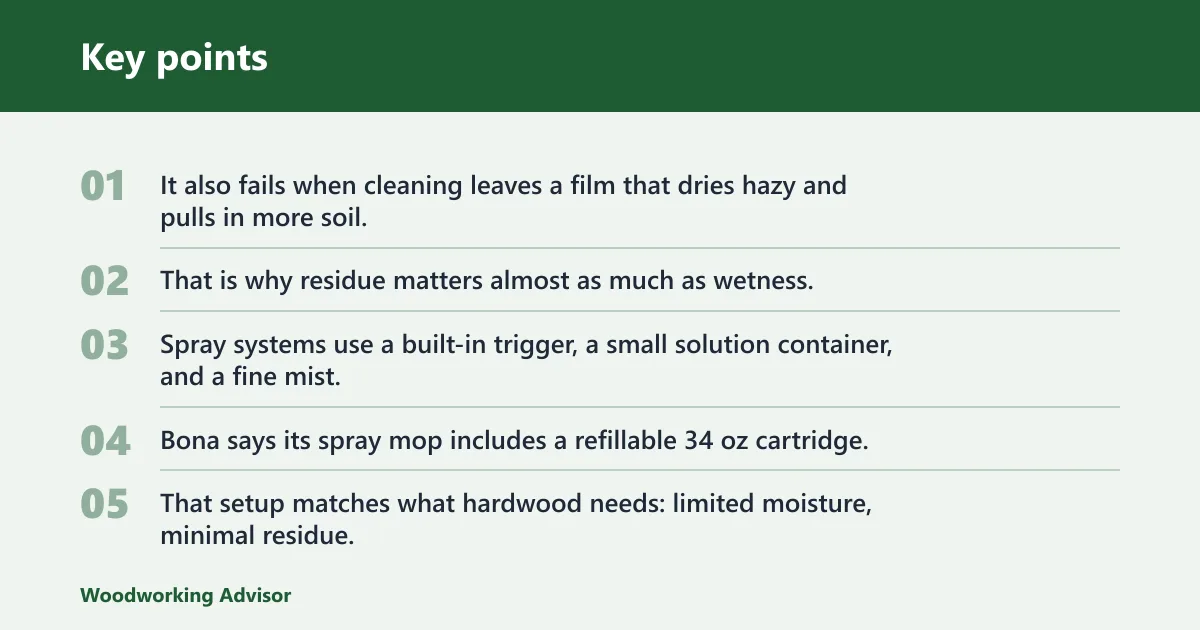
Hardwood fails when water lingers. It also fails when cleaning leaves a film that dries hazy and pulls in more soil. That is why residue matters almost as much as wetness.
Why the table favors spray mops for routine care
Spray systems use a built-in trigger, a small solution container, and a fine mist. Bona says its spray mop includes a refillable 34 oz cartridge, uses a precision fine mist, and comes with an extra-large reusable microfiber cleaning pad; it also says the cleaner is water-based and pH-neutral, and intended for polyurethane-finished wood floors.
That setup matches what hardwood needs: limited moisture, minimal residue, and a pad that lifts dust instead of pushing wet soil around. Good Housekeeping also lists the Bona Premium Microfiber Floor Mop as Best Overall and notes that it can be used wet or dry.
Why bucket mops still matter
A bucket system can help when the floor has more than dust and footprints. If the wringer gets the head very dry, a Bucket Mop can handle a greasy entryway or a sticky kitchen patch better than a light spray pass.
That edge disappears fast if the head stays wet or the rinse water gets dirty. A wet mop head carries more water into seams and finish wear, and a dirty bucket can spread residue across the floor instead of lifting it away.
What finished hardwood can tolerate
Finished hardwood is moisture-sensitive. Even polyurethane-finished boards need minimal water, because standing moisture can seep into seams, soften edges, and leave visible dulling after drying.
Do not assume every hardwood floor reacts the same way. A sound polyurethane finish tolerates careful damp cleaning better than an older or compromised finish, but neither one should be soaked.
What counts as too much water in practice
Too much water means the mop head drips, leaves visible wet trails, or keeps the floor shiny-wet long enough that you would not call it a quick pass. If the floor stays wet while you move across a room, the head is too wet for hardwood.
Picture a 12-by-14-foot living room with narrow gaps at the board seams. If the mop leaves a trail that remains glossy for several minutes, stop and wring or switch methods. Hardwood cleaning should leave the surface only slightly damp, not visibly wet.
Why residue matters as much as wetness
Residue can come from the cleaner, from dirty rinse water, or from a mop that was not rinsed enough between passes. On hardwood, a film is not a minor issue. It can dull the finish and make the floor feel tacky underfoot.
That is why a pH-neutral cleaner is the safer chemistry for wood floors. Water-based, residue-free cleaners are the right target, especially in hardwood-specific spray mop systems. Avoid waxy, oily, or shine-building formulas unless the floor manufacturer explicitly says otherwise.
Is a spray mop better for hardwood floors?
For sealed hardwood, yes, a Spray Mop is usually the better everyday choice because it gives you the most control over moisture. It works best on dust, daily footprints, and other light soil that does not need heavy scrubbing.
It is not the right answer for every mess. A spray mop is a maintenance tool, not a flood of cleaning liquid in a smaller package.
Best for dust, footprints, and light upkeep
Microfiber pads are the safest common pad choice for hardwood because they trap dust and absorb dry and damp soil without acting like a scrub brush. They are also washable, which keeps recurring cost lower than disposable pad systems.
Libman says spray mops are best for quick spot cleaning and daily touch-ups. That fits the job here: light use, limited liquid, and a pad that can pick up grit before it scratches the finish.
When a spray mop is not enough
Sticky spills, greasy patches, and pet accidents often need more than a few sprays. If the pad starts smearing instead of lifting the mess, stop and switch to a more controlled spot-cleaning method or a carefully wrung bucket system.
Say your kitchen has a patch of dried sauce near the island. A spray mop may loosen the top layer, but if the pad drags the residue around, you are better off with a damp microfiber cloth first and then a light mop pass after the area is clean.
Can you use a bucket mop on hardwood floors?

Yes, but only with caution. A Bucket Mop can work on hardwood if the floor is sealed, the mop head is wrung to nearly dry, and you move quickly enough that water does not sit on the surface.
The wringing method matters more than the bucket itself. Spin mops usually control moisture better than string mops, while string mops hold the most water and are the riskiest choice for moisture-sensitive wood floors.
Spin mop vs. string mop on sealed wood
Spin mops use a spinning chamber and hands-free wringing, which can help with moisture control. The same source says spin mops suit most households with sealed hard floors, and that is the category that makes sense for finished hardwood when a bucket system is needed.
String mops, by contrast, have twisted cotton or synthetic cord strands that hold a lot of water. They are better suited to water-safe floors. On hardwood, they are the type most likely to leave the head too wet.
How wringing changes the risk
A well-wrung mop should feel damp, not loaded. If it can drip from the head, it is not ready for hardwood. The wringer type matters too, because some wringers leave more water in the fibers than others.
Suppose a hallway needs a greasy shoe mark removed after a rainy day. A spin mop can help if the head comes out almost dry and you clean the mark in one or two passes. A string mop would be the riskier pick because it usually carries too much water into the boards.
Dirty rinse water and finish damage
Bucket systems can spread soil if the same rinse water gets reused too long. The mop head picks up grit, then re-deposits it across the floor. That increases residue risk and can leave the finish looking cloudy after drying.
If the bucket water is visibly cloudy, change it. The goal is to remove grime, not move it from one board to the next.
How much water is too much when mopping hardwood floors?
Too much water is any amount that leaves drips, standing wet trails, or a surface that stays wet long enough to soak into seams. Hardwood should be barely damp after mopping, not visibly wet.
A mop head that leaves a sheen across the board surface is too wet. A floor that needs a towel afterward is also too wet.
Failure cases to watch
Over-wetting can show up first at board seams, where moisture lingers and the finish wears unevenly. It can also show up as dulling after the floor dries, especially if residue from cleaner or dirty rinse water remains on the surface.
A common first-timer mistake is using a mop that looks “clean” but still carries too much water. The floor may look fine at first, then dry with streaks, hazy patches, or a slightly rough feel near traffic lanes.
When to stop and switch methods
- Stop if the pad is leaving visible water behind.
- Stop if the floor stays wet long enough to show a trail after your next pass.
- Stop if the finish looks dull once the area dries.
- Reduce moisture immediately, or change to a microfiber cloth for spot cleaning.
Wood cleaning decision matrix
This matrix maps common hardwood cleaning jobs to the safer choice, the moisture level to aim for, the cleaner type to use, and the point where you should stop mopping.
| Scenario | Safer choice | Moisture level | Cleaner type | When to stop |
|---|---|---|---|---|
| Dust | Spray Mop | Dry or barely misted pad | Dry microfiber pad; no liquid needed if dust only | Stop as soon as the pad stops picking up dust |
| Daily footprints | Spray Mop | Light mist only | pH-neutral, water-based cleaner | Stop if the floor looks wet instead of lightly damp |
| Sticky spill | Bucket Mop | Nearly dry head, then spot work | Residue-free cleaner; pre-lift the spill first | Stop once the tacky feel is gone and the board dries evenly |
| Pet accident | Bucket Mop | Very low moisture, fast cleanup | Hardwood-safe, water-based cleaner | Stop before the area stays wet or odor spreads |
| Grease spot | Bucket Mop | Very lightly damp microfiber | pH-neutral cleaner made for hardwood | Stop when the grease film is lifted and no slick residue remains |
| Seasonal deep clean | Bucket Mop | Controlled, nearly dry passes only | Water-based, residue-free cleaner | Stop if repeated passes are needed and the floor is staying wet |
How to read the matrix
Dust and daily footprints favor the spray mop because there is no reason to flood the floor with liquid. Sticky spills, pet accidents, grease, and seasonal deep cleaning lean toward a carefully wrung bucket system only when the mess is beyond light maintenance.
The rule is not “bucket for hard jobs” in general. The rule is “use the least water that can still remove the soil.”
Choose Spray Mop if… / Choose Bucket Mop if…
Choose Spray Mop if…
Choose Spray Mop if you are cleaning sealed hardwood on a routine schedule, especially for dust, footprints, and other light soil. It is also the better pick if you want faster touch-ups, a lower chance of residue, and less risk from over-wetting.
Choose it if you want a microfiber pad with a fine mist and a pH-neutral cleaner. It fits polyurethane-finished floors that need minimal water and quick drying.
Choose Bucket Mop if…
Choose Bucket Mop if the floor needs heavier scrubbing and you can wring the head to nearly dry, then keep the pass brief. A spin mop is the safer bucket-style option for sealed hardwood, while a string mop holds too much water for routine use.
Choose it for sticky spills, pet messes, grease spots, or a seasonal deeper clean when a spray mop would take too many passes. If the head starts dripping or the floor stays wet, stop and switch back to spot cleaning.

How often should hardwood floors be wet-mopped?
Wet-mopping hardwood should stay occasional, not automatic. For most homes, the safer pattern is frequent dry cleaning with a microfiber pad or vacuum, then limited damp mopping only when footprints, haze, or sticky soil actually appear.
The right interval depends on traffic, pets, and entryway grit. A hallway that collects dirt daily may need more frequent light misting than a guest room that only sees occasional use.
What to do between wet moppings
Regular dust pickup matters because grit scratches finish faster than a dry-looking floor suggests. Use a microfiber pad or vacuum to remove loose soil before any damp pass.
That approach lets you save wet cleaning for the moments that need it, which lowers both moisture exposure and cleaner residue over time.
What cleaner should I put in a spray mop for hardwood floors?
Use a water-based, pH-neutral cleaner intended for finished wood floors. The same source says its cleaner is water-based and pH-neutral, and it is intended for polyurethane-finished wood floors. That is the chemistry to look for when a spray mop is the tool.
Avoid cleaners that leave wax, oil, polish, or a shine coat unless the floor maker specifically approves them. Hardwood cleaning should aim for residue-free results, not a glossy film that builds up over time.
How to choose the right refill
Look for a cleaner made for wood, not a general-purpose floor soap. If the label does not clearly say it is safe for finished hardwood or polyurethane-finished wood floors, keep looking.
Bona also says one cleaning pad replaces 500 disposable pads, and the formula contains 95% USDA Certified Biobased Content. Those details do not change the cleaning rule, but they do show why a microfiber-pad spray system is built around low-moisture maintenance rather than heavy washing.
Frequently asked questions
Is a spray mop better than a bucket mop for hardwood floors?
For sealed hardwood, yes, a spray mop is usually better for routine cleaning because it limits moisture and lowers residue risk. A bucket mop only wins when the floor needs more scrubbing and the mop head can be wrung to nearly dry. If the head is wet enough to drip, it is the wrong choice for hardwood.
Can you use a bucket mop on hardwood floors without damaging them?
Yes, but only if the floor is sealed and the mop is wrung very dry. Spin mops are usually safer than string mops because they leave less water in the head. Dirty rinse water is another risk, so change the bucket water before it turns cloudy.
What type of mop is safest for sealed hardwood floors?
A microfiber spray mop is usually the safest common choice because it combines low moisture with a pad that traps dust and soil. A spin mop can also work if it is wrung very dry. String mops are the riskiest common option because they hold too much water.
Do spray mops clean better than bucket mops?
Not always. Spray mops are usually better for speed and maintenance, while bucket mops can remove heavier soil if moisture is controlled very carefully. For hardwood, “better” means safer drying, lower residue, and enough cleaning power for the mess at hand.
Should I use a microfiber mop or a string mop on hardwood?
Use microfiber. It traps dust and absorbs both dry and damp messes without the high water load that string mops carry. String mops are better suited to water-safe floors, not moisture-sensitive hardwood that needs minimal water and fast drying.
Sponsored / affiliate links. As an Amazon Associate I earn from qualifying purchases. I may earn additional commission from eligible campaigns.