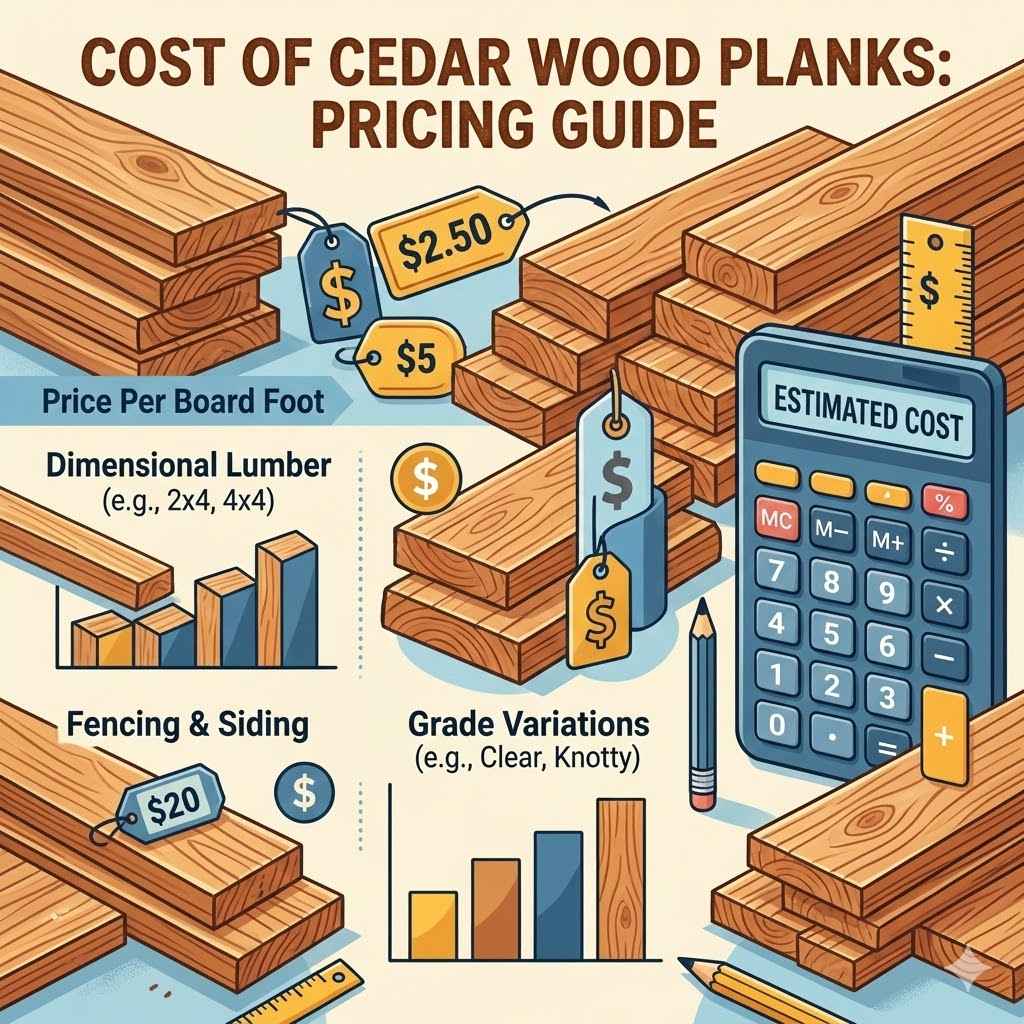
Cost Of Cedar Wood Planks: Pricing Guide
Figuring out the Cost of Cedar Wood Planks: Pricing Guide can feel a bit tricky when you’re new to building or crafting projects. Lots of things affect how much you’ll pay, and it’s easy to get lost in all the details. But don’t worry!
We’re here to make it super simple. We’ll break it all down step-by-step so you can get a clear picture of what to expect. Get ready to learn exactly what goes into the price and how to find the best deals.
Understanding Cedar Wood Plank Costs
This section will help you see why the Cost of Cedar Wood Planks: Pricing Guide can vary so much. We’ll look at the main reasons why one plank might cost more than another. Think about things like where the wood comes from, its quality, and even how thick it is.
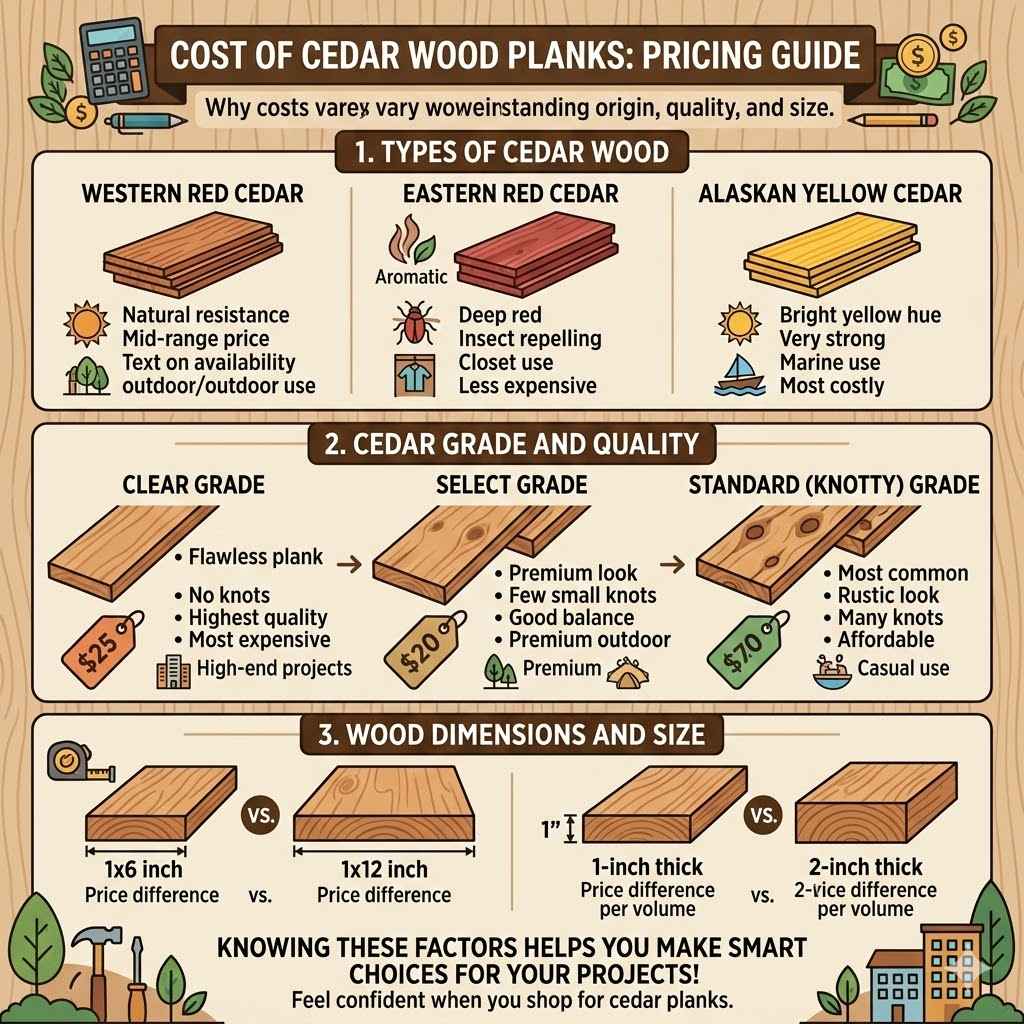
Knowing these factors helps you make smart choices for your projects. We want you to feel confident when you shop for cedar planks.
Types of Cedar Wood
Different kinds of cedar wood have different prices. Some are more common, while others are rarer and more expensive. Each type also has unique looks and strengths.
Western Red Cedar is a very popular choice. It’s known for its beautiful reddish-brown color and its natural resistance to rot and insects. This makes it great for outdoor projects like decks, fences, and siding. Because it’s widely available and durable, its price is often in the mid-range. It’s a good balance of cost and performance for many homeowners and builders. You’ll find it in many lumber yards and home improvement stores.
Eastern Red Cedar is another type, often found in the eastern parts of North America. It has a distinctive aroma and a deep red color. This wood is also good at repelling insects, especially moths, which is why it’s often used for lining closets and chests. It tends to be less expensive than Western Red Cedar because it’s more readily available in certain regions. Its smaller size also means you might find fewer large, clear boards.
Alaskan Yellow Cedar is a unique option. It has a bright yellow to golden-brown hue. This wood is very strong and resistant to decay and insects, making it excellent for marine applications and outdoor structures where high durability is needed. Its hardness and special properties can make it one of the more costly cedar varieties. It’s not as common as Western Red Cedar, which also contributes to its higher price point.
The specific species of cedar you choose has a big impact on the overall Cost of Cedar Wood Planks: Pricing Guide. Availability, demand, and inherent qualities all play a part.
Cedar Grade and Quality
Just like other types of wood, cedar planks come in different grades. These grades tell you about the quality of the wood and how it looks. Higher grades usually mean fewer knots and imperfections, making them more expensive.
Clear Grade: This is the highest quality cedar you can buy. It has no knots or blemishes. Boards are perfectly smooth and uniform in color. This grade is used for high-end projects where appearance is very important, like detailed interior paneling or premium outdoor furniture. Because it’s hard to find and requires a lot of selection during milling, clear grade cedar is the most expensive.
Select Grade: This grade allows for some small knots, but they are typically sound and don’t detract much from the wood’s beauty. It’s still considered a premium grade, offering a good balance between appearance and cost. It’s suitable for many outdoor applications and interior finishes where a few natural markings are acceptable.
Standard or Knotty Grade: This is the most common and affordable grade. It features more knots, which give the wood a rustic look. These knots can be larger and more numerous. This grade is perfect for projects where a natural, casual look is desired, like rustic fences, accent walls, or outdoor sheds. The knots are part of its charm.
When you’re looking at the Cost of Cedar Wood Planks: Pricing Guide, always check the grade. A knotty plank will almost always be cheaper than a clear one of the same size.
Wood Dimensions and Size
The size of a cedar plank directly affects its price. Wider, thicker, and longer boards naturally cost more because they use more raw material.
For example, a single 1×6 inch plank that is 8 feet long will be cheaper than a 1×12 inch plank of the same length. The 1×12 uses twice the wood. Similarly, a 2-inch thick board will cost more per linear foot than a 1-inch thick board of the same width and length.
Lumber yards often price wood by the board foot, which is a measure of volume.
Consider your project needs carefully. Sometimes, using smaller or thinner planks and joining them can be more cost-effective than buying large, expensive pieces. However, for structural integrity or a specific look, larger planks might be necessary, and you’ll need to factor that into the Cost of Cedar Wood Planks: Pricing Guide.
Factors Influencing Cedar Plank Pricing
Beyond the wood itself, other market forces and preparation steps play a big role in the Cost of Cedar Wood Planks: Pricing Guide. Understanding these external factors can help you spot deals and anticipate price changes.
Availability and Seasonality
Like many natural products, the availability of cedar wood can change. Factors like weather, forestry regulations, and even global supply chains can affect how much cedar is available at any given time.
Supply and Demand: When demand for cedar is high, especially for outdoor projects in spring and summer, prices tend to go up. Conversely, during slower seasons, like fall and winter, you might find better deals. Lumber mills also sometimes have production cycles that influence how much wood is ready to ship.
Forestry Practices and Regulations: Sustainable forestry is important. Regulations on how and where cedar can be harvested can impact supply. Areas with stricter environmental rules might have less readily available timber, potentially leading to higher prices. Certified sustainable wood may also come at a premium.
Transportation Costs: Cedar often comes from specific regions. The cost of transporting the wood from the forest to the lumber mill, and then to your local store or home, adds to the final price. Higher fuel costs or longer shipping distances mean higher prices.
Being aware of these factors can help you plan your purchases. Sometimes waiting for a slower season or a local sale can save you a good amount on your Cost of Cedar Wood Planks: Pricing Guide.
Milling and Processing
After trees are harvested, they need to be milled into usable lumber. The way this process is done significantly affects the price of the final plank.
Kiln Drying vs. Air Drying: Cedar can be dried in a kiln or air-dried. Kiln drying is faster and more effective at removing moisture, which helps prevent warping and shrinking. This controlled process adds to the Cost of Cedar Wood Planks: Pricing Guide but results in a more stable product. Air-dried wood is cheaper but takes longer and may be less stable.
Planing and Surfacing: Most cedar planks are planed to have smooth surfaces. This process removes imperfections and creates a uniform thickness. Rough-sawn lumber is cheaper but requires more work to finish. Finely planed or surfaced lumber costs more due to the extra labor and machinery involved.
Edge Treatment: Some cedar planks come with eased edges (slightly rounded) or are tongue-and-groove for easier installation. These finishing touches add to the manufacturing cost and thus the final price you see.
These processing steps ensure the wood is ready for use and meets certain quality standards. The level of refinement directly impacts the Cost of Cedar Wood Planks: Pricing Guide.
Geographical Location and Retailer Markup
Where you buy your cedar planks and who you buy them from matters. Prices can vary quite a bit from one place to another.
Regional Pricing: Cedar prices can be different depending on the region. If you live far from where cedar is harvested, you’ll likely pay more due to transportation costs. Local availability and demand in your specific area also play a role.
Retailer Type: Buying directly from a local sawmill might be cheaper than going to a large national home improvement store. Sawmills often have lower overhead costs. Big box stores might offer convenience and a wider selection but can have higher markups. Specialty lumber yards can offer high-quality wood but might also be pricier.
Wholesale vs. Retail: If you need a large quantity of cedar planks for a big project, buying wholesale directly from a distributor or sawmill can significantly reduce the Cost of Cedar Wood Planks: Pricing Guide per board. Retail prices are typically higher because they include markups for storefronts, staff, and smaller purchase volumes.
It’s worth shopping around and comparing prices from different sources to get the best value for your money.
Calculating Your Cedar Plank Costs
Now that you know what goes into the price, let’s talk about how to figure out your actual Cost of Cedar Wood Planks: Pricing Guide for your specific needs. This involves a bit of planning and math.
Estimating Material Needs
The first step is to figure out exactly how many planks you need. This prevents you from buying too much or too little.
- Measure your project area precisely. For a deck, measure the length and width. For a fence, measure the total linear footage. For siding, calculate the square footage of the walls.
- Determine the size of the planks you will use. This includes the width (e.g., 1×6, 1×8) and the length (e.g., 8 ft, 10 ft, 12 ft).
- Calculate the board feet needed. A board foot is a unit of volume equal to a board 1 foot long, 1 foot wide, and 1 inch thick. The formula is (Length in ft x Width in inches x Thickness in inches) / 12.
- Add a waste factor. It’s smart to add about 10-15% extra for cuts, mistakes, or boards with defects. This ensures you have enough even if things don’t go perfectly.
For example, if you’re building a small garden bed that needs two sides, each 8 feet long and 6 inches wide, and you’re using 1×6 boards (which are actually about 5.5 inches wide):
For one side: (8 ft x 5.5 inches x 1 inch) / 12 = 3.67 board feet. For two sides: 3.67 board feet x 2 = 7.34 board feet. Adding 10% waste: 7.34 x 1.10 = 8.07 board feet.
Pricing Tools and Resources
Many resources can help you get accurate pricing. Knowing where to look can save you time and money.
Lumber Yard Websites: Most local lumber yards and national home improvement stores have websites where you can check prices for different sizes and types of cedar planks. You can often see inventory and compare costs online before visiting.
Online Calculators: There are many free online board foot calculators. These tools can help you quickly figure out how many board feet you need for your project based on the dimensions you enter. They simplify the calculation process.
Get Multiple Quotes: For larger projects, it’s a good idea to get quotes from several different suppliers. This helps you find the most competitive pricing and ensures you’re not overpaying. Compare not only the price per board foot but also any delivery fees.
Using these tools will give you a much clearer picture of the Cost of Cedar Wood Planks: Pricing Guide for your specific project.
Comparing Prices Per Square Foot vs. Per Board Foot
Understanding how lumber is priced is key. Cedar planks are often sold by the board foot, but sometimes prices are advertised per linear foot or even per square foot.
Board Foot: This is a measure of volume. A board foot is 144 cubic inches (12 inches x 12 inches x 1 inch). If a price is listed as $X per board foot, you calculate your total cost by multiplying the total board feet needed by $X.
This is the most common method.
Linear Foot: This is simply the length of the board in feet. If you see a price per linear foot, you need to know the width and thickness of the board to compare it to board foot pricing. A wider or thicker board will have more board feet per linear foot.
Square Foot: Sometimes, especially for siding or decking, prices might be given per square foot. This is useful for calculating coverage area. You still need to know the board dimensions to understand how many linear feet or board feet are needed to cover one square foot.
It’s essential to convert all prices to a common unit, like board feet, when comparing. This ensures you’re making an apples-to-apples comparison and truly understanding the Cost of Cedar Wood Planks: Pricing Guide.
For example, if you see a 1×6 cedar plank for $2.50 per linear foot and a 1×12 cedar plank for $4.50 per linear foot. A 1×6 plank is approximately 0.5 board feet per linear foot (length x 5.5 inches wide x 1 inch thick / 12). So, $2.50 / 0.5 board feet = $5.00 per board foot.
A 1×12 plank is approximately 1 board foot per linear foot (length x 11.25 inches wide x 1 inch thick / 12). So, $4.50 / 1 board foot = $4.50 per board foot. In this scenario, the wider 1×12 plank is actually cheaper per board foot.
Real-Life Examples and Scenarios
Let’s look at some practical examples to see the Cost of Cedar Wood Planks: Pricing Guide in action.
Example 1: Building a Cedar Fence
Sarah wants to build a new fence around her backyard. The fence will be 100 linear feet long and 6 feet high. She decides to use Western Red Cedar for its durability and beauty.
She plans to use 1×6 cedar planks for the pickets, with a small gap between them.
- Fence Height: 6 feet. This means she needs 6-foot long planks.
- Plank Width: 1×6 planks (actual width about 5.5 inches).
- Linear Footage: 100 feet.
- Calculating Board Feet: Each 6-foot plank covers 0.5 board feet (6 ft x 5.5 in x 1 in / 12). For 100 linear feet, she needs boards that cover the total length. If she places pickets side-by-side, and they are 5.5 inches wide, she’ll need roughly 24 pickets per 100 feet to account for spacing (100 ft / (5.5 in / 12 in/ft)). So, she needs 24 pickets * 6 feet/picket = 144 linear feet of plank material.
- Board Feet Needed: 144 linear feet * 0.5 board feet/linear foot = 72 board feet.
- Adding Waste: 72 board feet * 1.15 (15% waste) = 82.8 board feet. Let’s round up to 83 board feet.
- Estimating Cost: If knotty Western Red Cedar 1×6 planks are priced at $5.50 per board foot, the estimated cost for the planks would be 83 board feet * $5.50/board foot = $456.50.
This example shows how careful measurement and calculation lead to a realistic estimate for the Cost of Cedar Wood Planks: Pricing Guide.
Example 2: Creating a Cedar Deck Border
Mark is building a deck and wants a nice border using 1×8 Western Red Cedar planks. The deck is rectangular, measuring 12 feet by 16 feet. He needs planks for the perimeter.
- Perimeter Calculation: (12 ft + 16 ft) * 2 = 56 linear feet.
- Plank Size: 1×8 cedar planks (actual width about 7.25 inches).
- Board Feet per Linear Foot: A 1×8 plank is approximately 0.6 board feet per linear foot (1 ft x 7.25 in x 1 in / 12).
- Total Board Feet Needed: 56 linear feet * 0.6 board feet/linear foot = 33.6 board feet.
- Adding Waste: 33.6 board feet * 1.10 (10% waste) = 36.96 board feet. Let’s round up to 37 board feet.
- Estimating Cost: If clear Western Red Cedar 1×8 planks cost $8.00 per board foot, the estimated cost for the border would be 37 board feet * $8.00/board foot = $296.00.
This scenario highlights how the grade of wood significantly affects the Cost of Cedar Wood Planks: Pricing Guide, with clear grade being more expensive.
Scenario: DIY Cedar Shelving
You want to build a set of simple shelves for your garage. You need three shelves, each 4 feet long and 10 inches deep. You decide to use knotty Eastern Red Cedar for its look and insect resistance.
You plan to use 1×10 boards (actual width about 9.25 inches).
- Shelf Length: 4 feet.
- Board Size: 1×10 (actual 9.25 inches wide).
- Number of Shelves: 3.
- Board Feet per Shelf: 4 ft 9.25 in 1 in / 12 = 3.08 board feet per shelf.
- Total Board Feet for 3 Shelves: 3.08 board feet/shelf * 3 shelves = 9.24 board feet.
- Adding Waste: 9.24 board feet * 1.10 (10% waste) = 10.16 board feet. Round up to 11 board feet.
- Estimating Cost: If knotty Eastern Red Cedar 1×10 boards are $6.00 per board foot, the estimated cost for the shelves would be 11 board feet * $6.00/board foot = $66.00.
This DIY scenario shows how smaller projects can still benefit from understanding the Cost of Cedar Wood Planks: Pricing Guide.
Tips for Saving Money on Cedar Planks
Everyone likes to save money! Here are some practical tips to help you reduce the Cost of Cedar Wood Planks: Pricing Guide without sacrificing too much quality.
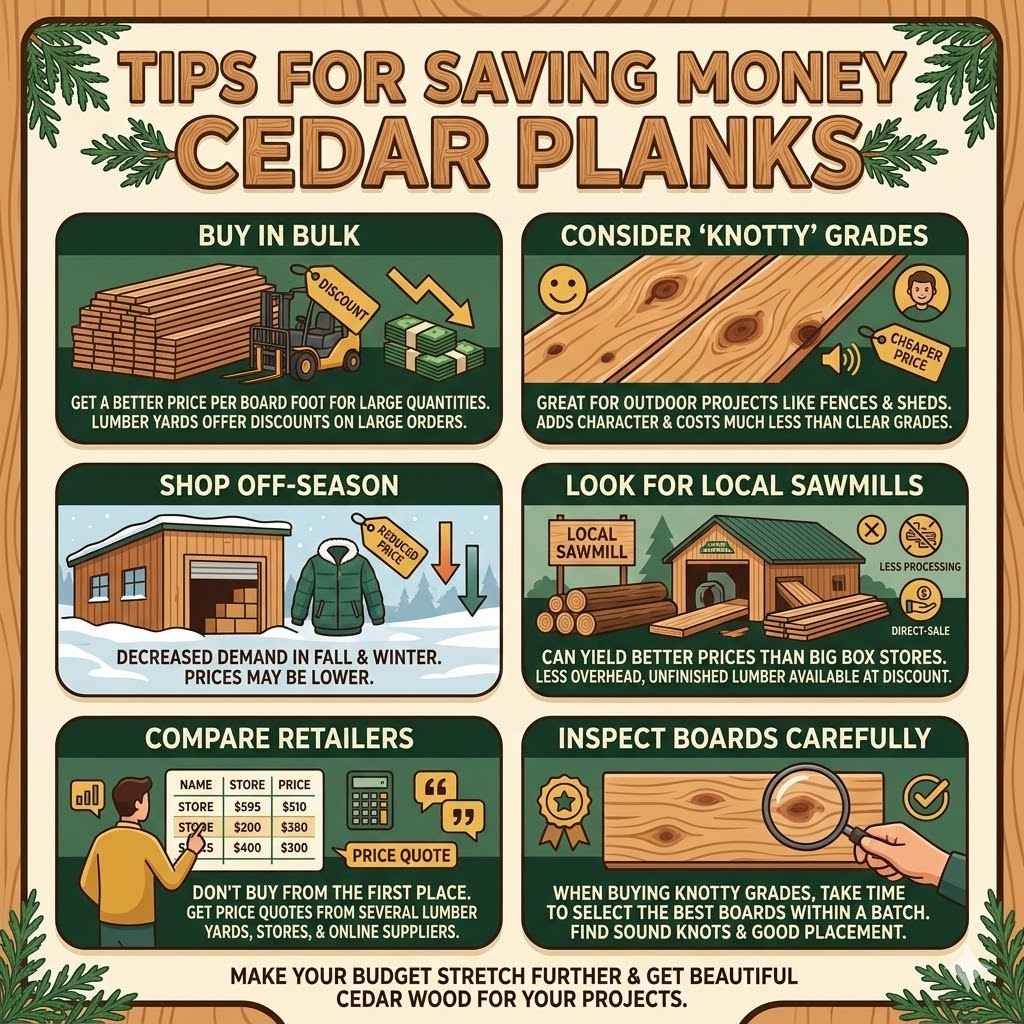
Buy in Bulk: If you have a large project or plan to do more projects in the future, buying a larger quantity of cedar planks at once can often get you a better price per board foot. Lumber yards and distributors usually offer discounts for larger orders.
Consider “Knotty” Grades: For many outdoor projects like fences, sheds, or rustic furniture, knotty cedar is a great choice. The knots add character and are usually much cheaper than clear grades. Make sure the knots are sound and not loose.
Shop Off-Season: Demand for outdoor building materials like cedar is often highest in the spring and summer. Prices might be lower during the fall and winter months when fewer people are starting new outdoor projects.
Look for Local Sawmills: Directly contacting local sawmills can sometimes yield better prices than big box stores. They often have lower overhead and might offer less processed lumber at a discount, which you can then finish yourself.
Compare Retailers: Don’t buy from the first place you see. Get price quotes from several different lumber yards, home improvement stores, and online suppliers. Even small differences in price per board foot can add up on larger projects.
Inspect Boards Carefully: When buying knotty grades, take the time to inspect the planks. Sometimes you can find better boards within a batch. Look for planks with fewer, smaller, and sound knots that are well-placed for your project.
By using these tips, you can make your budget stretch further and get the beautiful cedar wood you need for your projects.
Frequently Asked Questions
Question: What is the average cost per board foot for cedar planks?
Answer: The average cost per board foot for cedar planks can range from $4 to $10 or more. This varies greatly based on the type of cedar, grade, dimensions, and where you purchase it. Knotty grades are usually at the lower end, while clear grades and specialty cedars are at the higher end.
Question: Is cedar wood expensive compared to other woods?
Answer: Cedar is generally more expensive than common softwoods like pine or fir, but it’s often less expensive than hardwoods like oak or maple. Its higher cost is due to its natural resistance to rot, insects, and its attractive appearance, which makes it desirable for outdoor and premium applications.
Question: Should I buy rough-sawn or finished cedar planks?
Answer: Rough-sawn cedar planks are usually cheaper because they haven’t been planed smooth. If you have the tools and time to plane and finish them yourself, this can save money. Finished planks are ready to install but come at a higher price due to the extra processing.
Question: How do I calculate the number of cedar planks needed for a fence?
Answer: To calculate the number of cedar planks for a fence, first determine the total linear footage of the fence. Then, consider the width of your planks and how much gap you want between them. You’ll also need to factor in the height, which determines the length of each plank.
Always add about 10-15% for waste due to cuts and imperfections.
Question: Can I find cheaper cedar if I buy it online?
Answer: Sometimes, buying cedar online from specialized lumber suppliers can offer competitive pricing, especially for specific grades or sizes not readily available locally. However, you must factor in shipping costs, which can be significant for lumber. It’s best to compare online prices with local options after including shipping.
Summary
Understanding the Cost of Cedar Wood Planks: Pricing Guide involves looking at wood type, quality, size, availability, and where you buy it. By estimating your needs carefully, comparing prices, and using money-saving tips, you can find beautiful cedar wood that fits your budget and makes your projects look great.