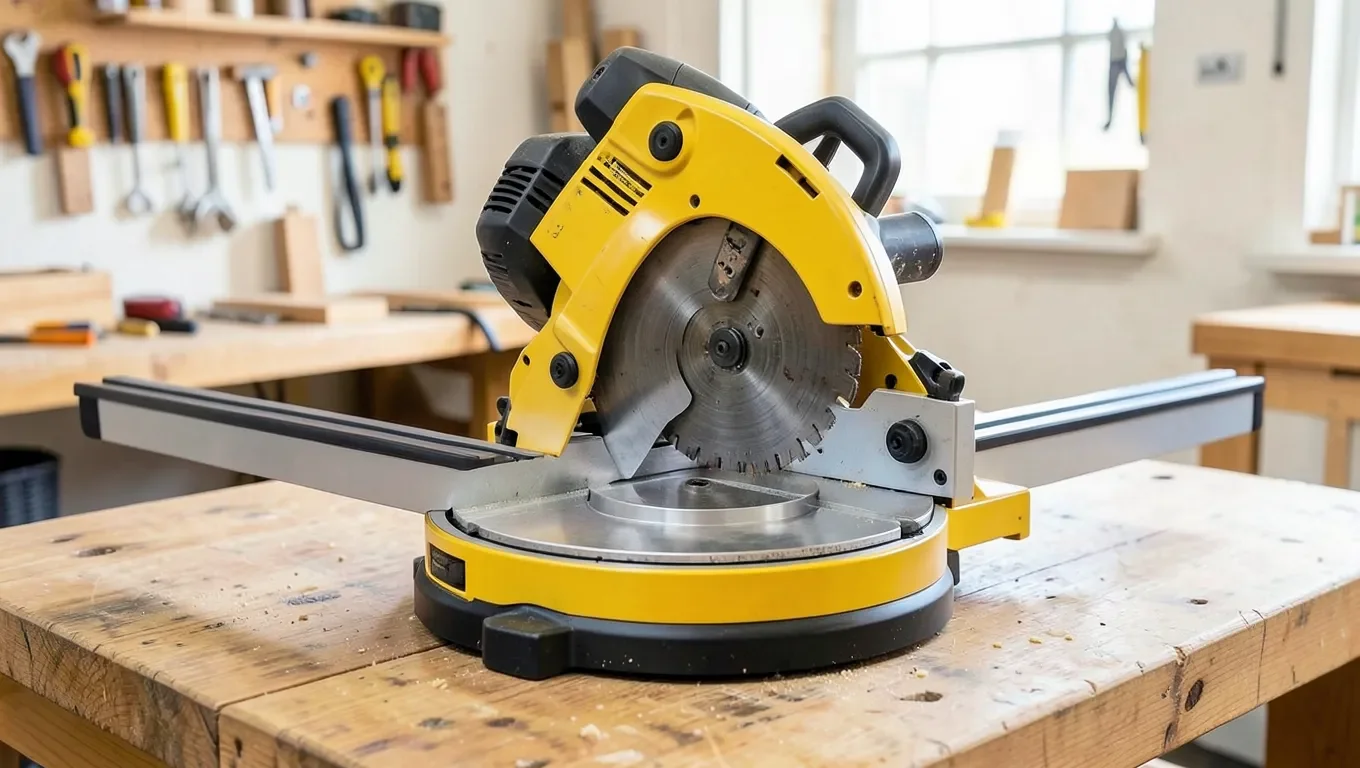
DeWalt Combination Miter Saw: DWS780 vs. DWS779 Compared
Search for a “DeWalt combination miter saw” and you will not find a single product with that exact name in DeWalt’s lineup. What people actually mean is a saw that combines three functions in one tool: a standard miter cut, a bevel tilt, and a sliding rail system for wide boards. DeWalt builds several of these, and the two you will run into most often are the DWS779 and the DWS780.
If you are also weighing whether a table saw belongs in your shop alongside this miter saw, see our table saw and miter saw combo guide for which to buy first and how to run both together.
Below I explain what that “combination” label really refers to, walk through the real differences between the models still sold new today, and cover the setup and safety details that matter once one of these saws is sitting on your bench.
Our Pick: The DeWalt DWS780
Best DeWalt Sliding Compound Pick
 |
DeWalt DWS780 12-Inch Sliding Compound Miter Saw – $649 This is the closest thing to a true “combination” miter saw in DeWalt’s lineup, since it puts miter, dual bevel, and slide capacity into one machine with built-in cut line guidance.
|
Both the DWS780 and the DWS779 share the same 15-amp, 3,800-rpm motor and 12-inch blade, and both cut up to 2×14 lumber at 90 degrees and 2×10 at 45 degrees. The DWS780 adds the XPS crosscut positioning system, which projects a shadow line showing exactly where the blade will land, and it ships with a 60-tooth blade instead of the DWS779’s 32-tooth blade. That combination of extras is why the DWS780 usually costs about $200 more.
There Is No Literal “DeWalt Combination Miter Saw” Model
This is worth clearing up because it trips people up when they go shopping. DeWalt does not sell a hybrid miter saw and table saw under one name. The “combination” in most people’s search comes from the fact that a dual-bevel sliding compound miter saw combines three separate cutting adjustments, miter angle, bevel angle, and a sliding rail for extra width, into a single tool. Older compound miter saws only handled miter and a single bevel direction. A dual-bevel sliding saw like the DWS779 or DWS780 lets you tilt the blade both left and right without flipping the board, which is the real reason trim carpenters reach for one on crown molding and picture frame work.
Is the DWS779 Still Worth Buying?
Both the DWS779 and DWS780 are current, active products in DeWalt’s catalog as of this update, sold new through Home Depot, Lowe’s, and Acme Tools. There was a 2022 recall covering units of the DWS779, DWS780, and DHS790 made between April 2019 and April 2022, after DeWalt received reports of the rear blade guard breaking or detaching. If you already own one of these saws with a date code in that range, check DeWalt’s recall page and get the free repair kit before using it. Saws built after April 2022, and everything currently sold new, already ship with the corrected guard.
Where the DWS779 gets tricky is availability on Amazon specifically. Its main standalone listing has gone in and out of stock, and at the time of this update it was showing as unavailable there, even though other retailers still carry it. If you want the DWS779’s lower price and do not need the XPS light, check Home Depot or Lowe’s directly rather than assuming Amazon has current stock.
What Makes the Slide-Plus-Dual-Bevel Combination Useful
The sliding rails are what separate these saws from a basic compound miter saw. Pulling the saw head forward before the cut lets the blade travel across a wider board instead of just dropping straight down, which is why a 12-inch blade on a sliding saw can crosscut lumber that would stall a non-sliding saw of the same blade size. Dual bevel means the head tilts up to 49 degrees in both directions, so a crown molding run that needs opposite bevel angles on each end does not require you to flip the workpiece and lose your reference edge.
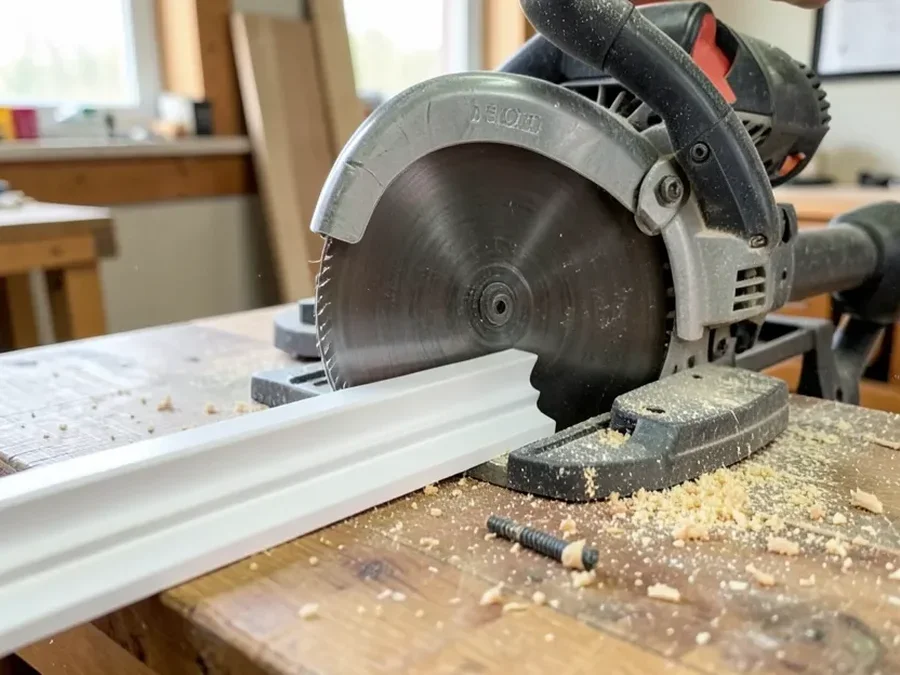
The detent plate is the other piece people underrate. Both models use a stainless steel miter detent plate with ten positive stops at the common angles (0, 15, 22.5, 31.6, and 45 degrees on each side). Locking into a detent takes the guesswork out of repeat cuts, which matters more than raw horsepower once you are running baseboard around an entire room.
Setting One Up: Bench Depth and Dust Collection
Because the head slides backward on rails, these saws need more clearance behind them than a fixed-head miter saw of the same blade size, generally 12 to 18 inches depending on how far back you mount the fence. Measure your bench or stand before buying if space is tight; this is the single most common regret with sliding miter saws. Bolt the saw to a stand or bench rather than running it loose on a folding table. The slide mechanism transmits vibration, and a loose base will show up as chatter marks on finish cuts.
DeWalt rates the dust collection on both saws at capturing roughly 75 percent of chips with the included bag attached. That is a reasonable number for a bagged system, but it is well below what a shop vac hookup manages. If you are cutting crown molding or trim indoors for any length of time, run a shop vac off the dust port instead of relying on the bag alone.
Safety Notes Specific to Sliding Compound Miter Saws
Keep both hands outside the marked no-hands zone printed on the saw’s table, and never reach across the blade path to steady an offcut while the blade is spinning. Let the blade come to a complete stop before lifting the head back up; sliding saws pull the blade toward you during the cut, and a coasting blade can catch a loose sleeve or glove on the way back. Wear eye protection every time, and if you skipped the dust collection step above, wear a dust mask too, since MDF and treated lumber dust from trim work is not something you want to breathe regularly.
If your saw falls in the 2019 to 2022 date code range covered by the 2022 recall, do not use it until you have installed the free replacement guard. DeWalt’s support line and recall page (search “DeWalt miter saw recall” on their site) will walk you through checking your date code.
DWS779 vs. DWS780 vs. Cordless (DHS790): Which One to Buy
Pick the DWS779 if budget matters most, you are working in a shop with power outlets already run, and you do not mind reading a standard blade-and-fence reference mark instead of a projected shadow line. Pick the DWS780 (our pick above) if you want the XPS cut line system, the beefier 60-tooth blade included in the box, and you are willing to pay roughly $200 more for it. Pick the cordless DHS790 (60V FlexVolt) if you need to set up on a jobsite without a generator or extension cord run, understanding that battery-powered miter saws trade some runtime for that portability. For a shop saw that stays in one place, corded is still the simpler and cheaper choice.
If you are still deciding whether you need a sliding, dual-bevel saw at all rather than a smaller fixed-head model, our 12-inch double bevel sliding miter saw buying guide breaks down that decision independent of brand.
Frequently Asked Questions
Is there an actual DeWalt “combination” miter saw model?
No. DeWalt does not sell a single product officially named “combination miter saw.” The term refers to a dual-bevel sliding compound miter saw, like the DWS779 or DWS780, which combines miter, bevel, and slide functions in one tool.
What is the difference between the DWS779 and DWS780?
They share the same motor, blade size, and cutting capacity. The DWS780 adds the XPS LED shadow line cut indicator and ships with a 60-tooth blade, while the DWS779 uses a standard fence reference mark and a 32-tooth blade. The DWS780 typically costs about $200 more.
Are DeWalt DWS779 and DWS780 saws affected by a recall?
Units built between April 2019 and April 2022 were part of a 2022 recall over a rear blade guard that could break or detach. Saws with those date codes need the free replacement guard from DeWalt before use. Current production and everything sold new today already includes the fix.
How much bench space does a sliding compound miter saw need?
Plan for 12 to 18 inches of clearance behind the saw for the sliding rails to travel, in addition to open space on both sides for the length of material you are cutting.
Bottom Line
“DeWalt combination miter saw” is search shorthand for a dual-bevel sliding compound miter saw, and DeWalt’s two main corded options, the DWS779 and DWS780, both still ship new today. The DWS780’s XPS shadow line and included 60-tooth blade make it our pick if the extra cost fits your budget; the DWS779 covers the same cutting capacity for less if you can find current stock through Home Depot or Lowe’s. Either way, confirm your saw is clear of the 2019 to 2022 recall window before you plug it in. If you have not settled on DeWalt specifically, our broader 12-inch miter saw buying guide compares compound, sliding, and dual-bevel types across brands.
Sponsored / affiliate links. As an Amazon Associate I earn from qualifying purchases. I may earn additional commission from eligible campaigns.