Dewalt Battery Cord Adapter: What It Actually Does (Not Off-Grid Power)
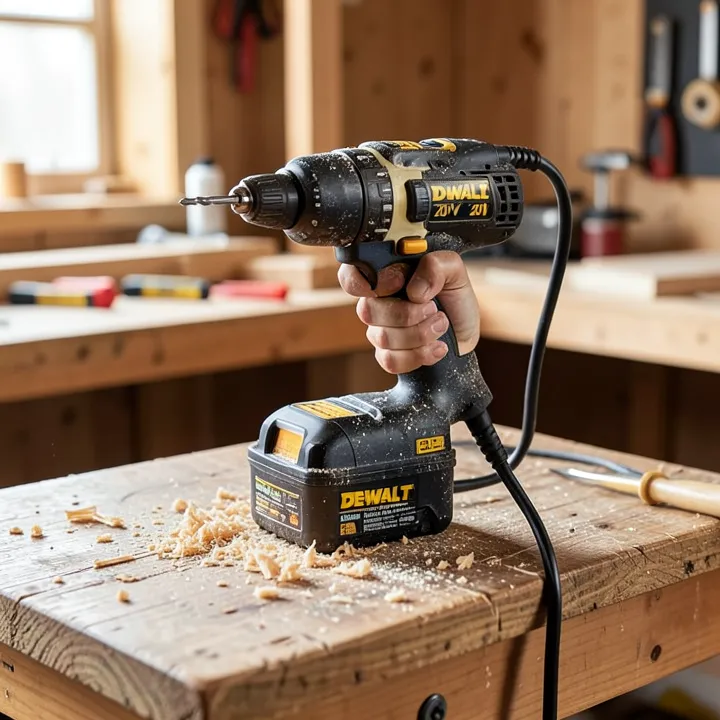
A Dewalt battery cord adapter is a battery-shaped plug that slides into the slot on a 20V MAX tool where the battery normally goes, with a cord running to a wall outlet — so the tool runs on AC power indefinitely instead of cycling through batteries. It’s the right fix for a tool that lives at one bench and runs for hours at a stretch. It doesn’t add mobility or “off-grid” use, since you still need an outlet nearby — that’s the opposite of what a battery gives you.
That distinction matters because it’s the one most write-ups on this adapter get backwards. If you’re picturing a way to power tools farther from an outlet, or on a job site with no power at all, this isn’t that product — you still need AC power, whether from a wall outlet or a generator. What it actually solves is battery downtime and cycle wear at a fixed location: a drill press conversion, a bench grinder, or any 20V tool you run continuously without wanting to burn through battery packs.
Benefits Of A Dewalt Battery Cord Adapter
Best Corded Adapter For 20V MAX Slide-Pack Tools
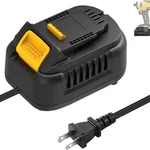 |
20V Corded AC Power Adapter for Dewalt Tools – $39.99 This clips into the same slot as a 20V MAX slide-pack battery and runs off a standard wall outlet, which is exactly the setup for a bench tool you don’t want cycling batteries all day.
|
A battery cord adapter provides one real benefit: it powers a tool with an AC power source instead of a battery pack, so a bench tool that runs for hours doesn’t chew through cycles on an expensive lithium-ion pack. Below are the key advantages, and the tradeoff that comes with them.
Continuous AC Power At A Fixed Location
The adapter serves as a power solution compatible with 20V MAX Dewalt tools that use the standard slide-pack battery shape — drills, drivers, and other tools that take the same pack. Because it’s tethered to a cord, it works best at a bench or station, not as a general-purpose power source you carry around the shop.
Fewer Battery Cycles, Longer Pack Life
Lithium-ion packs have a finite number of charge cycles before capacity noticeably drops. Running a stationary tool on AC power instead of swapping and recharging batteries all day keeps those cycles for the tools and jobs where you actually need to be cordless.
Compatibility With Dewalt Tools
Compatibility comes down to the battery slot shape, not just the “Dewalt” name on the tool — here’s what actually fits and what doesn’t.
Range Of Compatible Tools
Any tool that accepts a standard 20V MAX slide-pack battery — most drills, impact drivers, reciprocating saws, and work lights in that lineup — will accept a matching corded adapter. It will not fit 12V MAX tools (a different, smaller pack shape), and it won’t power 60V-only FlexVolt tools, which use a different connector; Dewalt’s own official FlexVolt adapter (the DCA120) was built specifically for those and has since been discontinued.
What Changes When You Switch To Cord Power
The adapter delivers regulated DC output at the tool’s normal voltage, so the tool itself runs the same. One real quirk: tools with a battery charge-level indicator will often show an inaccurate or static reading, since there’s no actual battery reporting state of charge — that’s cosmetic, not a performance issue, but it’s worth knowing before you assume something’s wrong.
Check your specific tool’s battery port before buying — a handful of newer Dewalt tools use a modified slide-pack connector for their brushless motor’s data pins, and an adapter built for the older pack shape may seat but not power the tool correctly.
Enhanced Productivity And Efficiency
For the specific case of a stationary tool, a corded adapter removes the interruptions that come with battery-powered operation, without needing to keep a rotation of charged packs on hand.
Continuous Power Supply
The adapter provides a seamless, uninterrupted power source for a bench-mounted tool. That eliminates the need to stop and swap batteries mid-task, which matters most for repetitive or long-duration jobs — a drill press stand running dozens of holes in a batch of parts, for example.
Reduced Downtime
Downtime from a dead battery disappears entirely as long as the tool stays plugged in. The tradeoff, again, is that “plugged in” is the operative word — this only helps at a fixed station with power already run to it.

Cost-effectiveness And Sustainability
When it comes to power tools, cost-effectiveness and sustainability are two real factors here, but the case for both is narrower than “buy one adapter, skip all future batteries.”
Fewer Replacement Batteries Over Time
For a tool that’s used constantly at one spot, running it corded instead of swapping through two or three packs a day reduces how often you’re replacing worn-out batteries — lithium-ion packs typically lose meaningful capacity after a few hundred charge cycles, and a tool that never leaves the bench doesn’t need to burn through those cycles at all.
Where This Doesn’t Help
If your actual pain point is buying too many batteries for tools you carry around the shop or job site, a corded adapter won’t fix that — it only helps the subset of tools that stay in one place. For everything else, you still need charged battery packs.
Real-Life Applications
The adapter’s usefulness is narrower than “power tools anywhere” — it’s specifically for tools that stay put near an outlet. Here’s where that actually applies.
| Application | Why It Works Here |
|---|---|
| Bench-mounted or converted stationary tools | A drill press conversion, bench grinder, or similar setup that runs at one spot near an outlet is the core use case — no battery cycling, no downtime for recharging. |
| Shop testing and diagnostics | Running a tool on regulated AC power isolates whether an issue is the tool or a failing battery pack, which is genuinely useful for troubleshooting. |
| Extended single-location tasks | A batch job at one bench — repetitive drilling, driving dozens of screws in an assembly line setup — benefits from not stopping to swap packs. |
Note what’s missing from this list: camping, remote job sites, or anywhere without existing AC power. A corded adapter still needs a wall outlet or a running generator, so it doesn’t solve for off-grid use — for that, you still want charged battery packs or a portable power station.
Frequently Asked Questions For Dewalt Battery Cord Adapter
How Does The Dewalt Battery Cord Adapter Work?
The Dewalt battery cord adapter allows you to convert your battery-powered Dewalt tools to corded operation. Simply plug the adapter into your tool and connect it to a power source, and you can continue working even when your batteries are drained.
It provides a convenient and reliable solution for extended use without interruption at a fixed location — it does not add portability away from a power source.
Is The Dewalt Battery Cord Adapter Compatible With All Dewalt Tools?
No — it’s compatible with tools that use the standard 20V MAX slide-pack battery, which covers most drills, impact drivers, and similar tools in that lineup. It does not fit 12V MAX tools or 60V-only FlexVolt tools, which use different battery connectors.
Check your tool’s battery port shape against the adapter’s listing before buying to confirm the fit.
Can I Use The Dewalt Battery Cord Adapter With Other Brands Of Power Tools?
No, a Dewalt-slot battery cord adapter is specifically shaped for Dewalt’s 20V MAX pack and won’t physically fit other brands. Each brand uses its own battery shape and pin layout, so you need an adapter built for that specific system.
Using a mismatched adapter can damage your tool or pose a safety risk.
Does Using The Dewalt Battery Cord Adapter Affect The Performance Of The Tool?
No, using the Dewalt battery cord adapter does not affect the tool’s cutting, drilling, or driving performance. It simply provides an alternative power source when you don’t have access to a charged battery. Your tool will function the same way it does with a battery, though a battery-level indicator (if the tool has one) may show an inaccurate reading since there’s no real battery reporting charge.
Conclusion
A Dewalt battery cord adapter is a narrow but genuinely useful tool: it keeps a stationary, bench-mounted 20V tool running on AC power instead of cycling through batteries, which saves pack wear and eliminates recharge downtime for that specific use case. It is not a mobility upgrade or an off-grid power solution — you still need a wall outlet or running generator nearby, and for anything farther from power, you’re back to batteries.
Sponsored / affiliate links. As an Amazon Associate I earn from qualifying purchases. I may earn additional commission from eligible campaigns.