DeWalt Powershop Radial Arm Saw: Real History, Safety & Restoration Guide
The Dewalt Powershop radial arm saw isn’t something you buy new anymore – DeWalt stopped making radial arm saws in 1988 – but plenty of these old cast-iron machines are still running in garages and basement shops, often inherited or picked up secondhand. If you’ve got one, the two things worth knowing before you plug it in are what makes the design genuinely different from a table saw, and why that same design is exactly why the industry moved away from it.
What Is the Dewalt Powershop Radial Arm Saw?
Best Negative-Hook Blade For Radial Arm Saw Safety
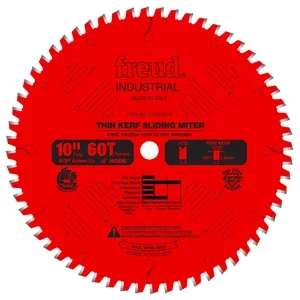 |
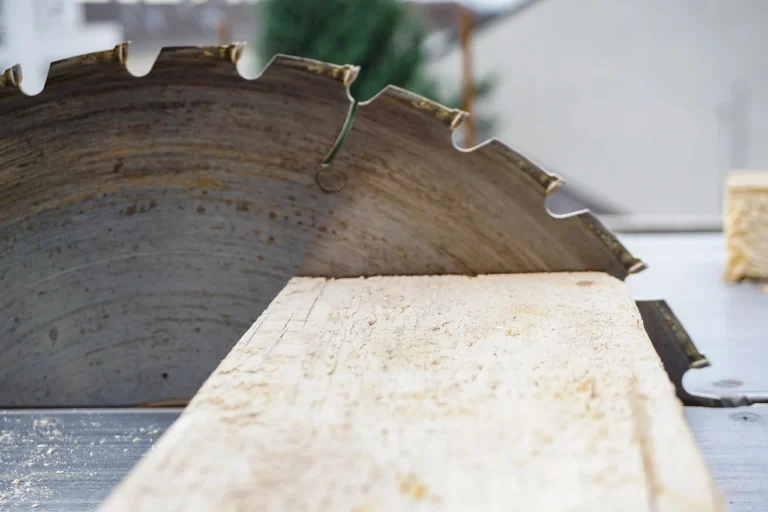
Freud LU91R010 10″ Negative-Hook Crosscut Blade – $70.14 If your Powershop still earns its keep for crosscutting, a -5° negative hook angle is the cheapest, easiest way to reduce the climbing tendency that makes an old radial arm saw feel more aggressive than a modern miter saw.
|
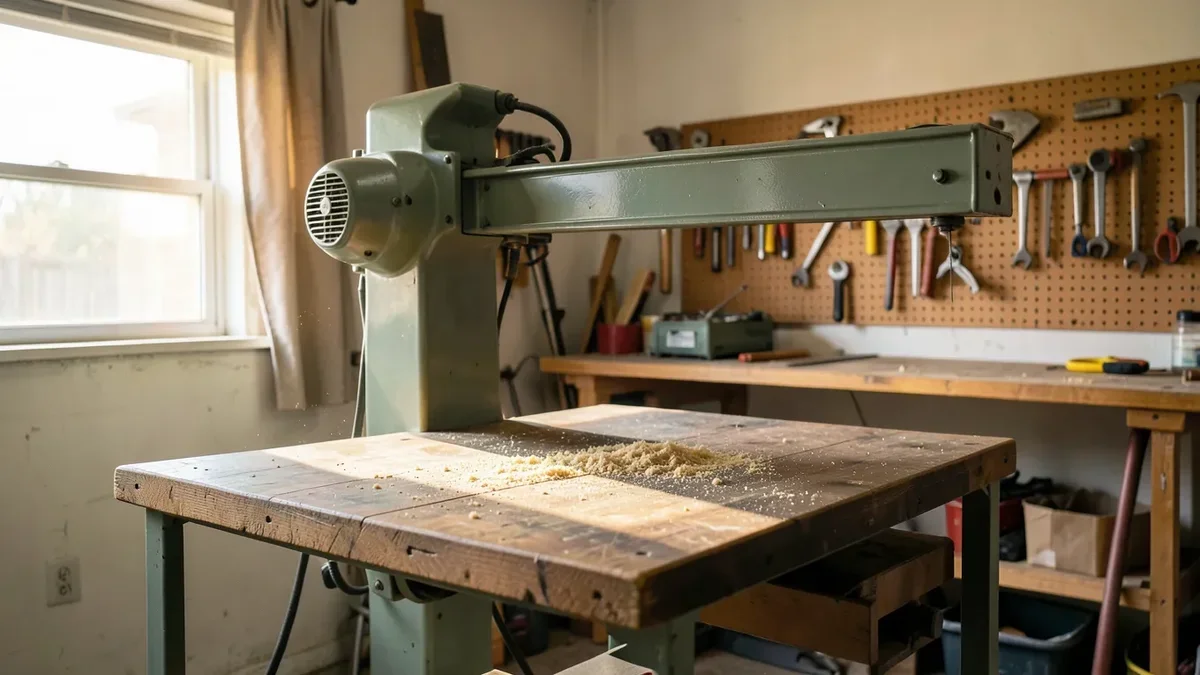
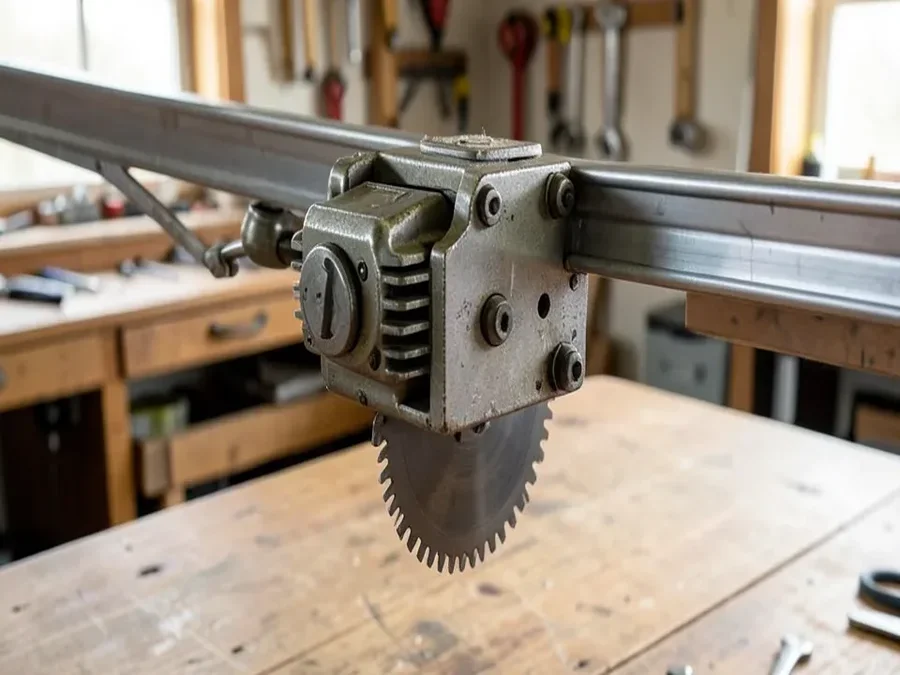
“Powershop” wasn’t a separate saw – it was DeWalt’s own brand name for its homeowner and light-duty radial arm saw line, sold alongside the heavier industrial models the company also made. The basic layout is the same on every version: a motor and blade carriage hang from an overhead arm that’s bolted to a column at the back of the table, and the whole carriage slides forward along that arm to pull the blade through the wood. The workpiece stays still on a fixed table; the blade travels. That’s the opposite of a table saw, where the blade is fixed in the table and you push the wood into it, and it’s also different from a miter saw, where the blade pivots straight down onto a stationary fence instead of sliding horizontally overhead.
The Real History Behind the Powershop Name
Raymond DeWalt patented the radial arm saw concept in 1922 and founded the DeWalt Products Company two years later in Leola, Pennsylvania, originally marketing the machine as the “Wonder-Worker.” Powershop became the branding DeWalt used for its consumer- and hobbyist-grade radial arm saws through the mid-20th century, positioned below the company’s industrial-line machines but built with the same basic cast arm-and-column architecture. DeWalt was acquired by American Machine and Foundry in the 1960s and later became part of Black & Decker, and the company discontinued radial arm saw production entirely in 1988 as table saws and, later, sliding compound miter saws took over the crosscutting jobs a radial arm saw used to handle.
That’s worth sitting with for a second: an entire tool category that DeWalt itself invented, and the company walked away from it decades before it became famous for cordless drills and circular saws. The next section is why.
Why Radial Arm Saws Fell Out of Favor: the Kickback Problem
This is the single most important thing to understand before you use one of these saws, and it’s the real reason radial arm saws lost ground to table saws and sliding miter saws – not fashion, not marketing. On a table saw, the blade spins so that its teeth come up out of the table toward you, but the wood is fed into a fixed blade, and the geometry of a crosscut sled or miter gauge keeps your hands moving with the cut, not against it. On a radial arm saw, you pull the spinning blade carriage toward yourself, across the top of the workpiece, to make a crosscut. If the blade isn’t set up correctly – wrong hook angle, dull teeth, worn arm track with play in it, or you let the saw’s own rotation grab the wood – the blade can self-feed and pull the carriage toward you faster than you intend, sometimes violently. That’s a kickback-toward-the-operator risk that a table saw or miter saw simply doesn’t have in the same way, and it’s well documented as the main factor behind the radial arm saw’s decline in popularity from the 1980s onward.
None of that means a well-maintained Powershop is unsafe to use – thousands of woodworkers still run them for ripping, dadoing, and general shop work without incident. It means crosscutting specifically deserves more respect on this machine than on a modern one, and the fix is mostly mechanical: a sharp blade with a neutral or negative hook angle resists that self-feed tendency, the anti-kickback fingers and blade guard need to actually be installed and functional (not removed “to see better,” which is common on old saws that have been passed around), and you feed the carriage with a slow, controlled pull rather than letting it run free.
Is a Vintage Powershop Worth Restoring or Buying Today?
Be honest with yourself about why you want one. As a financial investment, a used radial arm saw is close to worthless – forum sellers and restorers consistently report that these machines have essentially no resale value beyond what a fellow hobbyist who already wants one will pay, which usually isn’t much. As a genuinely useful tool for a home shop, or as a restoration project you enjoy for its own sake, that’s a different question entirely, and a lot of woodworkers are happy with the answer.
Before you commit time to restoring one, check these things in person if you can:
- Arm and column play: grab the carriage and check for looseness in the slide track and the yoke that lets it rotate; excess play here is what lets a blade wander or grab during a cut.
- Motor condition: listen for grinding bearings, check the power cord for cracked insulation, and confirm the motor actually holds RPM under load rather than bogging down.
- Missing guards: a saw with the upper blade guard, anti-kickback fingers, or riving knife removed needs those replaced before it’s used for crosscutting – don’t assume a “bare” saw is safe just because someone else ran it that way.
- Parts availability: arbors, bearings, and brushes for these old motors are still out there through specialty suppliers, but not at a hardware store – budget time to source them before you’re mid-project.
If you’d rather see the full restoration process step by step, our old radial arm saw restoration guide covers teardown and rebuild in more depth, and our DeWalt radial arm saw parts guide lists real sources for the blades, bearings, and brushes these machines actually need.
Setting Up and Running One Safely
Give the saw its own dedicated space with clearance on both sides of the table – radial arm saws need room to support long stock during crosscuts in a way a compact miter station doesn’t. Bolt or clamp the saw’s base down; a machine this heavy shifting mid-cut is its own hazard. Once it’s positioned, square the blade to the table and check the fence is parallel to the blade’s travel before you make a single real cut – a saw that’s out of alignment is far more likely to bind and self-feed.
For actual operation: always return the blade carriage to the back of the arm (away from you) after every cut and before releasing the workpiece. Never rip on this saw with the blade set for crosscutting orientation, and never crosscut with the guard or anti-kickback fingers removed. Wear eye and ear protection, keep the work held firmly against the fence and table, and if the saw ever tries to climb or pull harder than expected mid-cut, let go of the workpiece and let the saw stall rather than fighting it – that instinct is the single best habit you can build around this tool.
Powershop vs. Modern Table Saws and Miter Saws
A modern sliding compound miter saw does most of what a homeowner bought a Powershop for – crosscuts, miters, bevels – with the blade pivoting down onto fixed stock instead of sliding overhead toward the operator, which is inherently more predictable for a beginner. A table saw still beats the Powershop for ripping long stock accurately and for panel work. What the old radial arm saw offers that neither modern tool replicates cleanly is a single machine that handles crosscuts, rips, dados, and bevels without swapping tools or re-squaring a fence – which is exactly why so many of them are still in service in home shops decades after DeWalt stopped building them, even though a newer shop being built from scratch today would almost certainly reach for a miter saw and table saw combo instead.
Frequently Asked Questions
Is the Dewalt Powershop radial arm saw safe to use today?
Yes, if it’s been inspected, the guards and anti-kickback fingers are intact and functional, and it’s set up and squared correctly. The main risk to manage is the blade pulling toward the operator during a crosscut, which is reduced significantly by a sharp, negative-hook blade and a slow, controlled feed.
Why did DeWalt stop making radial arm saws?
DeWalt discontinued radial arm saw production in 1988 as table saws and, later, sliding compound miter saws took over most of the crosscutting and mitering work homeowners and contractors had used radial arm saws for, partly because those tools don’t share the same kickback-toward-operator risk during a crosscut.
Are old DeWalt Powershop saws worth any money?
Not as a financial investment. Resale value on used radial arm saws is generally low, and most sell only to other woodworkers who specifically want one for shop use. The value is in having a working tool, not in collecting for appreciation.
What’s the difference between a radial arm saw and a table saw?
On a radial arm saw, the blade and motor hang from an overhead arm and slide toward the operator across a fixed workpiece. On a table saw, the blade is stationary and rises up through the table while the operator pushes the workpiece into it. The two designs create different kickback risks, which is a major reason table saws became the more common general-purpose choice.
Conclusion
A Dewalt Powershop radial arm saw is a genuinely capable machine and a real piece of tool history – it just demands more respect during a crosscut than the table saw or miter saw that eventually replaced it in most shops. Inspect it properly, keep the guards on, run a good negative-hook blade, and it’s still a saw worth having in a home workshop rather than a museum piece.
Sponsored / affiliate links. As an Amazon Associate I earn from qualifying purchases. I may earn additional commission from eligible campaigns.