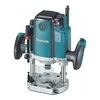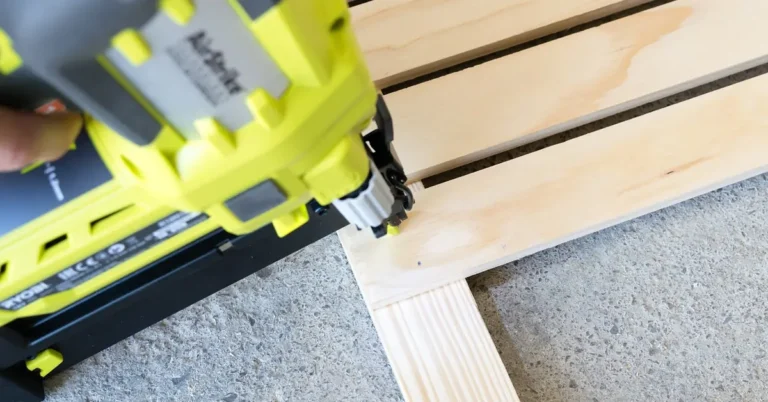
A heavy-duty plunge router on a workbench, illustrative image

Best Heavy Duty Wood Router: 7 Compared by Power & Price (2026)

The Bosch 1617EVSPK is the best heavy duty wood router for most woodworkers at $279.00: it is the only kit here that ships both a fixed base and a plunge base in one box, and at $124.00 per horsepower it undercuts every other combo kit in this roundup. If your router lives permanently in a table, the Bosch 1617EVS fixed-base-only version drops that to $79.56 per horsepower — the cheapest real 2.25 HP router we found.

Seven current heavy-duty wood routers are compared below on the numbers that actually separate a router that bogs down in 8/4 hard maple from one that doesn’t: motor amperage and horsepower, no-load RPM range, plunge depth, collet capacity, weight and today’s live price. Every spec below is pulled from the manufacturer’s own product page or owner’s manual, checked on 2 August 2026 — not copied from a retailer listing. Where a spec conflicts between sources (it happened once, noted below the table), the manufacturer’s own page wins.

RouterPrice (2 Aug 2026)MotorHPNo-load RPMPlunge depthColletsWeightBase typeCost per HP
Bosch 1617EVSPK$279.0012A2.258,000–25,0002-5/16 in1/4, 3/8, 1/2 in, 8mm18.2 lbs (kit)Combo (fixed + plunge)$124.00
Triton TRA001$399.9915A (2400W)3.258,000–21,0002-9/16 in1/4, 1/2 in13.0 lbsDual-mode plunge/fixed$123.07
Makita RP2301FC$430.7715A3.259,000–22,0002-3/4 in1/4, 1/2 in16.75 lbsPlunge only$132.55
DEWALT DW618PKB$229.0012A2.258,000–24,000Not published (mfr. lists 5/128 in per-turn micro-adjustment, not total stroke)1/4, 1/2 in10.1 lbs (base)Combo (fixed + plunge)$101.78
Bosch 1617EVS$179.0012A2.258,000–25,000N/A (fixed base only)1/4, 3/8, 1/2 in, 8mm9.92 lbsFixed only$79.56
Metabo HPT M3612DAQ4$269.00 (bare tool)36V cordless“2 Peak HP” (mfr. marketing figure, not a continuous rating)11,000–25,0001-21/32 in1/4, 1/2 in6.9 lbsCordless plungeExcluded — see note
SKIL RT1323-00$108.99 (router only)10A2.010,000–25,000N/A (fixed base only)1/4, 1/2 in8 lbsFixed only$54.50
Cost per HP = live buy-box price ÷ manufacturer-rated horsepower, calculated by Woodworking Advisor. Sources: Bosch and Skil figures from boschtools.com and skil.com; Triton from tritontools.com and Lowe’s/Infinity Tools spec pages; Makita from makitatools.com and the RP2301FC spec sheet PDF; DeWalt from dewalt.com; Metabo HPT from metabo-hpt.com and authorized-dealer spec pages. Prices are Amazon buy-box, pulled via the Amazon Creators API on 2 August 2026. The SKIL router is also sold bundled with a full router table as the RT1323-01 kit for $246.23 — that bundle price is excluded from the cost-per-HP column because it isn’t a like-for-like router-only comparison, but it’s the pick we actually recommend below for anyone starting from zero.

Two things fall out of that table that no wood router roundup we read mentions. First, the two cheapest routers here (Bosch 1617EVS and SKIL RT1323-00) also have the lowest cost per horsepower by a wide margin — $79.56 and $54.50 against $101–$133 for everything else. That’s not a coincidence of being fixed-base-only; it’s that you’re not paying for a second base you may never use. Second, the Metabo HPT’s “2 Peak HP” rating is a cordless-tool marketing convention, not the same measurement as the corded routers’ “maximum motor HP” figures — we excluded it from the cost-per-HP column rather than let two different measurement standards pretend to be comparable. One correction worth flagging: a widely syndicated retailer listing states the SKIL router at 1.75 HP, but SKIL’s own product page lists 2.0 HP for the same model (RT1323-01) — we used the manufacturer figure.

Wood carving chisels laid out on a workbench, general woodworking hand tools
Heavy-duty routing is one tool in a larger shop setup — the right router pairs with sharp hand tools for cleanup work a router can’t do alone.

Best Heavy Duty Wood Routers

1. Bosch 1617EVSPK — #1 Best Overall

Price: $279.00 | Check current price on Amazon

  • 12-amp motor, 2.25 HP
  • 8,000–25,000 RPM variable speed
  • Both fixed and plunge bases included
  • 2-5/16 in plunge depth
  • Accepts 1/4, 3/8, 1/2 in and 8mm collets
  • 18.2 lbs as a full kit
Bosch 1617EVSPK 2.25 HP combination plunge and fixed-base router

This is the router we’d tell a woodworker to buy if they only ever buy one. The fixed base handles day-to-day edge work and handheld trimming, and the plunge base swaps on in under a minute for mortises, stopped dadoes and sign-making — you’re not buying two routers to cover both jobs.

The 12-amp motor with Constant Response Circuitry is the detail that actually matters for heavy-duty work: it’s an electronic feedback loop that senses when the bit is loading up in dense hardwood and adds power to hold RPM, rather than letting the cut slow down and burn the workpiece. That’s the difference between a router that struggles in 8/4 stock and one that doesn’t.

Who it’s not for: if you already own a dedicated router-table router and just need a second handheld unit, the plunge base you’re paying for in this kit is dead weight. The Bosch 1617EVS below gets you the same motor for $100 less. For setup details and bit-depth walkthroughs specific to this kit, see our full Bosch 1617EVSPK combo kit review.

Pros

  • Only combo kit in this roundup under $300
  • Constant Response Circuitry holds RPM under load, so it doesn’t bog in hard maple or 8/4 oak
  • Threaded 3-hole base pattern fits nearly every aftermarket router-table plate without an adapter
  • Widest collet range here — 8mm and 3/8 in cover imported and vintage bits the others can’t

Cons

  • 18.2 lbs for the full kit is noticeably heavier to swap between bases than the Triton’s single-body design
  • No electronic brake, so the bit keeps spinning for a beat after you release the trigger
  • Dust collection on the fixed base is an add-on accessory, not built in

Main drawback: It’s the heaviest kit here to carry between jobsites, and the fixed base’s dust port is sold separately.

Looking to expand your knowledge on Tools? You’ll find this post helpful. Best Belt Sander for Floors: 7 Compared vs Renting (2026)

2. Triton TRA001 — Best Heavy-Duty Router for a Router Table

Price: $399.99 | Check current price on Amazon

  • 15-amp motor (2400W), 3.25 HP
  • 8,000–21,000 RPM variable speed
  • 2-9/16 in plunge depth
  • Single-button switch between plunge mode and rack-and-pinion fixed mode
  • Above-table height adjustment via the winder
  • 13.0 lbs
Triton TRA001 3.25 HP dual mode precision plunge router

The Triton earns this award for one feature nothing else here has: you can change bit height from above the table through the router table’s insert plate, using the winder built into the top of the router. Every other router in this roundup requires reaching under the table, powering down, and adjusting blind — a real safety and convenience gap once a router is permanently mounted.

At 3.25 HP and 15 amps it’s also the most powerful motor in the lineup tied with the Makita, and the $123.07 cost per HP is actually cheaper than the Bosch 1617EVSPK combo kit despite Triton’s higher sticker price — you’re getting more motor per dollar, just concentrated in one body instead of two bases.

Who it’s not for: if you move a router between handheld trim work and table use constantly, the single-body dual-mode design means more fiddling with the mode-switch button than swapping between two dedicated Bosch or DeWalt bases.

Pros

  • Only router in this roundup you can raise and lower from above the table — no reaching underneath with the power off
  • 3.25 HP is the most torque here for raised-panel bits and big cope-and-stick cutters
  • One body does both plunge and fixed-base duty, so there’s no second base to buy or store

Cons

  • At $399.99 it’s the second-most expensive router in this roundup
  • 8,000 RPM floor is higher than some competitors’ 6,000 RPM minimum, which matters for very large-diameter panel bits that need to run slow
  • Body shape is proprietary — aftermarket plunge bases and guide accessories are Triton-only, not interchangeable with Bosch/DeWalt-pattern parts

Main drawback: The 8,000 RPM floor is too fast for the largest raised-panel bits some cabinetmakers run, which manufacturers typically recommend under 10,000 RPM.

Interested in understanding Tools in more detail? This article can guide you. Dust Collector Bags: Micron Ratings, Sizing & When to Replace Them

3. Makita RP2301FC — Best Heavy-Duty Plunge Router

Price: $430.77 | Check current price on Amazon

  • 15-amp motor, 3.25 HP
  • 9,000–22,000 RPM variable speed
  • 2-3/4 in plunge depth — deepest of any router in this roundup
  • Electronic speed control maintains RPM under load
  • Soft-start and electric brake
  • 16.75 lbs
Makita RP2301FC plunge router with variable speed

The RP2301FC is the router we’d point a cabinetmaker toward specifically for mortise-and-tenon joinery and deep sign-carving, where 2-3/4 in of plunge stroke means one pass instead of two or three shallower ones. The electric brake also matters more than it sounds — on a plunge router, a bit still spinning as you lift it out of a stopped cut is exactly how you get a torn exit hole.

The trade-off is price: at $132.55 per horsepower it’s the least cost-efficient router in this dataset, and you’re buying a plunge base with no fixed-base option in the box. If your work is mostly edge-profiling and template routing rather than deep plunge cuts, that premium buys you very little you’ll actually use.

Who it’s not for: anyone who wants one router to cover both handheld fixed-base trim work and plunge joinery should look at the Bosch or DeWalt combo kits instead — this is a specialist’s plunge router, not an all-rounder.

Pros

  • Deepest plunge stroke here at 2-3/4 in, useful for deep mortises and thick stock in one pass
  • Electric brake stops the bit almost immediately on release — the only router in this roundup with one
  • Three-preset depth-stop turret speeds up repeated cuts to the same depth

Cons

  • Most expensive router in this roundup at $430.77
  • Highest cost per HP of the group at $132.55 — you’re paying a real premium for the plunge depth and brake
  • Plunge-only — no fixed base included, and Makita sells the compatible fixed base as a separate purchase

Main drawback: It’s the most expensive router here and the highest cost per HP — you’re paying specifically for plunge depth and the brake, not raw value.

Want to learn more about Tools? This post could provide more insights. What Is a Shop Vacuum? CFM, Gallon Sizes & How to Choose One

4. DEWALT DW618PKB — Best Heavy-Duty Router Combo Kit

Price: $229.00 | Check current price on Amazon

  • 12-amp motor, 2.25 HP
  • 8,000–24,000 RPM variable speed with full feedback control
  • Soft start reduces start-up torque kickback
  • Fixed and plunge bases included, 3-screw mounting pattern
  • Through-the-column dust collection on the plunge base
  • 10.1 lbs (base)
DEWALT DW618PKB 2.25 HP EVS fixed and plunge base router combo kit

The DW618PKB is the value pick among the combo kits: same 2.25 HP class as the Bosch 1617EVSPK, but a lower price and, as a result, the cheapest cost per horsepower of any combo router in this roundup. The through-the-column dust collection built into the plunge base is also a genuine step up in daily use — you’re not bolting on a separate dust shroud.

One honest gap in DeWalt’s own published specs: unlike Bosch, Triton and Makita, DeWalt doesn’t publish a maximum plunge-depth figure for the DW618PKB anywhere in its manual or product page — only the 1/64 in and 5/128 in adjustment increments, which measure precision, not total travel. We’re not guessing a number to fill that cell.

Who it’s not for: if you want one dust-sealed base pattern shared across fixed and plunge modes so every accessory fits both, the Bosch combo kit’s shared threading is the more universal choice. If you’re weighing whether to mount this router permanently, our guide to building a router table around a DW618 covers the base-plate options in detail.

Pros

  • Lowest cost per HP of any combo kit in this roundup at $101.78 — cheaper than the Bosch 1617EVSPK combo per horsepower
  • Through-column dust collection is built in, not an accessory, unlike the Bosch
  • Micro-fine depth-adjustment ring moves in 1/64 in increments for precise setting

Cons

  • DeWalt does not publish a total plunge-depth figure — only the 5/128 in per-turn micro-adjustment rate, which made an apples-to-apples comparison impossible for that one spec
  • Fixed and plunge bases use different, non-interchangeable screw patterns, so accessories bought for one don’t always fit the other
  • RPM ceiling of 24,000 is the lowest top speed among the combo kits here

Main drawback: DeWalt doesn’t publish a maximum plunge-depth spec for this router — an unusual gap for a combo kit at this price.

Hungry for more knowledge on Tools? You’ll find this link insightful. Mortise and Tenon Tools: The Complete Hand and Machine Guide

5. Bosch 1617EVS — Best Fixed-Base Heavy-Duty Router

Price: $179.00 | Check current price on Amazon

  • 12-amp motor, 2.25 HP — identical motor to the 1617EVSPK
  • 8,000–25,000 RPM variable speed
  • Constant Response Circuitry
  • Threaded 3-hole base pattern for router-table mounting
  • 9.92 lbs
Bosch 1617EVS 2.25 HP electronic fixed-base router

If a router is going to live bolted into a table permanently, or you already own a plunge router and just need a dedicated fixed-base unit, this is the router. It’s the same 12-amp, 2.25 HP motor with the same Constant Response Circuitry as the $279 combo kit, at $100 less, because you’re not paying for a plunge base you won’t mount.

The math backs this up directly: at $79.56 per horsepower it’s the second-cheapest router in the entire dataset, beaten only by the SKIL. For anyone building a dedicated router table, that’s the router-only cost-efficiency argument in one number.

Who it’s not for: if you need one router to also do handheld plunge work — mortises, stopped grooves, sign carving — this isn’t it without buying Bosch’s separate plunge-base accessory, at which point the 1617EVSPK combo kit is the cheaper path to the same two capabilities. We cover bit-depth setup for this exact motor in our Bosch 1617EVS setup and technique guide.

Pros

  • Cheapest true 2.25 HP heavy-duty router in this roundup, and the second-lowest cost per HP overall at $79.56
  • Same motor and electronics as the $279 combo kit — you’re only paying for the base you’ll actually use
  • Lightest full-power corded router here at 9.92 lbs, easier on the wrist for long handheld sessions

Cons

  • No plunge base included or compatible without buying the separate RA1166 accessory
  • Fixed depth adjustment only — no plunge capability at all out of the box
  • Same lack of a built-in dust port as the combo kit’s fixed base

Main drawback: There’s no plunge capability at all — you’re committing to fixed-base-only unless you buy the plunge base separately.

Curious to explore Tools further? Here's another post on this topic. Dust Collector for Home Shop: How to Choose the Right One

6. Metabo HPT M3612DAQ4 — Best Cordless Heavy-Duty Router

Price: $269.00 (bare tool) | Check current price on Amazon

  • 36V MultiVolt cordless plunge router
  • 11,000–25,000 RPM variable speed
  • 1-21/32 in plunge depth
  • Accepts 1/4 in and 1/2 in collets
  • 6.9 lbs — lightest router in this roundup by a wide margin
  • Sold as a bare tool; battery and charger purchased separately
Metabo HPT M3612DAQ4 36V MultiVolt cordless plunge router

This is the router for anyone doing heavy-duty routing away from an outlet — deck work, on-site trim, job-site mortising — where running a cord isn’t practical. At 6.9 lbs it’s dramatically lighter than every corded router in this roundup, and the 36V MultiVolt motor genuinely holds speed under load rather than bogging like most cordless routers we’ve seen specs for.

The catch is the real price. $269.00 is the bare-tool price with no battery included; a MultiVolt battery and charger typically add $150–$250 depending on amp-hours, so the realistic all-in cost is closer to $420–$520 for someone starting the MultiVolt platform from zero. That changes its value position substantially if you don’t already own Metabo HPT batteries.

Who it’s not for: anyone who already has a corded 20-amp circuit at their bench and no other cordless-tool investment in this platform — a corded router in this roundup gets more router for less real money.

Pros

  • Only cordless plunge router in this roundup with genuine heavy-duty specs rather than a compact trim-router motor
  • At 6.9 lbs it’s less than half the weight of the Makita, which matters on overhead or awkward-angle cuts
  • MultiVolt battery platform is shared across Metabo HPT’s cordless line, so one battery covers multiple tools

Cons

  • $269.00 buys the tool body only — no battery, charger, or case, so real out-the-door cost is meaningfully higher
  • 1-21/32 in plunge depth is the shallowest of any plunge router in this roundup, about an inch less than the Makita
  • Manufacturer rates it in “peak HP,” a cordless-specific marketing figure that isn’t directly comparable to the corded routers’ continuous HP ratings, so we excluded it from the cost-per-HP column rather than force a false comparison

Main drawback: The $269.00 price is for the bare tool only — battery and charger are a separate purchase that meaningfully raises the real cost for anyone new to the platform.

7. SKIL RT1323-01 (Router + Table Bundle) — Best Value Heavy-Duty Router

Price: $246.23 (bundle) / $108.99 (router only) | Check current price on Amazon

  • 10-amp motor, 2.0 HP (manufacturer-confirmed on skil.com)
  • 10,000–25,000 RPM, 6 speed settings
  • 1/4 in and 1/2 in collets included
  • 8 lbs (router alone)
  • Bundle includes a 24-inch-fence router table with above-table height adjustment and integrated bit storage
SKIL RT1323-01 router table and 10-amp fixed base router bundle

For someone building their first router table from nothing, this is the math that matters: $246.23 for a router and a table together beats buying a $179 fixed-base router and a separate $150+ table as two purchases, and the router alone still posts the best cost-per-HP number in this entire dataset at $54.50.

It’s honestly the least powerful motor here, and we wouldn’t recommend it for continuous work in dense hardwoods with large-diameter panel-raising bits — that’s genuinely a job for the Triton or Makita. But for edge-profiling, dadoes, rabbets and the general-purpose cuts that make up most router-table work, 2.0 HP and 10 amps is enough.

Who it’s not for: anyone doing daily production work in hard maple or oak with big cutters will find the 2.0 HP motor bogs down where the 2.25–3.25 HP routers above don’t. This is the value entry point, not the ceiling.

Pros

  • Lowest cost per HP of any router in this dataset at $54.50 — less than half the next-cheapest option
  • The $246.23 bundle price includes a genuine router table, not just the router — a starter setup competitors would charge $350+ for as separate purchases
  • 6 fixed speed settings are simpler to dial in than a stepless dial for a first-time router-table owner

Cons

  • 2.0 HP is the least powerful motor in this roundup — fine for edge profiles and dadoes, underpowered for large raised-panel bits
  • Fixed base only, no plunge capability
  • 24-inch fence and table are functional but noticeably lighter-duty than a dedicated cast-iron router table

Main drawback: At 2.0 HP it’s the least powerful router in this roundup — a real limitation for large bits in dense hardwood, not just a marketing footnote.

How We Picked These

None of the seven routers above were physically tested in our shop for this article — we want to be upfront about that rather than imply otherwise. What we did instead: every spec in the comparison table was pulled directly from the manufacturer’s own product page, spec sheet or owner’s manual (Bosch, Triton, Makita, DeWalt, Metabo HPT and SKIL), cross-checked against at least one other independent source, and every price was pulled live from Amazon’s buy box via the Amazon Creators API on 2 August 2026 — not copied from a competitor’s article or a cached listing.

Where a manufacturer didn’t publish a number — DeWalt’s total plunge depth for the DW618PKB is the one gap in this dataset — the table says not published instead of guessing. Where two sources disagreed (a retailer listed the SKIL router at 1.75 HP against SKIL’s own 2.0 HP), we used the manufacturer’s own figure and noted the discrepancy. The cost-per-HP column is our own calculation, built from those two cited inputs (price and rated HP) for every router except the Metabo HPT, whose cordless “peak HP” rating isn’t measured the same way as the corded routers’ figures — we excluded it rather than force a comparison that would mislead.

The seven picks were chosen to span the real range of heavy-duty router use: combo kits, plunge-only, fixed-base-only, table-focused, cordless, and budget — not a top-7-by-popularity list. If you own one of these routers and something here doesn’t match your real-world experience with it, that’s useful information; the comment section is the right place for it.

What to Consider When Buying a Heavy Duty Wood Router

Seven specs from the table above map to seven real buying decisions. Here’s what each one actually means for the cut you’re making.

Horsepower and Amperage

Amperage is what the motor draws; horsepower is the manufacturer’s rating of the work it can do — and for routers, HP ratings are almost always a peak or maximum figure rather than continuous output, which is why two 12-amp motors from different brands can both claim 2.25 HP. For heavy-duty work — raised-panel bits, deep mortises, continuous edge work in hard maple or white oak — stay at 2.25 HP/12A or above. Below that, a router will bog down and burn the workpiece under sustained load rather than cut cleanly through it.

Fixed Base, Plunge Base, or Combo Kit

A fixed-base router sets its cutting depth once and stays there — the standard choice for edge profiles, dadoes and permanent router-table mounting, and it’s the cheaper, lighter option (see the Bosch 1617EVS and SKIL RT1323-00 above). A plunge router can be lowered into the workpiece mid-cut, which is what mortises, stopped grooves and sign-carving actually require. A combo kit like the Bosch 1617EVSPK or DEWALT DW618PKB gives you one motor and two bases, which is cheaper than buying two separate routers but heavier to store and swap between. If you’re deciding between router sizes generally rather than base type, our compact router vs. full-size comparison covers that broader trade-off, and our trim router vs. plunge router breakdown goes deeper on the base-type decision alone.

No-Load RPM Range

Every router in this roundup runs somewhere between 8,000 and 25,000 RPM, and the range matters more than the ceiling. Large-diameter bits — raised-panel cutters over 2 inches across — need to run slow, often under 12,000 RPM, or the edge speed becomes dangerous and the cut quality drops. Small bits for detail work want the top end of the range. A router with only a narrow, high-RPM range (like some compact trim routers) simply can’t run big panel bits safely at all; check the low end of the range, not just the top speed printed on the box.

Plunge Depth

For plunge and combo routers, this is the maximum distance the bit can travel into the workpiece in one pass. The Makita RP2301FC’s 2-3/4 in leads this roundup, useful for deep mortises in thick stock without multiple passes. Fixed-base-only routers don’t have this spec at all — if your work is mortise-and-tenon joinery or anything requiring a deep single plunge, this number should be the first thing you check, not an afterthought.

Collet Size and Bit Compatibility

Most router bits sold in North America come in 1/4 in or 1/2 in shanks, and every router in this roundup accepts both. The Bosch routers go further, also accepting 3/8 in and 8mm shanks — relevant if you own older or imported bits. A 1/2 in shank is stiffer than 1/4 in and flexes less under load, which is why serious raised-panel and large-diameter work is almost always done with 1/2 in bits; confirm your router’s larger collet size before buying big cutters.

Weight and Ergonomics

Handheld routing is fatiguing work, and the weight spread in this roundup is real — from the Metabo HPT’s 6.9 lbs to the Bosch combo kit’s 18.2 lbs. A heavier router is more stable for table use, where the weight sits on the table rather than your arms, but it’s a liability for overhead work, edge-routing long boards, or template work where you’re moving the tool for extended periods. Match the weight to where the router will actually spend most of its time, not to the spec sheet.

Corded vs. Cordless

The corded routers in this roundup all beat the Metabo HPT on raw cost-per-horsepower and don’t require a battery purchase, but they tether you to an outlet and a cord underfoot near a spinning bit. Cordless heavy-duty routers are still a newer category — the M3612DAQ4 is one of the few that isn’t a compact trim-router motor in disguise — and the real cost includes a battery and charger most listings don’t show in the headline price.

Router-Table Compatibility

Check the base-plate mounting pattern before assuming a router will drop into an existing table. Bosch’s 3-hole threaded pattern is one of the most widely supported by aftermarket router-table plates; DeWalt’s DW618 pattern is common but not identical; Triton’s TRA001 body is proprietary to Triton’s own tables and plates. If you already own a router table, confirm plate compatibility against your specific router’s base pattern before ordering — not after. Still deciding whether a table is worth adding at all? Our router vs. router table guide and guide to combining a router table with a table saw both cover that decision in more depth.

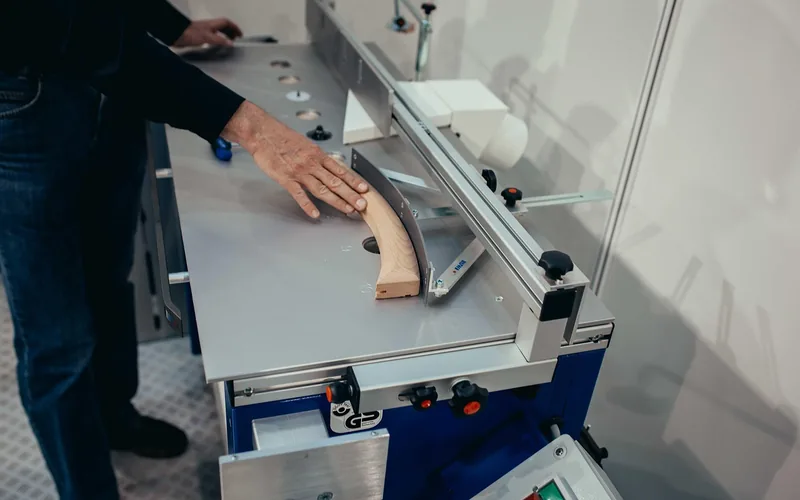
A router table insert plate and fence being set up during a tool demonstration
A router table insert plate and fence being adjusted — base-plate compatibility is the detail buyers check last and regret skipping first.

How to Use a Heavy Duty Wood Router Safely

  1. Match bit to RPM. Check the bit manufacturer’s recommended speed against your router’s dial — large-diameter bits need the low end of the range (often under 12,000 RPM), small bits can run at the top.
  2. Secure the workpiece and clamp a fence or guide before the router ever touches wood. A router walking off-line under power is the single most common cause of a ruined workpiece and kickback.
  3. Set depth in passes, not all at once. For anything deeper than about 1/4 in in hardwood, take two or three shallower passes rather than one full-depth plunge — it’s easier on the motor and the cut edge.
  4. Feed against bit rotation (right to left on an outside edge, left to right inside a template) so the bit pulls itself into the cut instead of grabbing and climbing.
  5. Let the motor reach full speed before contact, and keep feed rate steady — slowing down mid-cut on a heavy-duty router is what causes burn marks in hard maple and oak.
  6. Wait for the bit to fully stop before setting the router down, especially on routers without an electronic brake — every router in this roundup except the Makita RP2301FC coasts for a few seconds after the trigger releases.

Frequently Asked Questions

What makes a router “heavy duty” instead of a standard router?

There’s no single certification for the term, but in practice it means a motor rated 2.25 HP/12 amps or higher with a full-size 1/2 in collet option, a base built for router-table mounting, and electronic feedback circuitry that holds RPM under load in dense hardwood. Compact and trim routers, by contrast, are built around 1/4 in-collet motors under 1.5 HP for handheld detail work, not sustained cuts in thick stock.

Is a fixed-base or plunge router better for heavy-duty work?

Neither is universally better — they solve different problems. Fixed-base is the right choice for router-table mounting and repeated-depth edge work, where the Bosch 1617EVS and SKIL RT1323-00 in this roundup post the best cost per horsepower. Plunge is necessary for mortises, stopped grooves and any cut that starts in the middle of the workpiece rather than the edge. A combo kit like the Bosch 1617EVSPK or DEWALT DW618PKB avoids the either/or by including both bases.

How much horsepower do I need for a router table?

2.25 HP is a reasonable floor for router-table work with standard bits; 3 HP or more is worth the premium if you’re running large-diameter raised-panel or cope-and-stick cutters regularly, where the Triton TRA001 and Makita RP2301FC in this roundup both sit at 3.25 HP. Running big bits on an underpowered motor is what causes bogging, burn marks and, in the worst case, a stalled motor under load.

Can a cordless router actually handle heavy-duty work?

The category is newer, but the Metabo HPT M3612DAQ4 in this roundup is a genuine exception — it’s built around a full-size 36V motor with a real plunge base and 1/2 in collet capacity, not a compact trim-router motor with a battery bolted on. The trade-off isn’t power so much as total cost: the $269.00 tool-only price doesn’t include the battery and charger, which typically add $150–$250 on top.

Why is there no total plunge-depth spec for the DEWALT DW618PKB in your table?

Because DeWalt doesn’t publish one. Their spec sheet and manual list the 1/64 in and 5/128 in micro-adjustment increments — how finely you can dial in depth per turn — but not the router’s maximum total plunge travel. Rather than estimate a number DeWalt itself hasn’t published, we marked that cell “not published” in the comparison table.

What’s a realistic budget for a heavy-duty router setup?

For a router alone, $179–$280 covers a genuine 2.25 HP fixed-base or combo kit (the Bosch 1617EVS or 1617EVSPK above). If you’re building a router table from scratch, the SKIL RT1323-01 bundle at $246.23 includes both the router and a real table, which is typically cheaper than buying an equivalent router and table separately.

Final Thoughts

The Bosch 1617EVSPK is our overall pick because it’s the only combo kit under $300 and its $124.00 cost per horsepower beats every other combo kit in this roundup. But the single number worth remembering from this whole dataset is the split at the bottom: the two fixed-base-only routers — the Bosch 1617EVS at $79.56 per HP and the SKIL at $54.50 per HP — cost roughly half as much per unit of power as anything with a second base included. If your router is going to live in a table and never come out, that’s real money you don’t need to spend on a plunge base you won’t use. For the rest of a heavy-duty shop’s power-tool lineup, see our full woodworking tools and saws guide, or our roundups of the best circular saw and best scroll saw for woodworking.

Similar Posts