How to Store a Circular Saw (Skill Saw): 7 Storage Ideas
A circular saw — often called a “skill saw” after the Skilsaw brand name — should be stored blade-guard down, cord coiled, and blade covered in a dry space kept under roughly 50% relative humidity, since exposed saw-plate steel starts to show surface rust within days above that level. Skip this and you’re looking at a pitted blade or a rusted base plate by next season. This guide covers wall-mount racks, cases, and cordless-battery storage that actually protect the saw between cuts.
Insert your Affiliate Disclosure reusable block here.
Types of Skill (Circular) Saws You Might Be Storing
Best Circular Saw Storage Case Pick
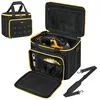 |
MRINCA Circular Saw Tool Bag (DEWALT/Milwaukee Compatible) – $31.99 A padded bag sized to hold the saw with its blade guard closed, plus a battery and charger — matches the “store the guard closed, keep batteries separate and moderate” guidance covered above.
|
As an Amazon Associate we earn from qualifying purchases.
“Skill saw” and “circular saw” are used interchangeably by most woodworkers, but a few related saw types get lumped in by mistake. Knowing which one you actually own changes how it should be stored.
Circular Saws
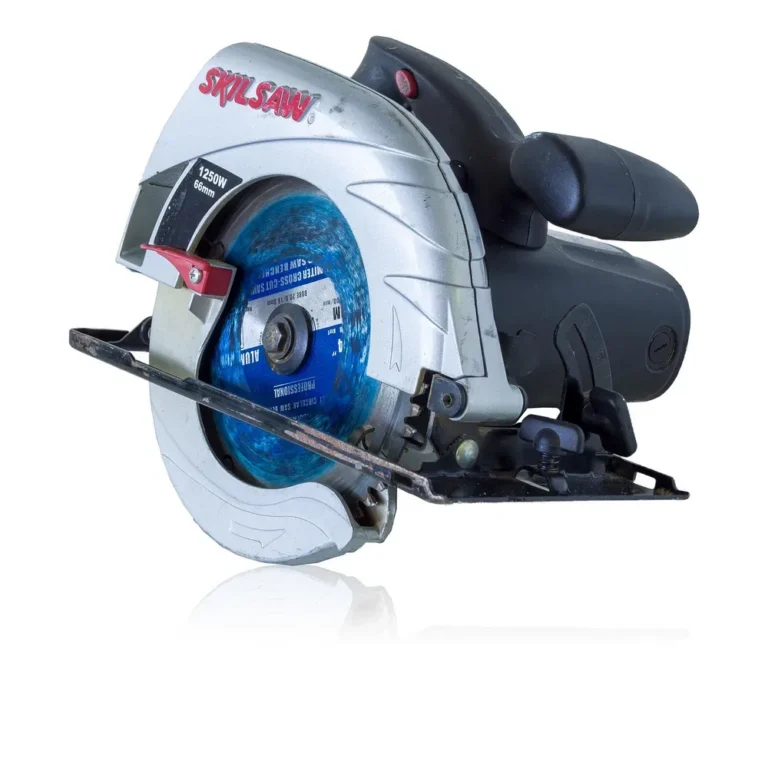
Circular saws are the true “skill saws” — versatile tools for straight rip and cross cuts in wood, and with the right blade, metal or plastic. Full-size models use a 7-1/4″ blade; compact corded and cordless models drop to 6-1/2″ or 5-1/2″. If you’re shopping for one and want a current comparison, see our circular saw buying guide for corded and cordless picks tested by spec.
Reciprocating Saws
Reciprocating saws use a back-and-forth blade stroke instead of a spinning disc, which makes them better suited to demolition and rough cuts through wood, metal, or drywall in tight spaces than to clean woodworking cuts.
Jigsaws
Jigsaws use a narrow vertical blade for curved and detailed cuts that a circular saw’s round blade can’t follow. If a jigsaw is part of your kit alongside your skill saw, our jigsaw uses and blade guide covers blade selection separately, since jigsaw and circular saw blades aren’t interchangeable and shouldn’t be stored in the same unlabeled bin.
How Much Space a Circular Saw Actually Needs
Proper skill saw storage starts with knowing the footprint you’re planning around. A full-size 7-1/4″ saw and a compact 6-1/2″ model need noticeably different shelf, hook, or case space — here’s the typical range so you’re not guessing:
| Saw Type | Typical Case Footprint | Minimum Shelf Depth |
|---|---|---|
| Full-size corded (7-1/4″ blade) | ~16″ L × 11″ W × 10″ H | 12″ |
| Full-size cordless (7-1/4″ blade) | ~15″ L × 10″ W × 9″ H | 11″ |
| Compact (5-1/2″–6-1/2″ blade) | ~13″ L × 9″ W × 8″ H | 10″ |
Use these as a starting point, then measure your own saw with the blade guard fully closed — that’s the position it should be stored in, and guards add an inch or two to the resting height that’s easy to forget when sizing a shelf.
Wall-Mounted Storage Solutions
Wall-mounted storage keeps a skill saw organized and off the floor without eating into your bench space. You can build your own bracket or buy a pre-made pegboard system.
DIY Racks and Holders
- PVC pipe holders: Cut a length of 3″–4″ PVC to cradle the saw’s base plate, screwed to a wall stud.
- Plywood shelves: A single 3/4″ plywood shelf with a raised front lip keeps the saw from sliding forward.
- Magnetic strips: Good for blades and small hex keys, not for the saw body itself — the motor housing is plastic, not steel.
Pre-Made Mounting Systems
| Brand | Features | Price Range |
|---|---|---|
| Wall Control | Durable metal pegboard, slotted-track design | $$ |
| Proslat | Slatwall panel, adjustable hooks and bins | $$$ |
| Gladiator | Heavy-duty GearTrack, quick-release hooks | $$$ |
Mobile Storage Options
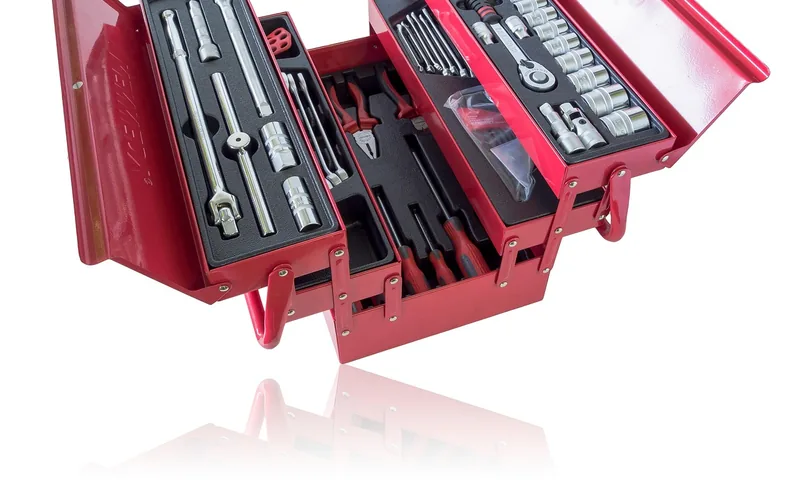
If your saw travels between the shop and jobsites, mobile storage matters more than a fixed rack. Rolling cabinets and toolboxes are the two most common options.
Rolling Cabinets
- Durability: Steel construction holds up to daily loading and unloading.
- Multiple drawers: Separate blades, wrenches, and the saw itself instead of one deep bin.
- Locking mechanism: Worth paying for if the cabinet lives in an open garage or job trailer.
Check the stated weight capacity before loading a rolling cabinet with more than one power tool — cheaper units flex or crack at the drawer slides well before their advertised limit.
Toolboxes and Carriers
Soft-sided bags and hard toolboxes are lighter and cheaper than a rolling cabinet, and better suited to a single saw plus its accessories rather than a full tool collection.
- Choose a case sized to your saw’s footprint (see the table above) rather than the largest one available.
- Look for a rigid base plate cutout or foam insert — loose saws rattle against blades in transit.
- Check for a separate zip pocket for the blade wrench; it’s the single most commonly lost accessory.
Making the Most of Vertical Space
A small shop benefits more from vertical storage than floor-level bins, since wall space is usually the most underused square footage in a garage or one-car shop.
Pegboards
A pegboard keeps accessories visible and lets you rearrange the layout as your tool collection changes. Mount it at a height where the heaviest item (usually the saw itself, if hung) sits at chest level, not overhead.
Shelving Units
Adjustable steel shelving holds more weight than most pegboard hooks and works well for the saw’s case rather than the bare tool. Keep the saw at or below eye level; a shelf reachable without a step stool gets used consistently, one that isn’t doesn’t.
Custom-Built Storage Ideas
Foam Inserts
A cut-to-shape foam insert inside a toolbox keeps the saw from shifting and cushions it against drops. Trace the saw’s outline onto layered foam, then cut along the line with a sharp utility knife or a hot-wire foam cutter for a cleaner edge.
Modular Drawer Systems
Stackable modular drawers let you assign one compartment per tool type and add capacity later without replacing the whole system — useful if your tool collection is still growing.
Cleaning, Rust Prevention, and Protective Cases
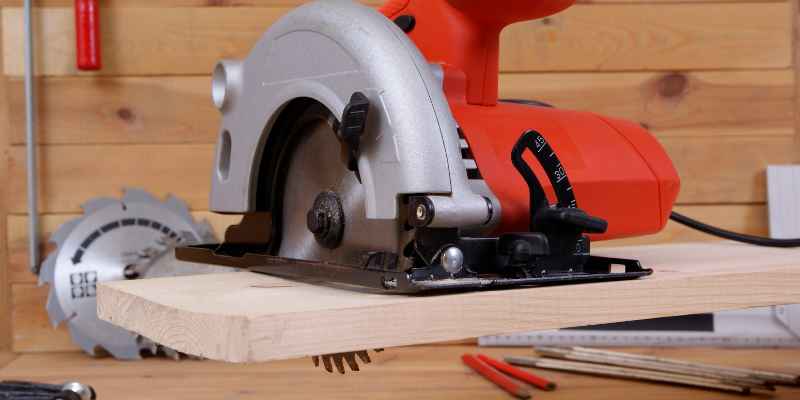
Regular cleaning protects performance; controlling moisture protects the metal itself. Both matter for how long a skill saw lasts.
- Unplug the saw (or remove the battery) before cleaning.
- Brush dust from the motor housing and vents — trapped sawdust restricts airflow and can overheat the motor over time.
- Wipe the blade and base plate with a light coat of oil if you notice any dulling of the metal’s shine.
- Inspect the blade guard spring for smooth, full retraction before storing.
📊 Keeping enclosed tool storage below roughly 50% relative humidity meaningfully slows rust formation on unprotected steel — above that threshold, corrosion risk on bare blades and base plates rises sharply. — Source: HUB Industrial Supply, tool corrosion prevention guide
A silica-gel desiccant pack inside a closed case is a cheap way to pull ambient moisture down in a garage or shed that swings humid in summer — most reusable packs can be dried out and reused in a low oven once they’re saturated.
Protective Covers and Cases
| Type | Description |
|---|---|
| Soft covers | Lightweight, quick to slip on for shelf storage; minimal impact protection. |
| Hard cases | Best for transport and job-site use; protects against drops and crushing. |
| Blade guards/covers | Cheap, and the single most effective way to prevent a nicked or rusted tooth edge. |
Storing a Cordless Skill Saw: Battery Care
Cordless circular saws add one more storage consideration corded models don’t have: the lithium-ion battery. Most battery manufacturers recommend storing packs at roughly 50–80% charge rather than fully drained or fully topped off if the saw will sit unused for more than a few weeks, since li-ion cells degrade faster stored at either extreme. Keep the battery in a moderate-temperature space — not a hot attic or an unheated shed in winter — and separate from the saw if you’re storing both for an extended stretch, so a dead cell doesn’t sit in contact with the tool’s contacts.
Safety Considerations for Storage
- Store in a dedicated spot. A specific shelf, hook, or cabinet slot beats a shared junk drawer.
- Use a lockable case or cabinet if children or untrained visitors have access to the space.
- Cover or retract the blade guard before setting the saw down for storage, every time.
- Coil and secure the power cord (or remove the battery) — loose cords are a trip hazard and a strain point that eventually cracks at the plug.
- Keep the area dry and well-lit so a rust spot or loose part gets noticed early, not after months.
- Unplug the saw or remove the battery before putting it away.
- Check for loose screws, a wobbling blade, or a frayed cord before storage — it’s easier to fix now than to discover mid-cut.
- Never stack heavy items on top of a stored saw; the base plate can warp under sustained weight.
Conclusion
A skill saw stored blade-guard-down, cord coiled, and kept below roughly 50% humidity will outlast one left loose on a shelf by years, not months. Whether that means a $15 wall bracket, a padded case, or a full rolling cabinet depends on how often the saw moves and how much space you have — but the underlying rule is the same: dry, covered, and out of the way of anything that could crush the base plate.
Frequently Asked Questions
How Should I Store My Skill Saw?
Store your skill saw in a dry, cool place under roughly 50% relative humidity. Use a protective case or blade cover to prevent damage and dust accumulation, and keep the blade guard closed. Organizing your tools in a designated area also improves safety and accessibility.
What Is the Best Way to Organize Skill Saws?
Organize skill saws using wall-mounted racks or a dedicated case rather than a shared toolbox. Label storage areas for easy identification, and use drawer dividers to separate blades and accessories so a loose blade can’t nick the saw’s housing.
Can I Store Skill Saws Outdoors?
Storing skill saws outdoors is not recommended. Exposure to moisture and temperature swings accelerates rust and can damage seals and plastics. If outdoor or unheated-shed storage is unavoidable, use a waterproof hard case and a desiccant pack to control humidity.
Does Humidity Damage a Circular Saw Blade?
Yes. Unprotected steel blades and base plates corrode faster once ambient humidity climbs above roughly 50%. A blade cover, a closed case, or a silica-gel desiccant pack in the storage area all reduce this risk without needing a climate-controlled room.
Should I Remove the Battery Before Storing a Cordless Circular Saw?
For storage longer than a few weeks, yes. Remove the battery, store it at roughly 50–80% charge rather than empty or full, and keep it at moderate temperature. This slows the normal degradation lithium-ion cells experience when left at a charge extreme for long periods.
How Often Should I Check My Skill Saw Storage?
Check your skill saw storage every few months. Inspect for dust accumulation, rust spots, or damage to the storage unit itself, and confirm the blade is still sharp and properly covered. This routine check prolongs tool life and catches small problems before they become expensive ones.
Sponsored / affiliate links. As an Amazon Associate I earn from qualifying purchases. I may earn additional commission from eligible campaigns.