Impact Drill vs Hammer Drill: Real Specs & Which to Use
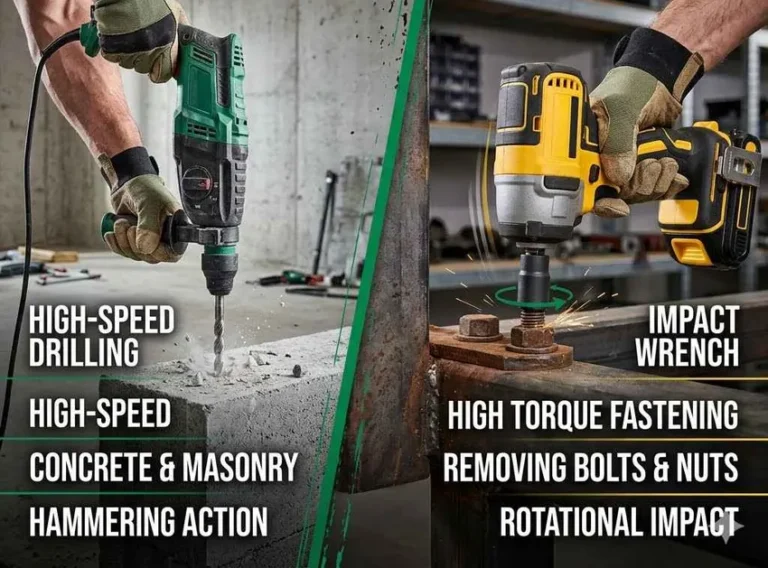
An impact driver spins screws in with rotational bursts; a hammer drill spins and pounds forward to break up brick and concrete. They are not interchangeable, and in the UK “impact drill” means a hammer drill. Maker specs show hammer drills hit 7 to 11 times more often per minute than an impact driver. This guide covers how each works, real specs, and which to use per job.
Impact Drill vs Hammer Drill: The Short Answer
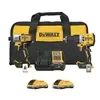 |
Best Hammer Drill + Impact Driver Combo DEWALT 20V MAX XR Hammer Drill and Impact Driver Combo Kit (DCK250QQ2), $299 Pairs the DCD806 hammer drill with the DCF845 impact driver, the same two-tool split this guide explains: one tool for masonry anchors, one rated at 1,825 in-lbs for driving big fasteners.
|
As an Amazon Associate we earn from qualifying purchases. Price checked 2026-10-05 and subject to change.
Use an impact driver when the job is driving or removing fasteners in wood or metal: deck screws, lag screws, structural screws. Use a hammer drill when the job is making a hole in brick, block or concrete for an anchor. Everything else sits between the two, and the table later in this guide sorts each common job.
If you can only buy one tool for a mixed workshop, a hammer drill with the hammer switched off still works as an ordinary drill/driver, so it covers more ground. If you drive screws all day, the impact driver is the better tool, because it keeps working when a screw binds instead of twisting your wrist. Our hammer drill vs impact driver guide takes the woodworker’s angle on the same choice.
What Does “Impact Drill” Actually Mean?
The phrase names two different tools. In the UK, “impact drill” and “percussion drill” are standard names for what US shops call a hammer drill: a drill with a mode switch that adds forward hammering for masonry. In US shops, “impact drill” is usually slang for an impact driver: a short tool with a 1/4-inch hex chuck that adds rotational hammering for fasteners. Bing search data for this page shows the same confusion in other languages, including Indonesian searches that put “hammer drill” and “impact drill” side by side.
This guide uses the maker terms: impact driver for the rotational tool and hammer drill for the forward-hammering one. When a listing just says “impact drill”, read the spec sheet. A rating in BPM (blows per minute) points to a hammer drill; a rating in IPM (impacts per minute) points to an impact driver. The chuck settles it too: a hex socket is an impact driver, a round chuck with a hammer symbol on the mode collar is a hammer drill.
How an Impact Driver and a Hammer Drill Work
Impact driver: rotational hammering
Inside an impact driver, a spring-loaded hammer rides on cam surfaces against an anvil connected to the 1/4-inch hex chuck. When a screw resists, the hammer slips back and then slams the anvil around, delivering a short burst of extra twisting force thousands of times a minute. The Milwaukee 2953-20, DeWalt DCF887 and Makita XDT16Z listed below are rated between 3,600 and 4,400 impacts per minute.
The bit is never driven forward, which is why an impact driver cannot break up masonry. Because the extra force arrives in bursts, the tool sends much less twist back into your wrist than a drill with the same peak torque would, and most impact drivers have no adjustable clutch, so you control depth with the trigger. Bits matter here: impact-rated hex bits handle the shock, and ordinary drill bits with round shanks will not seat in the chuck (see drill bit vs driver bit).
Hammer drill: forward percussion
A hammer drill is a normal drill/driver with two ridged discs behind the chuck. In hammer mode they ratchet against each other and shake the spinning bit back and forth. Each tap is tiny, but combined with a carbide-tipped masonry bit it chips concrete away as the bit turns. The DeWalt DCD996 is rated at up to 38,250 blows per minute and the Makita XPH14Z at up to 31,500.
Switch the hammer off and the same tool drills wood and metal like any drill. Makita rates the XPH14Z for 5/8 inch in masonry. Beyond that size, or when you have a lot of holes to make, a rotary hammer is the next step up: it uses a piston-driven mechanism and SDS bits rather than ridged discs (full comparison: hammer drill vs rotary hammer).
Impact Drill vs Hammer Drill: At a Glance
| Feature | Impact driver | Hammer drill |
|---|---|---|
| Force direction | Rotational bursts (extra twist) | Axial taps (forward into material) |
| Chuck | 1/4-inch hex only | Round chuck, usually 1/2 inch, takes standard drill bits |
| Speed rating | Impacts per minute (IPM) | Blows per minute (BPM) |
| Best material | Wood, metal, plastic fasteners | Brick, block, concrete, stone |
| Typical length | 4.47 in (Milwaukee 2953-20) | 7 in (Makita XPH14Z) |
| Adjustable clutch | Usually none | Yes, with a drill/driver mode |
| Works on wood | Yes, for driving screws | Yes, with hammer mode off |
| Works on concrete | No, no forward percussion | Yes, up to about 5/8 inch (Makita rating) |
Maker specs side by side
These are the published maximum ratings for bare tools from Makita, Milwaukee and DeWalt. Ratings change between model revisions, so check the current listing before you buy.
| Model | Type | Max torque | No-load speed | Hits per minute |
|---|---|---|---|---|
| DeWalt DCF887 | Impact driver | 1,825 in-lbs | 3,250 RPM | 3,600 IPM |
| Milwaukee 2953-20 | Impact driver | 2,000 in-lbs | 3,900 RPM | 4,400 IPM |
| Makita XDT16Z | Impact driver | 1,600 in-lbs | 3,600 RPM | 3,800 IPM |
| DeWalt DCD996 | Hammer drill | Rated in watts (820 UWO) | 2,250 RPM (hammer mode) | 38,250 BPM |
| Milwaukee 2904-20 | Hammer drill | 1,400 in-lbs | 2,100 RPM | 33,000 BPM |
| Makita XPH14Z | Hammer drill | 1,250 in-lbs | 2,100 RPM | 31,500 BPM |
The torque and hit-count numbers are not comparable
Read the table once and a pattern jumps out: the hammer drills list 1,250 to 1,400 in-lbs and the impact drivers list 1,600 to 2,000. That does not make a hammer drill a weak drill or an impact driver a better one. Impact driver torque is a peak delivered in bursts at the fastener; drill torque is what the motor and clutch can hold continuously. They are two different measurements, so do not shop by comparing them across tool types.
Older guides, including an earlier version of this one, quote 300 to 600 in-lbs for hammer drills. Current brushless 18V and 20V models are rated at 1,250 to 1,400 in-lbs, so that figure is out of date. The number that really separates the two tools is the hit count. The hammer drills above hit 31,500 to 38,250 times a minute, roughly 7 to 11 times the 3,600 to 4,400 impacts of the impact drivers, but a hammer drill’s hits are tiny forward taps while an impact driver’s are large rotational strikes.
Which Tool for Which Job
| Job | Best tool | Why |
|---|---|---|
| 3-inch deck screws, framing screws | Impact driver | Rotational bursts sink long screws without twisting your wrist |
| Lag screws and structural screws | Impact driver | Peak torque in bursts handles the final tightening |
| Pilot holes in hardwood | Drill/driver, or hammer drill with hammer off | A clutch and a round chuck give clean, controlled holes |
| Cabinet hardware and small screws | Drill/driver | Fine clutch settings prevent stripping or overdriving |
| Anchor holes in brick or block | Hammer drill | Forward taps chip the masonry while the bit turns |
| Sleeve or wedge anchors in a concrete slab | Hammer drill or rotary hammer | Holes over about 1/2 inch in concrete are faster with SDS |
| Self-drilling screws into metal studs | Impact driver | Steady rotational force holds the screw on the stud |
| Dozens of holes in concrete | Rotary hammer | A hammer drill overheats and tires you out over a long job |
The one rule that saves the most ruined work: never use hammer mode on wood. The taps chew the hole walls and can split the board, and the hole drifts. Our hammer drill vs drill guide covers which mode and bit to use for each material.
Can an Impact Driver Drill Concrete, or a Hammer Drill Drive Screws?
An impact driver can take hex-shank masonry bits, but it has no forward percussion, so the bit mostly grinds. A shallow hole in soft block or a mortar joint is possible, slow, and hard on the bit; for an anchor that has to hold weight, use a hammer drill. Overheated bits lose their carbide tip quickly, and a dull masonry bit is the usual reason a “hammer drill” seems weak.
Going the other way is easier. With hammer mode off and a driver bit in the chuck, a hammer drill drives screws well, and its clutch helps avoid stripping heads. It struggles only with large lag or structural screws, where an impact driver’s bursts push through resistance that would stall a drill and kick the handle against your wrist.
Silica Dust and Safety When Drilling Masonry
Drilling concrete, brick and block releases respirable crystalline silica. OSHA’s construction fact sheet on handheld and stand-mounted drills covers impact and rotary hammer drills used on these materials and lists a vacuum dust-collection system, a shroud and hose fitted to the drill, as the standard control. For a homeowner, the practical version is: use a dust shroud with a vacuum, wear a respirator rated for fine dust and safety glasses, and do not drill masonry indoors with the doors closed.
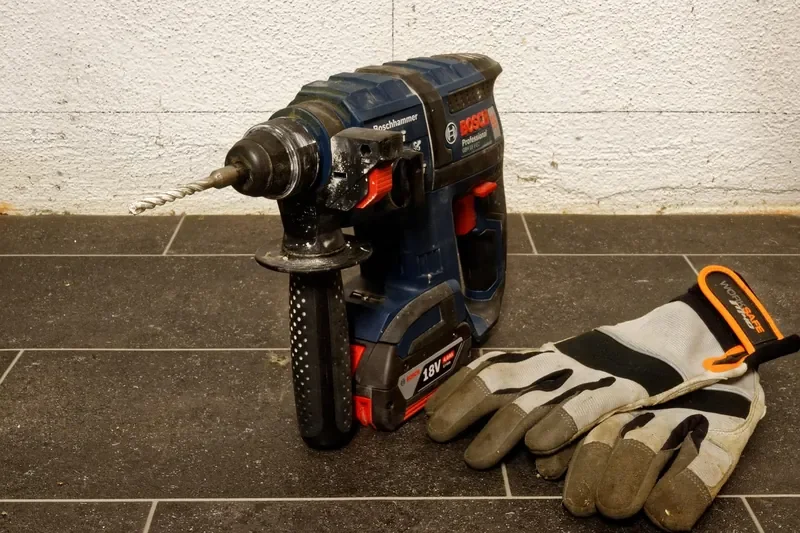
Hammer drills also grab. When the bit snags rebar or a stone, the whole tool twists toward you, which is why masonry-rated models come with a side handle. Hold it with both hands, brace your stance, and if the bit stalls, stop and move the hole instead of forcing it. Hammer mode is loud, so add hearing protection for more than a few holes. Step-by-step technique is in our guide on how to drill into concrete.
Which Should You Buy First?
For woodworking and deck building, the first purchase is a drill/driver and an impact driver. If you already know you will set anchors in masonry, swap the drill/driver for a hammer drill: with hammer mode off it does the drill/driver’s job, so you lose nothing and gain masonry capability. Stay on one battery platform when you add the second tool, because the batteries and chargers are the expensive part.
Combo kits make the pairing cheaper than buying two bare tools plus batteries. The kit we picked above lists for $299 and includes two 4Ah batteries and a charger, as of 2026-10-05, with the hammer drill and impact driver sharing one platform. For other drilling questions, browse our drilling guides.
Frequently Asked Questions
Is an impact drill the same as a hammer drill?
It depends on where you shop. In the UK, “impact drill” and “percussion drill” are common names for a hammer drill. In US shops, “impact drill” is usually slang for an impact driver, a different tool with a 1/4-inch hex chuck that adds rotational bursts for driving screws. Check the chuck and the spec sheet: BPM means hammer drill, IPM means impact driver.
What is the main difference between an impact driver and a hammer drill?
An impact driver delivers rotational bursts (3,600 to 4,400 impacts per minute in the Milwaukee, DeWalt and Makita models we checked) to drive fasteners. A hammer drill adds a forward hammering action (31,500 to 38,250 blows per minute in the Makita and DeWalt models we checked) to drill masonry. One drives screws, the other makes holes in brick and concrete.
Can an impact driver drill into concrete?
Not well. An impact driver has no forward percussion, so a masonry bit only grinds. A shallow hole in soft block or a mortar joint is possible but slow and hard on the bit. For anchors in brick, block or concrete, use a hammer drill, or a rotary hammer for larger or repeated holes.
Can you use a hammer drill as an impact driver?
You can drive screws with a hammer drill by switching hammer mode off and using a driver bit, and its clutch helps avoid stripping heads. It cannot match an impact driver on large lag or structural screws, because it has no rotational bursts to push through resistance and puts more twist into your wrist.
Do I need both an impact driver and a hammer drill?
If you build with wood, an impact driver earns its place for deck screws and lag screws. A hammer drill replaces your standard drill/driver and adds masonry capability when hammer mode is off. Most woodworkers who also set anchors in concrete end up owning both, which is why combo kits exist.
Conclusion
An impact driver and a hammer drill do different jobs. The impact driver adds rotational bursts to sink screws in wood and metal; the hammer drill adds forward taps to drill brick and concrete, and doubles as a plain drill with the hammer off. Match the tool to the material, check the BPM or IPM rating when a listing says “impact drill”, and use dust control whenever you drill masonry.
Sponsored / affiliate links. As an Amazon Associate I earn from qualifying purchases. I may earn additional commission from eligible campaigns.
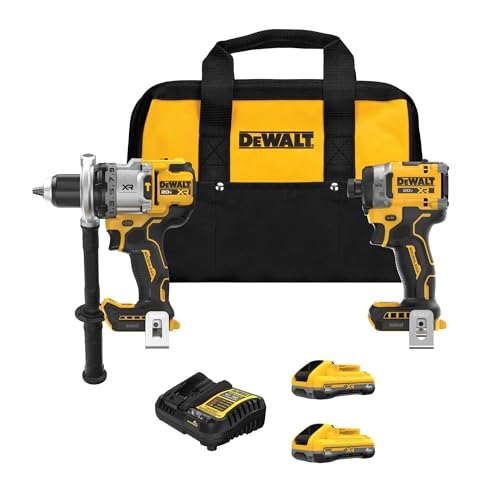 DEWALT 20V MAX XR Brushless Hammer Drill 1/2 In. and High Torque 1/4 Impact Driver Combo with 2 x 4 Ah Batteries and 4 Amp Charger (DCK2112QQ2)
 Greenworks 24V Cordless Brushless 400 in-lbs Drill/Driver+1950 in-lbs Impact Driver Combo,High Torque, Lightweight, (2) 2.0Ah USB-C Batteries(12,000mAh Power Bank) and 65W USB-C Fast Charger(3-Port)