How Fast Do Termites Eat Wood? Real Rates by Species (2026)
A single termite eats just 0.105 milligrams of wood a day – but a mature colony can consume more than 5 kilograms a month, according to University of Florida entomologist Dr. Thomas Chouvenc, enough to compromise framing within months. Feeding speed varies sharply by species, moisture, and colony size. This guide covers species-by-species rates, the conditions that speed damage, and the warning signs to catch it early.
Understanding Termite Appetite: The Big Picture vs. The Single Bug
When we ask, “How fast do termites eat wood?”, the answer isn’t a simple ruler measurement. It’s like asking how fast an army moves – you need to know the size of the army. A single termite, working alone in a piece of lumber, moves incredibly slowly. It’s the sheer numbers and relentless teamwork that create the destruction homeowners worry about. For general wood protection and pest defense strategies beyond termites, see our wood care and pest defense guide.
This page focuses on speed and consumption rates. If you want the biology behind it – how termites actually break cellulose down once they start chewing – see our guide on how termites eat wood at the gut-microbe level.
The Tiny Diner: Consumption Rate of a Single Termite
To get the facts straight, we need to look at the smallest unit: one worker termite. These workers are the only caste responsible for eating the wood, since soldiers and swarmers don’t feed the colony.
- Weight Loss: On average, one worker termite consumes only about 0.105 milligrams of wood per day.
- Annual Intake: Over a full year, a single termite eats roughly one-third of a gram of wood – less than the weight of a single grain of salt.
This fact can be both reassuring and unsettling. One termite alone would take centuries to matter. But that’s never the reality of an actual infestation.
The Colony Powerhouse: When Numbers Matter
Termites live in massive colonies that work around the clock. The size of the colony directly dictates the speed of consumption – you’re never dealing with one termite, but thousands, sometimes millions, of tiny workers.
An established subterranean termite colony – the most destructive type found in the U.S. – often contains between 60,000 and 2 million individuals. That collective power dramatically changes the eating speed: a large, mature colony can turn a sound structural beam into dust over a relatively short period if left untreated.
What Type of Termite Is Doing the Eating? Speed Varies by Species
Not all termites are created equal when it comes to appetite and speed. The three main groups homeowners encounter cause damage at very different rates. Knowing which pest you have is the first step toward the right protection.
Subterranean Termites: The Speed Demons
These are the biggest threat, particularly the Eastern Subterranean Termite common across much of the eastern and central United States. They build mud tubes from moist soil up into a home’s wooden structure, and because they rely on consistent moisture, they tend to move quickly through wood with high moisture content.
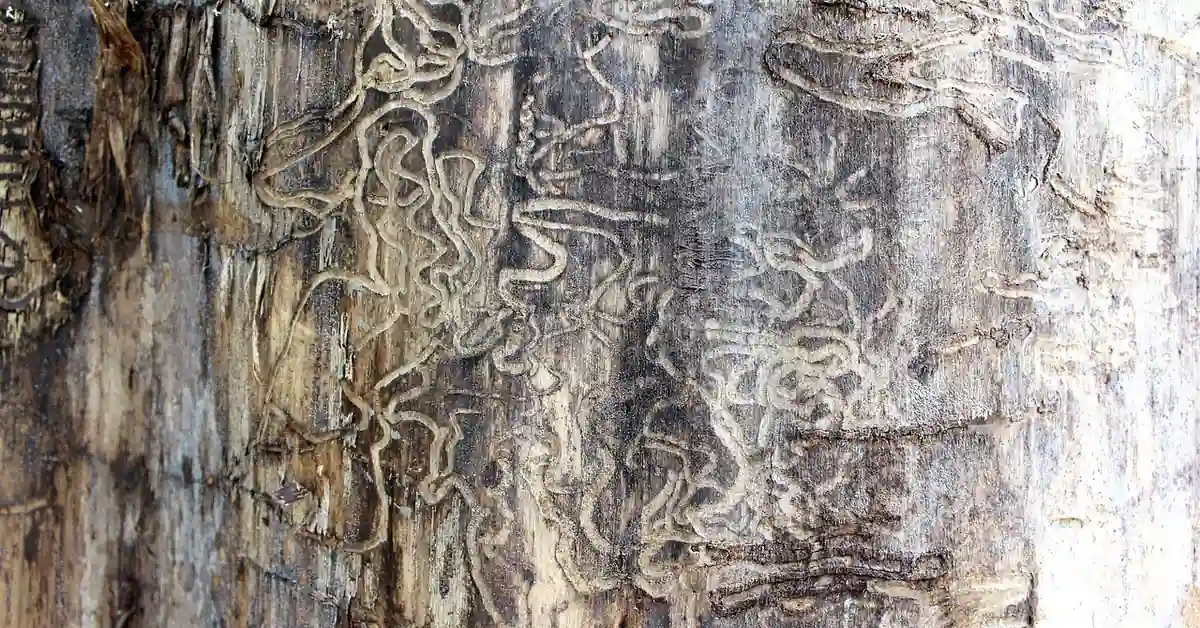
When feeding, subterranean termites leave behind galleries packed tightly with mud and fecal matter, which distinguishes their tunnels from drywood-termite tunnels.
Drywood Termites: The Slow and Steady Eaters
Drywood termites live entirely within the wood they consume and don’t need soil contact. They’re most common in warmer climates, and their feeding process is generally slower than their subterranean cousins.
While they eat wood continuously, colony sizes are usually much smaller, often under 1,000 individuals. Drywood colonies are patient – damage takes longer to become structurally critical – but they’re notoriously hard to eradicate because they don’t depend on an exterior moisture source pest control can cut off.
Dampwood Termites: Focusing on Moisture Damage
These termites usually infest consistently wet or decaying wood, like stumps or foundation sill plates where moisture has pooled. They prefer wood with moisture content over 20%, so their damage tends to stay localized to those wet spots. They eat faster than drywood termites but are less likely to infest the drier structural lumber of a well-maintained home.
The Science of Speed: How Fast Is “Fast” in Real Terms?
To answer “how fast do termites eat wood” with tangible numbers, we have to talk about the tipping point where minor damage becomes major repair work.
Based on controlled scientific studies, here is what researchers see with common structural lumber:
| Wood Type (Common Dimension) | Colony Size (Approx.) | Estimated Time to Cause Significant Damage (Heavy Infestation) | Damage Rate Indicator |
|---|---|---|---|
| 2×4 Pine Stud | 100,000 Workers | 6-12 Months | Noticeable hollowing, structural weakening |
| Hardwood Furniture (e.g., Oak) | 50,000 Workers | 18-36 Months | Surface integrity remains, interior destruction |
| Pressure-Treated Lumber | 150,000 Workers | Highly Variable / Slow | Chemical treatment slows the feeding rate significantly |
Important Note: These times assume continuous, unchecked feeding in favorable conditions. If wood is damp or treated, the timeframe can double or triple.
📊 A colony of roughly 60,000 termites can eat the equivalent of one foot of a 2×4 in about five months, and a heavy infestation can consume up to a pound of wood in 24 hours. Source: Orkin, Termite Diet: How Fast Do Termites Eat Wood, 2026
“We estimated that a mature colony can consume more than 5 kilograms of wood per month, so if such a colony feeds on a house, it can quickly compromise the integrity of a structure.”
– Dr. Thomas Chouvenc, Associate Professor of Urban Entomology, University of Florida IFAS, on his own 2,000-termite model-house experiment
In an academic study referenced by the U.S. Department of Agriculture (USDA) Forest Service, researchers monitor wood consumption under controlled laboratory conditions and consistently find that large groups hollow out pine boards far faster than intuition suggests. It doesn’t perfectly mimic a real wall, but it shows the sheer potential energy of a full colony.
Visualizing the Loss: What Does “Hollowed Out” Look Like?
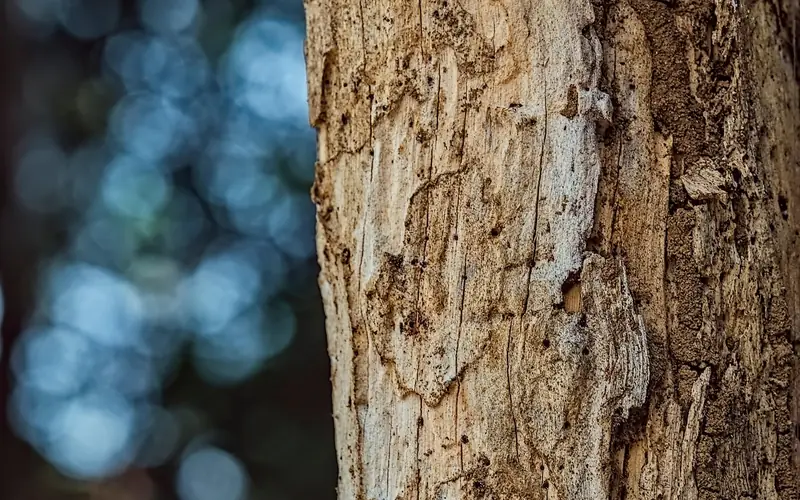
Termites don’t chew the outside wood surfaces first; they prefer the soft grain running between the growth rings. That means wood can look perfectly normal from the outside while it’s eaten away inside, creating “hollow sounding” spots when you tap them – a classic DIY giveaway.
If you tap a 2×4 sill plate and it sounds dull or hollow instead of solid, that section might already be substantially eaten, even if the outer veneer is intact. A section riddled with termite tunnels that still looks solid may have already lost 50% or more of its internal mass.
Factors That Speed Up Termite Eating (It’s Not Just The Termites)
As a homeowner tackling DIY projects and repairs, understanding these variables helps you assess your actual risk.
- Wood Moisture Content (The Big Factor): Termites need moisture to survive and digest cellulose. Wood with moisture content over 20% is far easier to eat and digest, so if you have a leak, termites swarm that area first. Damp wood can be consumed up to 10 times faster than dry, cured wood.
- Wood Species: Softwoods like pine, spruce, and fir (common in framing) are eaten much faster than hardwoods like oak, maple, or mahogany, because softwoods have a less dense structure that makes the cellulose easier to access. Naturally durable species like cedar are more resistant but not immune – see our breakdown of whether termites still target cedar wood.
- Temperature: Termites thrive in warm conditions – most wood-destroying insects are most active between 70°F and 90°F (21°C and 32°C). In cold climates, feeding slows dramatically or stops entirely until warmer months return.
- Food Accessibility: Termites prefer continuous access to wood. A sill plate touching damp concrete provides a constant food source, leading to faster consumption than a detached, dry piece of firewood stored well off the ground.
Best Moisture Meter Pick
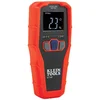 |
Klein Tools ET140 Pinless Moisture Meter – $49.97 Since moisture content over 20% is the single biggest factor that speeds up termite feeding (covered above), a pinless meter lets you check sill plates, framing, and sheathing for risk before termites ever find it.
|
When Should Homeowners Worry? Tracking Progress
If you see visible termite evidence – mud tubes, swarmer wings, or pinholes in wood – assume you have an established colony. Waiting to see significant structural sagging means you’ve waited too long. The general timeline:
- Early Stage (Months 1-6): Damage is superficial; control measures like targeted baiting are very effective.
- Established Stage (Months 6-18): Tunnels are spreading internally; structural framing integrity is being compromised, though maybe not visible externally.
- Critical Stage (18+ Months): Large sections are hollow; ceilings may sag or doors may stick. Immediate, professional intervention is mandatory to prevent costly structural collapse.
How DIYers Can Spot Early Warning Signs (Before They Eat Too Much)
The secret to managing termites is early detection, much like catching a small cut before it becomes a serious infection. Because their feeding is often hidden, look for their leftovers and their travel paths.
1. Mud Tubes (Subterranean Termites)
Check your home’s foundation, porch pillars, or wooden supports that touch the ground. Subterranean termites build narrow, pencil-sized tubes made of soil and wood debris to travel safely from the soil to your wooden food source. If you see these tubes, they’re actively feeding.
2. Frass (Drywood Termites)
Drywood termites push their fecal pellets (called frass) out of tiny holes in the wood. This frass looks like fine sand or sawdust but is hexagonal when viewed under a magnifying glass. Piles of this “sand” below wooden structures are a major red flag.
3. Hollow Sounding Wood
Tap suspicious wood with a screwdriver handle or the butt end of a hammer. A solid knock should produce a crisp, dense sound. If the wood sounds dull, hollow, or spongy, the interior structure has likely been eaten away – this is a free, no-cost diagnostic step for any homeowner.
4. Peeling Paint or Buckling Floors
Sometimes the damage shows up visually before you even start tapping. If paint bubbles or flakes off a wall and you find a hollow structure underneath, termites may be traveling just under the surface, leaving the outer veneer intact for protection.
Termite Treatment: Stopping the Speed Clock
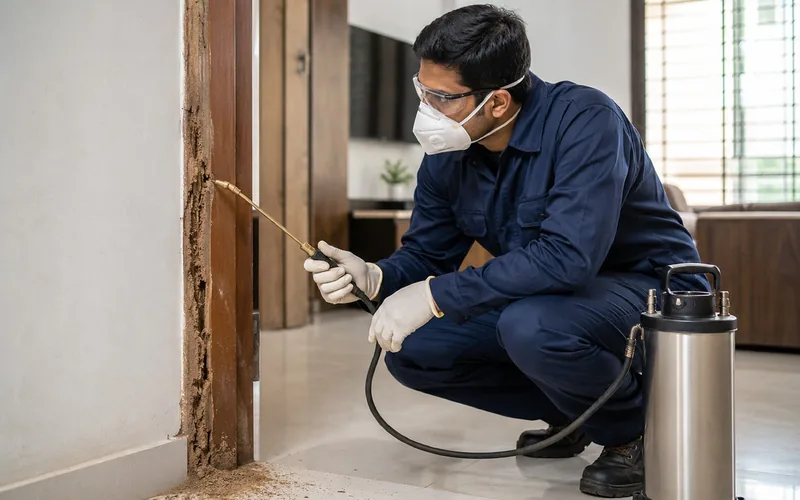
Once you confirm an active problem, the goal is simple: stop the feeding process immediately. DIY sprays can kill visible termites, but they rarely eliminate the entire colony, which lets feeding speed resume quickly. See our full termite treatment and injection options guide for step-by-step methods.
Here are the two main proven approaches:
Baiting Systems: These use slow-acting insecticides hidden in attractive wood or cellulose bait stations placed around the perimeter of your home. Workers carry the bait back to the colony and share it with the whole group, including the queen. This is generally the most effective long-term DIY approach for subterranean termites because it eliminates the source. Pest control companies specializing in this often rely on systems like Sentricon, though homeowner installation may vary in effectiveness compared to professional deployment.
Liquid Soil Treatments: These create a treated chemical barrier in the soil around your foundation. When termites try to travel from the soil to your home, they hit the repellent or non-repellent chemical, cutting off their path entirely. This works best for subterranean types and requires careful application under EPA guidelines – always consult product labels before applying, since mistakes can cause contamination or poor coverage.
📊 Standard homeowners insurance typically does not cover termite damage – insurers treat it as a preventable maintenance issue rather than a sudden peril, which is why catching an infestation early (and treating it) matters more than for storm or fire damage. Source: NerdWallet, Does Home Insurance Cover Termite Damage, 2026
FAQ: Quick Answers for the Beginner Homeowner
Quick, direct answers to the most common questions about termite speed and activity.
Can termites eat pressure-treated wood quickly?
No. Pressure-treated wood contains fungicides and pesticides that make it much less palatable and often repel subterranean termites. Highly motivated, large colonies can eventually overcome treated wood, but the speed is dramatically reduced compared to untreated pine.
If I see termites swarm in my living room, does that mean my whole house is gone?
Not at all. Swarming means reproductive termites are leaving a mature nest to start new ones. The actual feeding colony is still hidden elsewhere, likely in a wall void or subfloor. You caught an indicator, not the finished devastation.
Do termites stop eating wood in the winter?
They drastically slow down. In freezing temperatures, subterranean termites burrow deep into the soil below the frost line, where the ground stays warm enough to sustain them, but wood consumption nearly halts. Drywood termites tolerate temperature changes better but still slow down significantly.
How fast do termites destroy furniture compared to framing lumber?
Furniture usually sustains slower damage unless it’s soft wood sitting directly on a concrete slab or damp floor. Framing lumber, being part of a structure that holds moisture, is usually the primary and faster target for subterranean colonies.
Can I stop termites just by painting the wood?
No. Paint only deters very small, early-stage drywood termites testing the surface. It does nothing to stop a hungry subterranean colony coming up from the soil – they’ll simply tunnel beneath the paint or eat the wood surrounding the painted area.
What is the fastest reported termite destruction time?
In extreme laboratory conditions, focused populations on softwood have caused visible, severe structural compromise in under six months. In real-world homes, this happens in areas with continuous, high moisture levels, like chronic plumbing leaks, over about 12 months.
Does homeowners insurance cover termite damage?
Typically no. Standard homeowners insurance treats termite damage as a preventable maintenance issue rather than a sudden, covered peril, so repairs usually come out of pocket unless termite damage causes a secondary covered loss, like a resulting fire. A termite bond or service contract with a pest control company is the more reliable protection.
Craftsmanship and Conclusion: Taking Control of the Problem
As woodworkers and homeowners, we respect the strength and longevity of quality lumber, and seeing it consumed rapidly can feel like a violation of careful work. But the key takeaway is this: termite speed comes down to colony size and environmental conditions, not just the single pest.
You now have a solid understanding of “how fast do termites eat wood” – from the fractional milligram per day of a single worker to the multi-kilogram-per-month appetite of a thriving colony.
The crucial step is recognizing that once you see signs, the clock is ticking faster than you might think, especially with moist, soft pine framing. Don’t let fear slow you down; let the facts above guide your action.
Keep wood away from soil, ensure good drainage, and fix leaks immediately. If you suspect a full infestation, targeted professional help focused on eliminating the colony – through baiting or barrier treatments – will always be more effective than patching the visible tunnels yourself.
Sponsored / affiliate links. As an Amazon Associate I earn from qualifying purchases. I may earn additional commission from eligible campaigns.