Does MDF Have Formaldehyde? Yes, Here’s What That Means
Yes, most standard MDF is made with a urea-formaldehyde resin that binds the wood fibers together, and it can off-gas small amounts of formaldehyde, especially from raw, unsealed edges. That sounds worse than it usually is: US-sold MDF has to meet a specific emission limit, and sealing the board’s surfaces and edges cuts off-gassing dramatically.
Here’s what formaldehyde in MDF actually means for your health, the real emission limits (not just “there are rules”), and the specific steps — sealing edges, choosing NAF/ULEF board, ventilating during and after cutting — that measurably cut your exposure.
What MDF Is and Why It Contains Formaldehyde
Best Quick Air Screening Test
 |
Air Formaldehyde Test Kit for Home – $7.37 A color-change screening test that gives a rough read on indoor formaldehyde levels in about 30 minutes, useful for deciding whether new MDF furniture needs more ventilation time before you worry further.
|
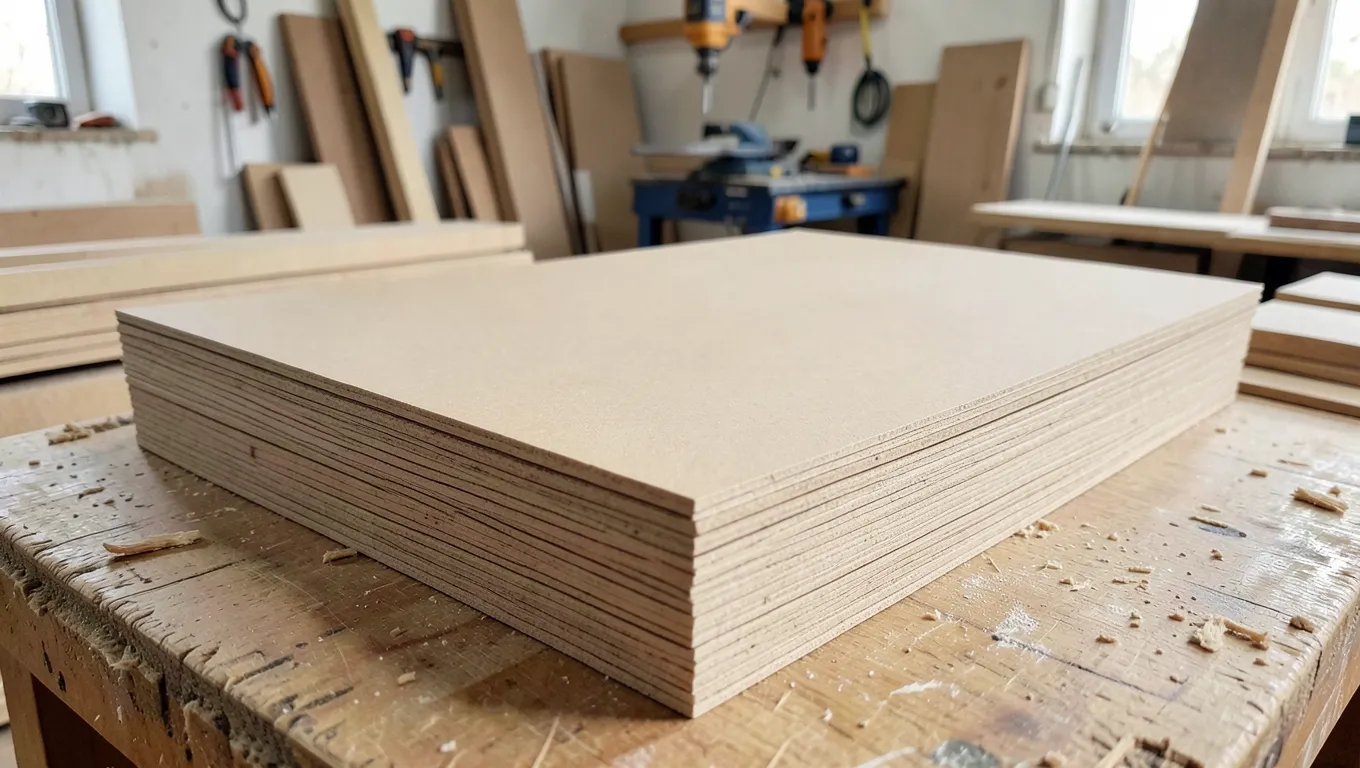
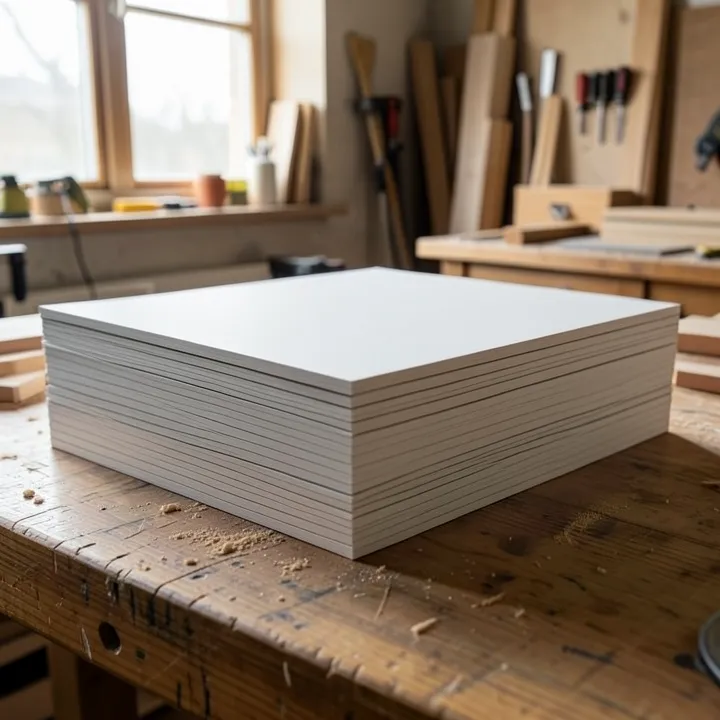
MDF (medium density fiberboard) is made by breaking wood down into fine fibers, mixing them with wax and a resin binder, then pressing the mix into flat panels under heat and pressure. Standard MDF uses a urea-formaldehyde (UF) resin as that binder, because it’s cheap, cures quickly, and gives the finished board its smooth, uniform surface. The formaldehyde isn’t an additive dumped in for no reason — it’s a structural part of the glue holding the board together, which is exactly why it can’t simply be washed off or filtered out; it has to either off-gas slowly over time or be sealed in. (For how that same fiber-and-resin structure holds up under a saw blade, see our guide to cutting MDF cleanly.)
Actual Formaldehyde Emission Limits (Not Just “There Are Rules”)
Most articles on this topic say “governments have rules” without saying what the rules actually are. Here are the real numbers:
- United States (TSCA Title VI / CARB Phase 2): MDF must emit no more than 0.11 ppm formaldehyde, tested under the ASTM E1333 chamber method. This is the standard virtually all MDF legally sold in the US since 2018 has to meet.
- European Union (E1): MDF and other wood panels are capped at 0.124 mg/m³ under the EN 717-1 chamber test.
- Japan (F four-star, F★★★★): The strictest common rating, capped at 0.3 mg/L under the JIS A 1460 desiccator test.
These three use different test methods and units, so the numbers aren’t directly comparable to each other — but each represents the lowest-emission tier sold in its own market. In practice, this means MDF bought from a mainstream US retailer today is already required to meet a real, enforced ceiling, not an unregulated free-for-all.
Health Effects: Short-Term vs. Long-Term
Short-term exposure to elevated formaldehyde levels, such as from cutting a lot of raw MDF in an unventilated room, can cause watery eyes, a burning nose or throat, coughing, and headaches. These effects are uncomfortable but typically resolve once you’re away from the source and the air clears.
Long-term, repeated exposure is the bigger concern. The International Agency for Research on Cancer (IARC) classifies formaldehyde as a Group 1 human carcinogen, based primarily on occupational studies of workers with sustained, high-level exposure (nasopharyngeal cancer risk). That’s a very different exposure profile than living with a sealed MDF bookshelf in a normal, ventilated home, but it’s the reason woodworkers who cut raw MDF regularly should wear a respirator rated for formaldehyde/organic vapors, not just a dust mask, and should cut it in a ventilated space or with dust collection — see our full breakdown of the cancer-risk research for the occupational studies this classification is based on.
Sealing Edges: The Single Biggest Thing You Can Do
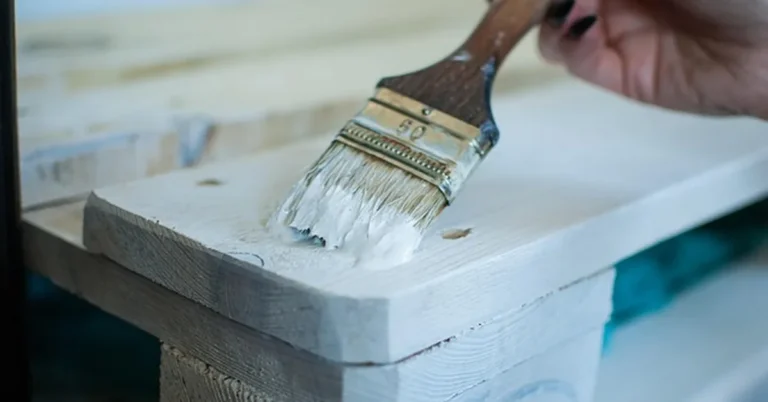
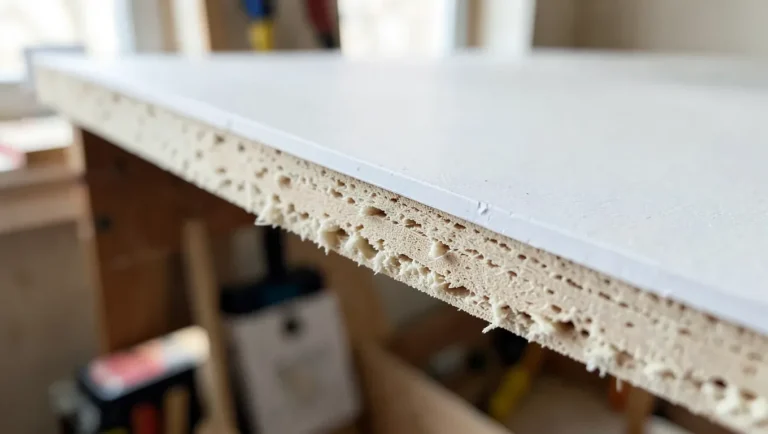
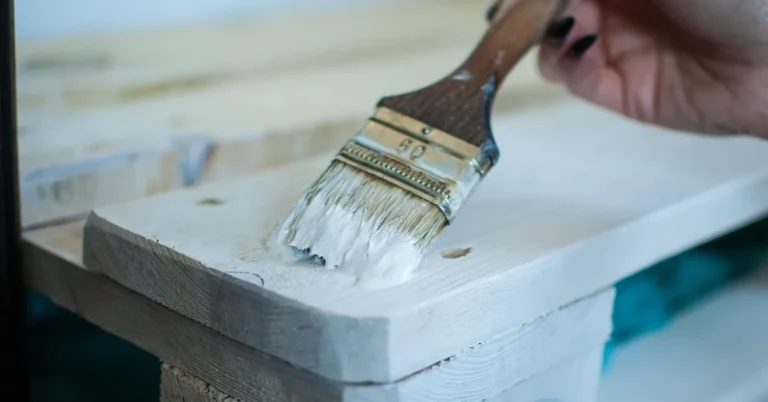
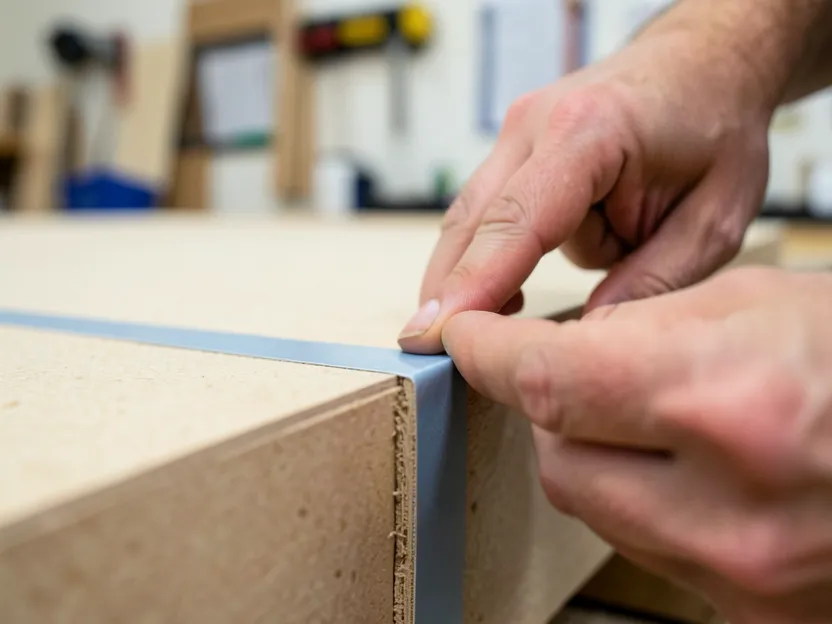
Off-gassing happens mainly through exposed, uncoated surfaces and edges. A factory-laminated MDF panel with painted or veneered faces is already mostly sealed on its flat surfaces, but any edge you cut yourself exposes raw fiber and resin directly to the air. Sealing that cut edge with paint, edge banding tape, veneer, or even a couple of coats of polyurethane meaningfully cuts how much formaldehyde escapes from that piece, and it’s the one step a lot of DIY builds skip because the edge is hidden inside a cabinet or under a countertop.
Formaldehyde-Free and Low-Emission Alternatives
If you want to avoid urea-formaldehyde resin entirely, look for board labeled NAF (no-added-formaldehyde), which typically uses a different binder chemistry such as MDI resin or a soy-based adhesive, or ULEF (ultra-low-emitting formaldehyde), which still uses a UF-type resin but is formulated and tested to emit well below the standard limit. Both cost more than standard MDF, and NAF board in particular can behave slightly differently when machining (some woodworkers report it’s a bit more brittle at edges), so it’s worth a test cut before committing a whole project to it.
Practical Steps to Cut Your Exposure
- Ventilate during and after cutting: open windows, run a fan, and don’t cut large amounts of raw MDF in a closed room.
- Wear the right protection: a dust mask stops particles, not formaldehyde vapor — use a respirator rated for organic vapors if you’re cutting a lot of it.
- Seal every cut edge before the piece goes into regular use, not just the faces that came pre-laminated.
- Let new furniture air out in a ventilated space for a few days before it goes into a bedroom or other room with limited airflow, since off-gassing is highest when the board is newest.
- Buy compliant board from a reputable supplier — TSCA Title VI / CARB Phase 2 compliance should be stated on the product label or spec sheet.
Frequently Asked Questions
Is All MDF Made With Formaldehyde?
Most standard MDF uses a urea-formaldehyde resin to bind the wood fibers, but formaldehyde-free options exist that use alternative binders like MDI (methylene diphenyl diisocyanate resin) or soy-based adhesives. Look for a NAF (no-added-formaldehyde) or ULEF (ultra-low-emitting formaldehyde) label if you want to avoid it entirely.
How Do You Reduce Formaldehyde Off-Gassing From MDF?
Seal every cut edge and face with paint, laminate, veneer, or edge banding, since raw, unsealed MDF off-gasses far more than sealed MDF. Ventilate the room well for the first few weeks after installing new MDF furniture, and buy CARB Phase 2 or TSCA Title VI compliant board when possible, since that’s the lowest-emission standard sold in the US.
Does Ikea MDF Have Formaldehyde?
IKEA’s MDF-based furniture is manufactured to meet formaldehyde emission standards in the markets where it’s sold, including the strict US TSCA Title VI / CARB Phase 2 limit of 0.11 ppm for MDF. That means it’s held to the same low-emission threshold as any compliant MDF product, not formaldehyde-free.
Should I Avoid MDF?
For most finished, sealed furniture, no. The health concern is mainly about raw, unsealed, uncoated MDF releasing formaldehyde gas indoors, and that risk drops sharply once every surface and edge is painted, laminated, or edge-banded. If you’re especially sensitive to VOCs or are cutting a lot of raw MDF indoors, ventilate well or choose a NAF/ULEF board instead.
What Formaldehyde Emission Standards Apply To MDF Sold In The US?
MDF sold in the US must meet the TSCA Title VI standard, which mirrors California’s CARB Phase 2 rule: a maximum of 0.11 ppm formaldehyde emissions under the ASTM E1333 chamber test. Europe’s comparable E1 standard caps emissions at 0.124 mg/m³, and Japan’s F four-star (F★★★★) rating caps it at 0.3 mg/L — each uses a different test method, so the numbers aren’t directly comparable, but all three represent the lowest-emission tier in their system.
Conclusion
MDF does contain formaldehyde in its standard resin, but modern US-sold board is capped at 0.11 ppm emissions, and sealing every cut edge and face is what actually determines how much of that reaches your air. Ventilate when cutting it, seal the edges you expose, and choose NAF or ULEF board if you want to avoid the resin entirely — the material itself isn’t something to panic over once you know what actually controls the exposure.
Formaldehyde is only one side of MDF’s environmental story, though — on sourcing and waste, MDF also has a genuine case in its favor. For the fuller picture, see our breakdown of whether MDF is actually sustainable.
Sponsored / affiliate links. As an Amazon Associate I earn from qualifying purchases. I may earn additional commission from eligible campaigns.