Is MDF Sustainable? Recycled Fiber, FSC Labels and Formaldehyde
MDF is only partly sustainable. Its fiber is mostly sawmill residue that would otherwise be waste, but the urea-formaldehyde resin binding it carries an air-quality cost that most “eco-friendly MDF” claims skip. This guide covers what recycled, FSC and SFI labels do and do not prove, the 0.11 ppm federal formaldehyde limit, and how to cut the downsides.
MDF’s Sustainability Case, at a Glance
Best Low-Odor Edge Primer

|
Zinsser Bulls Eye Water-Base Primer & Sealer (1 Quart) – $10.49 A water-based, low-odor primer you can brush onto cut MDF edges, which is where most formaldehyde off-gassing happens, as the sealing step this guide recommends.
|
The short version: MDF’s sourcing and waste story is genuinely good — it’s built from wood that would otherwise be scrap. Its resin story is the part that needs a caveat. Sealing every raw edge, for example with the low-odor primer above, narrows that gap.
What Actually Makes MDF a Genuinely Sustainable Material
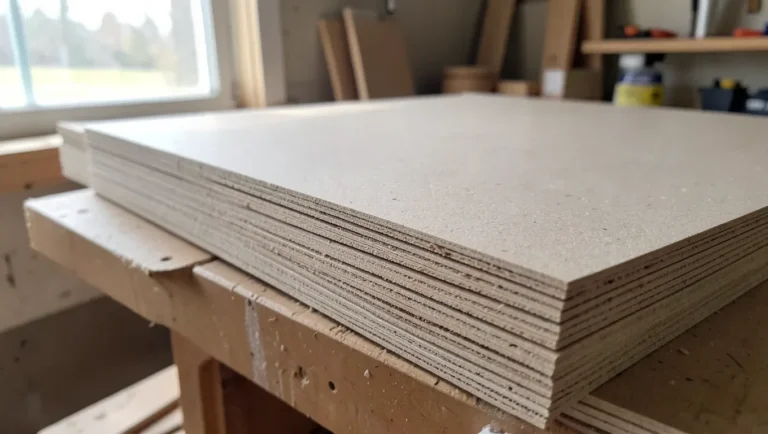
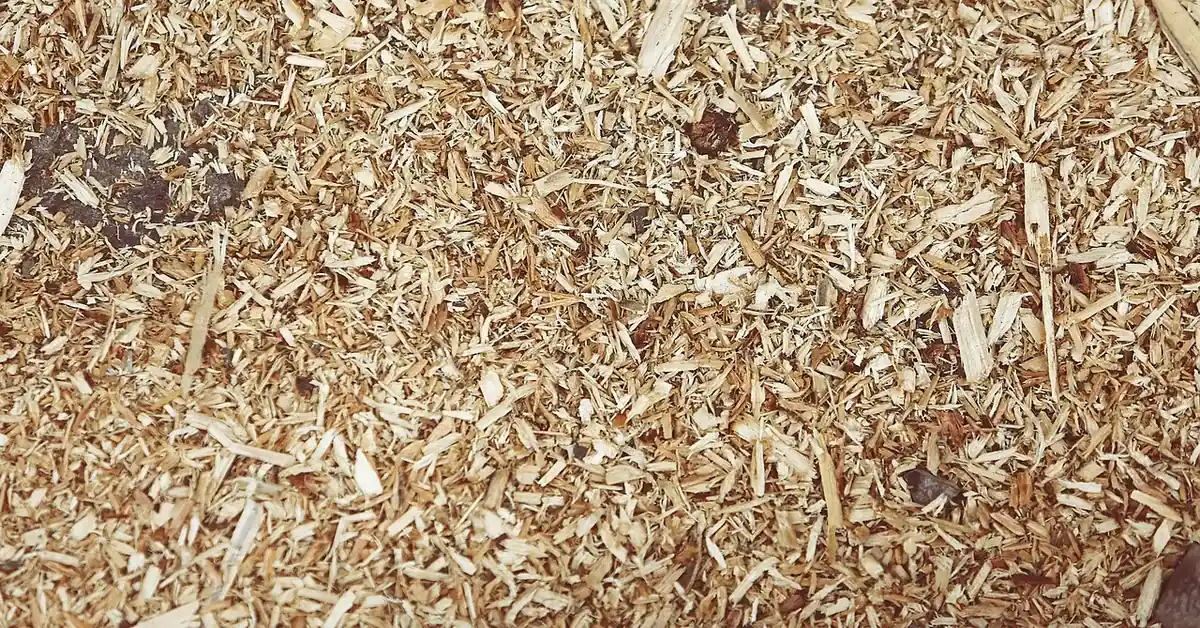
MDF panels are made by breaking wood down into fine fibers, then binding those fibers with resin under heat and pressure. That fiber furnish typically comes from sawmill byproducts — the sawdust, wood chips, and offcuts that solid-lumber mills generate anyway and would otherwise be burned, landfilled, or sold off as low-value mulch. Instead, MDF manufacturing turns that byproduct into a usable building panel, which is a real waste-reduction story, not a marketing one.
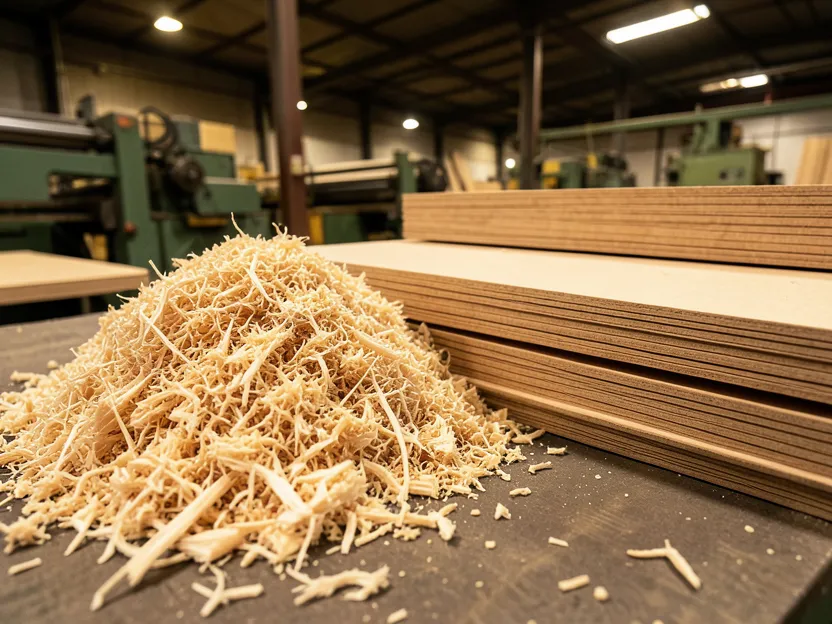
The wood species used for MDF fiber is also usually fast-growing plantation softwood — species that reach harvestable size in 15 to 30 years, versus the decades-to-centuries timeline for the old-growth hardwoods sometimes used in solid furniture. That matters for sustainability in a way that’s easy to skip past: a renewable resource that regrows on a human timescale puts far less pressure on forest ecosystems than one that doesn’t.
MDF’s uniform density also means manufacturers waste less material to warping, knots, or grain defects than they would milling solid boards, and the panels themselves are dimensionally stable once installed, which extends product lifespan and reduces how often furniture or trim needs replacing. All of that is a legitimate sustainability case. None of it is the whole picture.
The Part the “MDF Is Green” Pitch Usually Skips: Formaldehyde
Standard MDF is bound with a urea-formaldehyde resin, and that resin can off-gas small amounts of formaldehyde, especially from raw, unsealed, freshly-cut edges. That’s a real environmental and indoor-air-quality tradeoff against the recycled-fiber story above, and it’s the reason a fully balanced answer to “is MDF sustainable” can’t stop at “yes, it’s made from recycled wood.”
We’ve covered the formaldehyde side of MDF in more depth elsewhere — including the actual emission numbers, IKEA and other retailer-specific answers, and step-by-step exposure reduction — in our breakdown of whether MDF has formaldehyde and our guide to whether MDF is bad for your health. The short version relevant to sustainability: it’s a real cost, it’s regulated, and it’s manageable, not a reason to write MDF off entirely.
CARB Phase 2 / TSCA Title VI and NAF Board: How to Buy Lower-Emission MDF
MDF sold in the US has to meet the TSCA Title VI standard, which mirrors California’s CARB Phase 2 rule: a maximum of 0.11 ppm formaldehyde emissions for standard MDF, and 0.13 ppm for thin MDF (8mm or less), measured under a defined chamber test. That’s not a vague “meets regulations” claim — it’s a specific, testable ceiling, and it’s the reason off-gassing from compliant modern MDF is a much smaller concern than it was with older, unregulated board.
If you want to avoid the resin’s environmental cost entirely rather than just minimize it, look for NAF (no-added-formaldehyde) or ULEF (ultra-low-emitting formaldehyde) board. NAF panels swap the urea-formaldehyde binder for an alternative, such as an MDI (methylene diphenyl diisocyanate) resin or a soy-based adhesive, and both categories exceed the standard CARB Phase 2 / TSCA Title VI limit rather than just meeting it. They typically cost more and can be harder to source at a local big-box store, but they’re a real option if formaldehyde-free is a hard requirement for your project.
Greenwashing Check: What FSC, SFI and “Recycled” Labels Actually Prove
Most “green MDF” claims blur four different things: where the fiber came from, how much of it is recycled, what the resin is, and what happens to the panel afterward. Each label answers only one of them.
| Label or claim | What it supports | What it does not tell you |
|---|---|---|
| FSC (Chain of Custody or Controlled Wood) | The plant’s fiber is tracked to responsibly managed forests or screened against controversial sources | Nothing about the resin or formaldehyde. Check which FSC standard the plant holds, because Controlled Wood and full chain-of-custody labeling are not the same |
| SFI Fiber Sourcing | The plant meets SFI’s fiber-sourcing standard | Nothing about the resin, and not a claim that the panel is recycled |
| “Recycled content” | Material diverted from the waste stream, either in manufacturing (pre-consumer) or after use (post-consumer) | Which kind, and how much. Under the FTC Green Guides, a partly recycled product should state the percentage by weight |
| TSCA Title VI / CARB Phase 2 | Tested formaldehyde emissions at or under 0.11 ppm (0.13 ppm for thin MDF) | Nothing about forest sourcing or recycled content |
| NAF or ULEF | The binder has no added formaldehyde, or ultra-low emitting formaldehyde | Nothing about fiber source. NAF and ULEF still need third-party testing |
The myth worth correcting: “recycled” on MDF almost never means recycled furniture or post-consumer wood. The recycled fiber is typically pre-consumer residue from sawmills and plywood or lumber plants. The FTC Green Guides say pre-consumer material only counts if the marketer can substantiate that it would otherwise have entered the waste stream. One manufacturer’s third-party-certified MDF line lists 94.4% pre-consumer recycled content, so high figures exist, but ask for the number rather than trusting the word “recycled.”
End of life is the weak spot. A panel that is resin-bonded, then painted, laminated or edge-banded is hard to recycle, and wood-recycling yards and curbside programs often decline it, so call your local facility before assuming it can go in with clean lumber. Longer service life is therefore the practical lever: well-sealed, dry MDF that is not replaced after a few years is the better sustainability result. For the full emissions-limit comparison across board types, see our MDF vs particle board comparison, and for the structural side of the choice, our MDF vs plywood buyer’s guide.
MDF vs Solid Wood vs Plywood: Which Is Actually the Greener Choice
MDF vs solid wood: MDF generally wins on waste and renewability, since it uses byproduct fiber from fast-growing plantation softwood instead of requiring a full log. Solid wood wins on the formaldehyde question — most solid lumber furniture has no resin binder at all — but only if the wood itself is responsibly sourced; unlike MDF’s byproduct fiber, solid wood furniture can still come from unsustainably logged or slow-growing hardwood if it isn’t FSC-certified.
MDF vs plywood: Plywood keeps more of the wood’s original grain and structural strength intact through thin veneer layers, and veneer-core plywood is often manufactured to a lower formaldehyde emission class than MDF or particleboard under the same CARB Phase 2 framework. MDF still generally uses a higher share of true waste-stream fiber than plywood’s veneer layers, which typically come from larger logs. Neither material is the clear environmental winner across every category — it depends on which tradeoff (waste reduction vs. resin content vs. source log size) matters most for your project.
How to Reduce MDF’s Environmental and Air-Quality Downsides
A few practical choices close most of the gap between MDF’s sustainability upside and its formaldehyde downside:
Seal every raw edge. Off-gassing happens almost entirely at unsealed, freshly-cut surfaces — a primer like the one above, paint, laminate, or edge banding all cut it. Sealing also keeps moisture out, which we cover in our guide to making MDF waterproof. Buy CARB Phase 2 / TSCA Title VI compliant board as the baseline, and step up to NAF or ULEF board if you want the resin removed entirely. Ventilate while cutting and for the first few weeks after installing new MDF furniture or trim, since off-gassing is highest when the board is new. Recycle offcuts and scrap where your area accepts engineered wood waste, rather than sending it to a landfill, to keep the waste-reduction case intact through the material’s full lifecycle.
Frequently Asked Questions
Is MDF actually sustainable?
Partly. MDF is made from recycled sawmill wood fiber and fast-growing plantation softwood, which cuts down on wasted wood and old-growth logging compared to solid lumber. But standard MDF also uses a urea-formaldehyde resin binder, which has its own environmental and indoor-air cost, so “yes, unconditionally” overstates it — the honest answer is that MDF is genuinely greener in sourcing and waste, and genuinely worse in the resin it depends on.
Does MDF contain formaldehyde?
Yes. Standard MDF is bound with a urea-formaldehyde resin, and US-sold board must meet the TSCA Title VI / CARB Phase 2 limit of 0.11 ppm emissions (0.13 ppm for thin MDF 8mm or less). NAF (no-added-formaldehyde) and ULEF (ultra-low-emitting formaldehyde) board exist for buyers who want to avoid the resin altogether.
What makes MDF more eco-friendly than solid wood?
MDF is manufactured from wood fibers, sawdust, and other sawmill byproducts that would otherwise be discarded, so a panel doesn’t require cutting a full log the way solid lumber does. It’s also typically made from fast-growing plantation softwood rather than old-growth hardwood, and its uniform density means less material is wasted to warping or knots during manufacturing.
How do I reduce formaldehyde exposure from MDF furniture?
Seal every raw, cut edge with primer, paint, laminate, or edge banding, since unsealed edges are where most off-gassing happens. Ventilate the room well for the first few weeks after bringing new MDF furniture in, and buy CARB Phase 2 / TSCA Title VI compliant board — or NAF/ULEF board if you want to avoid the resin entirely.
Is MDF or plywood better for the environment?
Neither wins outright. MDF uses more recycled fiber and wastes less wood in manufacturing, but typically carries a higher formaldehyde emission profile than veneer-core plywood. Plywood keeps more of its structural wood grain intact and can have lower-emission adhesive options, but its face veneers often come from larger, slower-growing trees than MDF’s fiber furnish.
What do FSC and SFI labels mean on MDF?
They show that the plant’s wood fiber is sourced under a forest-management or fiber-sourcing standard. They say nothing about the formaldehyde resin or how much of the fiber is recycled, so check the TSCA Title VI or CARB Phase 2 label and ask for the recycled-content percentage separately.
Conclusion
MDF earns its sustainability reputation honestly on the sourcing and waste side — recycled sawmill fiber, fast-growing plantation wood, and less material lost to defects than solid lumber milling. It also carries a real cost the marketing usually skips: a urea-formaldehyde resin binder that off-gasses, especially from raw edges, though modern US-sold board is capped at a specific, regulated 0.11 ppm limit. The practical takeaway is to buy CARB Phase 2 / TSCA Title VI compliant board at minimum, seal every cut edge, and choose NAF or ULEF board if avoiding the resin matters to your project — not to treat MDF as either an unqualified green choice or something to avoid outright.
Sponsored / affiliate links. As an Amazon Associate I earn from qualifying purchases. I may earn additional commission from eligible campaigns.