Easy Whittling Projects: 5 Beginner Ideas That Actually Work
The five easiest whittling projects for a true beginner are a wooden spoon, a keychain fob, a simple bird figure, a butter knife, and a whistle — each needs only a sloyd knife, a block of basswood, and a few evenings of practice.
Whittling is knife-only wood carving: no chisels, no mallet, no bench vise, just a sharp blade and a piece of wood held in your hand. That low barrier to entry is exactly why it’s a good first carving hobby, but it also means picking the right first project matters — something too ambitious ends in a frustrating pile of wood chips instead of a finished piece. New to carving entirely? Our guide to starting wood carving covers tools, wood choice, and basic cuts before you pick a project.
Getting Started: Tools And Wood
A single sloyd knife (a short, fixed straight blade with a sharp point) handles every project in this guide — you don’t need a detail knife, a hook knife, or a full set until you move past basic shapes into spoons with deep bowls or curved figures. Basswood is the standard beginner wood: it’s soft, has a fine, even grain with almost no visible ring pattern, and rarely tears out unexpectedly the way pine or oak can.
Beyond the knife and wood, keep it simple: a cut-resistant glove for your holding hand, a thumb guard for your cutting hand, and 220-grit sandpaper for finishing. Skip the mallet, gouges, and bench hook — those belong to chip carving and relief carving, not whittling.
Best Starter Whittling Knife
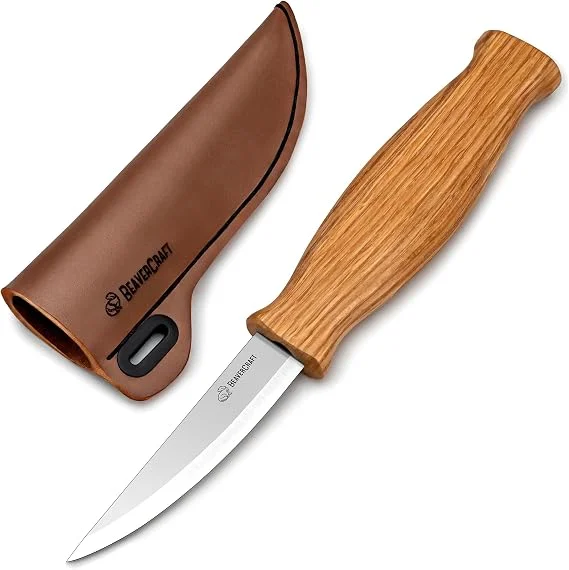 |
BeaverCraft Wood Carving Sloyd Knife C4s – $21.99 The single knife every project below actually uses — no need to buy a full set for your first few pieces.
|
Safety Tips
Every whittling cut moves away from your body and away from your holding hand — that single rule prevents most whittling injuries. Wear a cut-resistant glove on the hand holding the wood and a thumb guard on your cutting thumb if you’ll be using thumb-pushed cuts, and keep the blade sharp: a dull knife needs more force, and more force is what actually causes slips.
Work seated with your elbows resting on your knees rather than standing and cutting at arm’s length — the braced position gives you far more control over where the blade stops if it slips through the cut faster than expected.
Project 1: A Simple Wooden Spoon
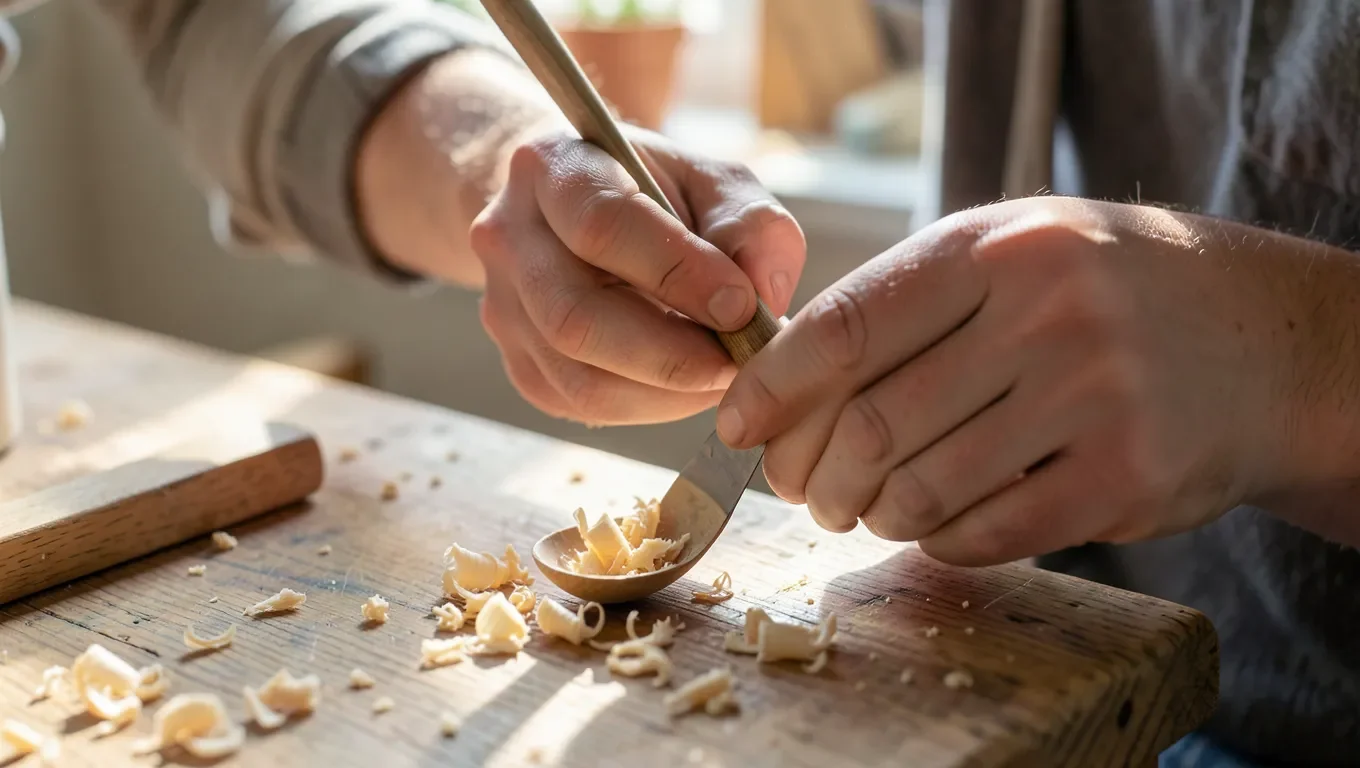
Start with a basswood blank roughly 8 inches long and 1.5 inches thick. Rough out the handle and bowl shape from the side profile first, then thin the handle before hollowing the bowl — hollowing first leaves you carving a bowl-shaped void that’s awkward to hold steady. A spoon usually takes a beginner 3 to 5 hours spread across a couple of evenings.
The bowl is the hardest part: a hook knife makes it faster, but a sloyd knife alone can hollow a shallow bowl with small, controlled scooping cuts along the grain. Sand to 220 grit and finish with a food-safe oil like walnut oil or mineral oil if the spoon will touch food.
Project 2: A Wooden Keychain Fob
A keychain fob is the fastest real project on this list — a flat basswood blank about 2×1 inches, shaped into a simple silhouette (a heart, a leaf, an initial letter) in under an hour. It’s the project most people should actually start with, since it teaches basic stop cuts and shaping without the time investment of a spoon.
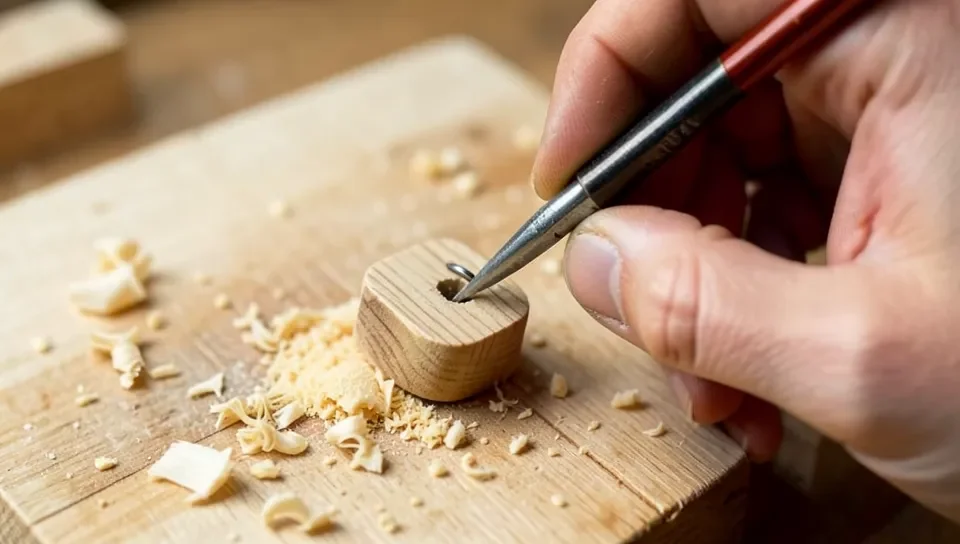
Drill the keyring hole before you carve the final shape, not after — drilling into a thin, already-shaped piece risks splitting it. Sand smooth, then finish with a beeswax-based wood polish for a bit of water resistance if it’ll live on an actual keyring.
Project 3: A Simple Bird Figure
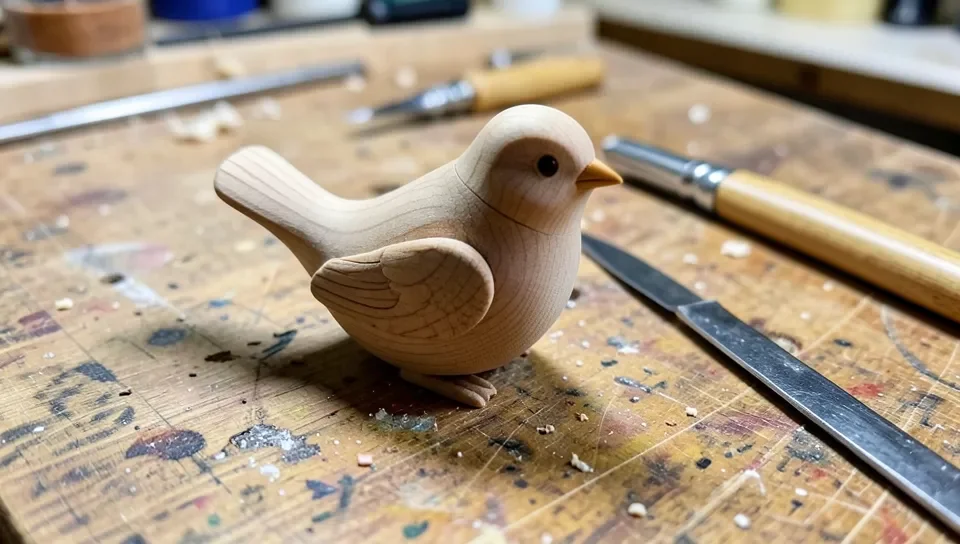
A rounded songbird shape — egg-shaped body, small wedge for a tail, no separately carved wings or legs — is the standard first figure because its curves forgive imprecise cuts better than anything with flat, straight edges that show every mistake. Work the overall silhouette first from a square blank, then round the corners into the body shape before adding any detail lines.
Skip carved feather detail on a first attempt; a smooth, simplified body reads as a finished, intentional style rather than an unfinished detailed one. Add eyes with a wood-burning pen or a fine permanent marker instead of trying to carve them — carved eyes on a piece this small are where most beginners split the wood.
Project 4: A Butter Knife
A butter knife is a flat-carve project — no hollowing like a spoon, just a handle tapering into a wide, thin, rounded blade shape. Start from a blank about 7 inches long, mark the centerline on both faces, and work down to it evenly from both sides so the blade doesn’t end up thicker on one edge than the other.
Keep the “blade” edge rounded and at least 1/8 inch thick — a butter knife needs to spread, not cut, and a too-thin edge splinters the first time it’s used. This project builds the flat-plane control that transfers directly to letter openers and other flat-carved pieces.
Project 5: A Simple Whistle
A basic slide or fipple whistle from a straight branch section (elder, willow, or sycamore work well with bark still on) is the one project on this list that involves actual voicing — cutting a precise notch and air channel that has to be right for the whistle to sound at all, which makes it a satisfying step up once the first four projects feel easy.
Cut the mouthpiece notch at roughly a 45-degree angle and test-blow after every small adjustment rather than committing to the full depth at once — a notch cut too deep on the first pass can’t be undone, while a shallow one can always be deepened.
Tips For Improvement
Two cuts cover most of whittling: the push cut (thumb braces the blade spine, blade pushed forward and away) for controlled, precise removal, and the pull cut (thumb on the wood, blade pulled toward the thumb) for faster rough shaping. Learn both on scrap wood before starting a real project — most beginner mistakes come from using one cut where the other would give more control.
Strop your knife on a leather strop loaded with honing compound every 20 to 30 minutes of carving, not just when it visibly dulls — a blade that’s still “sharp enough” to cut but has lost its keenest edge is exactly when most slips happen, because you unconsciously add extra force to compensate.
Looking for more structured options grouped by difficulty and time investment? See our 10 simple wood carving designs guide for a quick-pick list including a mushroom project and other next-level beginner pieces once these five feel comfortable.
Frequently Asked Questions
What Is The Easiest Thing To Whittle?
A flat wooden keychain fob is the easiest real project for a true beginner — a simple silhouette carved from a thin basswood blank in under an hour, with no hollowing or fine detail required.
Do You Soak Wood Before Whittling?
Green (freshly cut, unseasoned) wood carves easier than dry wood and doesn’t need soaking. Dry basswood from a craft store doesn’t need soaking either — it’s already soft enough to carve straight from the package.
Is Whittling A Cheap Hobby?
Yes. A sloyd knife runs $15 to $25, basswood carving blanks cost $2 to $5 each, and a cut-resistant glove and thumb guard add another $10 to $15 — a complete starter kit costs under $50 and lasts for dozens of projects.
What To Carve As A Beginner?
Start with a keychain fob or a simple rounded bird figure before attempting a spoon — both teach basic stop cuts and shape control in under an hour, while a spoon’s hollowed bowl takes several more hours and is easier to get wrong on a first attempt.
Conclusion
A keychain fob, a bird figure, a butter knife, a whistle, and a spoon cover the real range of beginner whittling — from a 30-minute first cut to a multi-evening bowl-hollowing project. Start with the fob, and work up to the spoon once the push and pull cuts feel automatic rather than deliberate.
Keep the knife sharp, cut away from your body, and don’t rush the bowl on that first spoon — it’s the one step where patience matters more than skill.
Sponsored / affiliate links. As an Amazon Associate I earn from qualifying purchases. I may earn additional commission from eligible campaigns.