Hardwood Floor Jack: What It Is, How to Use One, and Which to Buy
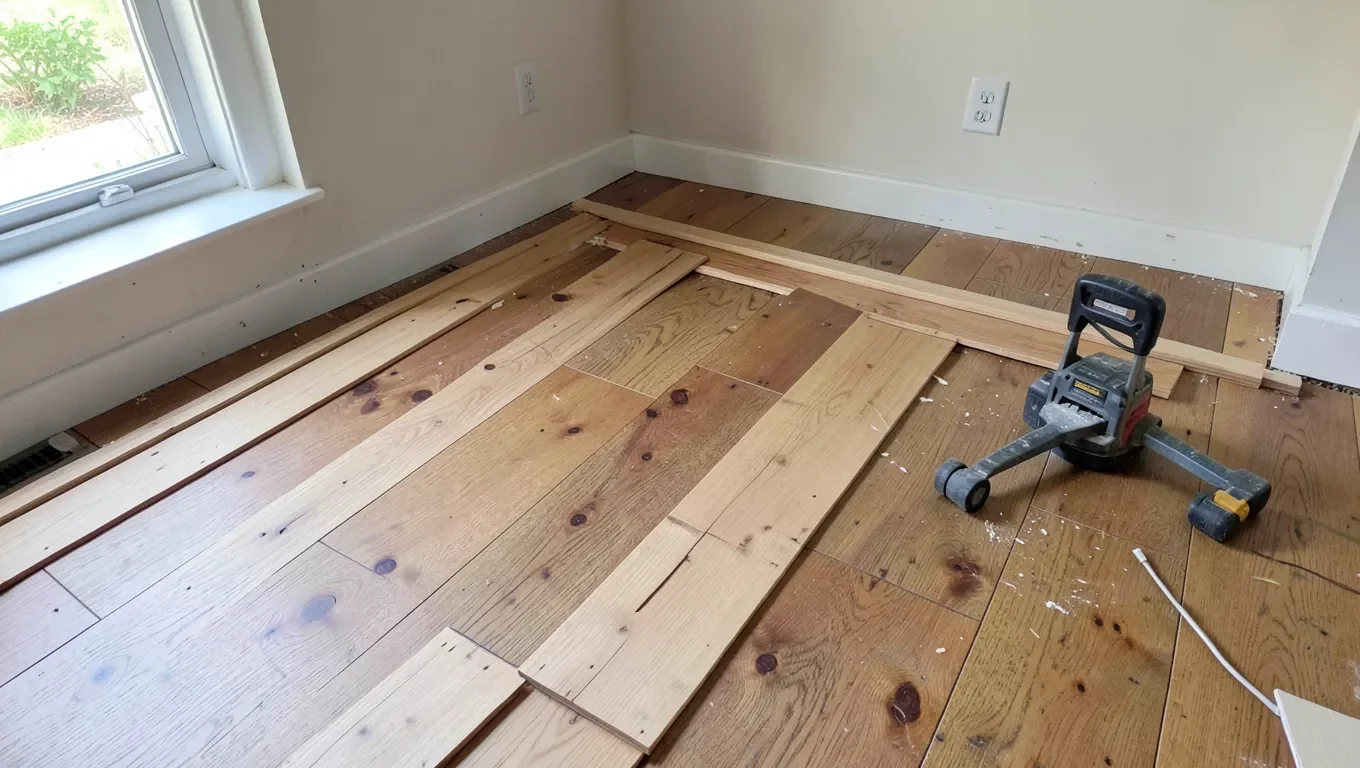
A hardwood floor jack is a ratcheting tool that pulls or pushes flooring boards tightly together during installation — used anywhere a mallet can’t fit, like the last row against a wall. Professional installers commonly use trade tools like the Primatech Prim-Jack, a specialty product sold through flooring-trade suppliers rather than general retailers; DIYers have real, more accessible ratcheting jack options that do the same basic job.
What A Floor Jack Actually Does
DIY-Friendly Alternative To Trade-Only Tools
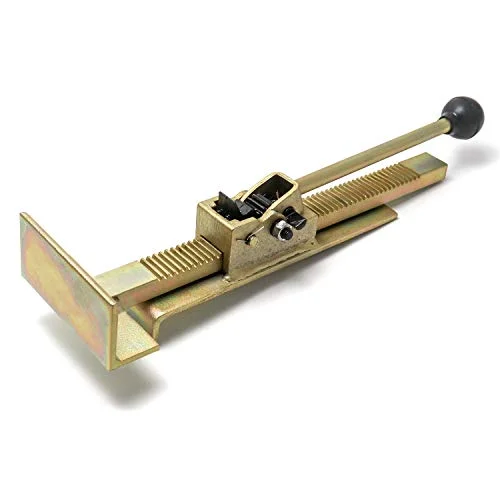 |
QWORK Ratcheting Flooring Jack – $34.47 Works with 8-22mm solid and engineered flooring, ratcheting handle applies controlled pressure up to 25 lbs — a real, Amazon-available alternative to trade-only professional jacks.
|
A floor jack uses a ratchet mechanism to apply steady, controlled pressure to a board’s edge, closing gaps between boards without the repeated hammer blows a mallet-and-block method requires. This matters most in two situations: straightening a crooked or slightly bowed board before nailing, and tightening the final row of boards against a wall, where there’s no room to swing a mallet or use a standard board-to-board nailing technique. The tool essentially does the same job a mallet does — close the gap — but with more control and in spaces a mallet physically can’t reach.
How To Use One: Pull Method
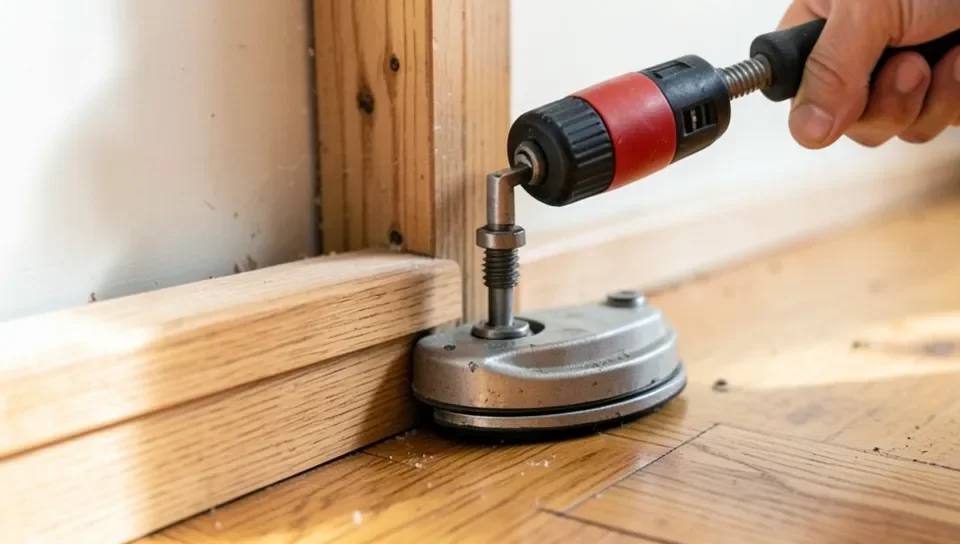
The pull method anchors the jack against a fixed point (often a stud or a temporarily-fastened block) and uses the ratchet to pull the loose board toward the already-installed flooring, closing the gap between them. This is the more common technique for general board tightening across the field of the floor, not just the final row.
How To Use One: Push Method
The push method works the opposite direction — the jack braces against the wall (with a protective block to avoid marking the wall) and pushes the final board toward the installed field, which is the technique most floor jacks are actually built for, since it’s the situation where a mallet genuinely can’t fit. Always use a protective block or pad between the jack and any finished wall surface to avoid denting drywall or baseboard.
Common Mistakes To Avoid
- Skipping a protective pad against the board or wall: the jack’s metal contact points can dent or mark both the flooring and the wall if used bare — always use the felt/rubber pad or a scrap block.
- Over-tightening in one spot: ratcheting too aggressively at a single point can bow the board rather than seat it flat — apply pressure gradually and check the board is seating evenly along its length, not just at the jack’s contact point.
- Using it on flooring outside its rated thickness range: most jacks specify a working thickness range (commonly 8-22mm) — using one outside that range risks slipping or an ineffective grip.
- Forgetting to check squareness periodically: tightening boards one at a time without periodically checking the overall row stays straight can compound small errors into a visibly crooked floor by the time you reach the far wall.
Trade Tools Vs. DIY-Accessible Options
Professional-grade tools like the Primatech Prim-Jack are precision-built, can deliver over a ton of force, and are designed for the daily wear of a full-time flooring installer — but they’re sold through specialty flooring-trade suppliers, not typical retail or Amazon channels, and priced accordingly for professional use. For a DIYer doing one or two rooms, a lighter-duty ratcheting jack (like the product above) available through standard retail channels does the same fundamental job at a fraction of the cost and is genuinely adequate for occasional, non-professional use — the tradeoff is durability and force capacity for repeated daily jobsite use, not whether it works for a home project.
Alternatives If You Don’t Want To Buy A Jack
- Rent one: most tool rental counters and flooring supply stores rent professional-grade jacks by the day — often the most cost-effective choice for a one-time DIY project where buying a tool you’ll rarely use again doesn’t make sense.
- Pry bar and scrap block: a flat pry bar braced against a scrap block nailed to the subfloor can substitute for tightening the final rows, though it offers far less controlled, even pressure than a purpose-built jack and takes more trial and error to get right.
- Flooring nailer with a built-in tightening foot: some pneumatic flooring nailers have an integrated mechanism that snugs the board as it nails — useful for the general field of the floor, though it still doesn’t solve the final-row-against-the-wall problem a dedicated jack handles.
Frequently Asked Questions
What does a hardwood floor jack do?
It ratchets flooring boards tightly together during installation, closing gaps a mallet can’t reach — especially useful for straightening boards and tightening the final row against a wall.
What floor types can a floor jack be used on?
Solid and engineered hardwood, and many laminate/vinyl plank products — check the specific tool’s rated thickness range (commonly 8-22mm) before use to ensure a proper grip.
Can a floor jack damage walls or flooring?
It can if used without a protective pad or block between the tool and the wall/board surface. Always use the included pad (or a scrap block) and apply pressure gradually rather than over-tightening at one point.
Conclusion
A hardwood floor jack solves a real, specific installation problem — tightening boards where a mallet can’t fit — using either a pull or push technique depending on the situation. Professional trade tools like the Primatech Prim-Jack are built for daily jobsite use and sold through specialty suppliers; a lighter-duty, retail-available ratcheting jack is a genuinely adequate choice for a DIY project.
Sponsored / affiliate links. As an Amazon Associate I earn from qualifying purchases. I may earn additional commission from eligible campaigns.