How Anchor Bolts Connect Wood Framing to Concrete (IRC Code)
Anchor bolts connect a wood-frame wall’s bottom sill plate to the concrete foundation below it — they’re the single connection standing between a house and being lifted or slid off its foundation in high wind or an earthquake. The International Residential Code (IRC R403.1.6) spells out the minimum: 1/2-inch-diameter bolts embedded at least 7 inches into the concrete, spaced no more than 6 feet apart, with at least two bolts per sill plate section and one within 12 inches of each end.
How Anchor Bolts Connect Wood Framing to Concrete
Code-Compliant Anchor Bolt Kit
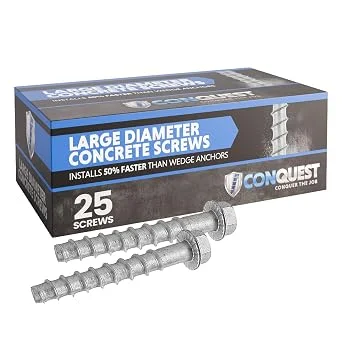 |
Conquest Galvanized Concrete Anchor Screws – $69.92 1/2-inch galvanized concrete screws for post-installed anchoring into cured concrete – the right tool for retrofitting an existing sill plate.
|
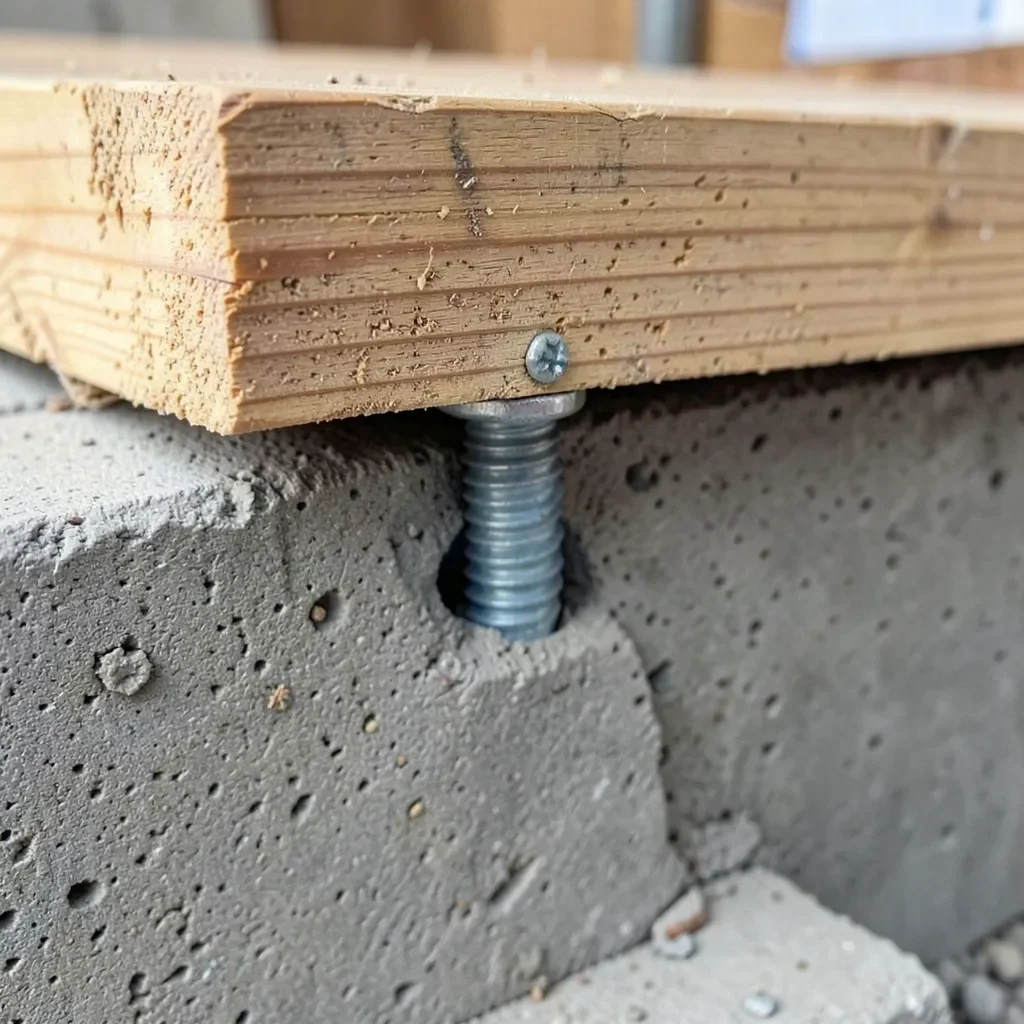
A steel plate washer at least 2x2x3/16 inches sits between the nut and the wood in high-wind and seismic zones — a standard round washer can pull straight through a sill plate under lateral load, which defeats the point of the bolt. The nut gets torqued down snug against the washer, not crushed into the wood; over-tightening a 1/2-inch bolt into a 2x sill plate can split the grain along its length.
Cast-in-Place vs. Post-Installed Anchor Bolts
Cast-in-place (also called wet-set) anchor bolts get set into the concrete while it’s still wet, held in position with a template or bracket until the pour cures — this is the standard method for new foundations and gives the strongest, most predictable embedment. Post-installed anchors go into cured concrete via a drilled hole, using either a mechanical expansion anchor or an epoxy adhesive anchor. Post-installed bolts are the practical choice for retrofitting an older house that was never properly bolted, or for repairing a section where a cast-in bolt was damaged or missing — epoxy anchors in particular can match cast-in-place holding values when installed to the epoxy manufacturer’s specified hole depth and cleaning procedure.
Common Anchor Bolt Mistakes
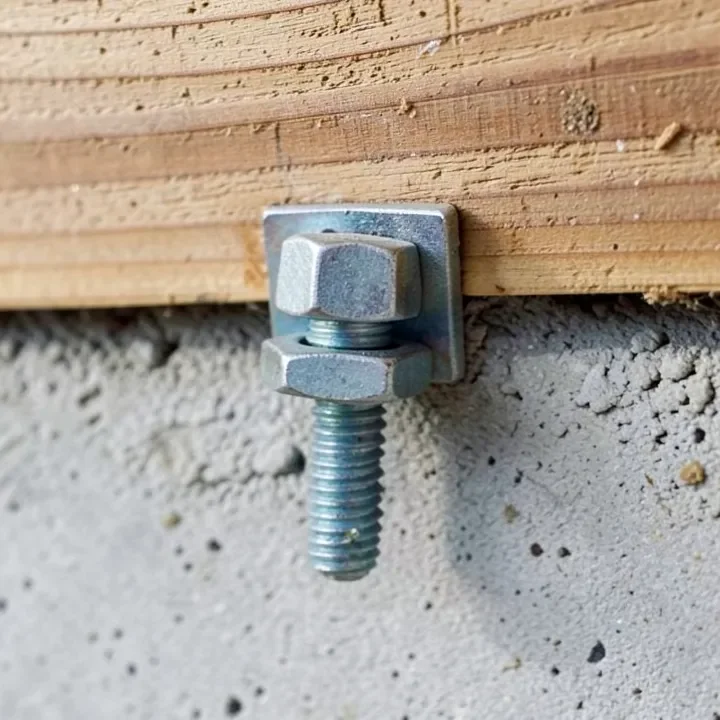
- Bolt spacing exceeding 6 feet — the IRC maximum, and inspectors will flag it on a foundation inspection.
- Missing the within-12-inches-of-each-end requirement at sill plate corners and splices, a spot that takes disproportionate load in a lateral event.
- Using a standard round washer instead of a plate washer in high-wind or seismic design zones, where code requires the larger bearing area.
- Drilling the sill plate hole oversized, which lets the bolt shift under load instead of holding the plate in fixed position.
- Over-torquing the nut, splitting the sill plate along the grain rather than clamping it evenly.
Frequently Asked Questions
How Are Anchor Bolts Used In Wood Construction?
Anchor bolts secure wooden structures to concrete foundations. They provide stability and resist lateral forces. Builders insert bolts into wet concrete and attach wooden frames once set. Proper placement ensures structural integrity, especially in seismic zones. Use washers and nuts to fasten wood securely.
What Are Anchor Bolts Used For In Construction?
Anchor bolts secure structures to concrete foundations in construction. They provide stability and resist movement. These bolts connect building elements like columns and beams. Anchor bolts enhance safety by ensuring structural integrity. They play a crucial role in earthquake-resistant and wind-resistant buildings.
How Many Anchor Bolts Are Used In Wood Frame Construction?
Wood frame construction typically uses anchor bolts spaced 6 feet apart. At least two bolts are required per plate section. Ensure placement within 12 inches of each end. Check local building codes for specific requirements, as they may vary.
When Should Anchor Bolts Be Placed?
Anchor bolts should be placed before concrete hardens to ensure proper alignment and stability. Position them during the formwork stage. Ensure precise placement by using templates or guides. This guarantees structural integrity and adherence to building codes. Proper timing prevents issues during construction.
Sponsored / affiliate links. As an Amazon Associate I earn from qualifying purchases. I may earn additional commission from eligible campaigns.