Best Way to Fasten Wood to Concrete: Screws vs Anchors
For most workshop and garage jobs, fasten wood to concrete with a 1/4 in. concrete screw (the Tapcon type) set in a hammer-drilled, vacuumed hole. Step up to a wedge, sleeve or screw anchor for heavier loads, and treat anything that holds a house to its foundation, such as a sill plate, as a code question rather than a hardware-store choice.
Concrete does not forgive a wrong guess. A screw that is too short, a hole full of dust, or a fastener placed too close to a slab edge is the usual reason a board pulls loose or a corner of the slab breaks away. This guide matches the fastener to the job, gives the drill sizes, embedment depths and edge distances the manufacturers publish, and covers the sill plate rules where getting it wrong is a safety problem.
Which Fastener Fits Which Job
Best Concrete Screw Pick
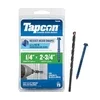 |
Tapcon 1/4 x 2-3/4 in. Hex Head Blue Climaseal Concrete Screws (75 pack), $29.04 A 2-3/4 in. screw through a 1-1/2 in. board leaves 1-1/4 in. in the slab, inside the 1 in. to 1-3/4 in. embedment window the manufacturer specifies.
|
| Job | Fastener that fits | Why |
|---|---|---|
| Furring strips, thin trim, light shelving on a wall | 3/16 in. concrete screws | Small loads, and the smaller screw needs the smaller 5/32 in. hole |
| Workbench frame, lumber rack, shop fixtures on a slab | 1/4 in. concrete screws, or a screw anchor | Cured slab, modest loads, removable if you rearrange the shop |
| Heavier fixtures and machinery, railing bases | Wedge, sleeve or heavy-duty screw anchors | Larger diameter and deeper embedment than a concrete screw |
| Sill plate on a foundation | Cast-in anchor bolts, or post-installed anchors approved for the purpose | Code sets bolt size, embedment and spacing (see the sill plate section) |
| Deck ledger or anything carrying people | Engineered anchors per your local code | A failure here injures people; follow the plans and inspector |
| Trim or panels that never carry weight | Construction adhesive can work | Not for anything load-bearing; see our glue-to-concrete guide |
Regular wood screws and deck screws never belong in this table. They have no way to grip concrete, and even a rated deck screw is a wood-to-wood fastener; our deck screw guide explains where that line sits.
Concrete Screws (Tapcon Type): The Numbers That Matter
A concrete screw cuts its own thread into a hole you drill first. Two mistakes cause most failures: the hole is too big, or the screw goes in too far or not far enough. The manufacturer figures below come from the Tapcon technical data as published by Concrete Fastening Systems, a fastener distributor. Load and spacing values depend on the concrete, so read the current instructions on your box before you trust any table, ours included.
| Screw diameter | Drill bit | Embedment into concrete | Min. spacing between screws | Edge distance for full capacity |
|---|---|---|---|---|
| 3/16 in. | 5/32 in. | 1 in. min, 1-3/4 in. max | 3 in. | 1-7/8 in. |
| 1/4 in. | 3/16 in. | 1 in. min, 1-3/4 in. max | 4 in. | 2-1/2 in. |
The same data lists test values in 2,000 psi concrete of 600 lb pull-out and 720 lb shear for the 3/16 in. screw, and 750 lb and 900 lb for the 1/4 in. screw. Those are published test numbers, not safe working loads, so do not hang anything heavy from one screw and call it a match.
Screw length: the myth that longer is stronger
It feels logical to buy the longest screw that will fit. With a concrete screw, embedment has a ceiling as well as a floor: 1 in. to 1-3/4 in., so the length you need is the board thickness plus that window.
| Board thickness | Screw length that lands in the 1 in. to 1-3/4 in. window |
|---|---|
| 3/4 in. (furring strip) | 1-3/4 in. to 2-1/2 in. |
| 1-1/2 in. (2x lumber laid flat) | 2-1/2 in. to 3-1/4 in. |
| 2-1/2 in. (two layers, or 2x plus sill gasket and plywood) | 3-1/2 in. to 4-1/4 in. |
That is why the 1-3/4 in. screws sold in small kits only suit thin furring. Through a 2×4 laid flat they would barely bite 1/4 in. into the slab.
Install steps that follow the manufacturer
- Drill clearance holes in the board slightly larger than the screw so the screw pulls the board down instead of jacking it up.
- Mark the slab through the holes with the bit, then move the board aside.
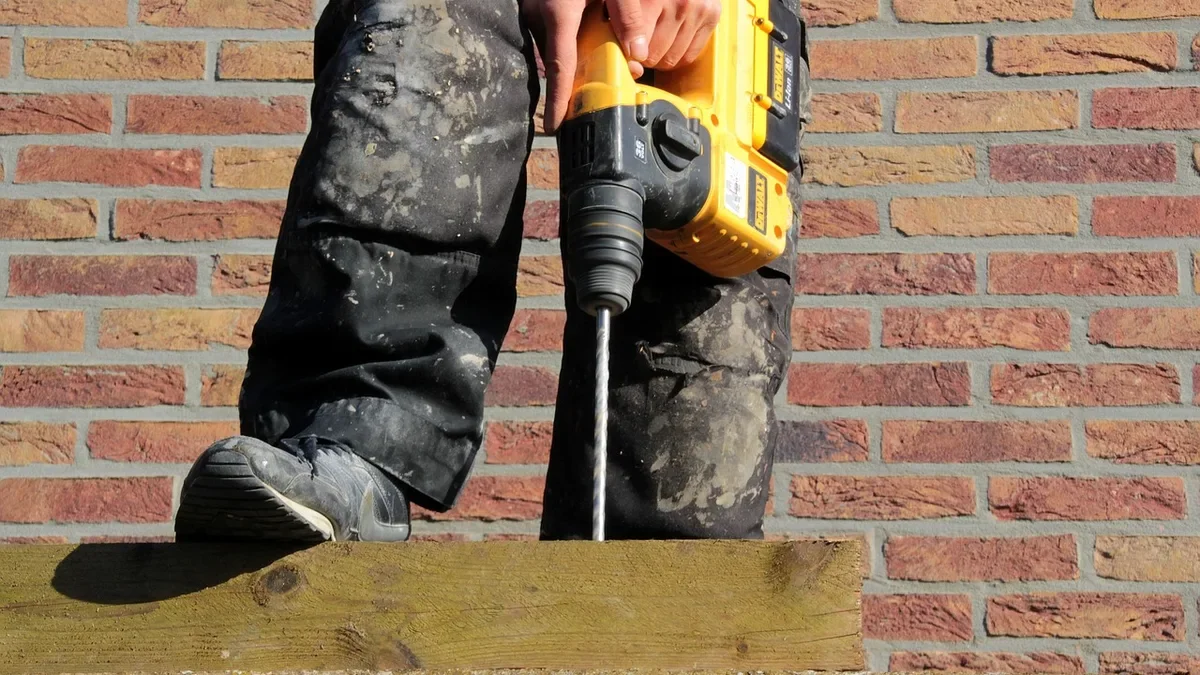
- Drill with a hammer drill and a carbide-tipped bit that meets ANSI standards, using the diameter in the table. Drill 1/2 in. deeper than the screw will penetrate so dust has somewhere to go. Tape on the bit or a depth stop keeps you honest.
- Clear the hole with a wire brush, compressed air or a vacuum. Dust left in the bottom is what stops a screw short.
- Drive the screw until the head is snug on the board. Stop there: forcing a screw that has bottomed out is how heads snap and threads strip.
New to drilling masonry? Our hammer drill vs drill comparison covers what the hammer mode does, and can a regular drill do concrete answers the budget version of that question.
When to Step Up to Wedge, Sleeve or Screw Anchors
Concrete screws are the easy answer for modest loads. Once the load, the vibration or the consequences get bigger, move to an anchor made for it:
- Wedge anchors are set into a hole of the exact size, then a nut pulls a clip that expands against the concrete. They suit solid concrete and heavy fixtures, and they are not designed to come back out.
- Sleeve anchors expand a sleeve along the bolt and tolerate slightly weaker base material. They are a common choice for railing bases and shop machinery.
- Heavy-duty screw anchors such as Simpson Strong-Tie Titen HD screw directly into the hole like a concrete screw but at larger diameters, and can be removed.
Follow each anchor maker’s installation data for hole size, torque and depth. As one example, retailer listings of Simpson Titen HD data show that anchor needing far more room from an edge than a small concrete screw does:
| Titen HD diameter | Min. embedment | Min. edge distance | Extra hole depth |
|---|---|---|---|
| 1/4 in. | 1-1/2 in. | 3 in. | 1/8 in. |
| 1/2 in. | 2 in. | 5 in. | 1/2 in. |
| 5/8 in. | 2-3/4 in. | 6 in. | 1/2 in. |
Treat those as a comparison, not a design table: the current Simpson catalog and the anchor’s evaluation report are the authority, and they change with concrete strength and cracking.
Whichever anchor you use, keep it clear of slab edges and joints, and never anchor into concrete that is cracked, crumbling or hollow. If the base material is brick or block rather than a solid slab, the rules change; see screwing into mortar first.
Sill Plates and Code: The One Place Not to Improvise
Bolting the bottom plate of a wall to a foundation is a structural connection. The International Residential Code, section R403.1.6, sets the baseline that most US jurisdictions build on:
- 1/2 in. diameter anchor bolts embedded at least 7 in. into the concrete
- spaced no more than 6 ft apart
- at least two bolts per plate section, with a bolt within 12 in. of each end but not closer than seven bolt diameters
- a nut and washer on every bolt, with 3 in. x 3 in. plate washers required for braced wall lines in Seismic Design Categories D0, D1 and D2, and for townhouses in Category C
Two details catch people out. Your jurisdiction may have adopted a different edition or amended these numbers, so the building department has the final word. And whether a screw anchor or epoxy anchor may stand in for a cast-in bolt on a sill plate depends on that product’s evaluation report and your inspector, not on how strong it feels in your hand. Our anchor bolt guide walks through how the bolts connect the frame to the foundation, and attaching wood steps to concrete covers the stair version of this problem.
Treated Lumber, Corrosion and the Moisture Gap
Wood that sits on concrete outdoors, or on a slab that touches the ground, is normally pressure treated; the IRC requires it for a sill plate touching a slab or foundation wall that is in contact with the ground. The catch is that modern copper-based treatments such as ACQ corrode ordinary steel quickly. The IRC calls for hot-dip galvanized, stainless steel, silicon bronze or copper fasteners in treated wood, with an exception for steel bolts 1/2 in. or larger.

In practice, that means a blue-coated concrete screw is a fine choice for dry interior work, but for treated lumber outdoors you should confirm that the fastener maker lists that use, or step up to stainless steel. Stainless costs more per screw, which is trivial next to replacing rotted framing. A sill gasket or a strip of sill sealer between the wood and the concrete also helps; our guide on what to put between concrete and wood compares the options, and putting pressure treated wood directly on concrete covers when direct contact is acceptable.
Drilling Concrete Without Breathing the Dust
Concrete dust contains respirable crystalline silica. OSHA’s construction silica rule (29 CFR 1926.1153, Table 1) covers workers, but its method is a useful model for anyone drilling: use a hammer drill fitted with a dust-collecting shroud attached to a vacuum with a high-efficiency filter, and clean the hole with a HEPA-filtered vacuum rather than blowing it out. Under that table, a respirator is not required for workers when those controls are fully in place. For a one-off home job without a shroud, wear safety glasses and a well-fitting respirator, and vacuum the dust instead of sweeping it into the air. Our full walkthrough on drilling into concrete covers bit choice and technique.
Other Ways People Attach Wood to Concrete
- Construction adhesive can hold trim, panels and other non-structural pieces, but it needs clean, dry, dust-free concrete and should not carry weight. Details are in our guide to gluing wood to concrete.
- Powder-actuated tools drive hardened pins with a cartridge. Contractors use them for light fastening such as plates and furring, but they require training and following the tool maker’s manual, so most home shops are better served by a hammer drill and concrete screws.
- Cast-in bolts are set into wet concrete during the pour. They are the strongest option and the standard for new foundations, but they only work if you plan ahead.
Common Mistakes That Cause Failures
- Using the wrong bit. A worn or undersized bit gives a hole that is off-spec; the screw either will not start or strips the thread it cuts.
- Skipping the dust removal. The screw hits packed dust and stops before it reaches full embedment.
- Placing fasteners too close to an edge. The manufacturer edge distances above exist because concrete spalls at the corner under load.
- Overtightening. The screw head snaps, or the thread in the concrete strips and the screw spins freely.
- Trusting a screw for a structural job. If failure could injure someone, get an anchor rated for the load and check with your building department.
Frequently Asked Questions
What is the easiest way to attach wood to concrete?
For light to moderate loads on cured concrete, a concrete screw (Tapcon type) is the simplest: drill the matching hole with a hammer drill, clear the dust, and drive the screw. The manufacturer calls for 1 in. to 1-3/4 in. of embedment.
Can I use regular wood screws to attach wood to concrete?
No. Wood screws and deck screws have no way to grip concrete, and they will strip or snap. Use a fastener made for masonry, with a bit that matches it.
What size drill bit do I use for a 1/4 in. Tapcon?
The manufacturer specifies a 3/16 in. carbide-tipped bit for a 1/4 in. screw and a 5/32 in. bit for a 3/16 in. screw, drilled with a hammer drill and 1/2 in. deeper than the screw will penetrate.
How far apart should anchor bolts be on a sill plate?
The IRC baseline is 1/2 in. bolts embedded 7 in., no more than 6 ft apart, with at least two per plate section and one within 12 in. of each end. Your local code may differ, so confirm with the building department.
Can I use construction adhesive instead of screws?
Adhesive can hold non-structural pieces such as trim and panels on clean, dry concrete, but it should not be relied on to carry weight. For anything load-bearing, use mechanical anchors.
Sponsored / affiliate links. As an Amazon Associate I earn from qualifying purchases. I may earn additional commission from eligible campaigns.