How Do You Get Krazy Glue Off: The Best, Proven Fix
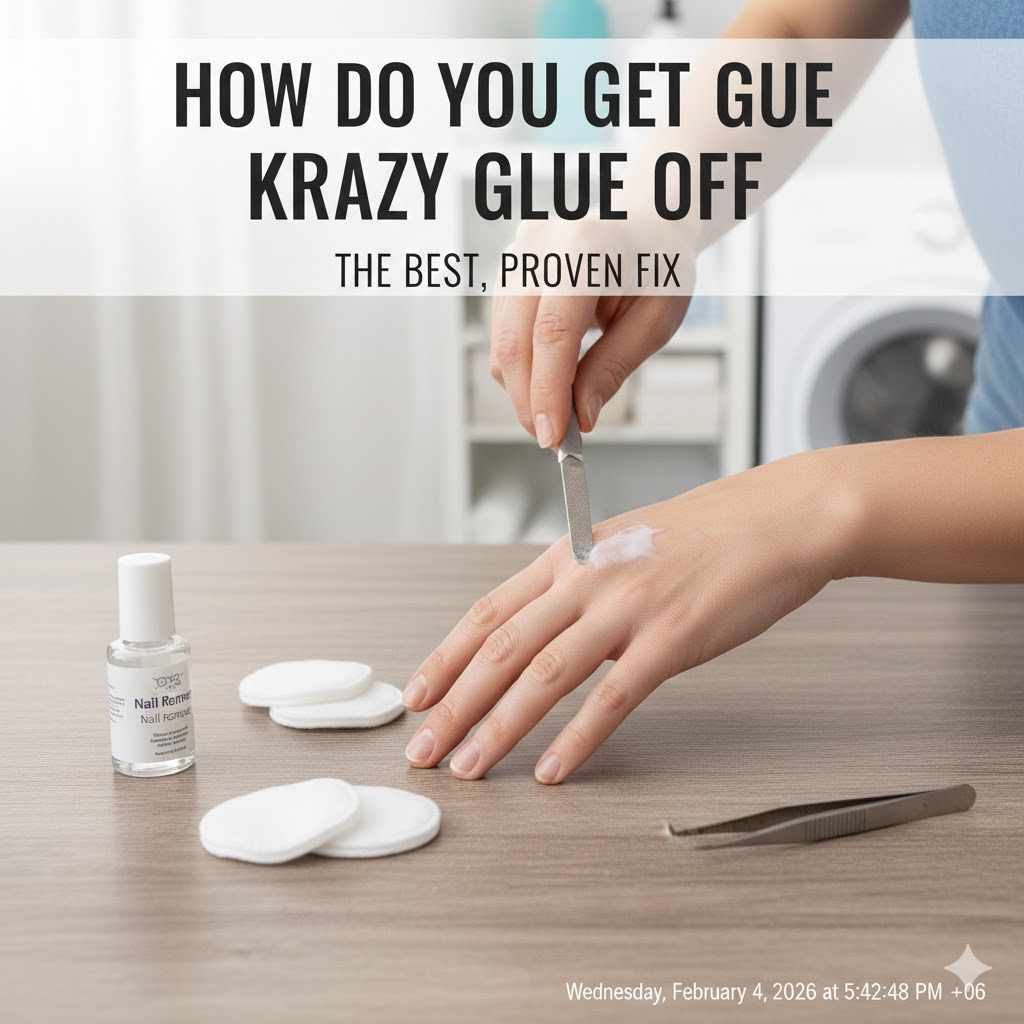
To get Krazy Glue off skin, soak the area in warm, soapy water, then gently rub it with an oil like petroleum jelly or vegetable oil. For stubborn spots, use an acetone-based nail polish remover on a cotton ball. For surfaces, test acetone on a hidden spot first, as it can damage some plastics and finishes.
Hello there! Md Meraj here, your friendly guide in the workshop. We’ve all been there. You’re in the middle of a project, fixing a small crack or joining two pieces of wood. You reach for the Krazy Glue, and in a blink, it’s on your fingers, your countertop, or somewhere it definitely shouldn’t be. Your first instinct might be to panic. But I’m here to tell you to take a deep breath. Getting stuck is just a small bump in the road, not a disaster.
This is one of the most common little mishaps in any DIY project, and thankfully, it’s one of the easiest to fix. We’ll walk through the simple, proven steps to remove that stubborn glue safely and without causing any damage. Let’s get you unstuck and back to your project!
First Things First: Safety is Key
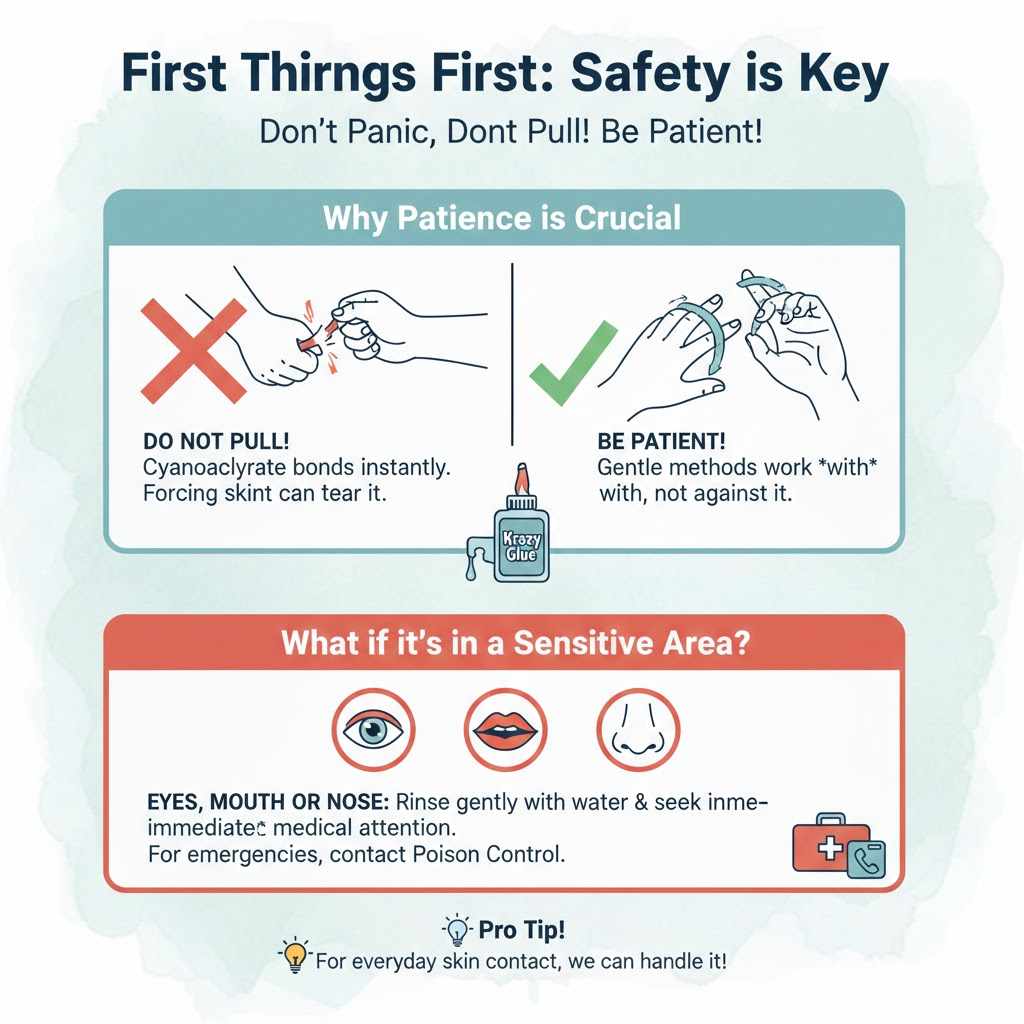
Before we dive into the solutions, let’s talk about safety. When you realize you have super glue on your skin, the most important thing is not to panic and not to pull. Krazy Glue is a powerful adhesive called cyanoacrylate. It bonds instantly, and trying to force bonded skin apart can tear it. It’s a common mistake that can turn a minor inconvenience into a painful injury. Be patient! The methods we’re about to cover are gentle and work with the glue, not against it.
What if Krazy Glue Gets in a Sensitive Area?
If you accidentally get Krazy Glue in your eyes, mouth, or nose, do not try to fix it yourself. Rinse the area gently with water and seek immediate medical attention. The American Association of Poison Control Centers provides excellent guidance for these specific emergencies. For everyday skin contact, however, we can handle that right here in the workshop.
How Do You Get Krazy Glue Off Your Skin? 3 Simple Methods
Having Krazy Glue on your fingers is the most common scenario. Luckily, your skin’s natural oils will cause the glue to release on its own over a day or two. But if you want it off now, here are the three best methods, starting with the gentlest.
Method 1: The Warm, Soapy Water Soak
This is the first thing you should always try. It’s gentle, safe, and often all you need for small spills.
- Fill a Bowl: Get a bowl or sink and fill it with warm (not hot) water.
- Add Soap: Add a generous amount of mild hand soap or dish soap to create a soapy solution.
- Soak the Area: Submerge the affected skin in the water for at least 10–15 minutes. This helps soften the glue’s bond.
- Gently Pry: While soaking, try to gently roll or peel the edges of the glue. You can use a blunt object like a spoon handle or your fingernail to help carefully pry it away from the skin. Don’t force it!
- Rinse and Repeat: If the glue doesn’t come off completely, you can dry your skin and repeat the process.
This method works best when the glue is fresh and hasn’t had a long time to cure. It’s a great, chemical-free first step.
Method 2: The Oil and Salt Scrub
If soap and water didn’t quite do the trick, it’s time to bring in some kitchen staples. Oils are fantastic at breaking down the cyanoacrylate bond, and salt provides a gentle abrasive to help lift the glue away.
- Choose Your Oil: You can use almost any household oil. Petroleum jelly, mineral oil, vegetable oil, olive oil, or even butter will work.
- Apply the Oil: Rub a generous amount of oil directly onto the Krazy Glue. Massage it into the skin and around the edges of the glue for a few minutes. You should start to see the edges lift.
- Add a Scrub: For extra power, sprinkle a little table salt or sea salt onto the oil. The salt acts as a natural exfoliant.
- Gently Rub: Rub the oil and salt mixture in a circular motion. This will help scrub the loosened glue particles off your skin without causing damage.
- Wash It Off: Once the glue is gone, wash your hands thoroughly with soap and water to remove any oily residue.
Method 3: The Surefire Fix: Acetone
When you need the glue gone right now, acetone is your most reliable solution. Acetone is the active ingredient in most nail polish removers, and it is highly effective at dissolving cyanoacrylate glue.
A quick word of caution: Acetone is a strong chemical. It can be very drying to your skin, and it’s flammable. Always use it in a well-ventilated area away from any open flames or sparks.
- Get the Right Stuff: Check your nail polish remover bottle. It must contain acetone to work. “Acetone-free” removers will not dissolve the glue.
- Apply to a Cotton Ball: Pour a small amount of the acetone-based nail polish remover onto a cotton ball or paper towel.
- Dab and Hold: Press the soaked cotton ball against the glue. Hold it there for a minute or two to let the acetone begin dissolving the bond.
- Wiggle and Peel: You should feel the glue begin to soften and turn gummy. Gently wiggle your fingers or use the cotton ball to peel the glue away. It should come off in small pieces.
- Wash and Moisturize: As soon as the glue is gone, wash your hands thoroughly with soap and warm water. Because acetone is very drying, it’s a great idea to apply a good hand lotion or moisturizer afterward to restore your skin.
How to Get Krazy Glue Off Different Surfaces
Getting glue on your project or your furniture can be frustrating. But just like with skin, there’s a solution for almost every surface. The key is to choose the right method to avoid causing more damage.
Always remember to test any remover on a small, hidden spot first! This is crucial for plastics, painted surfaces, and finished wood, as strong solvents like acetone can ruin the finish.
| Surface Type | Best Removal Method | Important Cautions |
|---|---|---|
| Finished Wood (e.g., table, desk) | Start with oil (mineral or olive oil). If that fails, very carefully apply acetone with a Q-tip. | Acetone can strip wood finish and stain. Test in an unseen area first! Wipe away residue quickly and apply a matching furniture polish afterward. |
| Unfinished Wood | Acetone can be used more freely here. If a stain remains, you can gently sand it away with fine-grit sandpaper. | Sanding will remove a thin layer of the wood. Make sure to sand with the grain for a smooth finish. |
| Plastic | Try warm, soapy water or isopropyl (rubbing) alcohol. Gently pry with a plastic scraper. | DO NOT USE ACETONE. It will melt or cloud many types of plastic. Understanding the type of plastic using its recycling code can help, as some are more solvent-resistant than others. Resources like the Resin Identification Code guide can be useful for advanced users. |
| Metal | Acetone is generally safe and very effective on most metals (steel, aluminum, etc.). | No major cautions, but wipe the metal clean after removal to prevent any residue from affecting coatings. |
| Glass | Apply acetone to dissolve the glue. Any remaining film can be gently scraped off with a razor blade held at a low angle. | Be careful not to scratch the glass with the razor blade. Keep the surface wet while scraping to provide lubrication. |
| Fabric / Clothing | Dab acetone onto the back of the fabric, underneath the glue spot. This pushes the glue off the fibers rather than into them. Blot with a clean cloth. | Test acetone on an inside seam first, as it can discolor some dyes. Krazy Glue on fabric often creates a permanent, stiff patch. Removal may not always be 100% successful. |
| Countertops (Laminate/Stone) | For laminate, use a controlled amount of acetone. For stone like granite, try acetone but clean it up quickly. A plastic scraper can help lift the glue. | Acetone can damage the seal on some stone countertops. Always test in an inconspicuous area. |
DIY vs. Commercial Krazy Glue Removers
You’ve seen we can use everyday items like oil and acetone. But you may have also seen special “Super Glue Remover” products at the hardware store. Which should you use? It depends on the situation.
| Remover Type | Pros | Cons | Best For |
|---|---|---|---|
| DIY (Soap, Oil, Salt) | Completely safe, gentle on skin, ingredients are already in your home. | Slower to work, may not be strong enough for large or fully cured glue spots. | Removing Krazy Glue from skin, especially for kids or people with sensitive skin. |
| DIY (Acetone) | Very powerful, fast-acting, inexpensive, widely available. | Drying to skin, flammable fumes, can damage many plastics and finishes. | Stubborn glue on skin (with care), metal, glass, and unfinished wood. |
| Commercial Removers | Often a gel formula that stays in place, formulated to be slightly less harsh than pure acetone. | Costs more, still contains strong chemicals, may need to be purchased specially. | Delicate surfaces, vertical applications where you don’t want drips, or when acetone fails. |
My advice? Always start with the gentlest DIY method first. If that doesn’t work, move up to acetone, making sure to take the proper safety precautions. A commercial remover is a good option to have on hand, but it’s not usually necessary for most common spills.
A Step-by-Step Plan for Any Krazy Glue Mishap
Feeling overwhelmed? Don’t be. Let’s simplify everything into one clear, actionable plan you can use anytime you have a glue emergency.
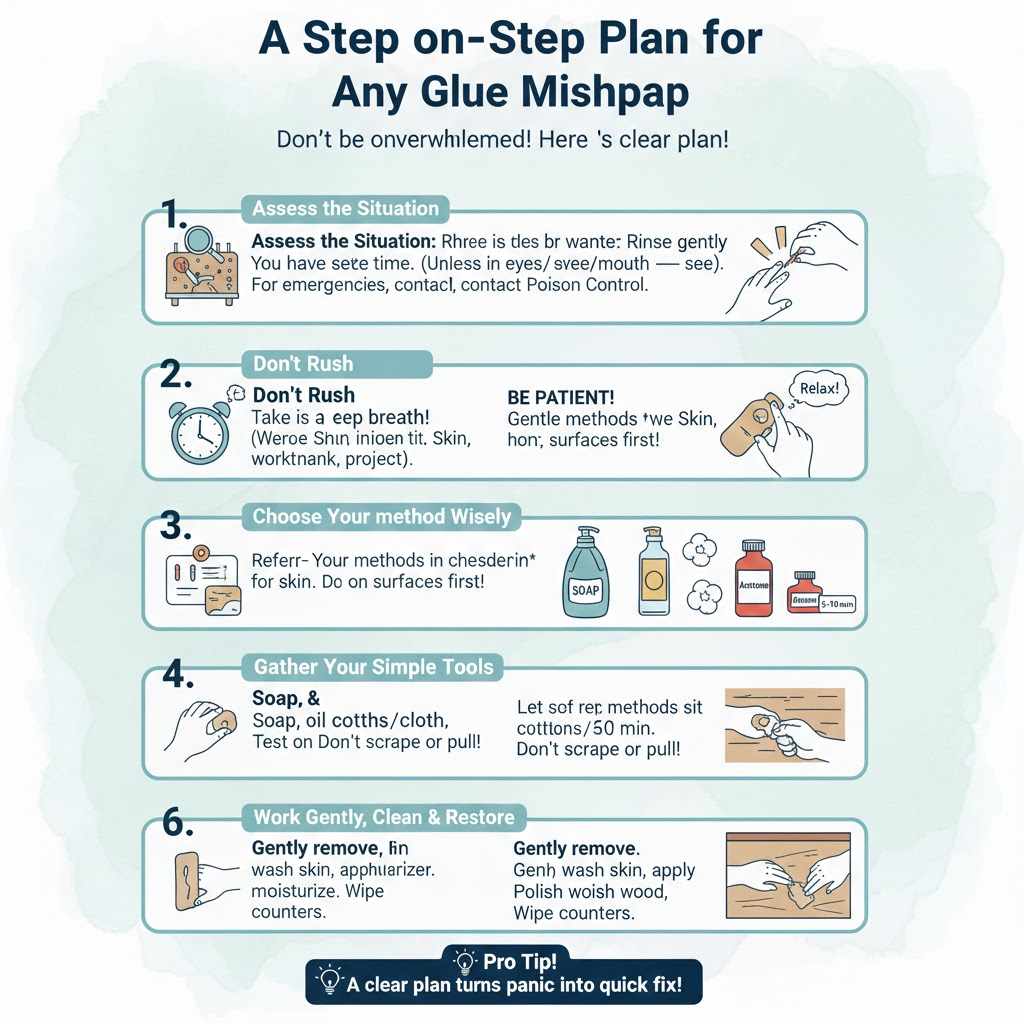
- Assess the Situation: First, identify exactly where the glue is. Is it on your skin, your workbench, or your project? The surface determines your method.
- Don’t Rush: Take a deep breath. Unless the glue is in a dangerous spot (like your eyes), you have time to handle this calmly.
- Choose Your Method Wisely:
- For skin, start with warm, soapy water. If that fails, move to an oil scrub. Use acetone only as a last resort for stubborn spots.
- For surfaces, consult the table above. Always plan to test your chosen remover in a hidden area first.
- Gather Your Simple Tools: You’ll likely need a bowl, soap, oil, cotton balls or a clean cloth, and perhaps some acetone-based nail polish remover.
- Apply and Be Patient: Apply your chosen remover and give it time to work. Solvents need a few minutes to break down the glue. Don’t scrape or pull aggressively. Let the chemicals or oils do the heavy lifting.
- Work Gently to Remove: Once the glue has softened, gently rub, peel, or pry it away. Use a soft cloth or a plastic scraper to avoid damaging the underlying surface.
- Clean and Restore: After the glue is gone, clean the area thoroughly. For skin, wash and apply moisturizer. For wood, you may need to apply a bit of furniture polish. For countertops, wipe them down with your usual cleaner.
Frequently Asked Questions (FAQ)
Is Krazy Glue toxic on my skin?
No, Krazy Glue (cyanoacrylate) is not toxic to the skin and is non-hazardous once cured. In fact, a medical-grade version of this glue is sometimes used in hospitals to close wounds. While it’s not harmful, it can be irritating and uncomfortable, which is why we remove it.
Can I just pull my fingers apart if they’re stuck?
No, absolutely not! This is the most important rule. The bond is often stronger than the top layer of your skin. Trying to force them apart will almost certainly tear your skin, causing a painful injury. Always use a solvent or oil to gently dissolve the bond first.
How long does it take for Krazy Glue to come off skin naturally?
If you do nothing, the Krazy Glue will typically fall off on its own within one to three days. Your skin constantly produces natural oils and sheds its outer layer. This process will naturally break the glue’s bond and push it off.
What’s the difference between Krazy Glue and Super Glue?
Essentially, there is no major difference. Both Krazy Glue and Super Glue are brand names for cyanoacrylate adhesives. They work in the same way and can be removed using the same methods we’ve discussed in this guide.
What should I do if I get Krazy Glue in my eye?
If you get Krazy Glue in your eye, do not try to force it open. Immediately rinse your eyelid and the surrounding area with warm water. Cover the eye with a wet patch and go to the nearest emergency room or urgent care center. This is a medical emergency that requires a professional.
Does rubbing alcohol remove Krazy Glue?
Rubbing alcohol (isopropyl alcohol) can sometimes work, but it is much less effective than acetone. It may help to soften very thin layers of glue, especially on some plastics where acetone is too harsh, but for most situations, you will find acetone works much better and faster.
Can I use nail polish remover that is “acetone-free”?
No, an acetone-free nail polish remover will not work. Acetone is the specific chemical solvent that effectively breaks down and dissolves the cyanoacrylate bonds in Krazy Glue. Without it, the remover will have little to no effect on the cured glue.
Conclusion: Stay Calm and Get Unstuck
There you have it—a complete guide to tackling one of the most common DIY annoyances. The next time you find a drop of Krazy Glue where it shouldn’t be, you’ll know exactly what to do. Remember the golden rule: be patient and don’t pull! Whether you’re using simple soap and water, a bit of oil from the kitchen, or a splash of acetone, the solution is likely already in your home.
Accidents like this are a part of making things with your own two hands. They are small learning moments, not failures. By handling them calmly and correctly, you build the confidence you need to tackle any project that comes your way. So, get back in the workshop, keep creating, and don’t worry about a little spilled glue.