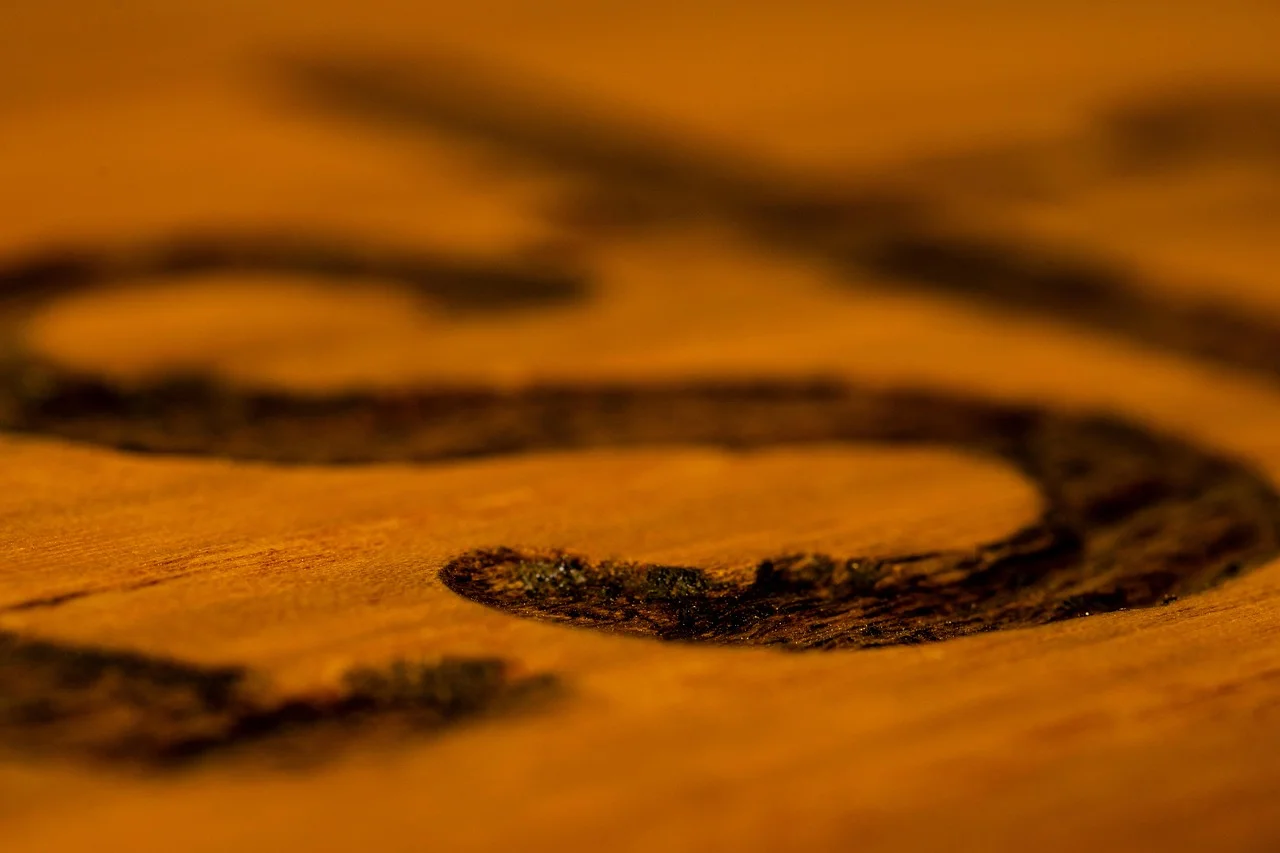
How Long Tung Oil Takes to Dry vs Fully Cure
Tung oil feels dry to the touch within 24 to 72 hours per coat, but it needs a full 30 days at room temperature to fully cure before you put a food-safe piece to hard use or seal it under another coat. Using it too soon traps solvent under the surface and leaves it tacky. This guide covers the difference between surface-dry and fully cured, plus how temperature and wood type change the timeline.
Tung oil is a popular wood finish. It creates a durable, water-resistant surface.
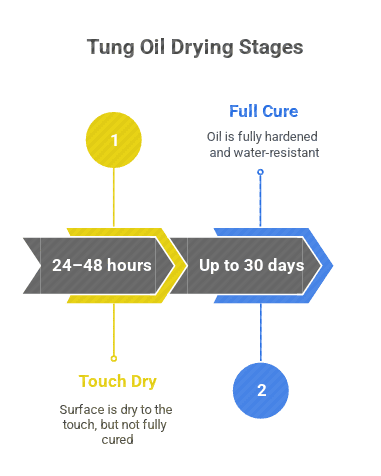
But how long does it take to dry? The drying time for tung oil varies. Factors like temperature and humidity play a role. Generally, tung oil can take between 24 to 48 hours to dry to the touch. However, full curing might take up to 30 days.
Tung oil is derived from the nuts of the tung tree. It has been used for centuries to protect and beautify wood. Applying tung oil can be a bit of an art. Patience is key, as drying times can affect the final result. Understanding these drying times ensures the best finish for your wood projects. This guide will help you navigate the drying process.
Introduction To Tung Oil
Best Pure Tung Oil for a Full 30-Day Cure
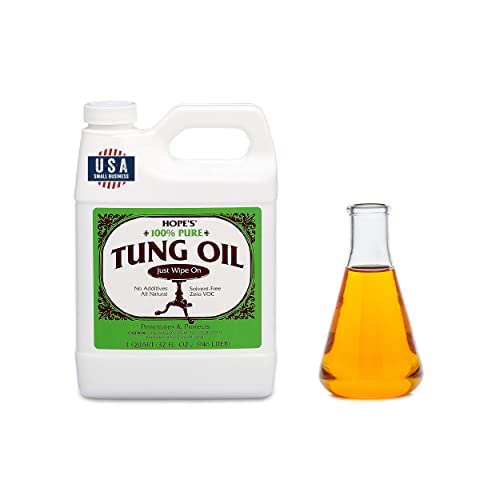 |
Hope’s 100% Pure Tung Oil, Food Safe Wood Finish, 32 Fl OzHOPE’S | Our pick | $29.99
Price as of 20 Oct 2026
|
View |
What actually happens as tung oil “dries” is chemically different from how paint or lacquer dries. Tung oil is rich in eleostearic acid, a fatty acid with three conjugated double bonds that react readily with oxygen in the air. As those bonds react, oil molecules link together into a solid polymer network right inside the wood’s surface fibers — there’s no solvent evaporating off, just a slow chemical reaction that needs a steady oxygen supply to keep progressing. That’s also why tung oil hardens faster and tougher than raw linseed oil, whose fat molecules don’t have the same conjugated structure and cross-link more slowly and less completely.
The practical upshot is two separate timelines under one label. “Dry” in the everyday sense — safe to handle, not tacky — happens once enough of the surface has reacted to stop feeling sticky, typically within a day or two. Fully cured, where the polymer network has finished forming all the way through the film, takes weeks, since oxygen has to keep diffusing into progressively less-reactive material. Confusing the two is the single most common reason people report a tung oil finish that never seems to fully harden — it was probably touch-dry the whole time, just not cured enough yet for real use.
Credit: www.realmilkpaint.com
Factors Affecting Drying Time
Porous softwoods like pine soak oil in fast and deep, which actually means less oil is left sitting on the surface to cure — the wood itself does some of the “drying” work by absorbing the excess. Dense hardwoods like maple or cherry take oil in more slowly and hold more of it near the surface, which is part of why they can feel tacky longer if a coat isn’t wiped off thoroughly. Open-pored woods like oak have the opposite issue from what it seems on the surface: because the pores hold a larger volume of oil, that oil is slower to fully cure through its depth even though the wood’s surface may feel dry sooner.
Temperature is the single biggest lever available, since oxidation reactions like this one roughly double their rate for every 18°F (10°C) rise, within reason — a shop at 75°F will cure a coat meaningfully faster than the same coat at 55°F. Humidity’s effect is more indirect than people assume: it doesn’t block the oxidation reaction itself so much as it slows how fast moisture already in the wood leaves, and wet wood fibers don’t take oil in as readily. Airflow matters because the reaction consumes the oxygen right at the surface faster than still air can resupply it — a light, steady air movement (not a direct blast, which can pull dust onto a wet coat) keeps fresh oxygen available.
Application Methods
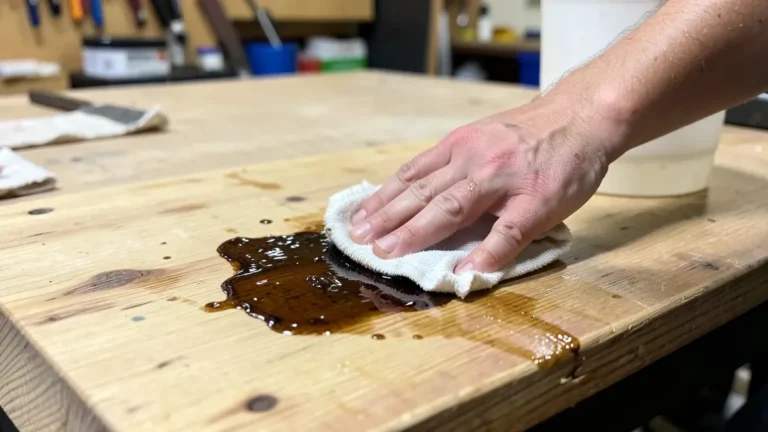
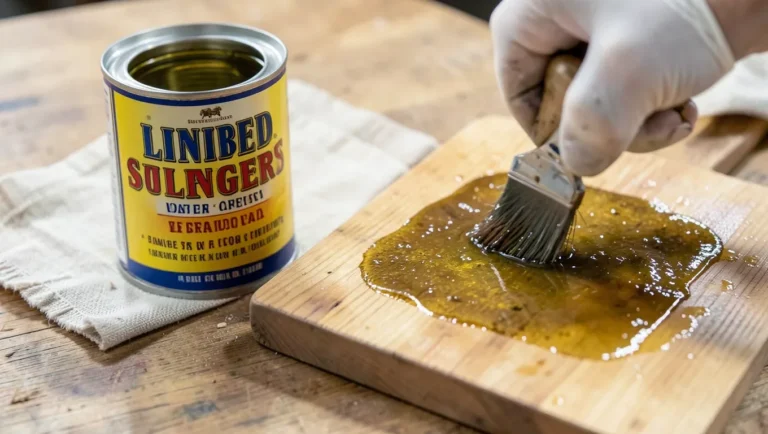
Brushing applies more oil per pass than wiping does, which sounds like an advantage until you factor in cure time — a heavier brushed-on coat has more volume to fully oxidize, which can add real time to both the surface-dry and full-cure stages compared to a thinner application. It still needs the same 15-30 minute penetration window before wiping off whatever the wood hasn’t absorbed; brushing doesn’t change that step, it just puts down more material to begin with.
Wiping with a cloth or an old T-shirt naturally limits how much oil goes on in one pass, which is why most experienced finishers prefer it for tung oil specifically — thinner, more controlled coats cure faster and more completely than thick ones, even though it takes more coats total to build the same overall finish thickness. Either method needs the same final step done thoroughly: wipe until the cloth comes away nearly clean, not just visibly less wet.
Stages Of Tung Oil Drying
The first 24-72 hours are the surface-dry stage: the outermost layer of oil has reacted enough with air to stop feeling wet or tacky to a light touch, but the material underneath is still soft. Testing this stage matters more than trusting a fixed number of hours — press a knuckle gently into an out-of-sight spot; if it leaves an indent or feels the least bit soft, it needs more time regardless of what the clock says, since a warm dry shop and a cool damp one can put the same coat a day or more apart.
Curing continues well past that point, typically running two to four weeks for pure tung oil to reach its full hardness and water resistance, as oxidation slowly works its way deeper into the film rather than just at the exposed surface. This is the stage that’s easiest to shortcut by accident — the piece looks and feels finished at day three, so it’s tempting to put it into hard use, but a cutting board or tabletop used hard before the cure finishes can show water spotting or dulling that a fully cured surface would have resisted.
Accelerating The Drying Time
Thinning doesn’t actually speed up the underlying oxidation chemistry — what it does is reduce the total volume of oil sitting in and on the wood, so there’s simply less material that needs to cure, and less of it pooling where it can’t get enough oxygen. Mineral spirits and naphtha both work for this, mixed roughly 1:1 for a first coat, with naphtha evaporating somewhat faster than mineral spirits if you want the thinner to clear out of the way sooner.
Raising the temperature genuinely does accelerate the reaction, which is why a warm room, a space heater kept a safe distance away, or simply working during a warm part of the day all shorten real cure time — a heat gun aimed directly at wet oil is riskier than it’s worth, since it can scorch the wood or the finish long before it meaningfully speeds curing. Steady airflow across the surface keeps fresh oxygen available at the point where the reaction is actually happening, which matters more for cure speed than most people expect from “just a fan.”
Credit: www.woodreview.com.au
Common Mistakes To Avoid
Leaving too much oil on the surface is the single most common reason a tung oil finish never seems to fully dry — a pool of oil that isn’t wiped off has a skin of cured material forming on top of it within a day or two, and that skin then blocks the oxygen the oil underneath needs to keep curing, trapping it soft indefinitely. The fix once it’s already happened is to wipe the area down firmly with a rag dampened in mineral spirits, pulling the excess back off, rather than just waiting longer for a coat that’s structurally unable to finish curing on its own.
Working in a cold, damp basement or garage in winter is a common setup for slow, frustrating cure times, since both low temperature and high ambient moisture work against the reaction in different ways — the cold directly slows the chemistry, while the moisture keeps the wood’s own fibers from being as receptive to the oil. If the schedule allows it, timing a tung oil project for a warm, dry stretch of weather (or moving the work to a heated space) does more for finish quality than any thinner or additive can.
Comparing Tung Oil To Other Finishes
Raw linseed oil is the slowest of the common wood oils to cure, often taking a week or more to surface-dry because its fat molecules lack the conjugated double bonds that let tung oil cross-link efficiently — boiled linseed oil (which has metallic driers added) is much faster, but that’s an additive doing the work, not a property of the oil itself. Tung oil sits in between raw and boiled linseed oil in the fatty-acid chemistry that drives curing, but its natural chemistry alone gets it to a durable, water-resistant film that untreated linseed oil never quite reaches.
Polyurethane isn’t really comparable chemically at all — it dries mostly by solvent evaporation (for oil-based) or water evaporation (for water-based), building a continuous film on top of the wood rather than curing inside the fibers, which is why it dries in hours and forms a hard, glossy shell. Tung oil’s tradeoff for that slower cure is a finish that stays in the wood rather than on it, with a matte-to-satin look that many woodworkers prefer for furniture where a plastic-looking shine isn’t the goal.
Maintenance And Reapplication
Once a tung oil finish has fully cured, upkeep is straightforward — dust with a soft cloth, wipe spills up before they sit long enough to leave a ring, and skip ammonia-based or abrasive cleaners that strip finish faster than normal use wears it. Because the finish lives inside the wood rather than as a separate film on top, there’s no clear coat to accidentally sand through the way there is with polyurethane.
A dulling surface, or water that stops beading and starts soaking in, both signal it’s time for a fresh coat — typically every six months to a year depending on how much use the piece sees. A light scuff-sand isn’t strictly required before a maintenance coat the way it is for the very first application, since there’s no old film to key into, but it does help remove any surface grime that’s built up since the last coat.
Safety Tips
The real hazard with tung oil isn’t the liquid itself but what happens after application: the same oxidation reaction that cures it on wood generates real heat when it’s happening across the large surface area of a balled-up rag, and there are documented cases of oil-soaked rags spontaneously combusting when left in a pile or a trash can. Lay used rags flat outdoors to fully cure, or submerge them in a sealed metal container of water, rather than tossing them in a wastebasket. Nitrile gloves and a well-ventilated space cover the more ordinary precautions — skin contact isn’t a major hazard with pure tung oil, but there’s no reason to make a habit of it.
For leftover liquid oil, most municipalities treat it as household hazardous waste rather than something for the regular trash or drain — a local hazardous-waste collection event or drop-off site is the right channel, since poured-out oil can both contaminate groundwater and clog plumbing over time.
Credit: www.furnitureclinic.com
Frequently Asked Questions
How Do You Know When Tung Oil Is Dry?
Tung oil is dry when it no longer feels tacky to touch. It also develops a smooth, hard finish.
How Long Do You Leave Tung Oil On Before Wiping It Off?
Leave tung oil on for 15-30 minutes before wiping off. This allows proper penetration and enhances the finish.
How To Make Tung Oil Dry Faster?
To make tung oil dry faster, apply thin coats and increase ventilation. Use a fan or dehumidifier. Add a drying agent like Japan drier. Keep the area warm.
Does Tung Oil Dry Faster In The Sun?
Yes, tung oil dries faster in the sun. Sunlight and warmth speed up the drying process. Apply thin coats for best results.
Conclusion
The number that matters for planning a project is really two numbers, not one: 24-72 hours before a coat is safe to touch or sand, and 2-4 weeks before the finish has fully cured and is ready for hard daily use. Treating the shorter number as the finish line is the most common reason a tung oil project disappoints someone expecting immediate durability.
Working with the temperature, thinning, and airflow factors above can shave real time off both stages, but there’s no way to safely skip the underlying chemistry — the oil needs oxygen and time to finish cross-linking, and pushing a piece into service before that’s done is what leads to the soft, water-spotting finishes that give tung oil an undeserved reputation for being finicky.
Sponsored / affiliate links. As an Amazon Associate I earn from qualifying purchases. I may earn additional commission from eligible campaigns.
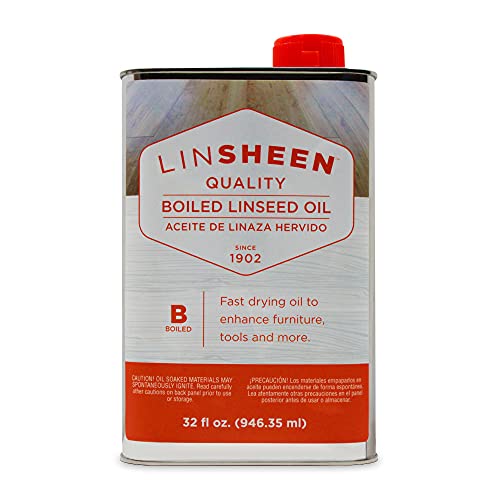 LinSheen Boiled Linseed Oil – Fast Drying Flaxseed Wood Treatment to Rejuvenate and Restore Outdoor and Indoor Wood Furniture, Floors and Sports Equipment, Quart
 Rosano's Mineral Oil Free Wood Butter - Natural Wood Conditioner for Cutting Boards, Furniture, Wood Utencils & Dishware - Beeswax & Coconut Oil - 6oz - Food Safe