How to Cut MDF Without Chipping: Best Blade for Every Saw
A circular saw or table saw fitted with a 60-to-80-tooth carbide blade cuts MDF straightest — a jigsaw with a fine, down-cut blade handles curves and thin laminate. The wrong tooth count is the number-one cause of the chipped, fuzzy edges MDF is known for. This guide covers which blade to run on each saw, the jigsaw speed setting that stops laminate from cracking, and how to rip MDF into clean strips for baseboard or trim.
Best Tools for Cutting MDF
Best MDF Cutting Blade Pick
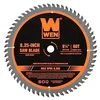
WEN 60-Tooth Carbide-Tipped Circular Saw Blade – $14.99
The 60-tooth carbide blade this guide recommends for straight MDF cuts — matches the ATB grind and tooth count from the comparison table above, sized for standard 7-1/4″ circular saws.
- Best for: Long straight cuts and sheet breakdown
- Why we picked it: 60-tooth count matches the low-chip spec this guide recommends
- Main drawback: Not the right choice for curved cuts — use a jigsaw blade instead
Compare more MDF cutting blade options
 Option 1 WEN 80-Tooth Table Saw Blade – $19.99
|
 Option 2 Bosch Special-for-Laminate Jigsaw Blade – $15.98
|
 Option 3 GVS Elipse P100 Respirator – $49.91
|
As an Amazon Associate we earn from qualifying purchases.
The right tool depends on the cut, not personal preference — this table sits alongside the rest of our MDF guides for exactly that reason. A circular saw or table saw with a high-tooth-count carbide blade handles long straight cuts with the least chipping. A jigsaw is the only practical option for curves and cutouts. A router leaves the cleanest edge of all but is slower and needs a straightedge jig. For 3mm MDF and thinner, a scored utility knife works without power tools at all — see our full guide to cutting MDF without power tools for hand-tool technique by thickness.
| Tool | Best For | Chip Risk | Blade / Setting |
|---|---|---|---|
| Circular saw | Long straight cuts, sheet breakdown | Low (right blade) | 60-tooth carbide, ATB grind |
| Table saw | Repeat cuts, ripping strips | Lowest | 80-tooth carbide, TCG grind |
| Jigsaw | Curves, cutouts, thin laminate | Medium | Down-cut blade, orbital off |
| Router | Cleanest possible edge, grooves | Lowest | Straight bit + guide, 2-3 light passes |
| Utility knife | 3mm or thinner sheet, no power | High if forced | Score 4-5 passes, then snap |
Can You Cut MDF With a Router?
Yes — a router with a straight bit and a clamped straightedge produces the cleanest MDF edge of any tool, because it shears the fibers instead of tearing them. It’s slower than a saw and only practical for edges you’ll leave exposed or paint directly, such as shelf fronts. Take 2-3 light passes rather than one deep pass to avoid burning the MDF’s resin binder.
How to Cut MDF Step by Step
The same basic sequence applies whether you’re using a circular saw, table saw, or jigsaw — only the blade and the exact motion change.
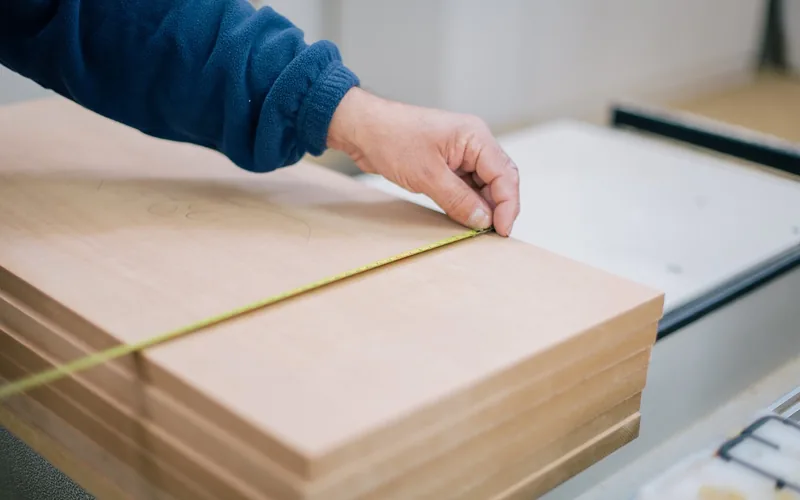
- Mark and measure the line: draw the cut line with a pencil against a straightedge or framing square, and double-check the measurement at both ends before cutting.
- Support the sheet fully: lay the MDF on sawhorses or a bench with the cut line clear of any support, and slide a piece of scrap wood underneath as sacrificial backing to stop tear-out on the underside.
- Clamp it down: secure the MDF (and a straightedge guide, if using one) so it cannot shift once the blade is running.
- Set the blade depth: for a circular or table saw, set the blade to protrude about 3mm below the MDF’s underside — deep enough to clear the sheet, not so deep that more teeth than necessary contact the material.
- Cut in one continuous pass: guide the saw along the line at a steady speed. Stopping mid-cut and restarting is a common cause of a visible step or burn mark.
- Sand the cut edge: lightly sand with medium-grit sandpaper to remove any fuzz before painting, sealing, or edge-banding.
Cutting Straight Lines With a Circular Saw or Table Saw
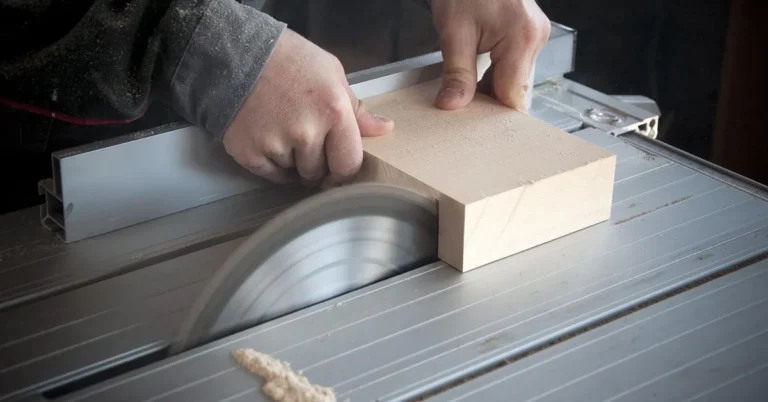
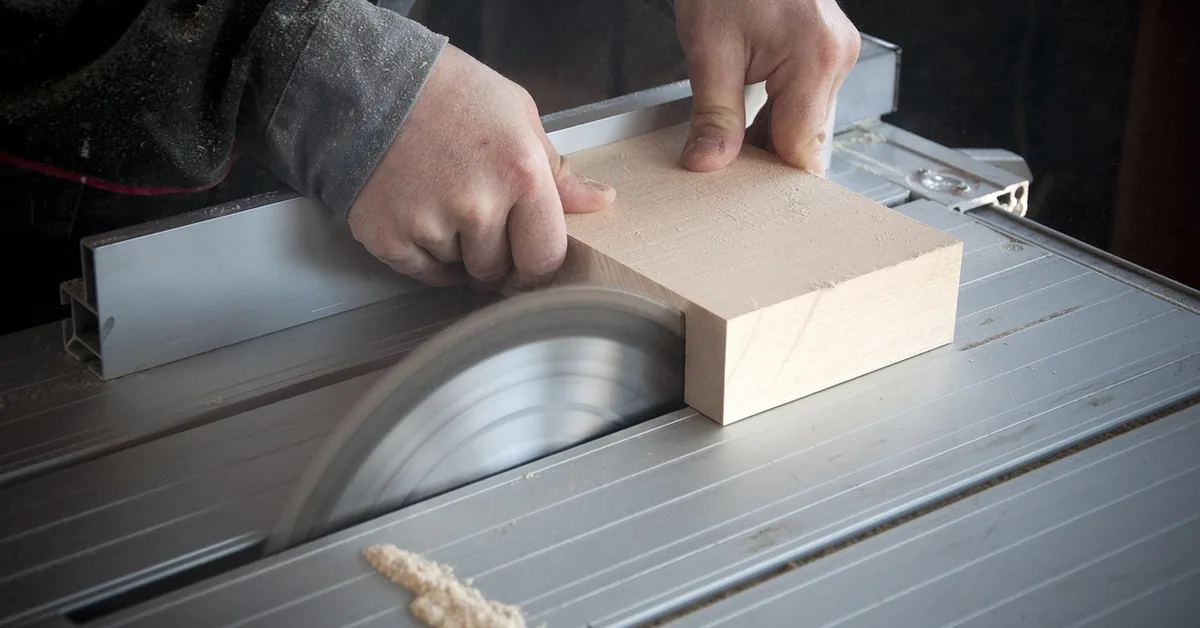
For straight cuts, a circular saw with a 60-tooth carbide blade is the standard choice for breaking down full sheets. A table saw with an 80-tooth blade and a zero-clearance insert gives an even cleaner edge and is worth the setup time if you’re cutting several MDF panels to the same size.
Cutting Curves With a Jigsaw
A jigsaw is the only practical tool for curved cuts and interior cutouts in MDF. Use a bi-metal, down-cut blade so the teeth pull chips downward and out of the cut rather than up into the visible face. Follow the marked line slowly — forcing the saw through a tight curve is what snaps jigsaw blades on dense MDF.
How to Cut MDF Without Chipping or Splintering
Chipping happens when the blade’s teeth exit the MDF faster than the resin-bound fibers can shear cleanly. Two techniques fix most chipped edges: run a utility knife along the cut line first to score through the top layer, and lay a strip of masking tape over the line so the blade exits through tape instead of bare fiber. For a deep dive on chip-free technique specifically, see our guide on how to cut MDF cleanly.
What Jigsaw Speed Should You Use for MDF Laminate?
Use a medium-high speed with a slow, steady feed rate, and switch the orbital action off. Orbital action is built for fast cuts in solid lumber; on brittle laminated MDF it drives the blade forward on the upstroke and chips the decorative face. A blade with 18-24 TPI keeps the tooth spacing fine enough that laminate doesn’t crack ahead of the cut.
What Table Saw Blade Is Best for MDF?
An 80-tooth carbide blade with a triple-chip grind (TCG) or alternate-top-bevel (ATB) profile gives the cleanest table saw cut. Fewer teeth — anything under 40 — leaves visible gaps between saw marks on MDF’s dense edge. A dedicated fine-tooth blade matters more on MDF than on solid wood, since MDF has no grain direction to hide a rough cut.
“A jigsaw’s orbital setting is meant for fast, aggressive cuts in solid lumber — on brittle, laminated sheet goods it should be switched off, with the saw running at a slower, steadier speed instead.”
Cutting MDF Into Strips or Baseboard Trim
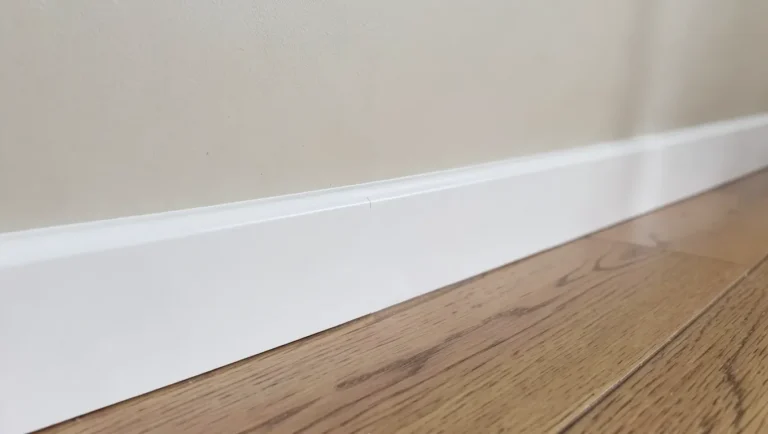
Ripping MDF into narrow strips (for baseboard, casing, or shelf edging) is a different challenge than crosscutting a full sheet — a thin offcut has almost nothing holding it flat, so it chatters against the blade and chips more easily. Use a table saw with a rip fence and a featherboard to hold the strip firmly against the fence, and always push the last few inches through with a push stick, never your fingers. For strips under about 2 inches wide, cut slightly oversized and pass the strip through a router table with a straight bit to true up the edge, since a table saw alone tends to leave a wavier edge on very narrow rips.
Do You Cut MDF and Particle Board the Same Way?
Yes — the same saws, blades, and support techniques work for both. The difference is in the result, not the method: MDF’s uniform density cuts to a smoother, more consistent edge, while particle board’s coarser wood-chip structure tends to chip and show visible seams even with a good blade. If you’re planning to paint the cut edge directly, MDF needs less edge prep; particle board almost always needs filler or edge banding first.
Safety When Cutting MDF
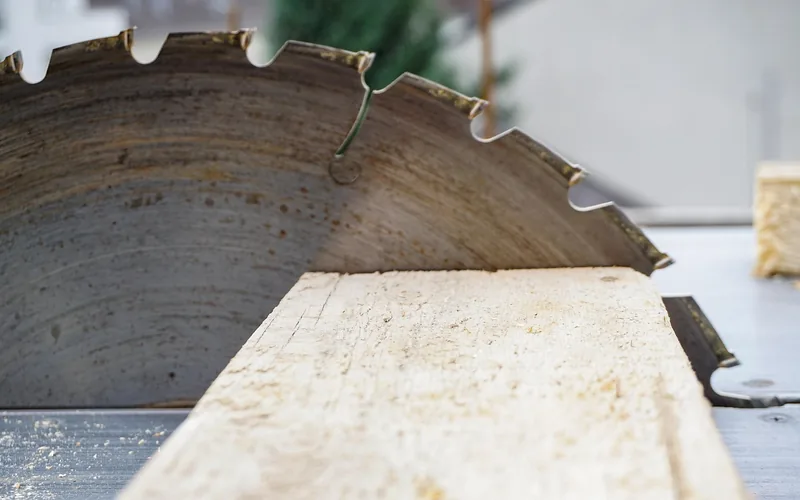
Cutting MDF releases fine dust containing the resin binder used to hold its wood fibers together. Wear safety goggles, hearing protection, and a rated dust mask or respirator, and run a dust extractor or shop vac connected to the saw whenever possible. For the full breakdown of what’s actually in MDF dust and how to protect against it, see is it safe to cut MDF.
📊 MDF sold or manufactured in the US must meet EPA TSCA Title VI formaldehyde emission limits (identical to California’s CARB Phase 2 standard) — one reason cutting it without dust extraction and a rated respirator carries more exposure risk than cutting solid lumber. Source: US EPA, Formaldehyde Emission Standards for Composite Wood Products
Sealing and Finishing Cut Edges
Sand the cut edge with medium-grit sandpaper to knock down any fuzz, then seal it before painting. MDF’s cut edge is the most porous part of the board and will soak up paint unevenly or swell if it gets wet, so apply a sanding sealer or primer made for MDF board edges before topcoating.
Dealing With Thick MDF and Repeat Cuts
MDF over 3/4″ thick needs a slower feed rate and, on a circular saw, a second shallower scoring pass before the full-depth cut — trying to push through in one pass at full depth is what stalls the motor and burns the edge. If you’re making the same cut repeatedly, build a simple straightedge jig sized to the exact width you need; it holds the saw on line automatically and removes the marking step entirely after the first cut. For dialing in that kind of repeat-cut accuracy — square within 1/32 inch — see our guide to precision MDF cutting techniques.
Frequently Asked Questions
What Is the Best Thing to Cut MDF With?
A circular saw or table saw with a 60-80-tooth carbide blade gives the straightest, cleanest cut for most projects. A jigsaw with a fine, down-cut blade handles curves and cutouts, and a router gives the cleanest edge of all when time allows for a straightedge jig.
How Do You Cut MDF Without Chipping?
Score the cut line with a utility knife first, lay masking tape over the line, and use a high-tooth-count carbide blade (60+ teeth). Support the sheet fully with sacrificial backing underneath so the fibers don’t tear out on the underside as the blade exits.
Can You Cut MDF With a Utility Knife?
Yes, for MDF 3mm thick or less. Score the same line 4-5 times with steady pressure, then snap the sheet along the score. Thicker MDF is very slow and inconsistent to cut this way — switch to a saw once you’re past about 6mm.
Can You Hand Cut MDF?
Yes, with a fine-tooth handsaw (11+ TPI) for boards up to about 3/4″ thick, though getting a perfectly straight line by hand takes practice. A utility knife works for thin sheets. Power tools give more consistent, repeatable results on anything thicker.
Why Does MDF Chip When You Cut It?
MDF chips when the blade’s teeth exit the material faster than its resin-bound wood fibers can shear cleanly — low tooth counts, dull blades, and cutting with the good side down are the three most common causes. A sharp, high-tooth-count blade and a scored cut line fix most of it.
Can You Cut MDF With a Track Saw?
Yes, and a track saw gives one of the straightest possible cuts on a full sheet, since the track itself replaces a clamped straightedge guide. Use the same 60+ tooth carbide blade recommended for a circular saw — the track only controls the line, not the chip risk.
What Happens If You Cut MDF Without a Dust Mask?
You inhale fine dust containing the urea-formaldehyde resin that binds MDF’s wood fibers together, which can irritate the eyes, nose, and lungs. Wear a rated dust mask or respirator and run dust extraction whenever you cut MDF, especially indoors or for extended cuts.
Conclusion
Match the blade to the cut: a 60-80-tooth carbide blade on a circular or table saw for straight lines, a fine down-cut blade on a jigsaw for curves, and a scored line with masking tape whenever chipping is a concern. Support the sheet fully, keep the feed rate steady, and sand the edge before sealing or painting.
Sponsored / affiliate links. As an Amazon Associate I earn from qualifying purchases. I may earn additional commission from eligible campaigns.