Composite Decking vs. Wood: Real 25-Year Cost Breakdown (2026)
Composite decking costs 40-80% more than wood upfront ($25-45 vs. $15-25 per sq. ft. installed) but the total cost gap closes by year 6-8, because pressure-treated wood needs restaining every 1-3 years at $2-6 per sq. ft. Composite lasts 25-30+ years with just soap-and-water washing; wood decks typically need replacing after 10-15 years. This guide breaks down the real 25-year cost, durability, and maintenance numbers for both.
Quick Answer
Choose composite if you want minimal upkeep and don’t mind the higher upfront cost — it pays for itself in avoided staining by around year 6-8. Choose pressure-treated or cedar wood if you want the lowest install cost and don’t mind sanding and sealing every 1-3 years. Tropical hardwoods (ipe, cumaru) split the difference: near-composite durability with a real wood look, at a premium price.
What’s the Real Difference Between Composite and Wood Decking?
Best Deck Cleaner Pick

DEFY Composite Deck Cleaner (2 lb, Biodegradable)
An oxygenated-bleach cleaner formulated to work on both composite and wood surfaces — the closest thing to a one-bottle answer regardless of which decking you end up choosing.
- Best for: routine seasonal cleaning of composite decks, or prepping wood before restaining
- Why we picked it: biodegradable and safe near grass/plants, works on both materials covered in this guide
- Main drawback: a cleaner only — wood still needs a separate sealer/stain after use
Compare more deck cleaner options
 Option 1 DeckMAX Concentrated Composite & Wood Cleaner
|
 Option 2 Restore-A-Deck Wood & Deck Cleaner
|
 Option 3 DEFY Wood Deck Cleaner Powdered Concentrate
|
As an Amazon Associate we earn from qualifying purchases.
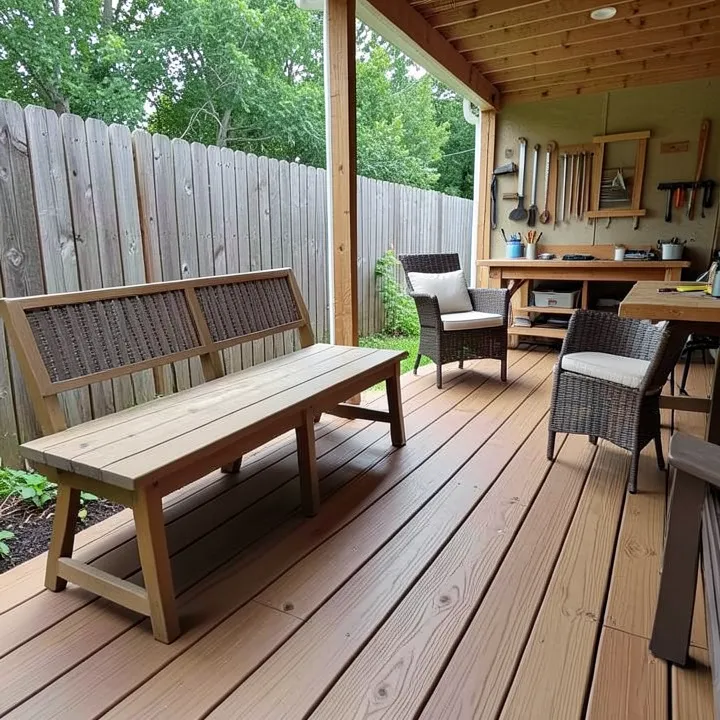
Composite decking is an engineered board made from recycled wood fibers and plastic (usually polyethylene or PVC), capped with a protective shell that resists fading, staining, and moisture. Wood decking is milled lumber — pressure-treated pine, cedar, redwood, or a tropical hardwood — that relies on its natural grain and applied finishes for weather resistance. The core trade-off: composite trades a higher purchase price for near-zero maintenance, while wood trades a lower purchase price for an ongoing sanding-and-sealing commitment.
Both belong to the broader category of outdoor decking materials, and the right pick depends less on which one is objectively “better” and more on how much maintenance time you’re willing to trade for upfront savings.
Cost Comparison: Composite vs. Wood Decking (2026 Numbers)
Composite decking runs $25-45 per square foot installed; pressure-treated wood runs $15-25 per square foot installed — composite costs 40-80% more upfront. For a typical 320 sq. ft. deck, that’s roughly $8,000-$14,400 in composite installed material versus $4,800-$8,000 for pressure-treated wood, based on current material and labor pricing (HomeGuide).
Upfront price is only half the story. Wood needs restaining every 1-3 years at $2-6 per sq. ft. ($640-$1,920 per session on a 320 sq. ft. deck); composite needs nothing beyond an occasional soap-and-water wash. The table below models the 25-year total cost for a 320 sq. ft. deck, assuming wood is restained every two years:
| Cost Stage (320 sq. ft. deck) | Composite Decking | Pressure-Treated Wood |
|---|---|---|
| Initial install | $8,000 – $14,400 | $4,800 – $8,000 |
| Maintenance, Years 1-10 (5 restains @ ~$1,200 avg) | ~$0 (soap & water only) | ~$6,000 |
| Maintenance, Years 11-25 (7-8 more restains) | ~$0 | ~$9,000 |
| Replacement by year 25 | Not needed (25-30+ yr lifespan) | Likely 1 full rebuild (10-15 yr lifespan) |
| Approximate 25-year total | $8,000 – $14,400 | $19,800 – $31,000+ |
This is a modeled estimate, not a quote — actual numbers shift with local labor rates, board grade, and how strictly you keep to a restaining schedule. But the pattern holds across independent pricing data (HomeGuide, HomeGuide staining cost data): the crossover point where composite’s total cost drops below wood’s typically lands around year 6-8. Skip a restain cycle or two and wood’s real cost climbs even higher, since deferred maintenance accelerates rot.
Durability and Lifespan
Composite Decking
Composite decking is engineered to resist rot, mold, and insect damage. The plastic-and-wood-fiber core, combined with a capped outer shell, keeps boards from warping, splintering, or fading under UV exposure. Most manufacturers rate modern capped composite at 25 to 30+ years of service life, and some premium lines are backed by 30-50 year warranties when installed correctly.
Wood Decking
Wood durability depends heavily on species and upkeep. Pressure-treated pine typically lasts 10 to 15 years before structural boards need replacing, even with regular maintenance. Naturally rot-resistant species — cedar, redwood, and tropical hardwoods like ipe — last longer (often 20-25 years for ipe) but cost significantly more per board foot and still require periodic sealing to hold that lifespan. Not every softwood resists rot equally — species selection matters as much as maintenance frequency.
Maintenance Requirements
Maintenance is where the two materials diverge the most, and it’s the single biggest driver of the 25-year cost gap above.
Composite Decking
Composite decking needs no staining, sealing, or painting. A wash with soap and water (or a dedicated composite deck cleaner) two to three times a year removes pollen, mildew film, and surface grime. That’s the entire maintenance routine for the life of the deck.
Wood Decking
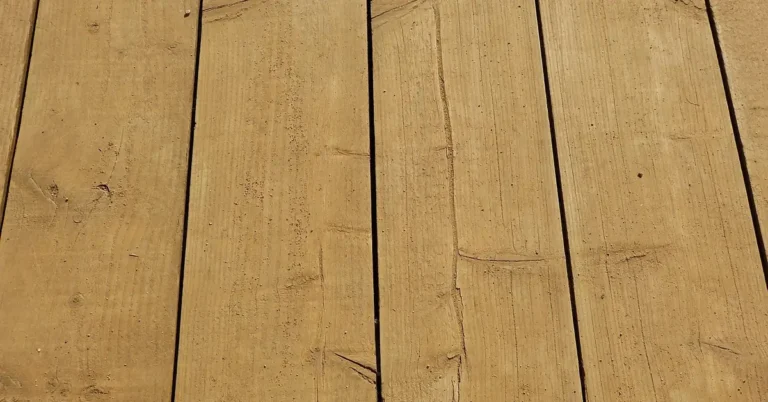
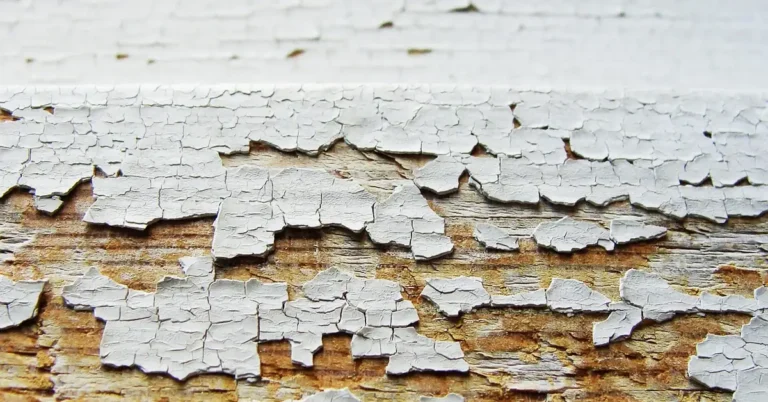
Wood decking needs restaining or resealing every 1 to 3 years depending on climate and sun exposure — more often in regions with harsh winters or intense UV. Skipping a cycle lets UV and moisture into the grain, which accelerates graying, splintering, and eventually rot. Between restains, regular cleaning and prompt debris removal go a long way toward stretching the interval.
Aesthetics: Composite vs. Wood Decking
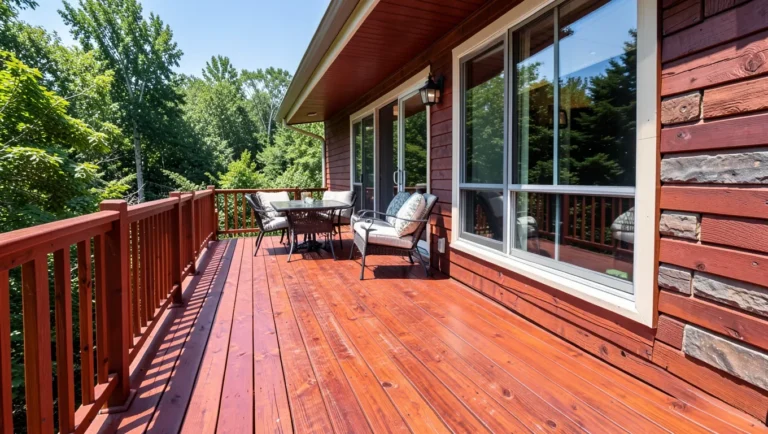
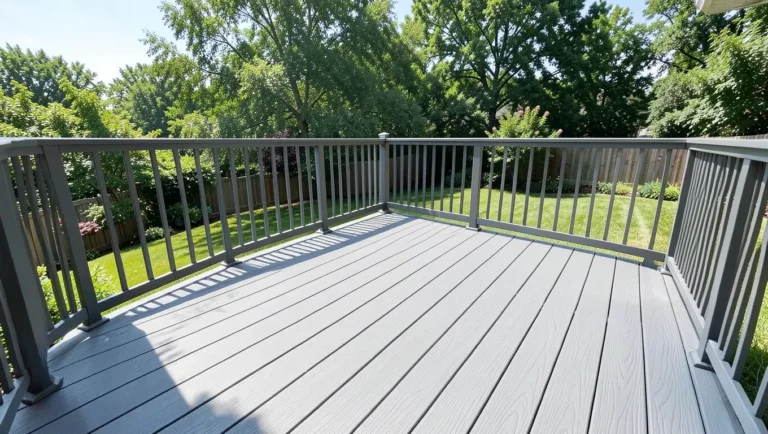
Composite decking now comes in a wide range of colors, wood-grain embossing patterns, and finishes — modern capped boards do a genuinely convincing job of mimicking real wood grain from a few feet away, and that color holds for the life of the board. Wood decking offers something composite can’t fully replicate: natural variation, real grain depth, and the ability to change the look entirely with a different stain color down the road.
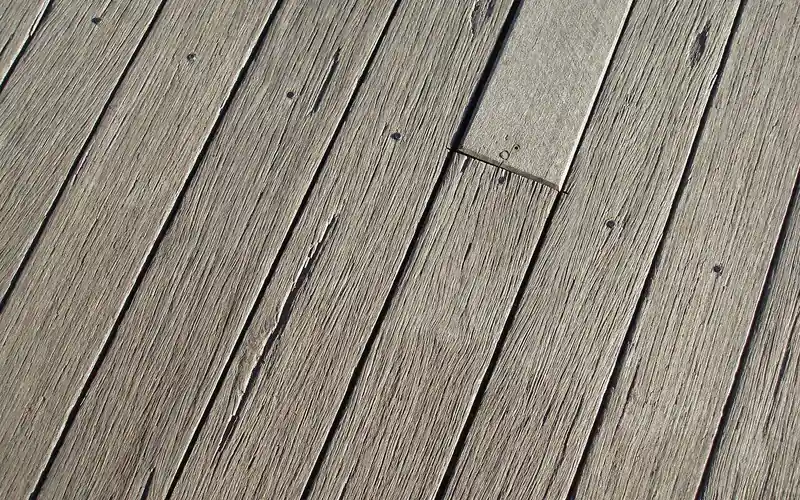
| Composite Decking | Wood Decking | Best For |
|---|---|---|
| Wide range of colors and embossed grain patterns | Classic, natural variation board to board | Composite: uniform look; Wood: rustic charm |
| Color is fade-resistant and permanent | Color can be changed with a new stain | Wood: if you like to redecorate over time |
| No staining ever needed to maintain look | Requires refinishing to keep original color | Composite: low-effort curb appeal |
Texture is part of that aesthetic decision too — see our full breakdown of wood deck texture for how natural grain, grooved boards, and composite embossing actually compare on looks, slip resistance, and upkeep.
Environmental Impact
Composite decking is typically made from a mix of reclaimed wood fiber and recycled plastic (often diverted from post-consumer packaging), which keeps that plastic out of landfills and reduces new lumber demand (EPA materials recycling data). Wood is a renewable resource when it’s responsibly harvested — look for FSC-certified lumber to confirm sustainable sourcing — but pressure-treated stock is chemically treated, and the staining/sealing products used over its lifetime add ongoing chemical runoff that composite avoids entirely. Wood is renewable in principle, but “renewable” and “low-impact over 25 years” aren’t the same claim — composite’s advantage here is largely about what happens after installation, not before it.
Installation Process
Composite decking typically installs faster because it skips finishing work entirely and uses hidden fastener systems for a clean, screw-free surface — see our guide to composite decking fasteners for how those clips work. Wood installation is more traditional: lay pressure-treated joists, then face-screw or nail the boards down, followed by an initial seal coat before the deck sees regular use. If you’re unsure which fastener type your framing calls for, our deck framing screws vs. nails guide covers what code actually requires at each connection.
Common Mistakes When Choosing Between Composite and Wood
- Comparing sticker price only. A cheaper wood deck that gets restained every 2 years for 25 years almost always costs more in total than composite — run the 10-year math, not just the install quote.
- Assuming all composite is equal. Early (uncapped) composite boards from the 2000s had real problems with fading and moisture absorption. Capped composite, the current standard, largely solved this — but “composite” alone isn’t a quality guarantee; check for a capped/encapsulated product.
- Skipping the first restain on new wood. Pressure-treated lumber needs to dry out (often 60-90 days) before it will accept stain properly — sealing too early traps moisture and voids the point of sealing at all.
- Ignoring local heat and humidity. Dark composite boards in direct summer sun can run noticeably hotter underfoot than wood of the same color — if you’re in a hot climate, ask about heat-mitigating composite lines before committing.
Frequently Asked Questions
Is composite decking worth the extra cost over wood?
Yes, for most homeowners keeping the deck 8+ years. Composite costs 40-80% more to install but needs no staining, and the total cost typically drops below wood’s by year 6-8 once wood’s restaining costs are factored in. If you plan to sell or replace the deck within 5 years, wood’s lower upfront cost may still win.
How long does composite decking last compared to wood?
Composite decking lasts 25 to 30+ years with minimal care. Pressure-treated wood typically lasts 10 to 15 years, while naturally rot-resistant species like cedar, redwood, or ipe can reach 20-25 years with consistent sealing.
Does composite decking get hotter than wood in summer?
Yes, dark-colored composite boards can run noticeably hotter underfoot than similarly colored wood in direct sun, since the plastic content retains heat differently than natural fiber. Lighter colors and newer heat-mitigating composite lines narrow this gap significantly.
Can you install composite decking yourself?
Yes — composite installation uses the same basic joist layout as wood, and many boards use hidden fastener clips that are arguably easier for a DIYer than face-screwing wood, since there’s no need to countersink or fill screw holes. The main extra step is following the manufacturer’s gap spacing for thermal expansion, which composite needs and wood does not.
Both materials build a deck that lasts, but they ask for very different things from the owner: composite asks for a larger check upfront and almost nothing afterward, while wood asks for less money upfront in exchange for a recurring weekend commitment. Run the 25-year numbers above against how long you actually plan to keep the deck, and the right choice usually becomes obvious.
Sponsored / affiliate links. As an Amazon Associate I earn from qualifying purchases. I may earn additional commission from eligible campaigns.