How Many Coats of Stain on Deck? (Solid vs. Semi-Transparent vs. Clear)
Most decks need two coats of stain, but the real number depends on whether you’re using a solid, semi-transparent, or transparent stain – and each type behaves differently.
Too few coats and the wood is left exposed to sun and rain within a season or two. Too many and you get a blotchy, film-like surface that peels instead of wearing gracefully. This guide breaks down exactly how many coats each stain type needs, why the number changes with wood age and porosity, and how to tell when a coat has actually failed versus when it’s just doing its job.
We’ll also cover the type of wood, how weather affects absorption, and the tools that make an even application realistic on a full-size deck. By the end, you’ll know exactly how many coats your deck needs and how to apply them without streaks or lap marks.
Choosing The Right Stain
For An Even, Streak-Free Coat
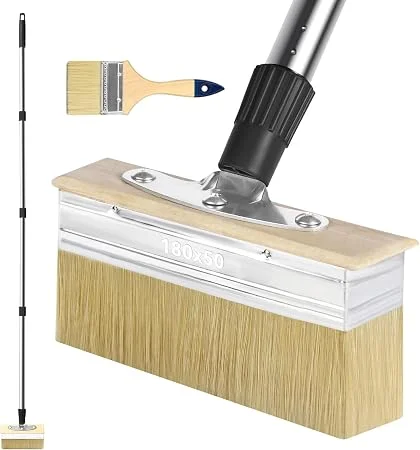 |
Deck Stain Brush with 60" Long Handle A wide 7-inch brush with an adjustable extension handle helps you apply each coat evenly across a full deck board without kneeling or leaving lap marks.
|
There are three main stain categories, and the coat count changes with each one. Solid stains sit on top of the wood like thin paint and hide the grain almost completely – one coat often covers, but two coats give more even wear resistance over 2-3 years. Semi-transparent stains penetrate the wood while still showing grain and color variation – these almost always need two coats, since the first coat mostly just seals the wood and the second is what actually builds color and protection. Transparent (or clear/toner) stains absorb deepest and show the most natural wood character, but they offer the least UV protection, so they typically need two coats applied closer together (within a season) and a fresh coat every 1-2 years.
Oil-based stains penetrate deeper into the wood fiber and generally hold up longer between recoats. Water-based stains dry faster and clean up easier, but tend to sit closer to the surface, which is part of why they sometimes need a slightly heavier second coat to match an oil-based stain’s protection.
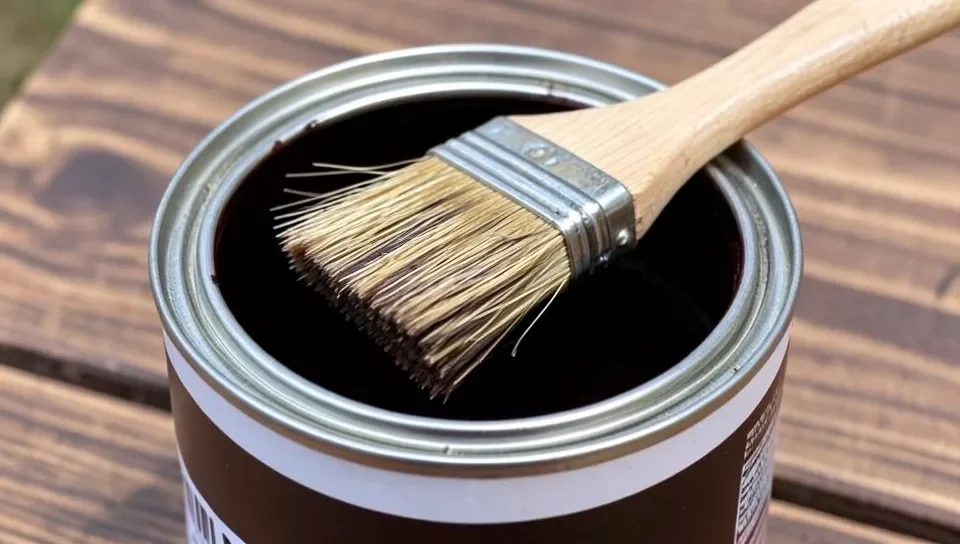
Choosing the right color also affects your coat count. Lighter colors show the wood grain and often need a light second coat to even out blotching on absorbent species like pine. Darker colors provide more UV protection per coat but can look uneven with just one pass on a deck that’s had years of sun exposure – the boards absorb stain unevenly once the surface wood has weathered and dried out. Testing a small, hidden area first tells you not just the color but how many coats that specific board is actually going to need.
Preparing The Deck
Prep work determines how many coats will actually stick, more than any product choice does. Start by sweeping off dirt and debris, then wash the deck with a dedicated deck cleaner rather than plain dish soap – soap residue can leave a film that repels stain unevenly and shows up as blotchy patches once you apply the first coat. Rinse thoroughly and give the wood at least 24-48 hours to dry completely before staining; damp wood traps moisture under the finish and is one of the most common reasons a coat fails early.
Sand any rough spots or splinters with medium-grit sandpaper, focusing on high-traffic areas and old, weathered boards where the wood fiber has raised. Sanding also opens the wood’s pores back up if an old coat of stain or sealer is still present – stain applied over a worn, glossy old finish won’t absorb evenly no matter how many coats you add. Sweep away all sanding dust before you start, since trapped dust under a coat of stain shows up as a gritty, uneven texture once it dries.
Weather Considerations
Staining your deck on a sunny day gives the best results. The temperature should be between 50°F and 80°F. Mild weather is perfect for the stain to dry well. Avoid staining your deck on very hot days.
Rain can ruin your fresh stain. Check the weather forecast before starting. High humidity slows down drying. Choose a dry day with low humidity for the best outcome. This ensures the stain sets properly.
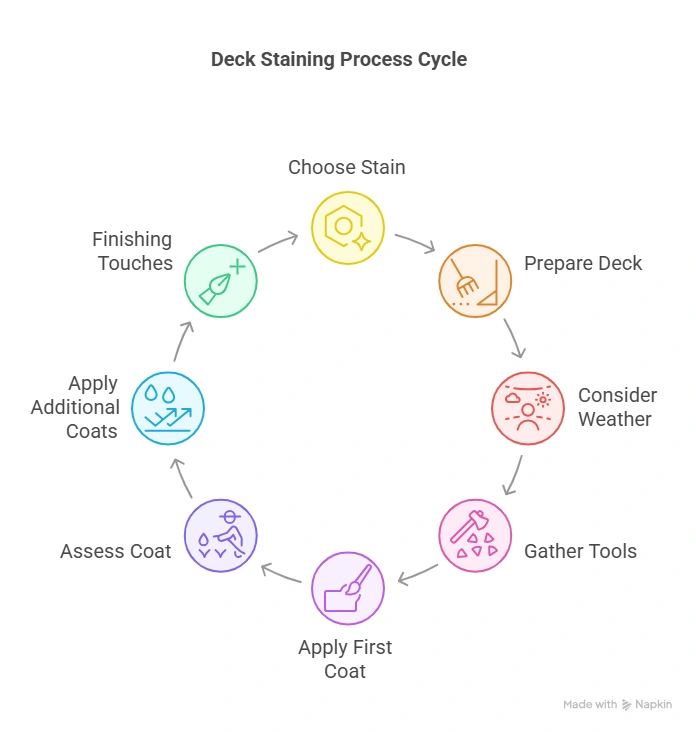
Tools And Materials Needed
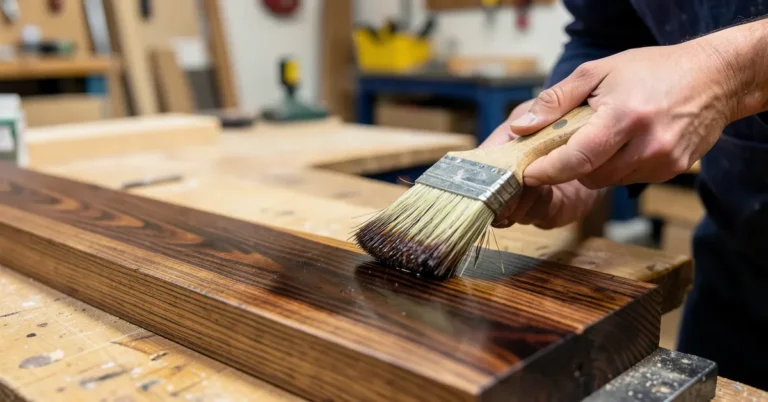
A natural-bristle brush works stain into the wood grain better than a foam roller, though a roller can speed up coverage on wide, flat sections before you go back over it with a brush to even out the strokes. Keep a drop cloth down over nearby siding or plants, since most oil-based stains are difficult to remove once they’ve splattered and dried. A sanding block and a lint-free cleaning cloth handle the prep work described above.
Buy enough deck cleaner and stain to cover the full square footage plus about 10% extra – running out mid-coat and mixing in a new can partway through a board is a common cause of visible color seams. Stir sticks matter more than people expect: stain pigment settles at the bottom of the can, and a poorly-stirred can gives you a lighter first half of the deck and a darker second half from the same batch. Painter’s tape keeps stain off railings or house trim you’re not staining, and a separate sealer (if your stain doesn’t already include one) adds water resistance on top of the color coat.
Applying The First Coat
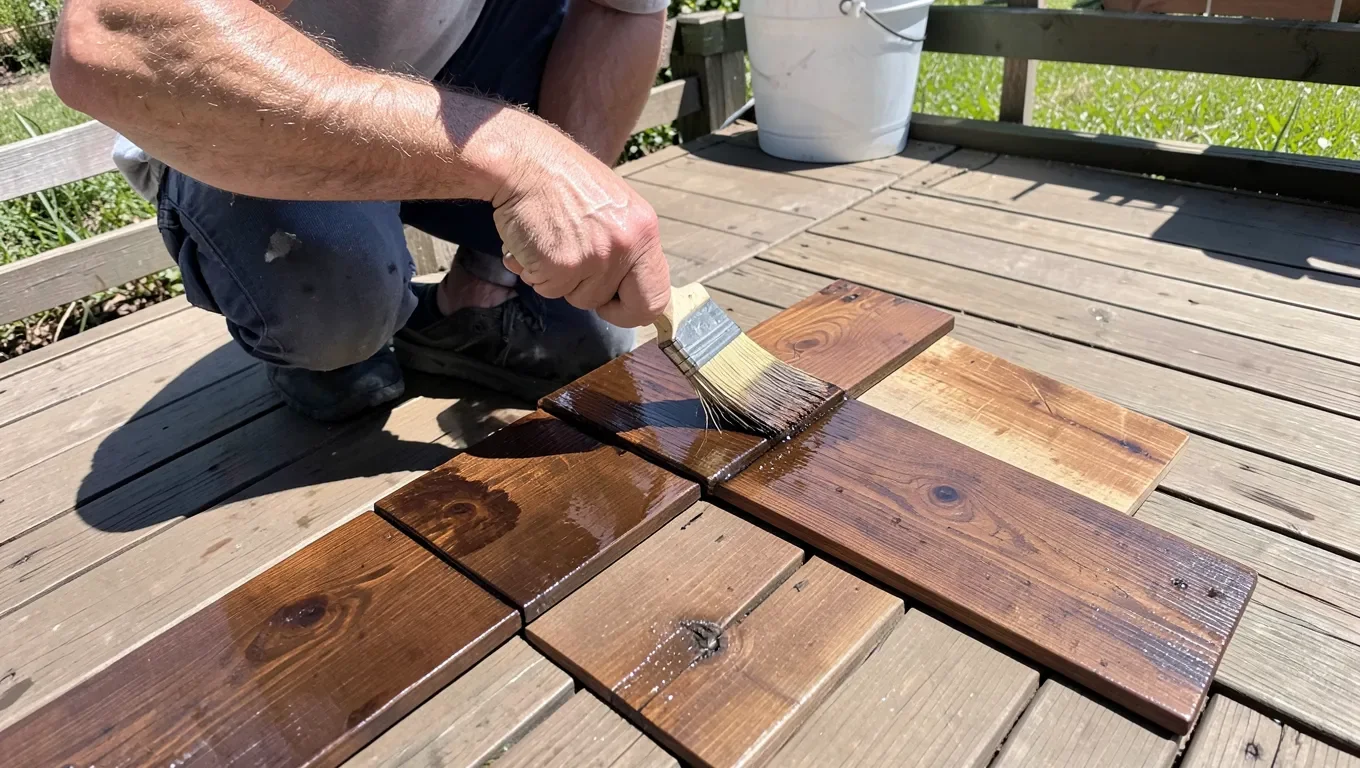
Work in small sections, two or three boards at a time, applying stain in thin, even strokes that follow the wood grain rather than trying to flood the surface. A thick, heavy first coat is the single biggest cause of a blotchy finish – excess stain that doesn’t get wiped or brushed out just sits on the surface, dries unevenly, and can even stay tacky for days. Overlap each stroke slightly into the wet edge of the previous one; once a section starts to dry, going back over it creates visible lap marks that a second coat won’t fully hide.
Start from one end of the deck and work steadily toward the other so you’re always blending into a wet edge instead of a half-dry one. Watch for puddles collecting between boards or in knots – these dry into dark, glossy blotches that stand out once the rest of the coat has flattened. A quick pass with the brush a minute or two after application catches most missed spots and pooling before it sets.
Let the first coat dry fully before deciding whether a second is needed – 24 to 48 hours for most oil-based products, though humid or cool weather can stretch that considerably. A coat that still feels tacky or transfers color to a bare finger isn’t ready for a second pass; stacking stain onto an undried coat is what causes the peeling and wrinkling that people sometimes blame on “too many coats” when the real problem was timing.
Assessing The First Coat
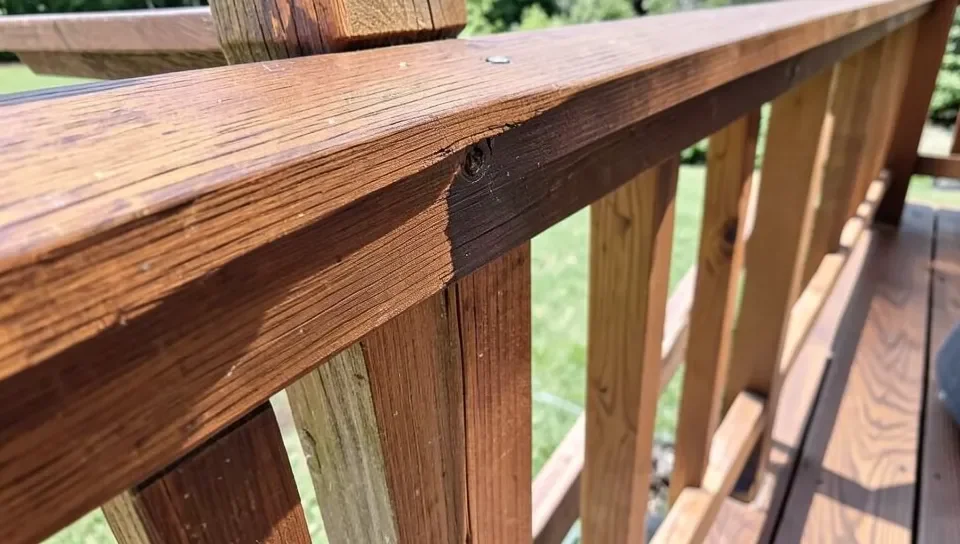
Once the first coat is dry, walk the deck in good daylight and look across the surface at a low angle rather than straight down – this makes uneven sheen and missed spots far easier to spot than looking straight on. Edges near railings, around fasteners, and where boards butt against the house are the most commonly missed areas, since a brush naturally pulls away from tight corners.
Darker patches usually mean stain pooled and needs a light sanding before the next coat; lighter or patchy areas mean the wood didn’t absorb evenly and will need a second, or sometimes third, targeted pass just in that spot before you apply the uniform second coat across the whole deck. This is also the point where solid stains reveal any spots that still need it: since solid stain is essentially opaque, a thin or missed area is much more visible now than it will be after the wood has actually weathered for a season.
Applying Additional Coats
It’s best to wait for the first coat to dry before judging whether you need another. This takes 24 hours for most oil-based stains, sometimes less for water-based ones. Check the weather before starting a second coat – rain within the drying window can ruin both coats, not just the top one. If the first coat looks patchy or you can still see bare wood through it, you need a second coat regardless of stain type.
For semi-transparent and solid stains, two coats is the standard recommendation from most manufacturers, and going beyond that rarely adds meaningful protection – it mostly just adds drying time and risk of a tacky, film-like surface that can peel. For transparent stains, two thinner coats applied close together (same day or next day, following the label’s recoat window) tend to outperform one heavy coat, since transparent formulas have less solid content to build a protective layer in a single pass.
A deck that faces direct afternoon sun or heavy foot traffic wears through its stain faster regardless of coat count – that’s a maintenance-schedule problem (recoat sooner, every 1-2 years) rather than a reason to add a third initial coat. Three coats on a first application is rarely necessary and on some solid stains can actually cause cracking as the thick film ages and loses flexibility. Keep the deck swept and free of standing water between recoats; trapped moisture under the finish is what causes early peeling, not an insufficient number of coats.
Finishing Touches
Some stains include a sealer built in, but if yours doesn’t, a separate clear sealant applied after the stain has fully cured adds real water resistance and UV protection without changing the color. This is a thin, separate coat, not a substitute for a second color coat – skipping the color coats and relying on sealer alone leaves the wood undyed and just as exposed to graying from sun as an unstained deck.
Ongoing maintenance affects how long your coat count actually lasts. Sweep leaves and debris off regularly so trapped organic matter doesn’t hold moisture against the boards, and move planters or furniture periodically so they don’t block airflow to one spot. Most stains hold up for 1-3 years depending on sun exposure and foot traffic; a light single-coat refresh on schedule is far less work than waiting until the finish fully fails and needs the entire multi-coat process repeated from bare wood.
Frequently Asked Questions
How Long Should You Wait To Put On A Second Coat Of Stain On A Deck?
Wait 24 to 48 hours before applying a second coat of stain to your deck. Ensure the first coat is completely dry.
Should I Apply One Coat Or Two Coats Of Deck Stain?
Apply two coats of deck stain for better protection and durability. One coat may not provide sufficient coverage. Always follow the manufacturer’s instructions.
Is It Better To Brush Or Roll Deck Stain?
Brushing deck stain offers better control and penetration. Rolling is faster but may miss cracks and edges. For best results, use both.
Does Applying A Second Coat Of Stain Make It Darker?
Yes, applying a second coat of stain can make the color darker. It enhances the depth and richness of the finish.
Conclusion
Applying the right number of stain coats matters for a durable deck. Generally, two coats offer good protection and a rich look. Always check the stain’s instructions for the best results. Proper preparation before staining ensures better absorption and longevity.
Take your time and don’t rush the process. A well-stained deck not only looks great but also lasts longer. Enjoy your beautiful and sturdy deck for years.
Sponsored / affiliate links. As an Amazon Associate I earn from qualifying purchases. I may earn additional commission from eligible campaigns.