How Is Wood Hardness Measured? The Janka Ball Test Explained
The Janka test measures wood hardness by pressing an 11.28mm steel ball halfway into a sample, recording the force in pounds-force (lbf) — but that number only applies to solid, defect-free wood under ASTM D143, not engineered flooring with a thin veneer. Confusing the two means picking red oak (1,290 lbf) for a mudroom that needed hickory (1,820 lbf). This guide covers the test procedure, the D143 vs. D1037 standards, and where Janka numbers stop predicting real wear.
Insert your Affiliate Disclosure reusable block here
What the Janka Test Actually Measures
Best Moisture Meter Pick
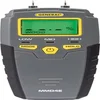
General Tools MMD4E Moisture Meter for Wood, Walls & Water Leak Detection
Since a Janka rating only holds for wood conditioned to 12% moisture, checking your own lumber’s moisture content before you buy or install is the fastest way to know whether the published number still applies.
- Best for: checking flooring or furniture stock before installation
- Why we picked it: pin-type reading with a 5-50% wood range, matching the moisture window that affects hardness readings
- Main drawback: pins leave small marks, so test on an offcut or hidden edge
Compare more moisture meter options
 Option 1 Klein Tools ET140 Pinless Moisture Meter
|
 Option 2 General Tools MMD7NP Pinless Digital Moisture Meter
|
 Option 3 Mecurate Digital Pin Type Wood Moisture Meter
|
As an Amazon Associate we earn from qualifying purchases.
Janka hardness is a measurement of the force needed to embed a steel ball halfway into a block of wood — a proxy for how well that species resists denting, scratching, and surface wear. It does not measure crush strength, bending strength, or toughness (resistance to a sudden impact); those come from separate tests entirely. A wood can score high on Janka and still split or crack under a hard blow, which is why the rating matters most for flooring and countertops and matters far less for tool handles or mallet heads.
The test was developed in 1906 by Austrian-American researcher Gabriel Janka as an adaptation of the Brinell hardness test used on metals. Instead of tracking crush resistance across the whole material, it isolates one repeatable, comparable number per species — which is exactly why lumber suppliers and flooring manufacturers still lean on it more than a century later.
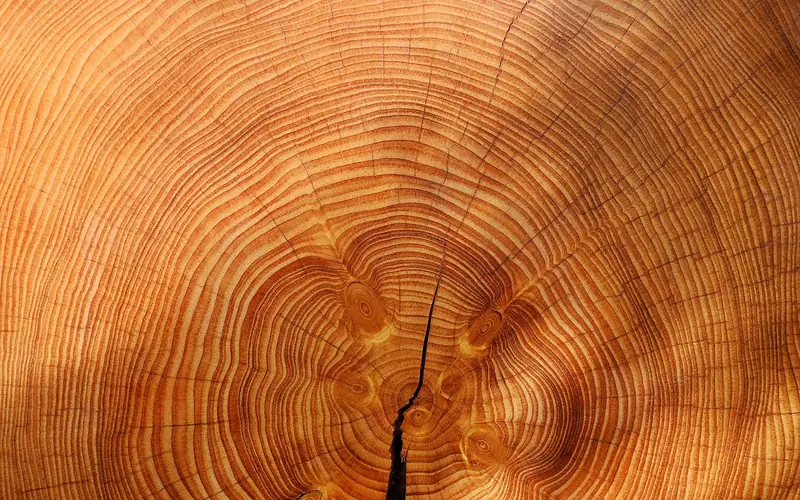
How the Janka Ball Test Works, Step by Step
The standard procedure follows ASTM D143 for solid lumber (a separate standard, D1037, covers engineered wood-based panels — see the comparison below). Here is what actually happens in the lab:
- Cut a clear sample: A defect-free block roughly 2 in. x 2 in. x 6 in. (50 x 50 x 150 mm) is cut from the heartwood, with no knots, checks, or grain runout.
- Condition to 12% moisture: The sample is dried and stabilized to 12% moisture content, since wetter wood dents more easily and would skew the reading low.
- Position the steel ball: An 11.28 mm (0.444 in.) diameter steel ball is set against the flat face of the sample. That diameter is not arbitrary — it produces a circular indentation with exactly 100 square millimeters (1 cm²) of contact area, which is what makes results comparable across species and labs.
- Press at a controlled rate: A testing machine drives the ball into the wood at 0.25 in. per minute (6 mm/min) — slow and steady, not a sudden impact.
- Stop at half the ball’s diameter: The ball is pressed in until it has sunk 5.64 mm (half its own diameter) into the surface.
- Record the force: The force required to reach that depth is recorded in pounds-force (lbf) in the U.S., or in newtons (N) or kilograms-force (kgf) elsewhere — mixing up the units is the single most common source of confusion when comparing charts from different sites.
- Test both faces and average: Testers repeat the push on the radial and tangential faces of the grain (and sometimes the end grain, called “end hardness”) and average the results, since wood is not equally hard in every direction.
Because moisture content is locked in at 12% before testing, a Janka number describes dry, stable, kiln-conditioned wood — not a green board straight off the mill, and not wood that has been sitting in a humid basement.
ASTM D143 vs. ASTM D1037: Which Standard Applies
Most articles treat “the Janka test” as one single procedure. It is not — and this is where a lot of flooring comparisons go wrong.
| Standard | What it tests | Typical use |
|---|---|---|
| ASTM D143 | Solid, defect-free wood blocks | Species comparison charts, solid hardwood lumber and flooring |
| ASTM D1037 | Wood-based panels: plywood, particleboard, MDF, engineered flooring cores | Manufactured/engineered flooring and panel products |
| ASTM D2394 | Falling-ball impact resistance | Simulates a dropped object rather than slow, steady pressure |
The practical problem: manufacturers sometimes publish the solid-wood Janka number for an engineered floor that only has a 1.5-2 mm hardwood wear layer over a plywood or HDF core. The species rating is accurate for solid lumber — it tells you almost nothing about how that thin wear layer will hold up once it is glued down over a different core. If you’re comparing engineered options, ask the manufacturer which standard their published number actually came from.
Reading Janka Numbers: What Counts as Hard or Soft
There’s no official cutoff between “soft” and “hard” — the scale simply runs from about 70 lbf (balsa, the softest wood commonly tested) to over 5,000 lbf for the hardest timbers. For flooring, most suppliers treat anything above roughly 1,200 lbf as suitable for normal residential foot traffic, with softer woods needing extra care or a protective finish. Red oak (1,290 lbf) is the industry’s informal reference point — when a chart says a wood is “harder than red oak,” that’s the comparison it means — while hickory (1,820 lbf) marks the top of common domestic species and Ipe (3,680 lbf) sits among the hardest woods used commercially.
This guide focuses on how that number gets measured in the first place. For the full ranked list — our Janka hardness chart covers 77 wood species side by side, from softest to hardest, with picks broken out by flooring, furniture, and outdoor use. You can also see where individual species fall in our guide to hardwood, softwood, and engineered wood types, or run your own numbers through the wood resistance calculator when comparing species for a specific project.
The “hardwood” and “softwood” botanical labels are a separate system from Janka hardness, and the two disagree more often than people expect — birch, for example, is botanically a hardwood yet several softwood conifers rate similarly or higher on the Janka scale than some true hardwoods. Never assume “hardwood” on a label means a higher Janka number; check the actual rating.
Where the Janka Rating Misleads You
The Janka number measures one thing only: resistance to a slow, steady push. It does not measure toughness — resistance to a sudden, sharp impact — which is a completely different property. That’s why mallet heads are a good real-world example of this: a mallet needs toughness to survive repeated hammer blows without splitting, not a high Janka score, and some tough woods actually rate lower on the Janka scale than brittle ones that would crack on the first strike.
The second common mix-up is applying a solid-wood rating to an engineered product. According to Hardwood Floors Magazine, sales listings routinely quote the solid-species Janka number for engineered floors, even when the actual wear layer is only 1-2 mm thick over a plywood or HDF core — so an engineered Brazilian Cherry floor rated near 2,350 lbf on paper can still show wear faster than expected once the finish and thin veneer take the daily impact instead of solid Jatoba. If impact resistance genuinely matters for your project — a mudroom, a workshop floor — ask whether the published number came from ASTM D143 (solid wood) or D1037 (the engineered-panel standard), and consider the falling-ball ASTM D2394 test as a closer real-world proxy.
Common Mistakes When Comparing Janka Ratings
- Mixing units: A chart in Newtons and a chart in lbf look wildly different for the same wood — always confirm the unit before comparing two sources.
- Comparing green wood to a published rating: Published numbers assume 12% moisture content; wet, unseasoned lumber will dent more easily than its rating suggests.
- Treating Janka as a toughness score: A high rating means dent resistance, not impact or crack resistance — check a species’ toughness separately for tool handles, mallets, or anything that takes repeated blows.
- Assuming engineered flooring matches its solid-wood species rating: Ask which ASTM standard the published number is based on before comparing an engineered product to solid lumber.
Frequently Asked Questions
What unit is wood hardness measured in?
Wood hardness from the Janka test is reported in pounds-force (lbf) in the United States, and in newtons (N) or kilograms-force (kgf) in countries that use the metric system. Always check which unit a chart is using before comparing species — the same wood can look very different in N versus lbf.
What is a good Janka hardness rating for flooring?
Most flooring suppliers treat 1,200 lbf and above as suitable for normal residential foot traffic, using red oak (1,290 lbf) as the informal benchmark. High-traffic commercial spaces or homes with large dogs typically do better above 1,450 lbf, in the range of hard maple or hickory.
Does the Janka test measure wood toughness?
No. The Janka test measures resistance to slow, steady denting, not toughness (resistance to a sudden impact). A wood can have a high Janka rating and still be brittle, and a lower-rated wood can be tougher under impact — which is why tool handles and mallet heads are chosen for toughness, not Janka score.
Is the Janka rating the same for solid and engineered wood flooring?
No. Published Janka numbers come from testing solid, defect-free wood under ASTM D143. An engineered floor with the same species name may have only a 1-2 mm wear layer over a different core material, so its real-world dent resistance can differ noticeably from the solid-wood number on the label.
How big is the steel ball used in the Janka test?
The test uses an 11.28 mm (0.444 in.) diameter steel ball, a size chosen because it creates a circular contact area of exactly 100 square millimeters (1 cm²) — which is what makes Janka results comparable across different labs and species.
Bottom Line
The Janka test gives you one specific, well-defined number: the force needed to press an 11.28 mm steel ball halfway into a sample of solid wood conditioned to 12% moisture, measured under ASTM D143. That number is genuinely useful for comparing solid-species dent resistance — red oak’s 1,290 lbf against hickory’s 1,820 lbf, for example — but it stops being reliable the moment you apply it to green lumber, engineered flooring, or a project where toughness under impact matters more than resistance to a slow push. Check the standard behind the number, check the moisture content of your own stock, and use the rating for what it actually measures.
Sponsored / affiliate links. As an Amazon Associate I earn from qualifying purchases. I may earn additional commission from eligible campaigns.