How Many Earthquake Straps Does a Bookshelf Need?
Furniture tip-overs are not a rare or exaggerated risk. The Consumer Product Safety Commission has tracked hundreds of child deaths from falling furniture and TVs over the past two decades, and the vast majority involved kids under six pulling up on a dresser or bookshelf that wasn’t anchored. The good news is that anti-tip straps are cheap and the installation takes about fifteen minutes per shelf. The question most people actually have isn’t whether to anchor a bookshelf – it’s how many straps it really takes to do the job right.
How Many Straps Does a Bookshelf Actually Need?
There’s no single certified number that applies to every bookshelf, and any guide that gives you one precise figure for all cases is guessing. What contractors and safety organizations actually recommend is a practical rule based on size: use at least two anchor points on any bookshelf, and add one more strap for roughly every 24 to 36 inches of width or for each major vertical section on a tall unit. A narrow 24-inch bookcase can usually get by on two straps near the top corners. A wide six-foot unit, or a tall stacked bookcase over 30 inches high, typically needs three or four spread evenly across the top rail so no single section can pivot forward on its own.
Best Stud-Mount Anti-Tip Pick
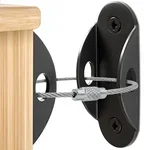 |
Booda Brand Furniture Anchors (10-Pack) – $11.99 A metal cable-and-bracket anchor kit built for exactly this job – rated to 400 lbs per set and sized to give a wide bookshelf the extra anchor points this guide recommends.
|
Why Wall-Stud Anchoring Matters More Than Strap Count
The number of straps matters less than what they’re screwed into. A screw driven into a solid wall stud can typically hold well over 100 pounds of lateral pull, depending on screw length and the stud’s condition. A basic plastic drywall anchor with no stud behind it holds closer to 5 to 10 pounds – nowhere near enough to stop a loaded bookshelf from tipping. A rated toggle bolt in clean drywall does better, roughly 50 pounds, but it’s still a compromise, not a substitute for a stud.
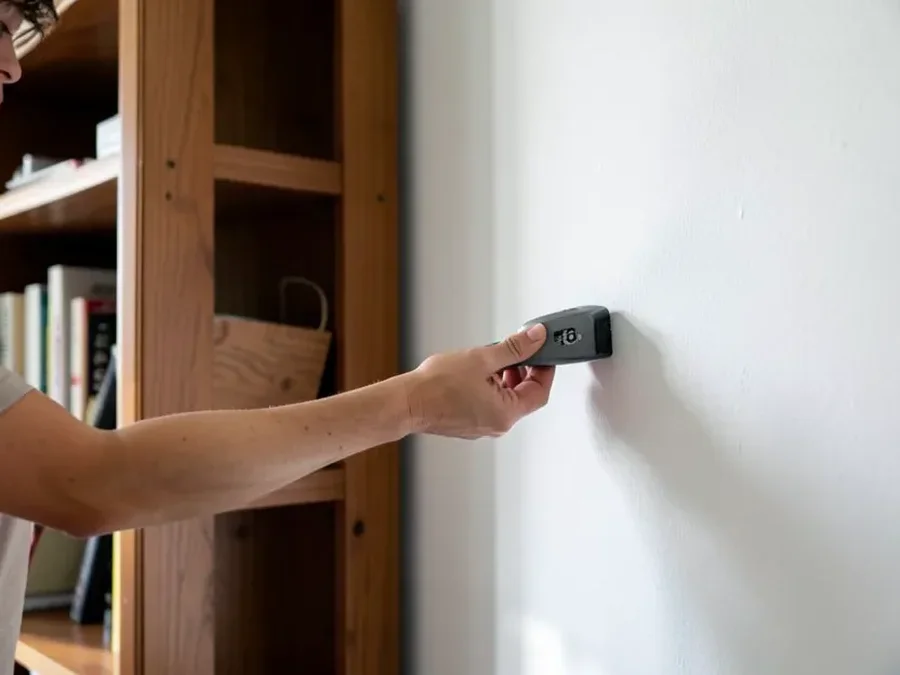
This is the detail most quick guides skip: a bookshelf with four straps into open drywall is less safe than one with two straps into studs. Before you buy anything, run a stud finder along the wall behind the shelf and mark every stud location. If a stud doesn’t line up where you need a strap, use a wall anchor rated for the load you’re securing (check the anchor’s packaging for its pull-out rating) rather than a plain screw into open drywall.
CPSC Guidelines and the STURDY Act: What’s Actually Regulated
Furniture tip-overs are a documented public safety problem, not internet exaggeration. CPSC data covering 2000 – 2019 recorded 451 deaths of children age 17 and under from furniture and TV tip-overs, with about 79 percent of those fatalities involving children younger than six. The agency’s long-running “Anchor It!” awareness campaign, launched in 2015, is credited with helping cut tip-over injuries and deaths by roughly half since then – anchoring furniture is one of the few home-safety fixes with a measurable track record.
On the regulatory side, the STURDY Act became law in December 2022, and in 2023 the CPSC adopted the ASTM F2057-23 standard as a mandatory federal safety rule (effective September 1, 2023). It’s worth being precise about its scope: STURDY specifically covers freestanding clothing storage units – dressers, chests, armoires – that are 27 inches or taller, requiring them to pass tip-over testing and include a built-in anti-tip device. It does not directly regulate bookshelves. That said, the same physics and the same CPSC “Anchor It!” guidance apply to bookcases: any bookshelf taller than about 30 inches, or one carrying real weight, should be anchored the same way a dresser is.
Extra Considerations in Earthquake-Prone Areas
Child-safety anchoring and earthquake anchoring use the same hardware, but seismic shaking adds a wrinkle straps alone don’t solve: side-to-side motion can walk items right off the shelf even if the frame never tips. In a moderate quake, an unrestrained bookshelf can also slide several inches away from the wall before the straps go taut, which is enough to yank the strap’s anchor point loose if it was only in drywall. Two practical additions for earthquake zones: use museum putty or shelf lips to keep breakables and heavy items from sliding off during shaking, and check that straps are short enough to limit that initial slide to an inch or two rather than a foot. If the bookshelf sits on a hard floor rather than carpet, adding a couple of felt or rubber pads under the base also cuts down how far it can walk before the straps engage.
None of this changes the core math from the section above – you still want at least two strap points into studs, more for wider or taller units – but a shelf in a known seismic zone is a good candidate for the higher end of that range (an extra strap or two) rather than the minimum.
How to Install Anti-Tip Straps on a Bookshelf
- Empty the bookshelf, or at least clear the top shelf, so you can see and reach the top rail.
- Run a stud finder across the wall directly behind the shelf and mark every stud within the shelf’s width.
- Position straps as close to the top corners as the shelf’s frame allows – that’s where leverage is highest during a tip.
- For anything wider than about 30 inches, add a strap at roughly the midpoint of the top rail as well.
- Screw the wall-side bracket into a stud whenever one lines up; use a properly rated anchor only when it doesn’t.
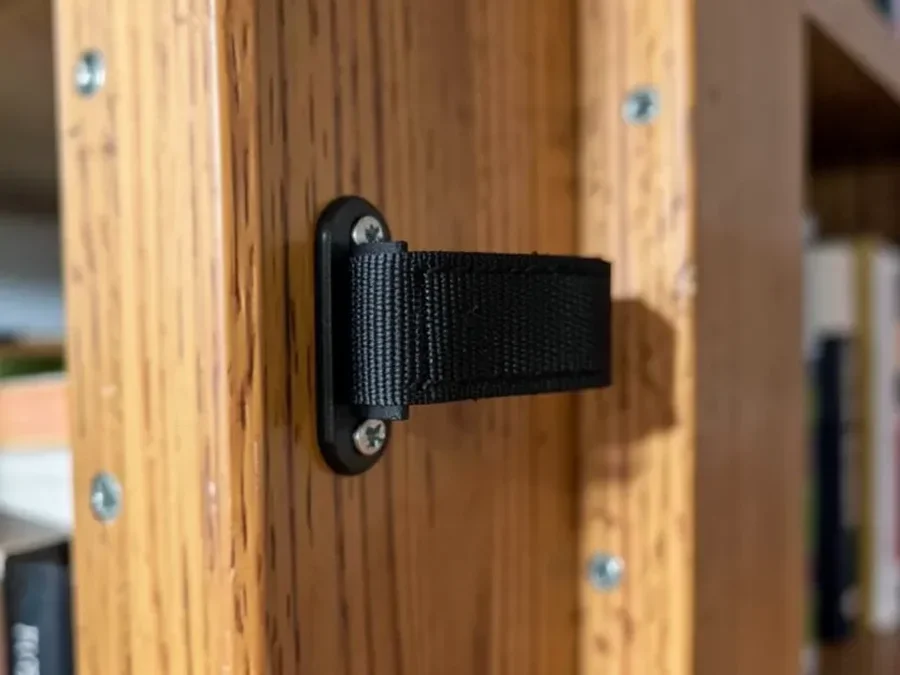
- Attach the furniture-side bracket to solid wood or the shelf’s structural frame, not into thin veneer or particleboard backing alone.
- Tighten the strap so there’s no slack, then gently rock the top of the shelf to confirm it can’t pivot forward.
If you’re a renter or can’t drill into the wall at all, see our guide to anchoring furniture without drilling for no-drill anti-tip strap and bracket options rated for similar loads.
Common Mistakes That Make Straps Useless
The most common mistake isn’t skipping straps entirely – it’s installing them into open drywall with no stud or rated anchor behind them, which gives a false sense of security while holding almost none of the actual load. The second most common mistake is placing every strap in the middle of the top rail instead of near the corners, which leaves the corners free to pivot forward. Loose straps are effectively decorative; check tension every few months, since books shift and straps stretch slightly over time. Finally, keep heavier books on lower shelves – a shelf that’s top-heavy puts more strain on the straps and more force behind a tip if something ever does fail.
Frequently Asked Questions
How many earthquake straps does a bookshelf need?
At minimum two, positioned near the top corners. Add roughly one more strap per 24 to 36 inches of width, or one per major vertical section on a tall stacked bookcase, so no single section can pivot forward independently.
Can I anchor a bookshelf without drilling into a stud?
Yes, with a wall anchor rated for the load, though a stud is always the stronger option since a basic drywall anchor without a stud holds only a fraction of the weight. If you can’t drill into the wall at all, no-drill anti-tip brackets rated for similar loads are available for renters.
Does the STURDY Act cover bookshelves?
No. The STURDY Act’s 2023 federal rule specifically covers freestanding clothing storage units 27 inches or taller, such as dressers and chests. Bookshelves aren’t directly regulated by it, but CPSC’s separate “Anchor It!” guidance recommends anchoring any bookshelf over about 30 inches tall using the same anti-tip principles.
How do I know if my bookshelf needs anti-tip anchoring?
If it’s taller than about 30 inches, holds any real weight, or is in a home with young children, pets, or earthquake exposure, it should be anchored. CPSC data shows nearly 80 percent of furniture tip-over deaths involve children younger than six, which is why anchoring is recommended even for shelves that seem stable.
Bottom Line
Two straps is the floor, not the ceiling – wider and taller bookshelves need more anchor points spread across the top rail, and every strap only works as well as what’s behind the wall. Find the studs first, anchor near the corners, keep heavy books low, and check the straps periodically. It’s a fifteen-minute job that accounts for a documented, preventable cause of injury and death, and it costs less than a takeout dinner to do properly.
Sponsored / affiliate links. As an Amazon Associate I earn from qualifying purchases. I may earn additional commission from eligible campaigns.