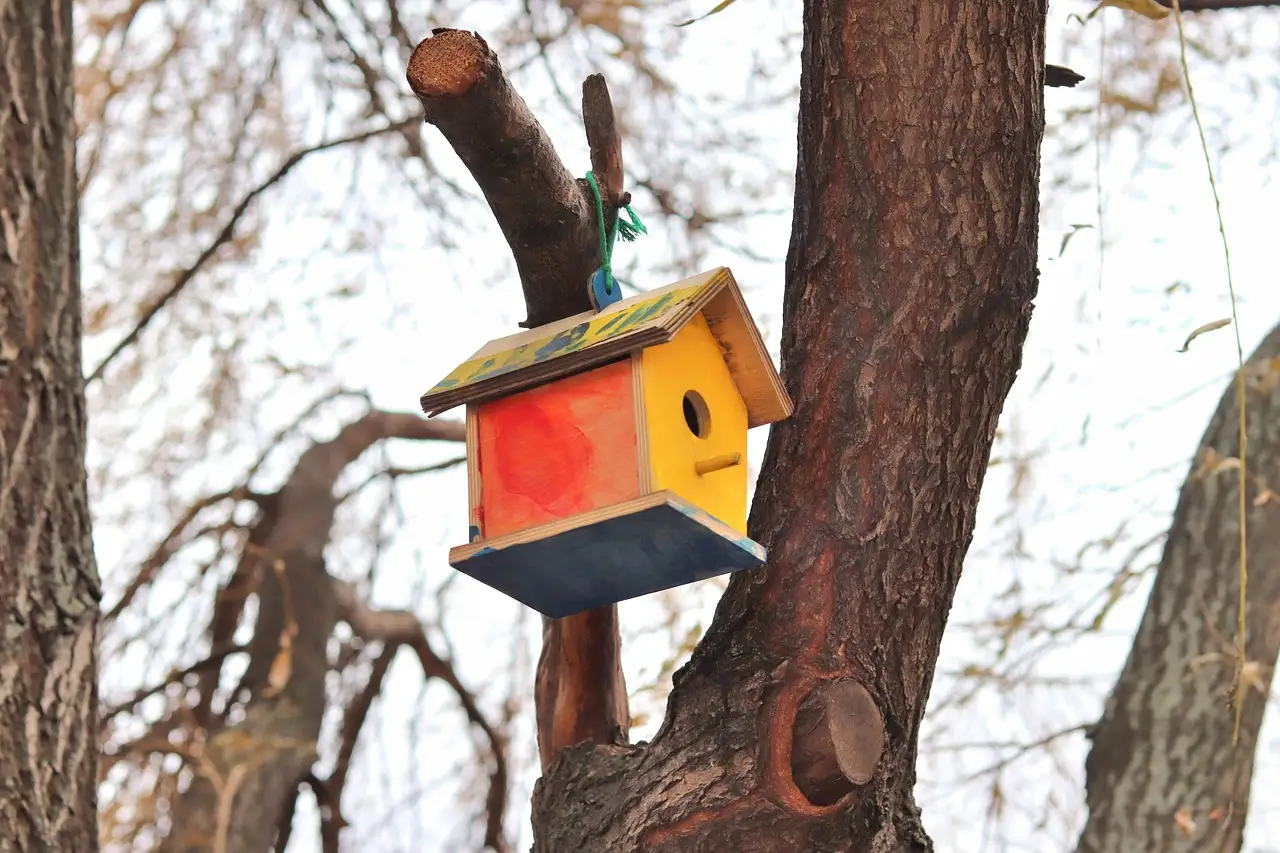
Bird House Hole Size Chart
Choose the smallest entrance hole that still meets the target species’ minimum, and never shrink below that bird’s accepted size. A hole that is too small blocks the right birds. A hole that is too large invites competitors, predators, and nest failure.
Entrance hole diameters by species


Entrance hole diameter is measured in inches and controls which birds can enter the box.
Use the table below as a drill guide, then check the rest of the box dimensions against a species plan. Hole size, floor size, entrance height above the floor, and mounting height all work together.
| Target species | Recommended hole diameter | Drill bit or hole saw size | Acceptable tolerance | Starling-risk level | Opening type |
|---|---|---|---|---|---|
| House wren | 1 1/8 inches | 1 1/8-inch bit or hole saw | Keep very close to spec; lightly sand only if needed | Low when kept tight | Fixed-size |
| Chickadee | 1 1/8 inches | 1 1/8-inch bit or hole saw | Keep very close to spec; sand only for a clean edge | Low when kept tight | Fixed-size |
| Eastern bluebird | 1 1/2 inches | 1 1/2-inch bit or hole saw | Small positive tolerance is acceptable; stay within a bluebird plan | Moderate if the hole grows beyond spec | Fixed-size |
| Downy woodpecker | 1 1/4 inches | 1 1/4-inch bit or hole saw | Keep close; edge cleanup only | Low to moderate | Fixed-size |
| Hairy woodpecker | 1 1/2 inches | 1 1/2-inch bit or hole saw | Stay at spec; do not oversize | Moderate if enlarged | Fixed-size |
| Purple martin | 1 3/4 to 2 1/4 inches | Check the species plan for the exact entrance system | Varies by model and compartment design | Varies by housing style | Usually adjustable only within a plan-made system |
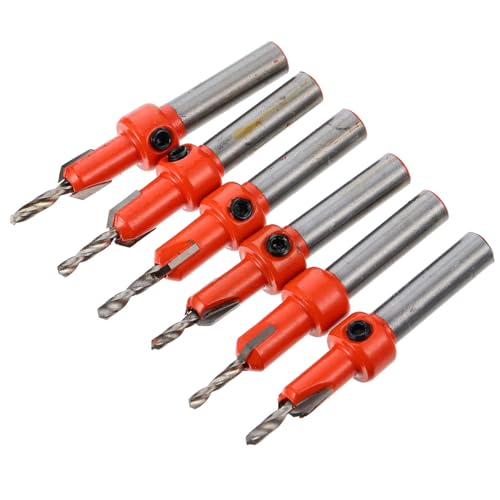
For clean work, match the bit or hole saw to the planned diameter, then test the cut with a scrap board if the tool tends to cut large. If the opening comes out slightly tight, sand the edge a little at a time. If it is too large, the fix is usually a new face piece or a different front, not a bushing that shrinks the hole only partway.
Drill bit and hole saw sizes for a clean fit
For most boxes, the best choice is the exact bit or hole saw size named in the species plan. That keeps the entrance predictable. A clean rim matters because ragged edges can leave splinters that snag feathers or make the opening read larger than intended.
If your saw cuts slightly oversize, treat that as a real change in fit, not a minor cosmetic issue.
Acceptable tolerance and when to sand the edge
Acceptable tolerance depends on the species and the build. For tight entrances such as 1 1/8-inch holes, sanding should be for cleanup, not for changing the opening.
Use sandpaper to remove fuzz, burn marks, and splinters. Do not use sanding to push a hole far beyond the planned size.
How big should a birdhouse hole be?
Use the smallest safe opening for the target bird. That means the hole must admit the species you want, but no more. If more than one species may use the box, choose the smallest opening that still fits the target bird and still matches local conditions.
If the hole is too small, the target bird cannot enter. If it is too large, competitors such as European starlings and house sparrows gain access.
What changes when more than one species is possible
When two or more cavity nesters overlap in your area, do not default to the largest opening. Start with the smallest size that admits the bird you want.
A common mistake is drilling a larger hole “just in case.” That choice often turns the box into a competitor magnet instead of a target box.
When a tighter opening helps exclude competitors
House sparrow is an undesirable competitor in many backyard setups, and tighter openings are often used to help exclude it. European starling is another invasive competitor.
Say your plan calls for bluebirds but house sparrows are common at the site. A 1 1/2-inch opening may still be too permissive if the rest of the setup is easy to occupy. A tighter, species-specific box plan is better than trying to solve the problem with hole size alone.
Builder’s hole selection matrix
This matrix turns the chart into a build decision. Use it when you know the target species, or when local birds overlap and you need a safe default. The opening should be treated as fixed-size unless the species plan specifically calls for a different insert, baffle, or compartment system.
| Target species | Hole diameter | Recommended drill bit or hole saw | Acceptable tolerance | Starling-risk level | Fixed-size or adjustable |
|---|---|---|---|---|---|
| House wren | 1 1/8 inches | 1 1/8-inch | Very tight; clean edge only | Low | Fixed-size |
| Chickadee | 1 1/8 inches | 1 1/8-inch | Very tight; clean edge only | Low | Fixed-size |
| Eastern bluebird | 1 1/2 inches | 1 1/2-inch | Stay close to spec; slight cleanup only | Moderate if oversize | Fixed-size |
| Downy woodpecker | 1 1/4 inches | 1 1/4-inch | Very close to spec | Low to moderate | Fixed-size |
| Hairy woodpecker | 1 1/2 inches | 1 1/2-inch | Stay close to spec | Moderate if oversize | Fixed-size |
| Purple martin | 1 3/4 to 2 1/4 inches | Check the housing plan | Varies by system | Varies by system | Adjustable only within a species plan |
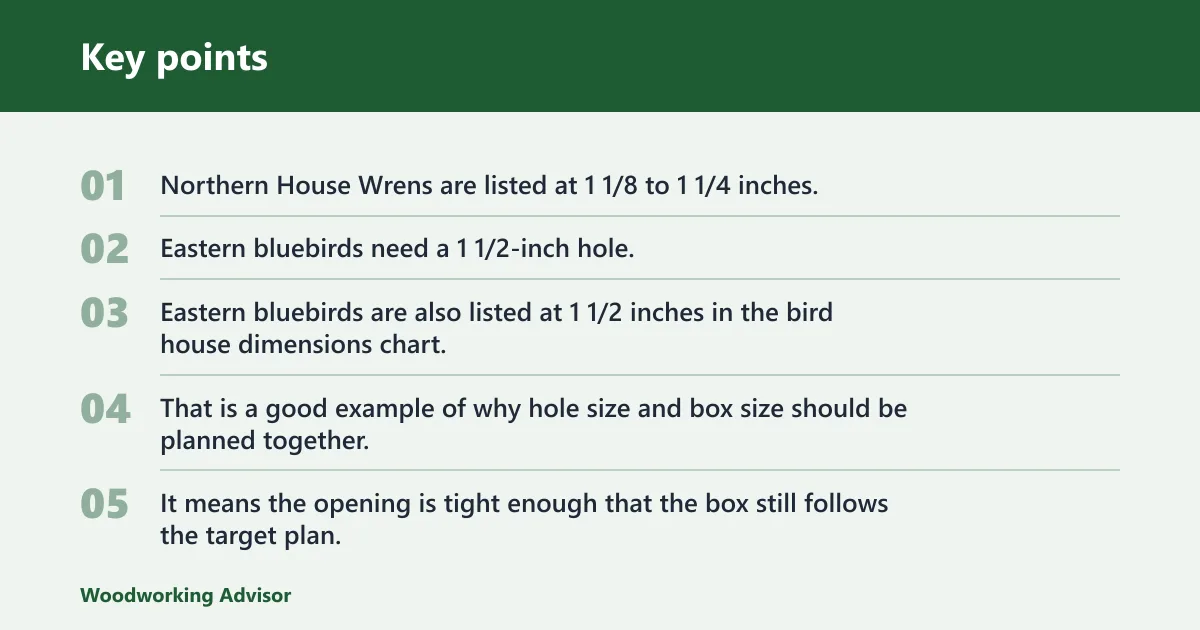
House wrens fit through 1 1/8-inch openings. Chickadees use a 1 1/8-inch entrance hole. Northern House Wrens are listed at 1 1/8 to 1 1/4 inches, so a tight entrance is part of normal planning, not an unusual tweak.
Eastern bluebirds need a 1 1/2-inch hole, and bluebirds are shown with a floor size of 5×5 inches and box height of 8-12 inches. Eastern bluebirds are also listed at 1 1/2 inches in the bird house dimensions chart. That is a good example of why hole size and box size should be planned together.
Starling risk level and what it means in practice
Low starling risk does not mean no risk. It means the opening is tight enough that the box still follows the target plan, assuming the rest of the design is also suitable. Moderate risk means you should be cautious about oversizing, uneven drilling, or assuming one hole fits several species.
Keep the opening tight, and do not treat a loose fit as harmless.
Tolerance notes for drill bits, saws, and sanding
Bit and saw sizes are not always exact in finished wood. Tearout, soft grain, and sanding can change the final opening. Check the cut with a template or measuring tool before you commit to the rest of the box.
If the opening is borderline, the safest move is usually to stop at the smaller size and clean the edge only. That is especially important for species that already face competition from house sparrows or starlings.
Species sizes that builders use most
Eastern bluebird is the common benchmark for backyard boxes because the species is often targeted and the entrance size is specific. House wren and chickadee are the opposite end of the scale: smaller birds that need a tighter fit.
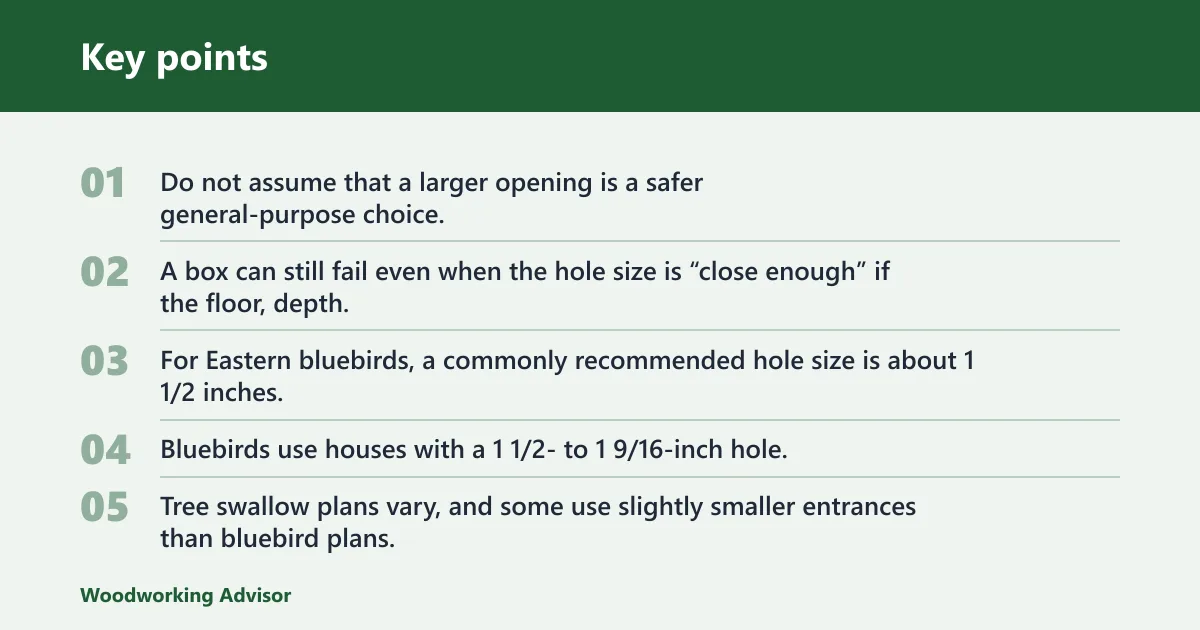
Do not assume that a larger opening is a safer general-purpose choice. A box can still fail even when the hole size is “close enough” if the floor, depth, or mounting height is wrong.
Eastern bluebird, tree swallow, and similar open-country species
For Eastern bluebirds, a commonly recommended hole size is about 1 1/2 inches, and a typical mounting height is about 4 to 6 feet. Bluebirds use houses with a 1 1/2- to 1 9/16-inch hole, which shows why a slightly loose opening can still matter.
Tree swallow plans vary, and some use slightly smaller entrances than bluebird plans.
House wren, chickadee, titmouse, and other small cavity nesters
House wren at 1 1/8 inches is a useful benchmark for a tight entrance. Chickadees use a 1 1/8-inch entrance hole, and titmice are often grouped with similar guidance in species charts.
Say your local birds include chickadees and wrens, and you drill 1 1/4 inches because it feels easier. That extra size can change the occupants completely.
Nuthatch and other species that need a tighter fit
Nuthatches also prefer a tight fit, so use a species-specific plan rather than a generic “small bird” hole. Downy woodpeckers are listed at 1 1/4 inches, which helps show how closely related cavity users can still differ in opening size.
For any species not listed here, check a species-specific plan before you drill. Guessing is a poor substitute when entrance diameter controls access.
Do hole size and box size both matter?
Yes. Hole size controls access, but box size controls interior fit, movement, and nest placement. A birdhouse with the correct entrance can still be a poor fit if the floor is wrong, the box is too shallow, or the entrance sits too low or too high above the floor.
Birdhouse floor size varies by species and works alongside hole size. Birdhouse entrance height above the floor also varies by species and affects access and interior protection.
How floor size affects nest fit and movement
A floor that is too small can crowd the nest. A floor that is too large can change how the bird uses the space. Bluebirds are listed with a floor size of 5×5 inches, which gives a clear example of a dimension that belongs in the plan, not as an afterthought.
When you choose a hole size, confirm that the floor matches the target bird too.
Why entrance height above the floor matters
The entrance height above the floor changes how the bird uses the interior and how protected the nest sits from direct view and draft. Species charts commonly list that distance because it affects access, nesting comfort, and the way predators can reach inside.
If the entrance is too low relative to the floor, the nest may be easier to disturb. If the box depth and entrance position are out of sync, the bird may ignore the box even when the hole is correct.
Mounting height and placement
Mounting height is species-specific and commonly ranges from 4 to 30 feet depending on the bird. Bluebirds are commonly mounted at 4 to 6 feet, while other cavity nesters use taller placements. A good hole in a bad location can still sit empty.
Place the box where the target bird actually forages and patrols. Open-country birds often need more open surroundings, while some cavity nesters accept more concealed sites.
Bluebird height guidance versus other cavity nesters
For Eastern bluebirds, 4 to 6 feet is the usual height range in many plans. That keeps the box in a practical viewing and maintenance zone while matching bluebird preferences. Other cavity nesters may need higher mounting points, so check the species plan instead of copying the bluebird height.
Open areas versus concealed sites
Open areas suit several backyard cavity nesters because the birds can approach and monitor the box. More concealed sites can work for other species. The correct choice depends on the bird, the habitat, and the pressure from competitors in your area.
Mounting a box too close to dense cover can help predators, while mounting it in the wrong open site can leave the box unused.
Should a birdhouse hole be round or oval?
A round entrance is the standard choice for many species-specific birdhouse plans. An oval or slot is not a universal upgrade. Use the shape the plan calls for, because the shape must match the bird, the compartment, and the competition pressure in the area.
For purple martins, follow a species-specific plan instead of trying to turn a round-hole chart into a martin setup.
When a round entrance is the standard choice
Round holes are common because they are easy to drill and easy to size. They also give a clear fixed target for cavity nesters such as bluebirds, chickadees, wrens, and woodpeckers.
When species-specific plans call for an oval or slot
Some birds need a different entrance shape because the whole housing system is different. Purple martin housing is the best example. Follow the specific plan for that species instead of trying to convert a round-hole chart into a martin setup.
Shape alone does not solve occupancy problems. The wrong size, wrong height, or wrong box depth can still keep the box empty.
Frequently asked questions
How big of hole for bird house?
Start with the smallest opening that still admits the bird you want. For many backyard cavity nesters, that means a tight species-specific hole rather than a general one.
What size hole should a birdhouse have for bluebirds?
Eastern bluebirds need a 1 1/2-inch hole. Bluebirds are also listed with a floor size of 5×5 inches and box height of 8-12 inches, so the entrance is only one part of the plan. Mounting height for bluebirds is commonly 4 to 6 feet.
What size birdhouse hole keeps starlings out?
Keeping the opening at or below 1 1/2 inches is a common exclusion limit for bluebird-style boxes. For any site with overlapping species, choose the smallest safe opening that still fits the target bird.
How do I choose the right birdhouse hole size for different birds?
Match the hole to the target species, then check the rest of the box dimensions and mounting height. If more than one species is possible, choose the smallest safe opening that still admits the intended bird.
What is the hole size for chickadees, wrens, and nuthatches?
Chickadees use a 1 1/8-inch entrance hole, and House wrens fit through 1 1/8-inch openings. Northern House Wrens are listed at 1 1/8 to 1 1/4 inches. Nuthatches need a tighter fit too, so check a species-specific plan before drilling.
Sponsored / affiliate links. As an Amazon Associate I earn from qualifying purchases. I may earn additional commission from eligible campaigns.