How Much Do Quality Carving Tools Cost?
Quality carving tools usually cost about $15–$40 for a single gouge or knife, about $60–$150 for a decent starter set, and roughly $100+ for premium tools. Cheaper steel dulls faster, flexes more, and makes control and edge holding harder. This guide breaks down price tiers, tool types, and the real cost of owning carving tools.
What drives carving tool prices


For most beginner-to-intermediate carvers, quality means a tool that arrives sharp enough to use, holds an edge through a practical session, and has a handle that fits your grip without fighting it. Single knives often sit at the low end of the range, while palm tools, V-tools, and gouges rise with better steel, cleaner grinding, and more consistent fit.
Single tools versus sets
A single knife or gouge lets you buy the exact geometry you need. Sets look cheaper per tool, but the value depends on whether the included profiles match your work. A whittling kit with a carry pouch can be a smart start for one project type, yet a relief carver may be better served by buying one knife, one V-tool, and a couple of gouges separately.
Price usually jumps for three reasons: better edge retention, more comfortable handles, and more consistent grinding. Carbon steel is common in carving knives because it sharpens readily and can take a fine edge, while tougher premium steels may hold that edge longer but cost more and ask more of your sharpening system.
Carving tool cost ladder
This ladder shows what you typically get at each tier and when the next tier starts to pay back its higher upfront cost over a year of use. The numbers below are practical purchase bands, not brand quotes, and they assume normal hand use rather than heavy production work.
| Tier | Single knife | Single gouge | Single V-tool | Typical set price | Steel and handle quality | When the next tier can be cheaper over a year |
|---|---|---|---|---|---|---|
| Budget | $8–$15 | $10–$18 | $12–$20 | $25–$60 | Basic carbon or mixed steel, rougher grind, simpler handle fit | If you sharpen often and replace one or two dull or loose tools within a year, the lower entry price can disappear quickly |
| Decent | $15–$40 | $15–$40 | $18–$45 | $60–$150 | Cleaner grind, better edge holding, more comfortable handle shaping | If a budget tool needs frequent touch-ups and one replacement, this tier often costs less across a year of regular use |
| Enthusiast | $35–$75 | $35–$80 | $40–$90 | $120–$300 | Better steel consistency, stronger polish on cutting surfaces, improved handle finish and balance | If you carve often, spend time re-sharpening cheap tools, and value cleaner cuts, this tier can be cheaper than repeated replacement |
| Pro | $70–$140+ | $75–$160+ | $80–$180+ | $250–$700+ | Higher steel quality, tighter profile control, better resale value, more specialty shapes | If you depend on a full profile range and long edge life, the higher buy-in can beat buying several midrange duplicates over time |
What the tier jump usually buys
The jump from budget to decent usually buys better edge life and less friction in the cut. The jump from decent to enthusiast usually buys more predictable sharpening and cleaner geometry. The pro tier is where profile choice, steel consistency, and resale value matter most, especially if your work demands several exact sweeps or narrow V angles.
What does a good carving knife cost?
A good carving knife usually costs $15–$40 for a usable single tool, with better detail knives often landing above that. For detail work, a clean edge and a handle that locks into the hand matter more than a flashy finish. Carbon steel remains a common choice because it sharpens quickly and can take a keen edge for fine cuts.
Carbon steel versus other steels
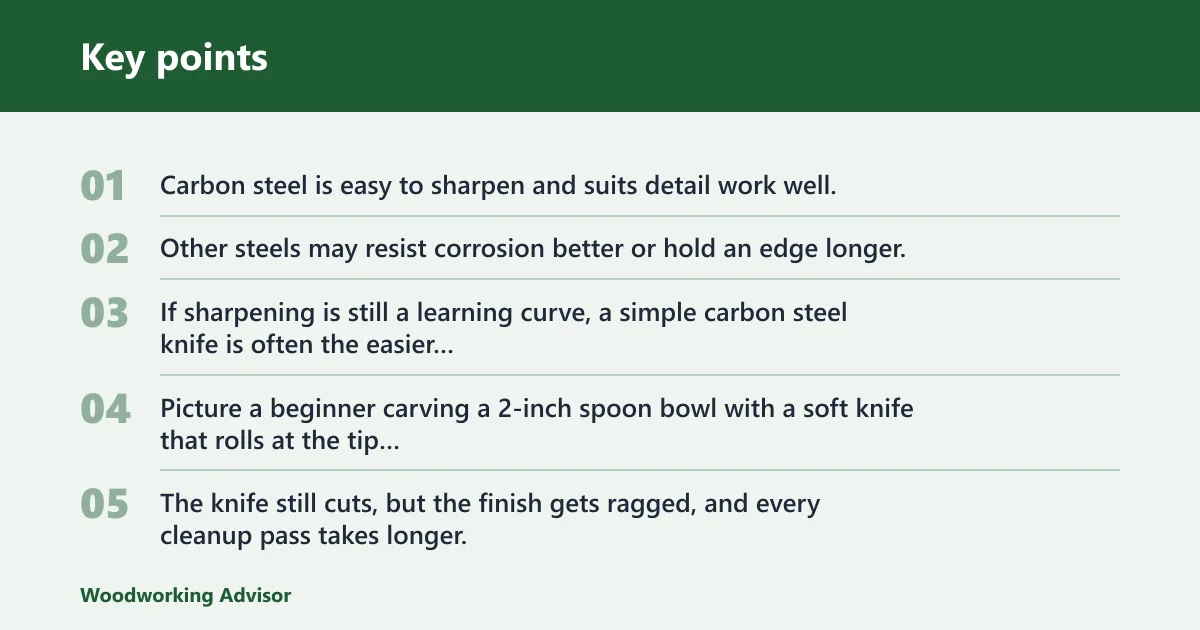
Carbon steel is easy to sharpen and suits detail work well, but it needs maintenance to prevent rust. Other steels may resist corrosion better or hold an edge longer, yet they can take more effort on stones and strops. If sharpening is still a learning curve, a simple carbon steel knife is often the easier place to start.
Picture a beginner carving a 2-inch spoon bowl with a soft knife that rolls at the tip after a few passes. The knife still cuts, but the finish gets ragged, and every cleanup pass takes longer. A better-ground knife in the same shape usually reduces that drag without changing the carving style.
Buy one better knife first when your work is mostly detail cuts, whittling, or chip carving and the rest of the kit would sit unused. A premium knife is easier to justify if it keeps its edge longer than three low-cost replacements and fits your grip without pressure hotspots.
Are carving sets worth it?
Sets are worth it when they include the shapes you will actually use, such as a knife plus a few small gouges or V-tools. They are less useful when they pack in many similar blades that duplicate one another. A starter bundle can save money, but only if the included profiles match the project.
Whittling kits versus individual tools
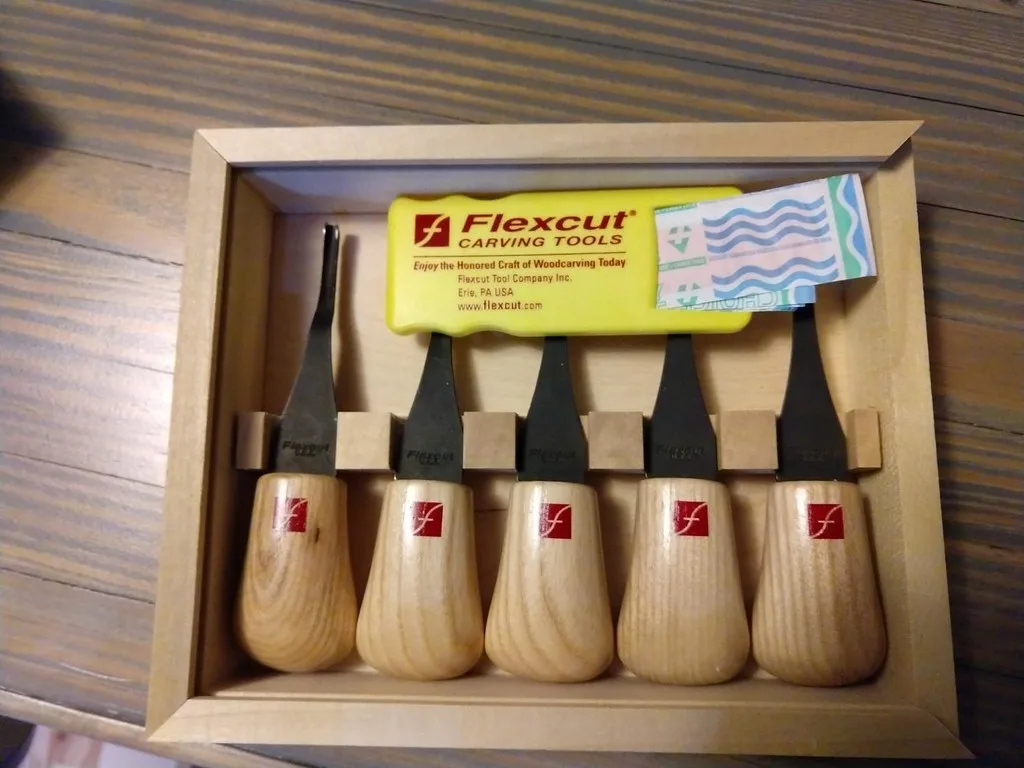
Whittling kits are usually aimed at beginners and often include a knife count that helps you start without piecing together every tool one by one. A carry case or pouch adds real value if you travel or store tools in a drawer. The question is not whether the bundle looks complete, but whether the steel and handles feel stable enough to keep.
When a set becomes false economy
A cheap bundle becomes false economy when one blade dulls so fast that you spend more time sharpening than carving, or when a handle cracks, loosens, or feels slippery enough to reduce control. If you replace two poor tools in a year, the bundle can cost more than a better single-tool purchase path.
Say your first project is a small relief panel and you buy a low-cost set with five near-identical blades. If only one knife and one V-tool actually fit the work, the other three are storage weight, not savings. In that case, two or three better tools would have been the cleaner purchase.
How much do palm tools and V-tools cost?
Palm tools usually cost less than full-size sets but more than the cheapest generic knives, because they are small, precise, and often made for detail work. V-tools usually sit in the midrange when the angle and grind are clean. For chip carving and relief work, the right shape matters more than a large count of mediocre tools.
Palm tools for control and finesse
Palm tools are miniaturized gouges, chisels, V-tools, and specialty blades. They suit small-scale carving because they place the cutting edge close to the hand, which improves control. Beginners often do well with a few palm tools before buying a large set, because each tool teaches a distinct cut path.
V-tools, angles, and line width
V-tools use a V-shaped cutting edge formed by two chisel blades. Their angles range from 30 to 90 degrees. A tight V-tool angle makes thinner lines, while a wide V-tool angle clears more material. That matters in chip carving, line work, and shallow relief where channel size changes the look of the finished surface.
Gouges for curves and hollowing
Gouges use curved blade geometry to hollow and smooth curves. Sweep and shape variants change how deeply they bite and how broad the channel becomes. A single gouge may cost less than a full set, but a set often makes sense when you need several sweeps for bowls, spoon carving, or soft relief transitions.
| Tool | Typical single-tool price | Best use | Why price changes |
|---|---|---|---|
| Palm gouge | $12–$35 | Small curves, tight areas, controlled cuts | Steel consistency and handle shape |
| Palm chisel | $10–$30 | Flat cleanup, corner work, stop cuts | Edge straightness and grind quality |
| V-tool | $18–$45 | Chip carving, line work, relief channels | Angle precision and edge symmetry |
| Gouge | $15–$40 | Hollowing, shaping, smoothing curves | Sweep accuracy and handle comfort |
Sharpening costs that change the total
Sharpening belongs in the purchase price, whether you budget for it or not. Stones, strops, and honing compound can keep even modest tools useful longer, but they add real ownership cost. Better steel can reduce how often you need to regrind or replace, yet every carving setup still needs maintenance.
What the sharpening system adds
A basic sharpening system usually includes stones, a strop, and honing compound. Green honing compound is chromium oxide and cuts at around half a micron. White and grey compounds are usually aluminium oxide. Diamond compound is suggested for harder steels. Those materials change how quickly you restore a fine edge and how long the edge lasts between sessions.
Why tool life affects yearly cost
If a cheaper tool loses its edge quickly, you spend more time sharpening and may still need replacement sooner. That extra cost often matters more than the first purchase price. Better steel can cut the number of touch-ups, which makes a higher tier cheaper over a year if you carve regularly.
- Buy the smallest set that matches your carving style.
- Budget for a stone or two, a strop, and compound.
- Inspect edge retention after a few sharpening cycles.
- Replace weak tools before you buy duplicates you do not need.
Power carving tools and safety costs
Wood carving power tools are useful for roughing out material and for some detail work, especially when you need speed control. Rotary tools commonly run at 5,000 to 35,000 RPM, and a variable-speed rotary tool between 10,000 and 35,000 RPM is a sensible start. They are best for beginners and detail work, not for replacing hand tools entirely.
Rotary tools versus hand tools
Power carving tool categories include rotary tools, angle grinder attachments, reciprocating carvers, and flexible shaft systems. Rotary tools handle small detail work and light stock removal. Hand tools still give the best control for clean cuts, final shaping, and surfaces where tear-out matters.
Safety gear and accessory costs
Safety gear is not optional with power carving. Eye protection, dust control, and a stable grip should be part of the total budget. Accessory bits also wear out, so a low tool price can turn into a higher annual cost if you burn through cutters or skip protection and cause avoidable damage.
Where to buy wood carving tools
Buy from trusted dealers, specialist woodworking shops, or sellers with clear return policies and consistent product descriptions. That matters for edge quality, handle fit, and whether the profile matches the stated angle or sweep. Used tools can save money if you inspect the edge, ferrule or handle joint, and any signs of grinding damage before you pay.
What to look for in used tools
Used tools are best when the steel is sound and the profile has not been overheated or badly reworked. A used premium tool can be a very good buy if the edge geometry is intact. If the handle is split, the blade is pitted, or the grind is uneven, the apparent discount can disappear in sharpening time.
Buying matrix for first tools
This matrix maps carving style, budget, and tool count to a sensible first purchase list. It is built to keep you from paying for shapes you will not use in the first few projects.
| Carving style | Budget | First tool count | Sensible first purchase list |
|---|---|---|---|
| Whittling | Low to mid | 1–2 | One detail knife and one backup blade or strop-ready knife |
| Chip carving | Mid | 2–3 | One chip carving knife, one tight V-tool, one small strop |
| Relief carving | Mid to higher | 3–5 | One knife, one or two gouges, one or two V-tools, sharpening kit |
| Spoon carving | Mid | 2–4 | One sloyd-style knife, one hook knife or curved gouge, strop |
A practical first purchase list is usually small. Begin with the shapes that match the work in front of you, then add profiles only when you can name the cut you cannot make with what you already own. That approach keeps tool cost tied to use, not hype.
Frequently asked questions
How much do quality wood carving tools cost?
The real cost depends on steel, handle fit, and how often you need to sharpen or replace a tool during the year.
What is a good price for a carving knife?
A good price for a carving knife is often $15–$40 for a dependable single blade. Below that, you may get usable steel but less edge life and rougher grind quality. Above that, you are usually paying for better steel consistency, fit, and a more refined edge.
Are expensive carving tools worth it for beginners?
They can be, but only when the beginner knows the tool shape will be used often. A better knife or gouge can reduce frustration and sharpening time. A full premium set is usually too much at first unless the carving style clearly calls for several exact profiles.
How much does a carving tool set cost?
Basic whittling kits can start around $25–$60, decent starter sets often land at $60–$150, and larger pro sets can run $250–$700+. The best value depends on how many included tools actually match your carving style and how much sharpening work they need.
Should I buy used wood carving tools?
Used tools can be a smart buy if the steel is sound and the edge geometry is intact. Inspect for chips, heavy rust, cracks, and poor regrinding. A used premium tool with a healthy edge can be better value than a new budget tool that dulls quickly.
Premium carving tools commonly cost $70–$140+ for a single knife, $75–$160+ for a gouge, and $80–$180+ for a V-tool. Premium sets often start around $250 and rise from there. The higher price usually buys better steel, tighter geometry, and better resale value.
Sponsored / affiliate links. As an Amazon Associate I earn from qualifying purchases. I may earn additional commission from eligible campaigns.