What Does MDF Stand For in Woodworking? Meaning, Uses, and Limits
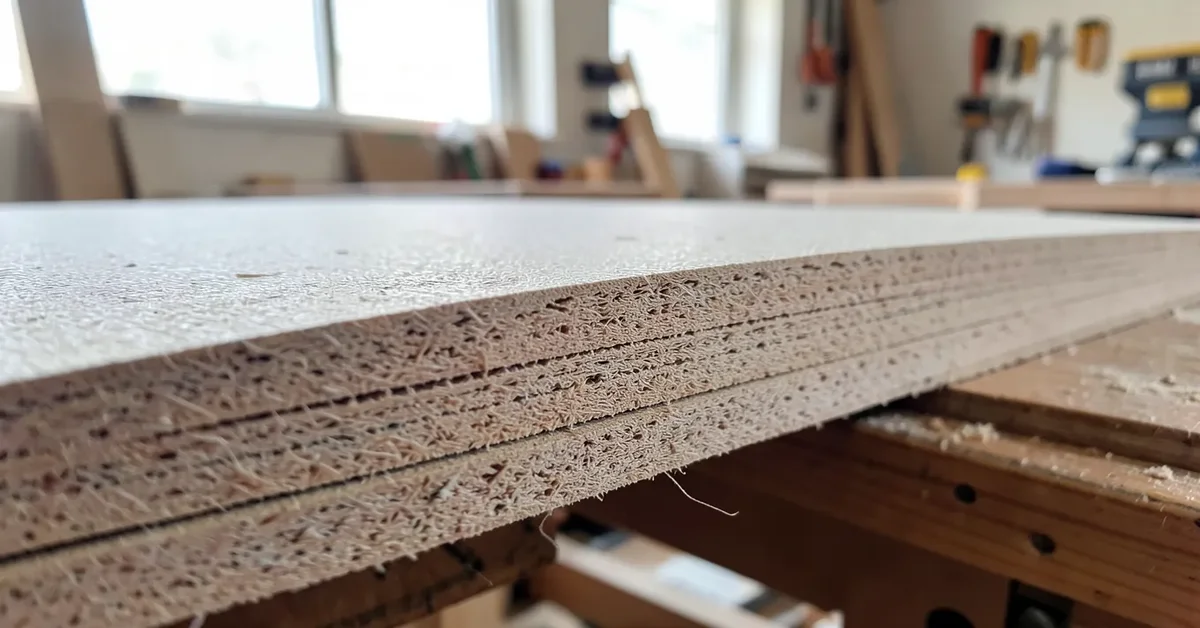
MDF stands for Medium-Density Fiberboard — an engineered wood panel made by breaking softwood (and some hardwood) down into fine fibers, blending them with wax and urea-formaldehyde resin, then pressing the mat under heat and pressure into flat, uniform sheets. Unlike plywood, there’s no visible grain or layered veneer; MDF is the same density and texture all the way through, which is exactly why it cuts and paints so cleanly.
How MDF Is Actually Made
Recommended for MDF Dust
 |
3M 8511 N95 Cool Flow Valved Respirator, 10-Pack – $27.49 MDF’s urea-formaldehyde resin binder means its dust is finer and more irritating than solid-wood sawdust — worth a real N95, not a paper dust mask, any time you’re cutting or sanding it.
|
Mills start with wood chips and sawmill waste, steam them soft, then run them through a refiner that separates the wood into individual fibers — this is the step that gives MDF its name, since the fiber size (not a bonded log structure) is what makes it “fiberboard” rather than particleboard. The fibers are blended with wax for moisture resistance and a urea-formaldehyde or, in exterior-rated versions, a more moisture-resistant resin. The fiber mat is then hot-pressed to a target density, typically 600 to 800 kg/m³, and trimmed to sheet size.
That density figure is the whole “medium” in Medium-Density Fiberboard — it sits between low-density insulation board and high-density hardboard (Masonite). Higher density means a smoother surface and cleaner edge cuts, but also more weight per sheet than plywood of the same size.
Where MDF Genuinely Outperforms Plywood
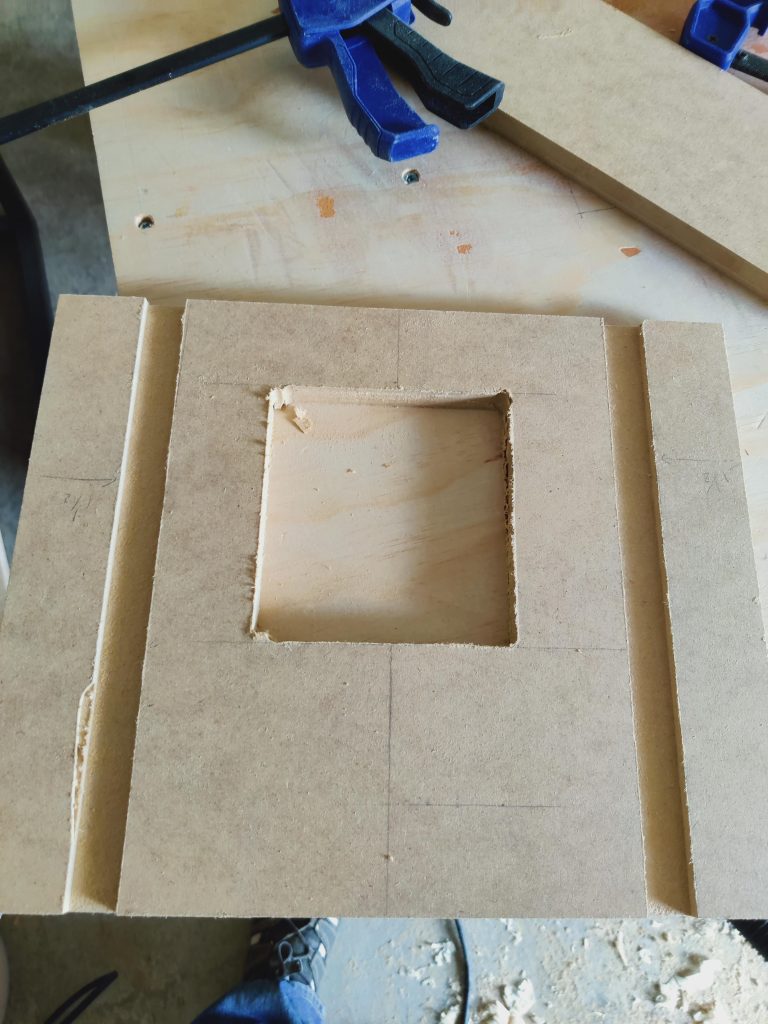
MDF’s uniform, grain-free surface is its real advantage: there are no voids, knots, or face-veneer seams to telegraph through paint, so a painted MDF panel looks flawless in a way that painted plywood rarely does without heavy filling. It also machines cleanly — a router bit cutting MDF produces a smooth edge profile without the tear-out or splintering you get routing plywood’s cross-grain layers, which is why it’s the standard choice for raised-panel cabinet doors, decorative moldings, and speaker cabinets where edge profiles matter.
Where MDF Fails — and the Dust Safety Point Most Guides Skip
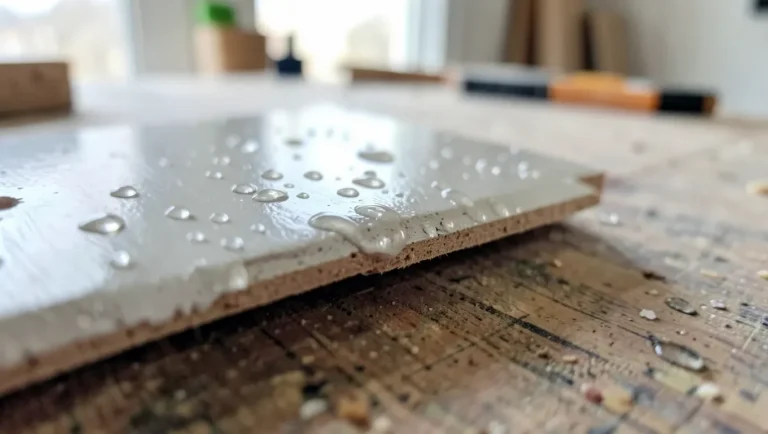
MDF has essentially no internal strength against moisture: since the fibers are held together by resin rather than a natural cell wall structure, water swells the panel edges permanently and it doesn’t reshrink or sand back flat once damaged. It also holds screws poorly compared to plywood — the fibers strip out under load rather than gripping threads, so any MDF joint under real stress needs glue, a pocket screw with a wider thread pitch, or a threaded insert instead of a screw driven straight into the edge.
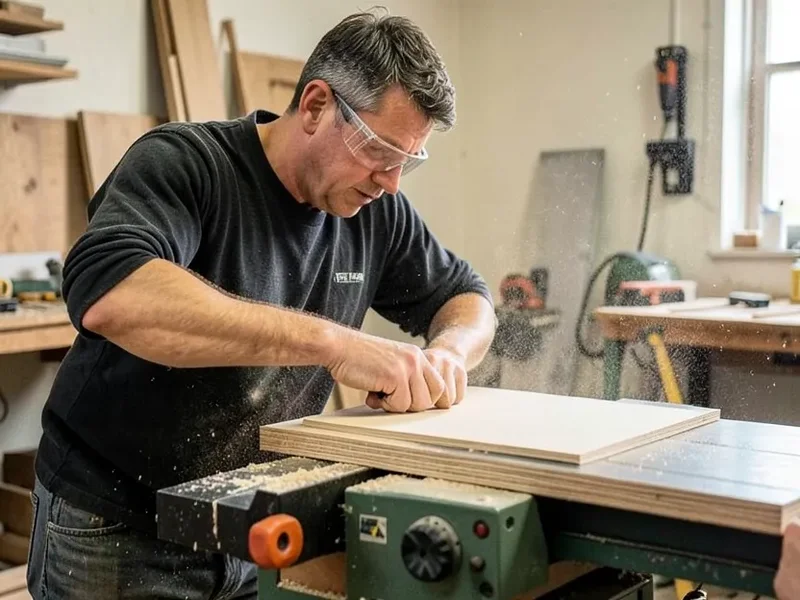
The dust hazard is the part that gets glossed over: because MDF is bound with urea-formaldehyde resin, cutting or sanding it releases both wood dust and formaldehyde-containing particulate, and the fiber particle size is finer than typical solid-wood sawdust, meaning more of it gets past a basic paper dust mask. Cut and sand MDF with dust collection running and a real NIOSH-rated N95 respirator, not a disposable comfort mask, and do it outdoors or with strong ventilation when possible.
Common Uses in Woodworking and Cabinetry
MDF takes paint exceptionally well, which makes it the default core material for painted kitchen cabinet doors, wainscoting, crown molding, and baseboard. It’s also common in speaker cabinet construction, where its high density and lack of resonant grain pattern actually improve acoustic damping compared to plywood. Furniture makers use it for flat panels that will be veneered or painted, not for structural legs or load-bearing frames, and it shows up in interior door frame components and decorative trim where it won’t warp the way solid wood can.
Working With MDF: Practical Tips
Seal cut edges with primer, edge banding, or a wood sealer before painting — raw MDF edges are the most absorbent, most vulnerable part of the panel and will soak up moisture and swell first if left bare. Use sharp carbide-tipped blades and bits; dull cutters burn MDF’s resin content and leave a rough, fuzzy edge that’s hard to sand smooth. Pre-drill for screws near edges to avoid blowing out the material, and use glue plus mechanical fasteners on any joint that will bear real weight.
Frequently Asked Questions
Why is MDF banned in the US?
MDF isn’t banned in the US. Formaldehyde emissions are regulated under CARB and EPA TSCA Title VI standards, and most commercially sold MDF today is manufactured to meet those low-emission limits.
Is MDF good quality wood?
For its intended use — flat, painted, or veneered panels — yes. It’s dense, uniform, and resists warping better than solid wood. It’s not a substitute for solid wood or plywood in structural or moisture-exposed applications.
What are the disadvantages of MDF?
It swells permanently when it absorbs water, holds screws poorly without pilot holes or inserts, weighs more per sheet than plywood, and its dust requires real respiratory protection due to the resin binder.
Is MDF better than plywood?
Neither is universally better — MDF wins for smooth, paintable, grain-free surfaces and detailed edge profiles; plywood wins for strength-to-weight, screw-holding, and moisture tolerance. Pick based on whether the piece will be painted flat stock or load-bearing.
Bottom Line
MDF (Medium-Density Fiberboard) earns its place in a shop for anything flat, painted, and indoors — cabinet doors, trim, speaker boxes. Keep it away from moisture, seal every cut edge, and treat the dust with the same respect you’d give any resin-bound composite, not like ordinary sawdust.
Sponsored / affiliate links. As an Amazon Associate I earn from qualifying purchases. I may earn additional commission from eligible campaigns.