How Much Cedar Mulch Do You Need
For a standard 2-3 inch mulch layer, one cubic yard of cedar mulch covers roughly 100-160 square feet, and a typical 2-cubic-foot bag covers about 8-12 square feet. Measure your bed’s square footage, decide your depth, and the math below gets you an exact number instead of guessing and making a second trip to the garden center.
The Actual Calculation
Standard Bag Size Referenced Below
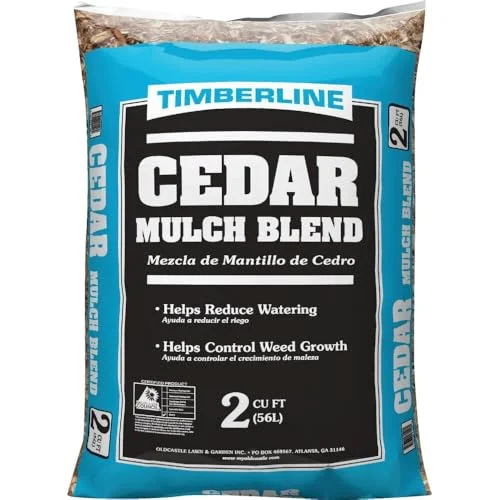 |
Oldcastle Timberline Cedar Mulch Blend, 2 Cu Ft The standard bag size most coverage math (including the calculations below) is based on.
|
- Measure your area. Multiply length by width for a rectangular bed (or use a length × average width estimate for an irregular shape) to get square feet.
- Pick your depth. 2 inches for a light refresh over existing mulch, 3 inches for a new bed – going deeper than 4 inches doesn’t add more benefit and can actually suffocate roots.
- Convert depth to feet. Divide inches by 12 (3 inches ÷ 12 = 0.25 ft).
- Multiply area by depth in feet to get cubic feet needed. A 200 sq ft bed at 3 inches needs 200 × 0.25 = 50 cubic feet.
- Convert to cubic yards if buying bulk (divide cubic feet by 27), or to bags if buying bagged (divide by your bag’s cubic feet, typically 2).
Quick Reference Table
| Bed Size | 2″ Depth | 3″ Depth |
|---|---|---|
| 50 sq ft | 8.3 cu ft (~4 bags) | 12.5 cu ft (~6 bags) |
| 100 sq ft | 16.7 cu ft (~8 bags) | 25 cu ft (~13 bags) |
| 200 sq ft | 33.3 cu ft (~17 bags) | 50 cu ft (~25 bags) |
| 500 sq ft | 83.3 cu ft (~1.5 cu yd) | 125 cu ft (~2.3 cu yd) |
How Many Wheelbarrow Loads Is That?
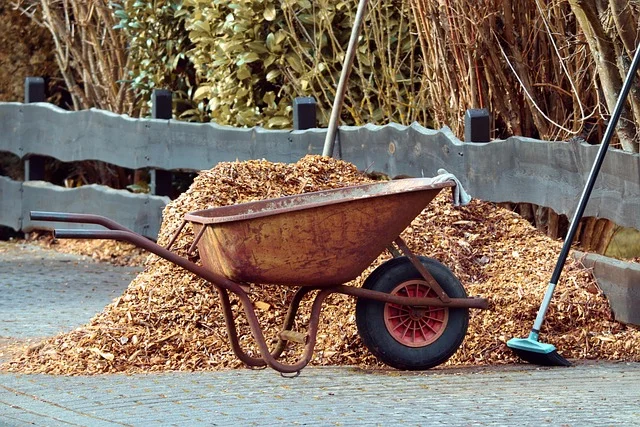
If you’re getting mulch delivered in bulk rather than buying bags, you’ll likely be moving it by wheelbarrow, and this is where a lot of coverage calculators leave you guessing. A standard contractor wheelbarrow holds about 3 cubic feet when reasonably loaded (not overflowing, which risks spilling on the way to the bed). That means one cubic yard of bulk mulch (27 cubic feet) takes roughly 9 wheelbarrow loads to move, and the 50-cubic-foot example above would take about 17 loads. Load the wheelbarrow about three-quarters full rather than heaping it – a slightly lighter, stable load moves faster overall than one you have to creep along with or that tips on uneven ground. On soft lawn or muddy ground, a lighter load also matters for not leaving wheel ruts you’ll need to repair separately from the mulching project itself.

Applying the Mulch
- Clear old mulch, weeds, and debris from the bed first – old mulch that’s broken down into a matted crust blocks water penetration and should be removed rather than covered.
- Loosen the top inch of soil lightly with a rake so the new mulch settles in contact with soil, not on a compacted crust.
- Spread mulch evenly to your target depth, keeping a 2-3 inch gap around plant stems and tree trunks – mulch piled directly against a stem traps moisture and invites rot.
- Water lightly after spreading to help the mulch settle and reduce the chance of it blowing around before it compacts naturally.
Common Mistakes
- Mulch volcanoes. Piling mulch high against a tree trunk looks intentional in a lot of commercial landscaping but is genuinely bad for the tree – it traps moisture against bark and invites rot and pests.
- Applying over old, un-decomposed mulch repeatedly. Layers stack up over years into a thick mat that can actually repel water instead of retaining it. Rake out old mulch periodically rather than just adding fresh on top indefinitely.
- Guessing quantity and running short mid-project. A half-finished bed with visibly different mulch depth looks worse than taking ten minutes to measure first.
- Ignoring allelopathic effects on seedlings. Fresh cedar mulch has some mild allelopathic compounds that can slightly inhibit seed germination directly underneath it – fine for established plants and transplants, less ideal directly over a seed bed. Direct-sown vegetable and flower beds are the one place to hold off on fresh cedar mulch until seedlings are established.
Cost Considerations: Bags vs. Bulk
Bagged mulch costs more per cubic foot than bulk delivery, but bulk delivery usually has a minimum order (often several cubic yards) that doesn’t make sense for a small bed. As a rough guideline, bagged mulch becomes the worse value once you need more than about 10 cubic yards total – below that, the convenience and lack of a delivery minimum usually offsets the higher per-unit cost. Bring a tarp or old sheet to line the trunk if you’re transporting bags yourself, since a torn bag in a car trunk is a mess nobody wants to clean up. Get a bulk delivery quote from a local supplier before buying dozens of bags for a genuinely large project; the savings at that scale are usually substantial. Some suppliers also offer a delivery discount when you buy enough to fill their minimum truck load exactly, so it’s worth asking directly rather than assuming a quoted price is fixed.
Cedar Mulch vs. Other Mulch Types by Coverage
Coverage math is essentially the same across mulch types since it’s a volume calculation, but density differences affect how heavy your wheelbarrow loads feel and how many bags fit in a vehicle. Cedar mulch is moderately dense; pine bark nuggets are lighter and bulkier per pound; rubber mulch is much heavier per cubic foot than any wood product, which matters if you’re hauling it yourself rather than having it delivered. If weight is a real constraint (a small vehicle, a long carry distance to the bed), cedar’s moderate density is actually one practical point in its favor compared to denser alternatives.
Recalculating When You Add More Later
Mulch settles and decomposes over the season, typically losing 20-30% of its depth by the following year depending on climate and rainfall. When topping off an existing bed rather than starting fresh, measure the current depth first rather than assuming you need a full fresh application – if 2 inches of mulch remains from last year and you want to get back to 3 inches total, you only need enough for that 1-inch difference, not a full fresh 3-inch layer on top of what’s already there. Over several years of repeated full-depth reapplication without ever measuring the existing layer, beds can end up with 6-8 inches of accumulated mulch, which is well past the point of any benefit and starts working against root health, sometimes suffocating shallow feeder roots that need surface oxygen exchange. This single adjustment is the most common reason people either run short or way over-order on a routine annual mulch refresh.
Irregularly Shaped Beds
Most real garden beds aren’t clean rectangles, which makes the length-times-width formula only an approximation. For a curved or irregular bed, break it into rough rectangular and triangular sections, calculate each separately, and add them together – this is more accurate than trying to estimate one average width across the whole irregular shape. For a roughly circular bed, use the area formula (pi times radius squared) instead. When in doubt, round up your final estimate by about 10% rather than down; running slightly short of mulch mid-project is more annoying than having a partial bag left over for next year’s touch-up.
Frequently Asked Questions
How do I calculate cedar mulch needed?
Measure your area in square feet, decide your depth in inches and convert to feet (divide by 12), then multiply area by depth to get cubic feet. Convert to cubic yards (divide by 27) for bulk orders, or to bags (divide by the bag’s cubic feet, typically 2) for bagged mulch.
How much area does one bag of cedar mulch cover?
A standard 2-cubic-foot bag covers about 12 square feet at a 2-inch depth, or about 8 square feet at a 3-inch depth.
What depth should cedar mulch be applied?
2 to 3 inches for most beds. Going beyond 4 inches doesn’t add benefit and can suffocate roots or trap excess moisture.
How many wheelbarrow loads is a cubic yard of mulch?
Roughly 9 loads, based on a standard contractor wheelbarrow holding about 3 cubic feet per reasonably-full load.
Conclusion
Measure first, calculate the cubic feet you actually need, and you’ll buy the right amount of cedar mulch in one trip instead of guessing and running short mid-project. The math is simple once you have your bed’s square footage and target depth – everything else in this guide just converts that number into bags, cubic yards, or wheelbarrow loads. Keep the math, and you’ll never overbuy or underbuy a mulch project again.
Sponsored / affiliate links. As an Amazon Associate I earn from qualifying purchases. I may earn additional commission from eligible campaigns.