Cedar vs Redwood for Fence Pickets
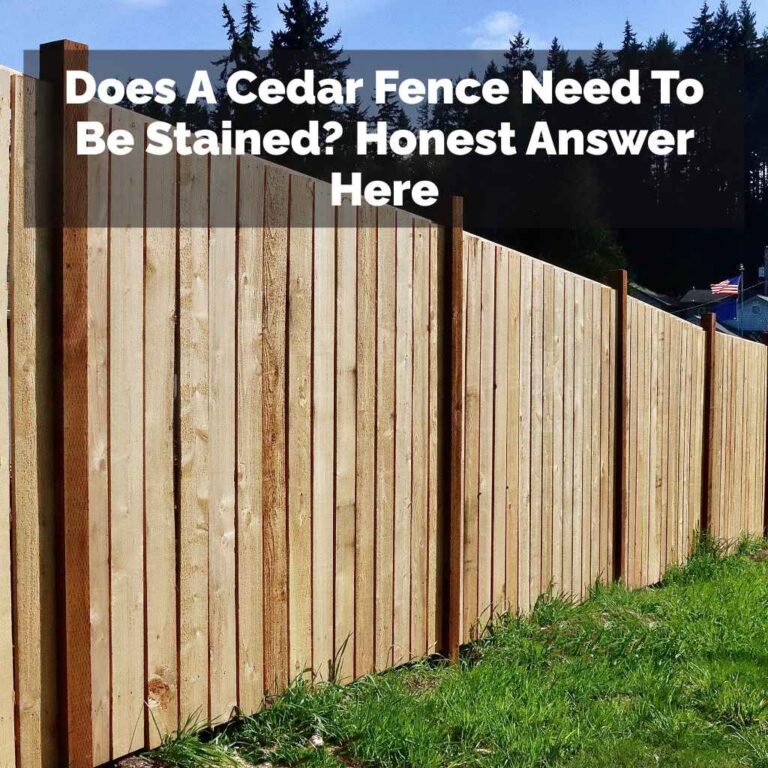
For many fences, cedar pickets in about 3/4-inch thickness, preferably #2 or better, are recommended. Pick redwood only when you can get clear, kiln-dried boards at a comparable price, because species matters less than grade, thickness, and post and rail durability. Thin, low-grade pickets usually cost more over time through early warp, splits, repainting, and replacements. This guide compares cedar and redwood at the picket level, including grades, thicknesses, fasteners, rail layout, and upkeep costs.
| Decision factor | Cedar | Redwood for Fence Pickets | Winner |
|---|---|---|---|
| Upfront price | Usually lower initial cost | Typically 15-25% higher installation cost in the cited market | Cedar |
| Board grade and consistency | Commonly sold in standard fence grades; best value rises with #2 or better | Most boards are a mix of heartwood and sapwood; all-heartwood grades exist at a 15-25% premium | Cedar |
| Typical thickness | Usually five-eighths of an inch thick in the cited comparison | Usually three-quarters of an inch thick in the cited comparison | Redwood for Fence Pickets |
| Stability risk | More likely to move if boards are thin or undersupported | Higher density and stability help, especially in thicker clear boards | Redwood for Fence Pickets |
| Maintenance burden | Needs finish care if you want to slow graying and moisture wear | Also benefits from stain or sealant; all-heartwood boards buy more margin | Tie |
| Best buy after rail and post upgrades | Best when you keep the fence simple and spend savings on rails or posts | Best when the fence is visible, premium-grade, and you are already paying for stronger support | Depends on project |
Upfront cost and board quality explained
Cedar is the better value for most fence picket jobs. Redwood wins when you want a thicker, more stable board and you can justify the premium for clearer stock, especially all-heartwood material. The real decision is not species alone; it is grade, thickness, rail support, and how much maintenance you are willing to plan for.
Upfront price versus total value
Cedar usually costs less at the start, and that matters on long runs. Redwood fencing in the cited market runs 15-25% higher in installation cost, so the price gap is real before you add anything else. If the redwood quote also includes better boards, better rails, or premium posts, the gap widens fast.
Board quality matters more than the species label
With redwood, the heartwood-versus-sapwood split changes the buy. Most redwood fence boards are a mix of heartwood and sapwood, while all-heartwood redwood carries a 15-25% premium. That premium can make sense on a visible front fence, but mixed boards can narrow the value gap enough that cedar becomes the smarter buy.
Fence picket decision table
This is the picket-level decision, not a whole-fence answer. Use it to compare board grade, thickness, movement risk, and the point where the better board stops being the cheaper board once rails and posts are included.
| Pick | Grade and board type | Typical thickness | Stability risk | Expected maintenance burden | When it becomes the better buy |
|---|---|---|---|---|---|
| Cedar | #2 or better cedar pickets; common fence species with natural rot- and insect-resistant oils | Usually five-eighths of an inch | Moderate if boards are thin, dry unevenly, or span too far between rails | Moderate; finish slows graying and moisture damage | Best when you want lower upfront cost and can spend the savings on better rails or posts |
| Redwood for Fence Pickets | Clear, kiln-dried boards are the strongest value; all-heartwood grades are the premium choice | Usually three-quarters of an inch | Lower than cedar when boards are clear and well-supported | Moderate; stain or sealant still matters, but better stock can stretch the maintenance interval | Best when board quality is high and the project already calls for premium rails and posts |
Grade and board type
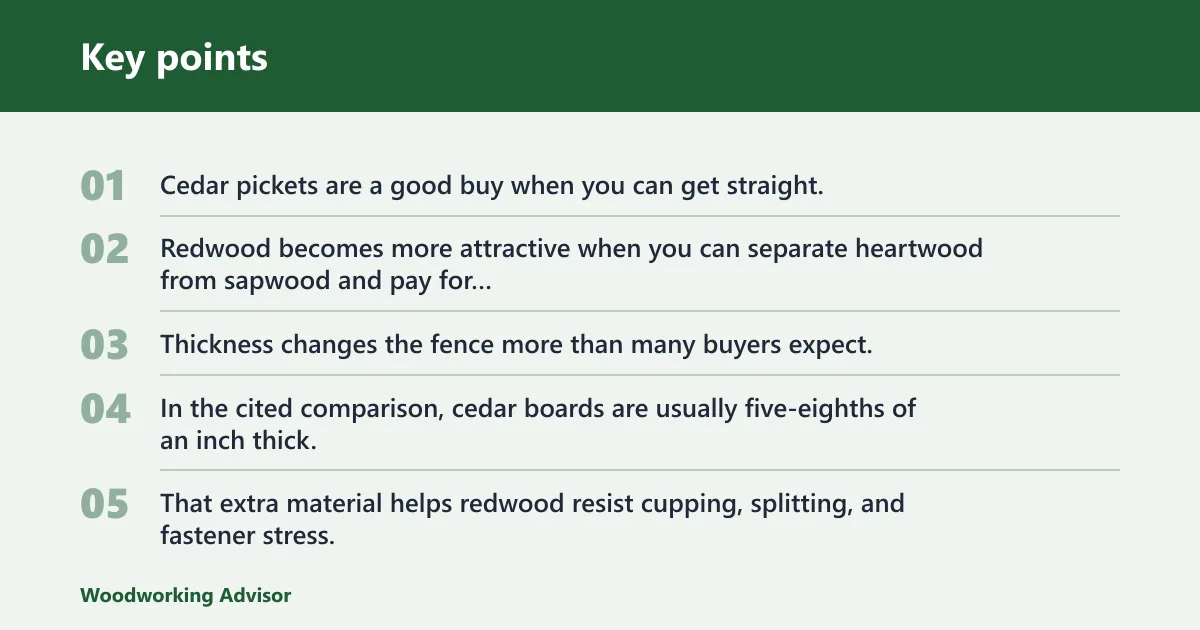
Cedar pickets are a good buy when you can get straight, #2 or better boards with few knots and clean edges. Redwood becomes more attractive when you can separate heartwood from sapwood and pay for all-heartwood stock only where it matters most, such as a front-facing run or cap-and-trim fence.
Thickness and movement risk
Thickness changes the fence more than many buyers expect. In the cited comparison, cedar boards are usually five-eighths of an inch thick, while redwood boards are usually three-quarters of an inch thick. That extra material helps redwood resist cupping, splitting, and fastener stress, especially on privacy fences with long sun exposure.
Maintenance burden and finish care
Both species tend to weather to gray without finish. Stain or sealant slows that color shift and limits moisture-related wear on the surface and end grain, but it is not a one-time fix. A fence in shade, near sprinklers, or close to soil splash needs more attention than a dry, open run with good airflow.
Where the price gap flips
For a 6-foot privacy run with long sight lines and premium posts and finished rails, redwood can be a good option if the boards are clear and kiln-dried. In that case, redwood can be the better buy if the boards are clear and kiln-dried, because the thicker stock and better grade help justify the higher material cost. If the boards are mixed or thin, cedar usually holds the value lead.
Which wood lasts longer?
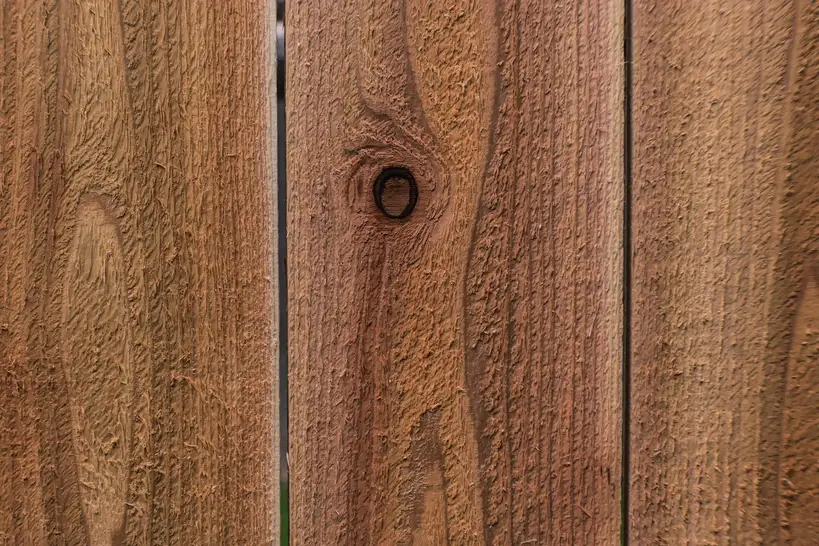
Redwood lasts longer on paper when you compare clear, all-heartwood boards against standard cedar pickets, especially in thicker stock and with proper sealing. Cedar can still last a long time, but its life drops faster when the boards are thin, the fence is shaded, or the posts and rails stay wet for long periods.
Western red cedar durability basics
Western red cedar is a common fence species because its natural oils help resist rot and insects. The Sequoia page says cedar fences often show wear after 10 to 15 years without regular care. That is not a failure number for every fence, but it is a useful planning point for buyers who want a lower-maintenance exterior finish.
Redwood heartwood versus sapwood
Redwood has a durable heartwood portion and a less durable sapwood portion. That matters because the page notes most redwood fence boards are a mix of heartwood and sapwood. All-heartwood redwood costs more, but it also gives you a more consistent board and better longevity potential than mixed stock.
Weather, shade, and soil splash
Any fence wears faster when it stays damp. Side yards with sprinkler overspray, fence lines that trap leaf litter, and posts that wick ground moisture all shorten service life. A fence that dries quickly after rain will usually last longer than a fence that stays damp under trees or beside a mulch bed.
Picture a backyard fence on a narrow lot where one side stays shaded most of the day. A five-eighths-inch cedar picket can cup or split sooner there than a three-quarters-inch redwood board, even though both woods are naturally durable. The site condition, not the marketing label, drives the result.
Is cedar cheaper once rails and posts are included?
Often, no. Cedar usually starts cheaper, but that advantage can shrink if you upgrade to thicker boards, add a third rail, or choose better posts. The fence posts are the first thing to fail on many fences, so a low picket price can be misleading if the support system is weak.
Rail choices: cedar versus pressure-treated 2x4s
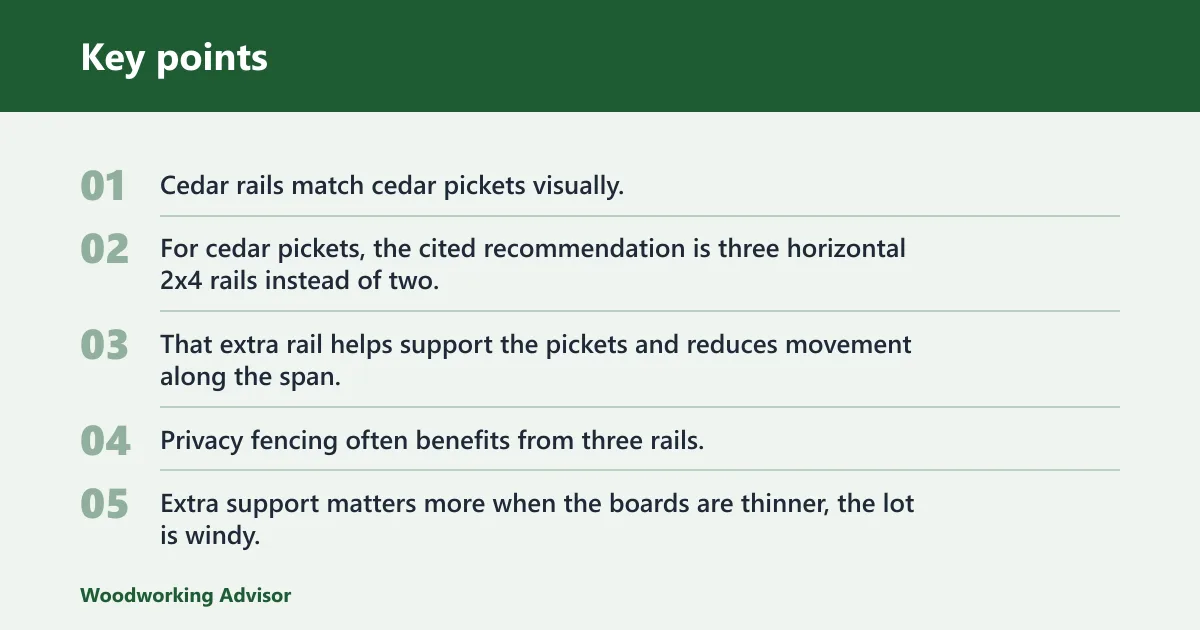
Cedar rails match cedar pickets visually, but pressure-treated 2×4 rails often make better structural sense because they handle ground-side moisture better. For cedar pickets, the cited recommendation is three horizontal 2×4 rails instead of two. That extra rail helps support the pickets and reduces movement along the span.
Two-rail and three-rail layouts
Privacy fencing often benefits from three rails. Extra support matters more when the boards are thinner, the lot is windy, or the fence is long and exposed. If you choose cedar pickets with only two rails, you may spend more later on repairs and replacement boards.
Post choices: pressure-treated wood or galvanized steel
Pressure-treated posts are common, but galvanized steel posts are strongly recommended for durability in the cited guidance. Posts sit at the ground-contact failure point, where water and termites do the most damage. If the posts outlast the pickets by a wide margin, you have spent money where it matters most.
A common first-timer mistake is buying premium redwood boards and then fastening them to undersized rails and weak posts. The fence looks good for a season, then starts moving at the lines where posts flex and rails bow. Better pickets cannot fix a weak frame.
Choose Cedar if… / Choose Redwood for Fence Pickets if…
Choose Cedar if you want the lower-cost fence board, plan a standard privacy run, or need room in the budget for stronger rails and posts. Choose Redwood for Fence Pickets if you want thicker stock, a cleaner front-yard look, or premium all-heartwood boards and are willing to pay more for that upgrade.
Choose Cedar if…
- You are replacing a long fence line and price per board matters more than premium appearance.
- You can use the savings for three horizontal 2×4 rails or better posts.
- You are comfortable with routine stain or sealant maintenance.
- You are building a budget privacy fence where #2 or better boards are available.
Choose redwood for fence pickets if…
- You can get clear, kiln-dried boards with a thicker profile.
- The fence is highly visible from the street or entry path.
- You are already paying for upgraded rails and galvanized steel posts.
- You want the better chance of longer service life and more stable boards.

Frequently asked questions
Cedar vs redwood fence pickets
Cedar is usually the better buy for everyday fence pickets because it starts cheaper and still offers natural rot and insect resistance. Redwood pulls ahead when you can buy thicker, clear boards and want a more stable, premium finish. The support system matters either way.
Cedar vs redwood fence boards
Cedar boards are usually five-eighths of an inch thick in the cited comparison, while redwood boards are usually three-quarters of an inch thick. That extra thickness helps redwood resist warping and split-out, but cedar remains the lower-cost choice for standard runs and replacements.
Is redwood or cedar better for a fence?
Redwood is better for a fence when you want premium appearance, thicker boards, and stronger stability, especially with all-heartwood stock. Cedar is better when the project is cost-sensitive and you want to redirect budget toward rails, posts, or finish care. The better choice depends on the whole build.
Cedar fence rails vs pressure treated
Pressure-treated rails are usually the safer structural choice because rails are part of the support system, not the visible face. Cedar rails look consistent with cedar pickets, but they are not the best answer if you want the longest service life from the frame. Match the look if you must; choose treated for function.
What is the best wood for fence rails?
For most fences, pressure-treated 2×4 rails are the best practical choice because they handle moisture better than untreated frame parts. Cedar rails can be used, especially on all-cedar fences, but they do not usually beat treated lumber on durability at the rail level. The fence’s hidden structure should be the tougher material.
Is cedar cheaper than redwood for fence boards?
Yes. Cedar is usually cheaper upfront, and the cited market shows redwood installation costs are typically 15-25% higher than cedar. That gap can shrink if cedar needs extra rails, heavier posts, or earlier replacement, so compare the full fence package, not just the board price.
What fence wood is best for coastal or windy climates?
In coastal or windy sites, choose the thicker, better-supported board and pair it with durable posts. Redwood often has the edge when you can buy clear, thicker stock, but cedar can still perform well if you use three rails, good fasteners, and regular finish care. Avoid thin boards and weak posts.
Sponsored / affiliate links. As an Amazon Associate I earn from qualifying purchases. I may earn additional commission from eligible campaigns.