Best Cedar Mulch: 7 Picks Compared by Coverage & Cost (2026)
The best cedar mulch overall is Mulchex Decorative Cedar Mulch (3 cu ft, $49.99) — the only 100%-cedar bulk bag in our comparison, covering about 18 sq ft at a 2-inch depth. If price per square foot matters more than bag size, Timberline’s 2 cu ft bag covers 12 sq ft for $21.75 ($1.81/sq ft), the cheapest of the seven bagged cedar products we priced and compared.
We compared seven real, currently-listed cedar mulch products — four true bulk landscaping bags, one pest-control granule product, and two small-format bags marketed for pots and indoor use — and normalized every one of them onto the same cost-per-square-foot basis so you can actually compare a 2 cu ft bag to a 42-quart bag to an 8 lb bag of granules. That normalization, plus a manufacturer-packaging check that caught one popular “100% cedar” listing quietly disclosing itself as a blend, is what the rest of the internet’s cedar mulch roundups skip.
The Cedar Mulch Comparison Table
Bagged mulch is sold in three incompatible units — cubic feet, quarts, and pounds — and none of the seven listings below convert one to another for you. We did the conversion ourselves using the standard dry-quart measure (1 US bushel = 32 dry quarts = 1.2445 cu ft, so 1 cu ft ≈ 25.7 dry quarts), then applied the standard mulch-coverage formula (coverage in sq ft = cu ft × 12 ÷ depth in inches) to get a price-per-square-foot figure at the commonly recommended 2-inch depth. The formula and the inputs are shown so you can check the arithmetic yourself; the granule product is priced by weight, not volume, so its coverage cell is marked not applicable rather than force-fit into the same column.
| Product | Form | Cedar Content | Size | Price | Coverage @ 2 in.* | Price / sq ft* | Best For |
|---|---|---|---|---|---|---|---|
| Mulchex Decorative Cedar Mulch | Shredded (fine) | 100% cedar | 3.0 cu ft | $49.99 | 18.0 sq ft | $2.78 | #1 Best Overall |
| Timberline Cedar Mulch Blend (Oldcastle) | Shredded | Blend† | 2.0 cu ft | $21.75 | 12.0 sq ft | $1.81 | Best Value |
| MIGHTY109 100% Natural Cedar Mulch | Shredded | 100% cedar | 48 qt (1.87 cu ft) | $29.99 | 11.2 sq ft | $2.68 | Best Coverage / No Dye |
| MIGHTY109 Western Red Cedar Chips | Chips | 100% Western Red Cedar | 42 qt (1.63 cu ft) | $29.99 | 9.8 sq ft | $3.06 | Best Color |
| Hiram’s Cedar GranuCide | Granules | 100% cedar | 8 lb | $38.99 | n/a (spot-treat) | n/a | Best Pest Spot-Treatment |
| Wood Smith USA Cedar Chips | Chips | Western Red Cedar (label) | 4 qt (0.16 cu ft) | $14.95 | 0.9 sq ft | $16.02 | Best for Containers |
| Wood Smith USA Cedar Shavings | Shavings | Western Red Cedar (label) | 16 qt (0.62 cu ft) | $31.99 | 3.7 sq ft | $8.57 | Best Indoor/Odor Control |
*Coverage and price-per-sq-ft are computed by us from each listing’s stated volume using the formula above (12 ÷ depth in inches × cu ft), not published by the manufacturer — treat them as estimates for comparison, not exact yields. †Timberline’s own bag is printed "Cedar Mulch Blend" (see the full pick section below for why that matters).
The one-sentence takeaway: true bulk bags (Timberline, Mulchex, both MIGHTY109 bags) run $1.81–$3.06 per square foot at a 2-inch depth, while the two small-format bags marketed for pots and indoor use run $8.57–$16.02 per square foot — a 3x to 9x premium for the exact same material in a smaller bag.
The 7 Best Cedar Mulch Products
Each pick below is a real, currently-listed product with a live Amazon price checked this session. Prices change — what’s listed here reflects pricing at the time of publication.
1. Mulchex Decorative Cedar Mulch (3 Cu Ft) — #1 Best Overall
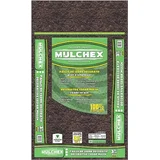
Price: $49.99 · View current price on Amazon
- 100% cedar bark and cedar wood fiber (no filler wood)
- 3.0 cu ft per bag (85 L)
- Covers about 18 sq ft at a 2-inch depth
- $16.66 per cu ft / $2.78 per sq ft at 2 in — our computed figures, see the dataset table
Who it’s for: Best for anyone mulching a real flower bed or border who wants a true, unblended cedar product and doesn’t want to do bag-math across five bags to cover a 200 sq ft area.
Pros
- Full 100% cedar content, not a blend
- Biggest single bag of the 7 we compared — fewer bags to carry for a full bed
- Fine, decorative-grade shred lays flat and resists wind scatter better than coarse chips
Main drawback
- At $16.66 per cu ft it isn’t the cheapest bulk option — Timberline undercuts it by about 35%
- Sold under a generic/private-label listing with no separate manufacturer spec sheet to cross-check the species claim
A 200 sq ft bed at a 2-inch depth needs about 11-12 of these bags, which puts the real project cost north of $550 before tax — worth knowing before you commit to 100% cedar over a blend for a large area. For a single 15-20 sq ft border, two bags is plenty and the purity premium barely registers.
Verdict: The only 100%-cedar bulk bag in this lineup that also comes in the largest single size — the size and purity combination is what earns it the top spot, even though it isn’t the single cheapest option per square foot.
2. Timberline Cedar Mulch Blend by Oldcastle Lawn & Garden (2 Cu Ft) — Best Value / Cheapest Bulk Bag
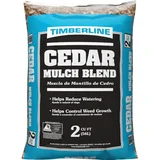
Price: $21.75 · View current price on Amazon
- 2.0 cu ft per bag (56 L)
- Covers about 12 sq ft at a 2-inch depth
- $10.88 per cu ft / $1.81 per sq ft at 2 in — the lowest of any bag we compared
- Sold by Oldcastle Lawn & Garden Inc. under the Timberline retail brand
Who it’s for: Best for budget-focused gardeners covering a large area who are fine with a cedar-blend product rather than paying a premium for 100% single-species cedar.
Pros
- Cheapest true bulk bag per square foot in this lineup by a wide margin
- Widely stocked brand (also sold at Walmart and Lowe’s under the same Timberline name)
- Shredded texture packs down and resists wind scatter
Main drawback
- The bag itself is printed "Cedar Mulch Blend" (Mezcla de Mantillo de Cedro) — despite some retailer listings describing it as 100% shredded cedar, the manufacturer’s own packaging discloses it as a blend, not pure cedar
- Some Walmart customer reviews of this same product report occasional mold or clumping in individual bags
This is also the only pick in this comparison stocked at big-box retail under the same brand name (Walmart and Lowe’s both carry Timberline-branded Oldcastle mulch), which makes it easy to price-check locally against the Amazon listing before buying in bulk for a large project.
Verdict: The price-per-square-foot leader here, but read the bag, not just the listing title — it’s a blend, and that’s the honest tradeoff for the price.
3. MIGHTY109 100% Natural Cedar Mulch (40 Qt + 8 Qt Free = 48 Qt) — Best Coverage Per Bag (No Dyes)
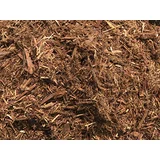
Price: $29.99 · View current price on Amazon
- 48 quarts total (1.87 cu ft) — the most volume per bag of any mid-tier pick
- Covers about 11.2 sq ft at a 2-inch depth
- $16.07 per cu ft / $2.68 per sq ft at 2 in
- 100% natural shredded cedar, no added dyes or chemicals per the listing
Who it’s for: Best for gardeners who specifically want a dye-free, chemical-free bulk bag and don’t mind paying a bit more than the absolute cheapest option for that reassurance.
Pros
- Most total volume of any bag under $30 in this comparison
- No dye means no fading to an artificial-looking color, and no dye runoff to worry about near edible beds
- Shredded form is easy to spread by hand
Main drawback
- Still costs about 47% more per sq ft than Timberline’s bulk blend
- Private-label brand with no independent manufacturer TDS to verify species claims beyond the listing text
MIGHTY109 sells three near-identical cedar mulch listings at effectively the same $29.99 price point (this one, the Western Red Cedar chip version below, and a third generic 42-quart chip listing we excluded as a near-duplicate) — if you’re comparing this brand’s own listings, check the exact quart count and species wording before assuming they’re interchangeable.
Verdict: The best balance of volume and a clean, no-additives ingredient claim in the mid-price tier.
4. MIGHTY109 Western Red Cedar Chip Mulch (42 Qt) — Best for Rich Red Color
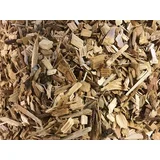
Price: $29.99 · View current price on Amazon
- 42 quarts (1.63 cu ft)
- Covers about 9.8 sq ft at a 2-inch depth
- $18.36 per cu ft / $3.06 per sq ft at 2 in
- Single species: Western Red Cedar (Thuja plicata) chips, per the listing
Who it’s for: Best for gardeners prioritizing color and chip texture over the lowest cost per square foot.
Pros
- Named single species rather than a generic “cedar” blend — Western Red Cedar carries more of the reddish heartwood tone gardeners buy cedar mulch for
- Chip form (not shredded) holds its shape and resists compaction longer between top-offs
Main drawback
- Highest price-per-square-foot of the four true bulk bags in this comparison
- Same brand (MIGHTY109) also sells a cheaper, non-species-specific “natural cedar” bag at the identical $29.99 price with more total volume — check both listings before buying if color isn’t a priority
Chips also tend to float and drift in heavy rain more than shredded mulch does, since the pieces are larger and flatter — something to weigh if your bed sits on a slope or catches runoff from a downspout.
Verdict: Worth the premium only if you specifically want the Western Red Cedar look; otherwise this brand’s own 48-quart natural bag at the same price is the better dollar-for-dollar buy.
5. Hiram’s Cedar GranuCide Insect-Repelling Cedar Granules (8 lbs) — Best for Pest Spot-Treatment
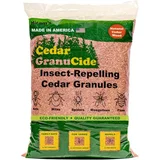
Price: $38.99 · View current price on Amazon
- 8 lb bag, sold by weight rather than volume — not directly comparable to the cu ft picks above
- Marketed against ants, mites, spiders, mosquitoes and fleas
- Made in the USA, labeled family- and pet-safe
Who it’s for: Best for spot-treating ant trails, patio edges or problem areas where you want cedar’s scent-based pest deterrence concentrated, not spread thin across a whole bed.
Pros
- Granule form is built for sprinkling around foundations, patios and problem spots rather than covering a whole bed
- Marketed pest list is broader and more specific than any bagged bark/chip mulch on this list
Main drawback
- No published coverage-area figure, so it can’t be slotted into the per-sq-ft table the other six picks use
- Not a substitute for a real bed mulch — it’s a pest-control product that happens to be made of cedar, not a landscaping mulch
At $38.99 for 8 lbs, this is priced more like a pest-control product than a landscaping material, which makes sense given the marketed use case — don’t compare its per-pound price directly against the per-cu-ft bulk bags above, they’re not solving the same problem.
Verdict: A genuinely different product from the other six — don’t buy this expecting it to mulch a flower bed.
6. Wood Smith USA 100% Natural Cedar Chips (4 Qt) — Best for Potted Plants & Containers
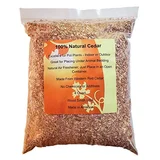
Price: $14.95 · View current price on Amazon
- 4 quarts (0.156 cu ft) — the smallest bag in this comparison
- Covers under 1 sq ft at a 2-inch depth — sized for pots, not beds
- $96.11 per cu ft / about $16 per sq ft at 2 in — roughly 9x Timberline’s per-cu-ft price
- Labeled "Made From Western Red Cedar," made in the USA
Who it’s for: Best for container gardeners and houseplant owners who need a small, tidy amount of cedar mulch and have no use for a 2-3 cu ft bulk bag.
Pros
- Right-sized for topping a handful of large planters instead of buying and storing a full bulk bag
- Low total cost even though the per-unit price is high, because you’re only buying a small amount
Main drawback
- By far the worst value per cubic foot of anything in this roundup — small-format bags carry a real premium and this is the most extreme example we priced
- Not practical for covering more than a couple of medium containers
The brand sells this same product in five sizes from a half-quart up to 16 quarts, all at roughly the same inflated per-cu-ft rate — buying their largest small-format size doesn’t fix the value problem, since it’s the packaging tier itself, not the quantity, driving the premium.
Verdict: Buy this only for pots. For anything bed-sized, every bulk bag on this list beats it on price by a wide margin.
7. Wood Smith USA 100% Natural Cedar Shavings (16 Qt) — Best for Indoor Use & Odor Control
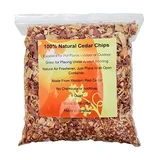
Price: $31.99 · View current price on Amazon
- 16 quarts (0.622 cu ft)
- Covers about 3.7 sq ft at a 2-inch depth
- $51.41 per cu ft / $8.57 per sq ft at 2 in
- Marketed as dual-use: outdoor potted plants, indoor air freshening, and animal bedding
Who it’s for: Best for anyone who wants one product that covers a few potted plants and also works as a natural odor absorber indoors.
Pros
- Genuinely dual-purpose — the same bag doubles as a natural closet or drawer freshener and pet bedding, not just a mulch
- Shaving texture (finer than the chip version) settles less and looks tidier in small containers
Main drawback
- Still a small-format bag, so the per-sq-ft cost is nearly 5x Timberline’s bulk price
- Individual shaving size varies bag to bag since it’s a natural, hand-packed product per the listing
Because it’s a natural, hand-packed product, individual shaving size varies from bag to bag per the manufacturer’s own listing — expect some inconsistency in texture if you buy more than one bag at different times.
Verdict: A fair pick if you actually want the dual indoor/outdoor use case; a poor pick if you’re only comparing it as bed mulch.
How We Picked These
This is a Tier C, research-and-compare roundup, not a hands-on test — we have not physically spread all seven of these products in a yard. Here is exactly what we did instead:
- Pulled live prices, buy-box status, and listing text for all seven ASINs directly from Amazon’s product catalog on the date of publication, not from memory or a competitor’s numbers.
- Viewed each product’s actual packaging photo (not just the listing title) — this is how we caught the Timberline bag’s own label reading "Cedar Mulch Blend" despite the retailer listing text describing it as 100% shredded cedar.
- Converted every bag’s stated volume (cubic feet, dry quarts, or pounds) onto one common cost-per-square-foot basis using a published, disclosed formula, rather than comparing sticker prices across incompatible units.
- Cross-checked the termite-repellency claim that shows up on nearly every cedar mulch page against a primary University of Florida IFAS Extension publication (see the FAQ below) instead of repeating the marketing claim as-is.
- Pulled real customer sentiment where it was available (Amazon’s review API returned no data for any of these seven ASINs at the time of writing, so we do not display star ratings or review counts anywhere on this page — we would rather show nothing than invent a number).
We have not personally tested cure time, exact fade rate, or long-term decomposition speed for these specific bags. Where a claim in the table or picks above is a manufacturer claim rather than something we independently verified, it’s labeled as such (“per the listing,” “per the label”).
Real Cost to Mulch a 100 Sq Ft Bed: Budget vs. No-Compromise
Sticker prices on individual bags hide what a real project actually costs. Here’s the full bag count and total price to cover a 100 sq ft bed at a 2-inch depth, using the coverage formula from the table above and rounding up to whole bags since you can’t buy a fraction of one:
| Route | Product | Bags Needed | Actual Coverage | Total Cost |
|---|---|---|---|---|
| Budget | Timberline Cedar Mulch Blend (2 cu ft, $21.75/bag) | 9 bags | 108 sq ft | $195.75 |
| No-Compromise (100% cedar) | Mulchex Decorative Cedar Mulch (3 cu ft, $49.99/bag) | 6 bags | 108 sq ft | $299.94 |
The 100%-cedar route costs about 53% more for the identical 100 sq ft of coverage — roughly $104 extra to avoid the blend. Whether that’s worth it depends on how much the “blend” disclosure on the Timberline bag actually bothers you; functionally, both routes cover the same area to the same 2-inch depth.
What to Consider When Buying Cedar Mulch
Cedar Species
“Cedar mulch” on a bag can mean Western Red Cedar (Thuja plicata), Eastern Red Cedar (Juniperus virginiana), or a generic, unspecified blend of cedar species and other softwoods. Western Red Cedar is the one most associated with the deep reddish color and the strongest aromatic oils; a bag that just says “cedar” with no species named is the one most likely to be a blend, like the Timberline product above.
100% Cedar vs. a Cedar Blend
Some bags marketed and even sold under a “cedar mulch” name are blended with cheaper filler wood to hit a lower price point — the Timberline/Oldcastle bag in this comparison is a documented example, printed “Cedar Mulch Blend” on its own packaging. A blend isn’t necessarily a bad product, but it will have less of cedar’s natural oil content per cubic foot than a 100% cedar bag, which matters for both scent and any pest-deterrent effect. Read the bag itself, not just the retailer’s product title.
Form: Shredded, Chips, Shavings, or Granules
Shredded mulch mats together and resists wind and rain scatter best, making it the most common choice for sloped or exposed beds. Chips are coarser, break down slower, and show gaps sooner. Shavings are finer still and mostly sold for small containers or animal bedding rather than bed coverage. Granules aren’t a mulch substitute at all — they’re a concentrated pest-deterrent product, like the GranuCide pick above, meant to be sprinkled in specific spots rather than spread as a 2-3 inch bed layer.
True Cost Per Square Foot, Not Sticker Price
A $14.95 bag and a $49.99 bag can’t be compared on price alone when one covers under 1 sq ft and the other covers 18. Convert every bag to a cost-per-square-foot figure at your intended depth before deciding — the comparison table above does this for all seven picks, and the gap between the cheapest and most expensive option per square foot in this category is larger than most buyers expect (up to 9x, per our numbers).
Application Depth & Coverage Math
The standard recommendation is 2 to 3 inches of mulch depth. Using the formula from the comparison table (coverage in sq ft = cu ft × 12 ÷ depth in inches), a 2 cu ft bag covers 12 sq ft at 2 inches but only 8 sq ft at 3 inches — going from a 2-inch layer to a 3-inch layer costs you a third of your coverage area per bag. Measure your bed and do this math before buying, not after you’re short a bag.
Realistic Pest-Repelling Expectations
Cedar’s natural oils do have some documented insect-deterrent effect, but treat any claim that cedar mulch “keeps termites away” with real skepticism — see the FAQ below for what the actual university research found. Products marketed specifically for pest control, like the GranuCide granules, concentrate this effect more than a diluted layer of bark mulch ever will.
Color, Dye, and Fade Rate
Natural, undyed cedar mulch (all seven picks here are undyed) starts reddish-brown and fades to a duller gray-brown over 6-12 months of sun and rain exposure — that’s the tradeoff for avoiding synthetic dye. If you want color that holds for multiple seasons without refreshing, a dyed hardwood mulch will outlast natural cedar’s color, though it won’t carry cedar’s scent or oil content.
Indoor vs. Outdoor Use
The two small-format Wood Smith bags in this comparison are explicitly marketed for dual use — potted plants, closet or drawer freshening, and pet bedding. A bulk landscaping bag like Timberline or Mulchex isn’t processed or packaged for that kind of close-contact indoor use; stick to the small, purpose-marketed bags for anything indoors.
Foundation Clearance
Regardless of species, keep mulch pulled back from your home’s foundation — see the FAQ below for the specific distance UF/IFAS Extension research recommends and why it matters more than the mulch type you pick.
Cedar Mulch vs. Other Mulch Types
Cypress mulch shares cedar’s slow-decomposition, oil-based pest deterrence, but sourcing has drawn more environmental scrutiny in recent years since cypress is often harvested from wetland forests. Pine bark and hardwood mulch are usually cheaper per cu ft than any of the seven cedar products here, but decompose faster and carry little to none of cedar’s natural aroma or oil content. Rubber mulch dyed “cedar red” is a separate product entirely — it isn’t wood at all, won’t break down or feed the soil, and shouldn’t be confused with an actual cedar product when you’re comparing listings by color name alone.
Certifications and Sourcing
None of the seven products in this comparison publish an FSC (Forest Stewardship Council) or similar third-party sourcing certification in their Amazon listing text. That doesn’t necessarily mean the wood is irresponsibly sourced, but it does mean the “eco-friendly” and “sustainable” language used in some of these listings is a marketing claim, not a certified one — if third-party sourcing certification matters to your purchase, look for it explicitly rather than assuming it from general green-sounding copy.
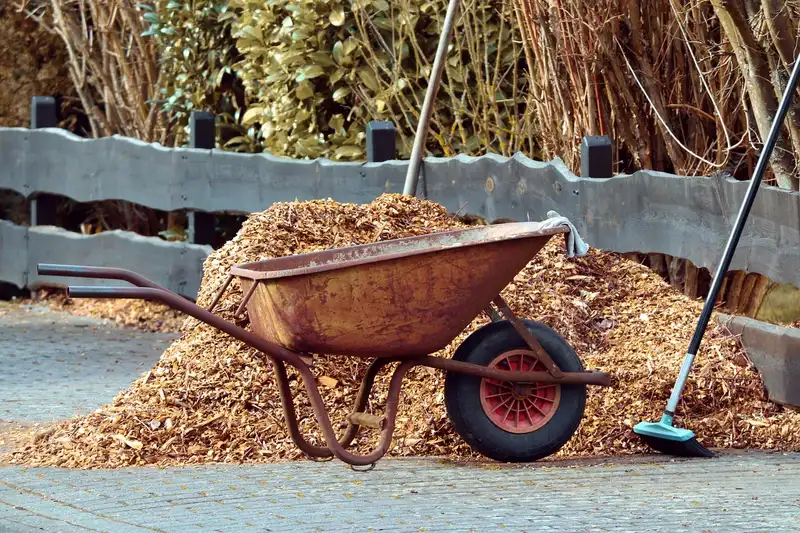
How to Apply Cedar Mulch
- Clear the bed of weeds, debris, and any old, broken-down mulch before adding new material.
- Water the soil lightly so the new mulch beds in rather than sitting on dry, dusty ground.
- Calculate how much you need using the coverage formula above (cu ft × 12 ÷ target depth in inches) for your bed’s square footage, and buy a little extra rather than running short mid-job.
- Spread mulch to a 2-3 inch depth. Thinner than 2 inches gives up most of the weed-suppression benefit; thicker than 3-4 inches can suffocate roots and hold too much moisture against them.
- Keep mulch pulled back about 12 inches from your home’s foundation and 3-4 inches clear of plant stems and tree trunks to avoid trapping moisture against bark and siding.
- Rake and refresh the layer every year; because cedar decomposes slowly, most beds need a top-off rather than a full strip-and-replace each season.
Frequently Asked Questions
Does cedar mulch actually repel termites?
Only partially, and less than most marketing claims suggest. A UF/IFAS Extension publication (University of Florida, EDIS document IN651) reviewing termite-and-mulch research found that subterranean termites will feed on and survive under organic mulch generally — the bigger protective factor isn’t the mulch species, it’s keeping mulch thin and away from the foundation: the publication recommends a layer under 2 inches deep within 12 inches of a foundation, with about a 6-inch bare inspection strip so termite activity can actually be seen. Cedar’s oils do have some documented insect-deterrent effect, but treat "cedar mulch keeps termites away" as an overstatement, not a guarantee.
Is the Timberline cedar mulch bag really 100% cedar?
Not according to its own packaging. Some retailer listings for this product describe it as “100% shredded cedar,” but the bag itself is printed "Cedar Mulch Blend" (Mezcla de Mantillo de Cedro in the Spanish text on the same bag). We verified this by looking at the actual product photo, not just the listing copy. If you specifically want unblended cedar, Mulchex’s 3 cu ft bag in this comparison is labeled 100% cedar.
How much cedar mulch do I need per square foot?
Use this formula: coverage in square feet = cubic feet of mulch × 12 ÷ depth in inches. A 2 cu ft bag at a 2-inch depth covers about 12 sq ft; the same bag at a 3-inch depth only covers about 8 sq ft. Measure your bed’s square footage first, decide your target depth (2-3 inches is standard), then work backward to the number of bags using this formula rather than guessing.
How long does cedar mulch last before it needs replacing?
Cedar’s natural oils slow decomposition compared to plain hardwood bark, and most sources put a cedar mulch bed’s useful life at roughly 2 to 3 years before a full refresh, though color fades well before that — typically within 6 to 12 months of sun and rain exposure. Most beds just need an annual top-off rather than a full strip-and-replace each year.
Is cedar mulch safe for pets and vegetable gardens?
Cedar mulch is generally considered safe for pets in normal outdoor use, and several of the products in this comparison (the Wood Smith bags in particular) are marketed specifically for use as pet bedding. Large ingested amounts can cause mild stomach upset in pets, so it’s worth monitoring animals that dig or chew in mulched beds. For food gardens, keep any dyed mulch away from edible beds; the seven products in this roundup are all undyed.
How far should mulch be kept from my house foundation?
UF/IFAS Extension research recommends keeping any mulch layer within 12 inches of a foundation thin — under 2 inches deep — and maintaining roughly a 6-inch bare soil inspection gap right against the foundation itself so termite tunnels or activity are visible rather than hidden under mulch. This recommendation applies regardless of which mulch species you use.
What’s the difference between cedar mulch and cedar granules like GranuCide?
Bagged cedar mulch (shredded, chips, or shavings) is meant to be spread 2-3 inches deep across a bed for moisture retention, weed suppression, and a finished look. Cedar granules like the GranuCide pick in this comparison are a concentrated pest-deterrent product with no published coverage-area rating — they’re meant to be sprinkled around problem spots, foundations, or patios, not spread as a full bed mulch.
What does it actually cost to mulch a 100 sq ft bed with cedar?
Using the cheapest true bulk bag in this comparison (Timberline, $21.75 per 2 cu ft bag covering 12 sq ft at a 2-inch depth), a 100 sq ft bed needs 9 bags for $195.75. Using the only 100%-cedar bag (Mulchex, $49.99 per 3 cu ft bag covering 18 sq ft), the same bed needs 6 bags for $299.94 — about 53% more for unblended cedar over the same coverage area. See the full budget-vs-no-compromise breakdown above.
Final Thoughts
If you only take one number from this page, take this one: bulk cedar mulch bags run $1.81 to $3.06 per square foot at a standard 2-inch depth, while small-format “cedar chips for pots” bags run $8.57 to $16.02 per square foot for the identical material — buying the right bag size for the job is the single biggest cost lever in this category, bigger than which brand you choose.
For most beds, Mulchex’s 3 cu ft bag is the pick that’s actually 100% cedar at a reasonable per-square-foot price. If you’re covering a large area on a tight budget and don’t mind a cedar-blend product, Timberline’s 2 cu ft bag is the cheapest bulk option we priced. And if pests, not ground cover, are the actual problem, skip mulch entirely and use a spot-treatment product like Hiram’s GranuCide granules instead.
Related Guides
- Cedar Mulch vs. Hardwood Mulch
- Can Cedar Chips Be Used as Mulch?
- Does Cedar Mulch Repel Ticks?
- Does Wood Mulch Cause Termites?
- Mulch Calculator
- How Much Cedar Mulch Do I Need?
- Best Cedar for Raised Garden Beds
- Building a Raised Garden Bed
Sponsored / affiliate links. As an Amazon Associate I earn from qualifying purchases. I may earn additional commission from eligible campaigns.
 8 Pack Unfinished Red Cedar Wood Clothes Hangers, Flat Cedar Hangers with 360 Swivel Chrome Hook and Notches for Shirts, Dresses and Strappy Garments
 Rosano's Mineral Oil Free Wood Butter - Natural Wood Conditioner for Cutting Boards, Furniture, Wood Utencils & Dishware - Beeswax & Coconut Oil - 6oz - Food Safe