How Much Do Butcher Block Countertops Cost
Thinking about new kitchen countertops can bring up lots of questions. One common puzzle for folks new to kitchen upgrades is How Much Do Butcher Block Countertops Cost? It seems like a simple question, but the answer can feel a little tricky with all the different choices out there. Don’t worry, though!
We’ll walk through it together, step by step, to make it super clear. Get ready to learn what affects the price and what you can expect to pay.
Understanding Butcher Block Countertop Costs
This section breaks down the basic factors that influence the price of butcher block countertops. We’ll look at the main reasons why one piece of butcher block might cost more than another, covering everything from the type of wood used to how it’s made. This will give you a solid starting point for figuring out your budget and making smart choices for your kitchen remodel.
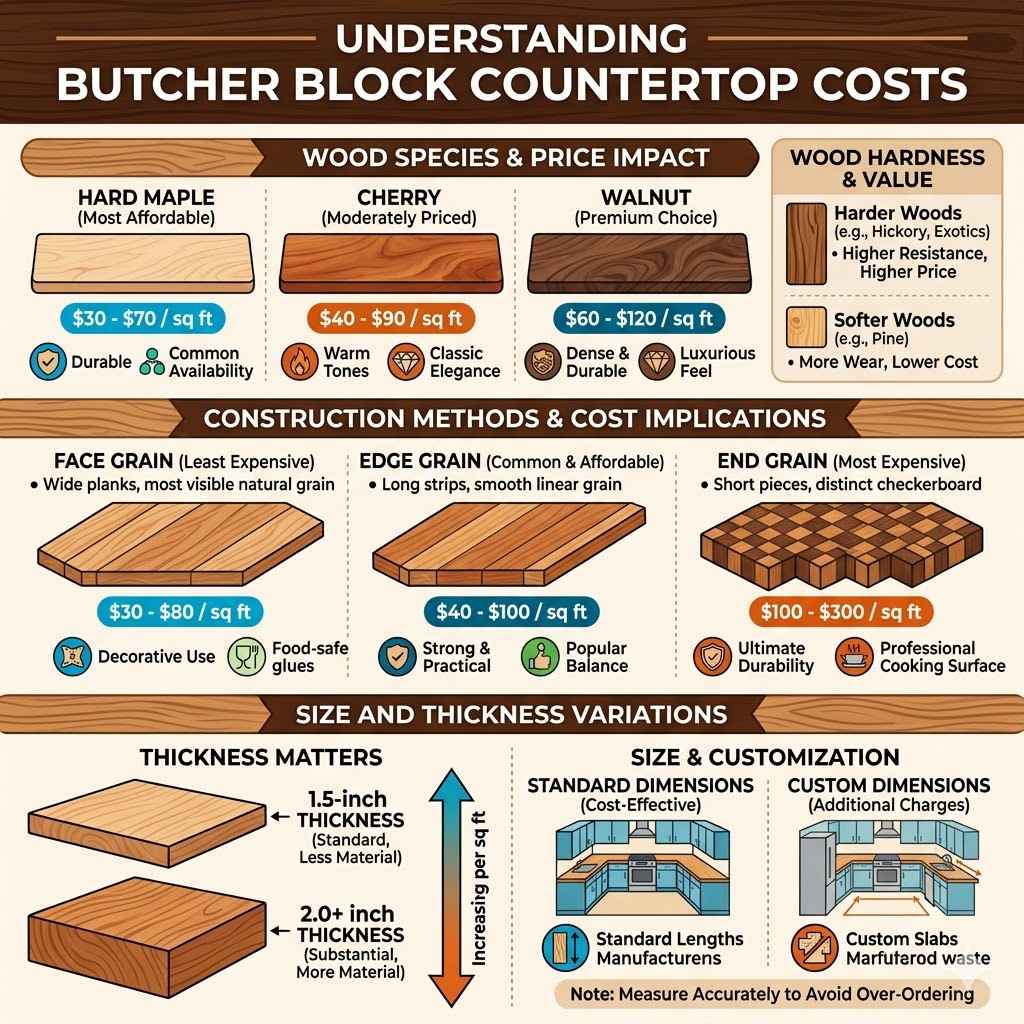
Wood Species and Their Impact on Price
The type of wood you pick for your butcher block countertops is a major factor in how much they will cost. Different woods have different hardness, grain patterns, and availability, all of which affect their price. Some woods are much rarer or harder to work with, driving up the cost.
Knowing these differences helps you choose a wood that fits both your aesthetic and your budget.
- Hard Maple is a very popular choice for butcher block. It’s known for its durability and light color. Because it’s widely available and relatively easy to work with, it tends to be one of the more affordable options. Many people like it for its smooth, clean look that can fit into almost any kitchen style. The cost for hard maple typically ranges from $30 to $70 per square foot for the material itself. This price point makes it an attractive option for many homeowners looking for a natural wood countertop.
- Walnut is a premium wood that offers a rich, dark color and beautiful grain patterns. It’s denser and often more expensive than maple due to its natural beauty and slower growth rate. Walnut countertops can add a luxurious feel to a kitchen. The price for walnut butcher block can range from $60 to $120 per square foot. This higher cost reflects its aesthetic appeal and its status as a more exotic wood in the countertop market.
- Cherry wood provides a warm, reddish-brown tone that deepens with age. It’s a moderately priced option, sitting between maple and walnut in terms of cost. Cherry is known for its lovely grain and its ability to add a classic, elegant look to a kitchen. Prices for cherry butcher block often fall between $40 and $90 per square foot. It’s a good compromise for those wanting a beautiful, high-quality wood without the highest price tag.
The hardness of the wood is also a key factor. Harder woods like hickory or exotic hardwoods are more resistant to dents and scratches, which adds to their value and price. Softer woods like pine are less expensive but will show wear more quickly, requiring more maintenance.
Construction Methods and Their Cost Implications
How the butcher block itself is put together also plays a big role in its final price. There are a few main ways butcher block is constructed, and each has its own advantages and cost. The way the wood pieces are arranged and glued impacts both the look and the strength of the countertop.
- End Grain construction is often the most expensive. In this method, short pieces of wood are glued together at their ends. This creates a very durable surface that is ideal for chopping directly on, as the wood fibers separate and close back up. This type of construction is visually striking with a checkerboard pattern. Because it requires more labor and precise cutting, end grain butcher block can cost anywhere from $100 to $300 per square foot. It’s a professional-grade choice for serious cooks.
- Edge Grain construction is a common and more affordable method. Long strips of wood are glued together along their edges. This creates a smooth, continuous surface with visible linear grain. Edge grain butcher block is strong and attractive, making it suitable for most kitchen uses. It’s a good balance of durability and cost, usually ranging from $40 to $100 per square foot. This is a popular choice for its practicality and aesthetic appeal.
- Face Grain construction is typically the least expensive. It uses the widest planks of wood, showing the most natural grain pattern. The planks are glued together along their broad faces. While beautiful, face grain is the least durable for heavy use as a cutting surface. It can be prone to scratching and denting more easily than edge or end grain. Face grain butcher block usually costs between $30 and $80 per square foot, making it a budget-friendly option.
The quality of the glue used and the precision of the milling also contribute to the overall cost. High-quality, food-safe glues are essential for durability and safety, especially if the countertops will be used for food preparation.
Size and Thickness Variations
The dimensions of your butcher block countertops directly affect the total cost. Larger kitchens with more countertop space will naturally require more material, increasing the overall price. Similarly, thicker butcher block slabs are generally more expensive than thinner ones.
- Thickness is an important consideration for both durability and cost. Standard butcher block thickness often ranges from 1.5 inches to 2 inches. Thicker slabs, like those that are 2 inches or more, offer greater stability and a more substantial look. They also provide more surface area for potential refinishing over time. A 2-inch thick slab will cost more per square foot than a 1.5-inch thick slab of the same wood. For example, a 2-inch thick maple countertop might cost $50-$80 per square foot, while a 1.5-inch might be $30-$60.
- Standard countertop lengths and widths are readily available and will be more cost-effective. Custom dimensions or unusually large slabs will often incur additional charges. This is because they require special manufacturing processes and may involve more waste from raw lumber. Always measure your space accurately to determine the exact square footage needed to avoid over or under-ordering.
When ordering, you’ll usually pay by the linear foot or square foot. It’s wise to get detailed quotes that specify the dimensions and thickness to compare prices accurately between suppliers.
Factors Affecting Installation Costs
Beyond the material itself, the cost of getting your butcher block countertops installed is a significant part of the total project budget. Professional installation ensures the countertops are properly fitted, sealed, and secured, which is crucial for their longevity and appearance. Installation costs can vary widely based on the complexity of the job and where you live.
Professional Installation versus DIY
Deciding whether to hire a professional or tackle the installation yourself is a key choice that impacts both cost and outcome. Professional installers have the tools, experience, and knowledge to ensure a perfect fit and finish.
- Professional installation typically includes measuring, cutting, fitting, and sealing the countertops. They will ensure the cabinets are level and can handle the weight of the butcher block. This service adds to the overall expense, but it provides peace of mind and a guarantee of quality work. Professional installation costs can range from $500 to $2,000 or more, depending on the size of the kitchen and the complexity of the installation.
- DIY installation can save you money on labor costs, but it requires significant skill, time, and the right tools. Mistakes during DIY installation can be costly to fix and may void manufacturer warranties. If you choose this route, be sure to research installation guides thoroughly and invest in good quality tools. You’ll still need to factor in the cost of sealants, adhesives, and any necessary hardware.
It’s also important to consider if any modifications to your existing cabinets are needed. Butcher block is heavier than laminate or some other materials, so cabinets must be sturdy and level. Professionals can assess this and make necessary adjustments, which might add to the labor cost.
Sealing and Finishing Services
Proper sealing and finishing are essential for protecting your butcher block countertops from moisture, stains, and bacteria. This process is critical for maintaining their beauty and hygiene, especially in a kitchen environment.
- Natural oils, like mineral oil, are often used for sealing butcher block. This is a more DIY-friendly option and can be reapplied regularly. A good quality mineral oil is food-safe and relatively inexpensive. Reapplication is crucial, perhaps every 1-3 months depending on use, to keep the wood protected.
- Varnishes, polyurethanes, or lacquers can also be used for a more durable, water-resistant finish. These finishes create a protective layer that is easier to clean and less prone to staining than oiled finishes. However, they may not be ideal if you plan to chop directly on the countertop. Applying these finishes requires careful preparation and application to achieve a smooth, even look. Professional application of these finishes can add to the labor cost.
- The cost of sealants and finishes varies. A gallon of food-grade mineral oil might cost $20-$50. High-quality polyurethane can cost $50-$100 per quart. If a professional applies these finishes, expect to pay for their labor, which can be included in the overall installation quote or billed separately.
The choice of finish also affects the countertop’s maintenance. An oiled finish requires more frequent reapplication but can be easily spot-repaired. A film finish is more durable but might require full sanding and refinishing if damaged.
Customization and Edge Profiles
Butcher block countertops can be customized to fit your kitchen’s unique design. This includes choosing different edge profiles and incorporating features like sink cutouts or integrated cutting boards. These customizations add to the overall cost.
- Standard straight edges are the most budget-friendly. However, you can opt for more decorative edge profiles like a bullnose, beveled edge, or ogee edge. These profiles require additional milling and labor, increasing the price. For instance, adding a decorative edge might add $10-$30 per linear foot to the cost.
- Sink cutouts are a necessary customization for most kitchens. The precision required for a clean, well-finished sink cutout adds to the labor cost. This can range from $100 to $300 for a standard cutout, depending on the complexity and the type of sink being installed (e.g., undermount vs. drop-in).
- Integrated cutting boards or other custom features, like a routed-out groove for a knife block, are specialty additions. These are priced on a custom basis and can significantly increase the total project cost. They offer unique functionality but come at a premium price.
When getting quotes, be sure to ask about all potential customization costs. This includes any charges for specific sizes, shapes, edge treatments, and cutouts.
Additional Costs and Considerations
Beyond the price of the butcher block itself and its installation, there are other factors that can influence your overall budget. These include delivery fees, the cost of underlayment or support if needed, and potential future maintenance expenses. It’s important to have a clear picture of all these elements before you begin your project.
Delivery Fees
If you order your butcher block countertops from a supplier or manufacturer, you’ll likely incur delivery charges. The cost of delivery depends on the distance from the supplier to your home, the size and weight of the order, and the delivery service used.
- Local suppliers may offer free or low-cost delivery within a certain radius. However, for larger orders or deliveries to more remote areas, these fees can add up. Expect to pay anywhere from $50 to $300 or more for delivery, depending on these factors.
- Some online retailers may include delivery in their pricing, while others will add it as a separate charge. Always clarify delivery costs upfront to avoid surprises. For very large or heavy slabs, specialized delivery services might be required, which can increase the cost.
Consider picking up the material yourself if the supplier is nearby and you have a suitable vehicle and assistance for loading and unloading. This can sometimes save a considerable amount of money.
Underlayment and Support Systems
Depending on the weight of the butcher block and the type of cabinetry, you might need to reinforce your cabinets or add an underlayment. This is to ensure the countertops are well-supported and stable.
- Butcher block countertops can be quite heavy, especially thicker slabs. Most standard kitchen cabinets are designed to support this weight, but it’s always good practice to ensure they are structurally sound. If your cabinets are older or seem less sturdy, adding extra bracing or support beams might be necessary. This could involve purchasing additional wood or metal supports.
- Some installers might recommend a thin layer of plywood or another rigid material as an underlayment between the cabinets and the butcher block. This can help distribute the weight evenly and provide a perfectly flat surface for the countertops to rest on. The cost for this would be for the material itself, typically under $100.
Always consult with your installer or the countertop supplier about any specific support requirements for your chosen butcher block. This proactive step can prevent future issues.
Maintenance and Longevity
The long-term cost of owning butcher block countertops includes ongoing maintenance. While butcher block can last for decades with proper care, neglecting maintenance can lead to premature wear and costly repairs.
- Regular oiling is key for oiled finishes. You’ll need to purchase mineral oil and apply it every few months. This is a relatively low cost, perhaps $20-$50 per year for oil. It helps prevent drying, cracking, and staining.
- For film finishes like polyurethane, maintenance is simpler. Occasional cleaning with mild soap and water is usually sufficient. However, if the finish becomes scratched or damaged, it may require sanding and refinishing, which can be a more involved process and cost.
- Over time, butcher block may develop minor nicks and scratches. These can often be sanded out and refinished, which is a benefit of the material. While DIY sanding is possible, professional refinishing can cost several hundred dollars. The longevity of butcher block is excellent; with proper care, it can last 20-30 years or even longer.
The initial investment in quality butcher block and proper sealing will pay off in the long run by reducing the need for frequent repairs or premature replacement.
Budgeting for Butcher Block Countertops
Creating a realistic budget is crucial for any kitchen renovation project. Understanding the full spectrum of costs associated with butcher block countertops, from the raw material to the final installation, will help you plan effectively. This section aims to provide a clear picture of how to estimate your expenses and make informed financial decisions.
Average Cost Ranges
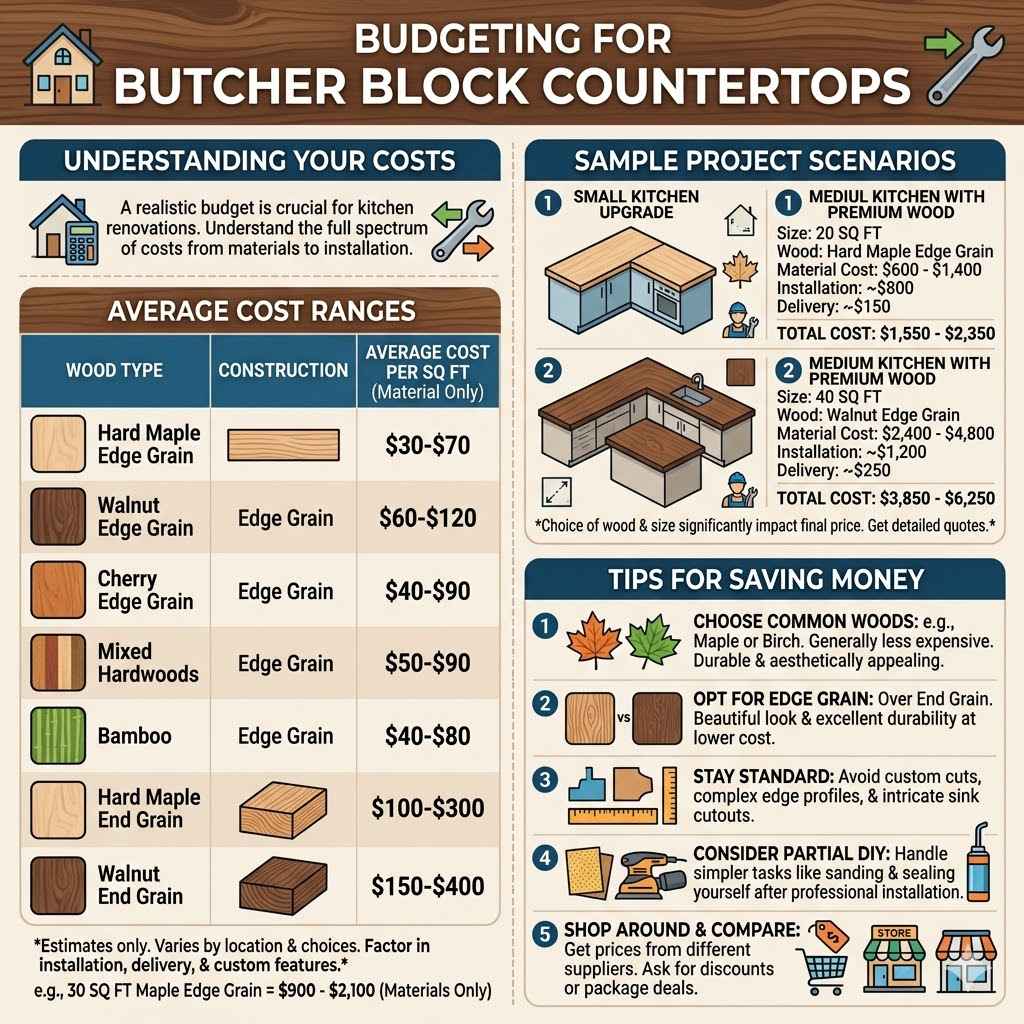
To help you visualize your investment, here’s a breakdown of average cost ranges for butcher block countertops based on common factors. These are estimates and can vary significantly depending on your specific choices and location.
| Wood Type | Construction Type | Average Cost Per Square Foot (Material Only) |
|---|---|---|
| Hard Maple | Edge Grain | $30 – $70 |
| Walnut | Edge Grain | $60 – $120 |
| Cherry | Edge Grain | $40 – $90 |
| Mixed Hardwoods | Edge Grain | $50 – $90 |
| Bamboo | Edge Grain | $40 – $80 |
| Hard Maple | End Grain | $100 – $300 |
| Walnut | End Grain | $150 – $400 |
These figures are for the material cost per square foot. Remember to add installation, delivery, and any custom features to get your total project cost. For example, a kitchen needing 30 square feet of edge-grain hard maple might cost $900 – $2,100 for the material alone.
Sample Project Scenarios
Let’s look at a couple of examples to illustrate how costs can add up for different kitchen sizes and choices.
- Small Kitchen Upgrade: Imagine a small kitchen with 20 square feet of countertop space. You choose edge-grain hard maple for its affordability and classic look. The material cost would be roughly $600 to $1,400. Adding professional installation at an estimated $800 and $150 for delivery, your total project cost could range from $1,550 to $2,350. This scenario provides a good balance of quality and budget.
- Medium Kitchen with Premium Wood: Consider a medium-sized kitchen requiring 40 square feet of countertop. You opt for walnut in an edge-grain construction for its rich appearance. The material cost would be approximately $2,400 to $4,800. With professional installation around $1,200 and delivery at $250, the total estimated cost could be between $3,850 and $6,250. This choice emphasizes luxury and aesthetics.
These scenarios highlight how the choice of wood and the size of your kitchen significantly impact the final price. Always get detailed quotes tailored to your specific needs.
Tips for Saving Money
There are smart ways to manage the costs of butcher block countertops without compromising too much on quality. Strategic planning and careful choices can help you achieve your desired kitchen look within your budget.
- Choose more common wood species like hard maple or birch, which are generally less expensive than exotic hardwoods. Their availability and ease of processing contribute to lower prices. These woods also offer great durability and aesthetic appeal for most kitchens.
- Opt for edge-grain construction over end-grain. While end-grain is superior for cutting, edge-grain offers excellent durability and a beautiful look at a significantly lower cost. It’s a fantastic compromise for a functional and attractive countertop.
- Consider standard sizes and shapes. Custom cuts, special edge profiles, and complex sink cutouts will always add to the bill. Sticking to simpler designs and readily available dimensions can help keep expenses down.
- Explore DIY installation for parts of the project if you have the skills. While professional installation is recommended for precision, you might be able to handle simpler tasks like sanding and sealing yourself after the countertops are cut and fitted by a professional.
- Shop around and compare prices from different suppliers. Prices can vary between retailers, especially for raw materials. Don’t hesitate to ask for discounts or package deals if you are ordering multiple materials for your renovation.
By carefully weighing these options, you can find a butcher block solution that fits your budget and your kitchen’s needs.
Frequently Asked Questions
Question: What is the most budget-friendly butcher block wood?
Answer: Hard maple and birch are typically the most budget-friendly wood options for butcher block countertops. They are widely available, durable, and less expensive to process than many other hardwoods.
Question: How thick should butcher block countertops be?
Answer: Standard butcher block countertops are usually between 1.5 and 2 inches thick. Thicker options like 2 inches or more offer greater durability and a more substantial look.
Question: Can I cut directly on my butcher block countertops?
Answer: Yes, you can cut directly on butcher block countertops, especially if they are made with end-grain or edge-grain construction and finished with food-safe oils. However, frequent cutting will create marks and require more maintenance.
Question: How often should I oil my butcher block countertops?
Answer: If your butcher block is finished with oil, you should reapply the oil every 1 to 3 months, or whenever the surface starts to look dry. This helps protect the wood from moisture and staining.
Question: What’s the difference between end-grain and edge-grain butcher block?
Answer: End-grain butcher block has pieces glued together on their ends, creating a checkerboard pattern and a very durable surface. Edge-grain has pieces glued along their long edges, resulting in a linear grain pattern and is generally more affordable.
Summary
Deciding on butcher block countertops involves looking at wood type, construction method, size, and installation fees. Hard maple and edge-grain designs offer affordability. Walnut and end-grain options are more premium.
Professional installation, custom edges, and delivery add to the total. Budgeting wisely with these factors in mind ensures a beautiful and functional kitchen update.