How Much Does It Cost to Install Hardwood Floor: Ultimate Guide 2026
Thinking about installing hardwood floors in your home? You’re probably wondering, “How much is this going to cost me?” It’s a smart question because knowing the price upfront helps you plan better and avoid surprises.
Hardwood floors can transform your space, adding warmth and value, but the cost varies depending on several factors. You’ll discover the real expenses behind hardwood floor installation and learn how to get the best value for your money. Keep reading to make a confident, informed decision for your home.
Factors Influencing Hardwood Floor Costs
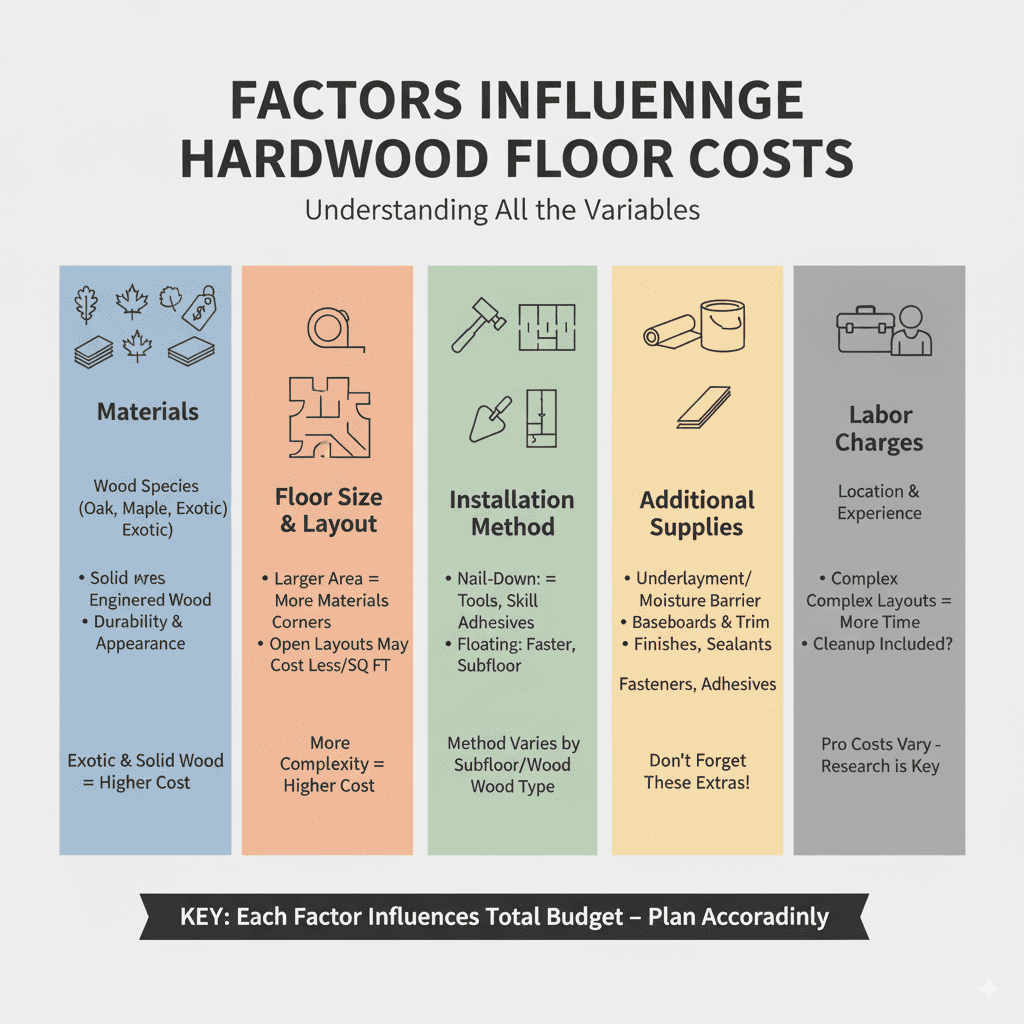
Several factors influence the cost of installing hardwood floors. Understanding these factors helps plan your budget better. Each aspect affects the total price differently.
Types Of Hardwood Materials
The cost varies with wood species. Oak, maple, and cherry differ in price. Exotic woods cost more than domestic types. Engineered hardwood can be cheaper than solid wood. Material choice impacts durability and appearance too.
Floor Size And Layout
Larger floors need more materials and time. Complex room shapes increase installation difficulty. More corners and angles require extra cuts. Open floor plans may lower the price per square foot. Measuring the area accurately is important.
Installation Methods
Different methods affect labor and cost. Nail-down installation needs special tools and skills. Glue-down methods add material costs. Floating floors can be faster and cheaper. The chosen method depends on subfloor type and wood.
Additional Materials And Supplies
Underlayment and moisture barriers add to expenses. Baseboards and trim may need replacement. Finishes and sealants protect the floor but cost extra. Fasteners and adhesives are necessary for installation. These supplies vary based on wood and method.
Labor Charges
Labor costs depend on location and experience. Skilled installers charge higher rates. Complex layouts take more time and raise costs. Some contractors include cleanup in their fees. Getting multiple quotes helps find fair prices.
Price Breakdown By Hardwood Type
Understanding the cost of hardwood flooring starts with the type of wood you choose. Each hardwood type has a unique price range. This section breaks down costs by hardwood categories. It helps you plan your budget better and pick the right flooring.
Solid Hardwood Flooring
Solid hardwood comes from one solid piece of wood. Prices range from $5 to $10 per square foot. Installation adds $3 to $8 per square foot. Oak and maple are common and affordable choices. Solid wood lasts long but can swell in moist areas.
Engineered Hardwood Flooring
Engineered hardwood has a thin wood layer over plywood. It costs $4 to $9 per square foot. Installation fees are about $3 to $7 per square foot. It handles moisture better than solid wood. Perfect for basements and kitchens.
Exotic Hardwood Options
Exotic hardwoods come from rare trees. Prices start at $8 and go up to $15 per square foot. Installation can cost $5 to $10 per square foot. Brazilian cherry and teak are popular exotic types. They offer unique colors and patterns.
Reclaimed Hardwood
Reclaimed hardwood uses wood from old buildings or barns. It costs $6 to $12 per square foot. Installation is $4 to $9 per square foot. This type has a rustic look and is eco-friendly. Some wood may need extra preparation before use.
Installation Cost Variations
The cost to install hardwood floors can change a lot. Many factors affect the price. Knowing these helps you plan your budget well. Some parts of installation need more work or skill. Each step adds to the total cost.
Diy Vs Professional Installation
Doing the job yourself can save money. But it takes time and skills. Mistakes may cost more later. Hiring a pro costs more upfront. Pros work faster and with better results. The price depends on your choice.
Complexity Of Installation
Simple layouts cost less to install. Patterns like herringbone or diagonal raise the price. Cutting wood to fit corners or curves needs skill. Complex jobs take more time and tools. This increases the overall installation cost.
Subfloor Preparation
The subfloor must be flat and clean. Uneven or damaged subfloors need repair. Fixing these problems adds to the price. Sometimes, extra materials are needed. Good preparation keeps floors strong and long-lasting.
Removal Of Old Flooring
Old floors must be taken out first. Removal costs depend on the floor type. Carpet is easier to remove than tile or concrete. Debris disposal may add fees. This step can add a lot to the final cost.
Geographic Price Differences
Costs for hardwood floor installation vary greatly by location. Prices depend on local labor rates, material availability, and demand. Understanding these differences helps plan your budget better. Geographic factors influence both the cost of materials and the price for installation services.
Urban Vs Rural Costs
Urban areas usually have higher installation costs. Labor rates are higher due to living expenses and demand. Transporting materials in cities can be easier but more expensive. Rural areas often have lower labor costs. However, material delivery can add to expenses. Fewer contractors in rural locations may increase prices.
Regional Price Trends
Prices differ across regions due to climate and wood supply. In the Northeast, hardwood is common but labor costs are higher. The South often has cheaper materials but fewer skilled installers. The West Coast may charge more for premium wood types. Midwest prices tend to be moderate with balanced supply and demand.
Additional Expenses To Consider
Installing hardwood floors involves more than just the cost of materials and labor. Several extra expenses can affect your total budget. These costs vary depending on the project size and the type of flooring you choose. Understanding these additional expenses helps you plan better and avoid surprises.
Finishing And Sealing
Many hardwood floors need finishing and sealing after installation. This process protects the wood from scratches and moisture. It also enhances the floor’s color and shine. Finishing and sealing can add to your cost, especially if you choose premium finishes. Some installers charge separately for this service.
Delivery And Transportation Fees
Delivery costs depend on the distance from the supplier to your home. Large or heavy orders often cost more to transport. Some companies include delivery in the price, but others charge extra. Make sure to ask about these fees before ordering your hardwood flooring.
Waste Disposal And Cleanup
Old flooring removal creates waste that needs proper disposal. Many contractors charge for hauling away debris. Cleanup after installation is also essential to leave your home tidy. These services might be included or billed separately. Budgeting for waste disposal and cleanup is important.
Cost-saving Tips
Installing hardwood floors can be expensive. Saving money is possible with smart choices. Small changes can cut costs without losing quality. Here are some tips to help you spend less on your new floor.
Choosing Affordable Materials
Hardwood comes in many types and prices. Some woods cost less but still look great. Oak and maple are good, budget-friendly options. Engineered hardwood also costs less than solid wood. Picking less expensive wood saves money on materials.
Scheduling Installation Strategically
Plan your floor installation during slow seasons. Contractors may lower prices in winter or fall. Avoid peak times like spring and summer. Booking early or last minute can get discounts. Timing your project right can reduce labor costs.
Comparing Contractor Quotes
Get quotes from several flooring installers. Compare prices and services carefully. Don’t pick the cheapest without checking quality. Ask about hidden fees or extra costs. Choosing the best offer saves money and ensures good work.
Return On Investment For Hardwood Floors
Installing hardwood floors is a smart choice for many homeowners. It can add beauty and style to any room. Beyond the look, hardwood floors offer a strong return on investment. Understanding this return helps you decide if hardwood flooring is right for your home.
Impact On Home Value
Hardwood floors often increase a home’s market value. Buyers usually prefer homes with wood floors. This preference can lead to faster sales and higher offers. Hardwood flooring creates a warm, inviting atmosphere that appeals to many people. It also gives a feeling of quality and care in the home.
Longevity And Maintenance Costs
Hardwood floors last for decades with proper care. They do not wear out as fast as some other flooring types. Regular cleaning and occasional refinishing keep them looking new. Maintenance costs are usually lower over time. This durability means less money spent on repairs or replacements. The long life of hardwood floors adds to their overall value.
How Woodworking Advisor Can Help You with How Much Does It Cost to Install Hardwood Floor
Learning Through Experience: Beyond Cost Estimates
Understanding the costs involved in installing hardwood floors opens a door to practical learning, especially when you dive deeper into factors influencing hardwood floor costs and installation cost variations. For those eager to try their hand at woodworking or home improvement, exploring these elements firsthand can be both educational and rewarding.
By experimenting with different hardwood types and considering geographic price differences, hobbyists gain insight into material selection and budgeting. These experiences align well with Woodworking Advisor’s mission to make woodworking approachable and enjoyable, encouraging creativity while respecting traditional craftsmanship.
- Try sourcing materials locally to see how regional prices vary.
- Practice measuring and estimating installation needs to better understand additional expenses.
- Document your findings to compare with published cost breakdowns.
For those seeking guidance or detailed advice, reaching out to woodworkingadvisor.com can provide valuable perspectives without the pressure of sales, reinforcing a friendly and knowledgeable community spirit.
Frequently Asked Questions
How Much Does Hardwood Floor Installation Cost Per Square Foot?
Hardwood floor installation typically costs between $6 and $12 per square foot. This price includes materials and labor. Exotic woods and complex patterns may increase the cost. Always get multiple quotes to ensure a fair price.
What Factors Affect Hardwood Floor Installation Costs?
Costs vary based on wood type, floor size, and subfloor condition. Additional costs include removal of old flooring and custom finishes. Labor rates differ by region and installer experience. Proper preparation lowers unexpected expenses.
Is It Cheaper To Install Hardwood Floors Yourself?
DIY installation can save labor costs but requires skill and time. Mistakes may lead to costly repairs or replacements. Professionals ensure proper installation and finish. Weigh savings against potential risks before deciding.
How Long Does Hardwood Floor Installation Take?
Installation time depends on room size and floor complexity. On average, it takes 2 to 5 days for a standard room. Additional time is needed for floor acclimation and finishing. Proper scheduling prevents delays.
Conclusion
Hardwood floor installation costs vary by wood type and room size. Labor and materials both affect the total price. Choosing the right wood can help control your budget. Remember to include extra costs like removal or repairs. Planning ahead saves money and avoids surprises.
Quality floors add value and beauty to your home. Take time to compare prices and options before deciding. This way, you get the best result for your money.