How Much Is A Cord Of Oak Firewood? Pricing Breakdown
It’s that time of year again. The air gets a little crisp. You start thinking about cozy nights by the fire.
But then you look at your empty fireplace and wonder, “How much does firewood actually cost?” Specifically, you’re curious about oak firewood. It’s a popular choice for good reason. It burns hot and long.
But the price can feel like a mystery. Let’s untangle that for you.
The average cost for a cord of oak firewood in the US can range from $150 to $400. This price depends heavily on location, type of oak, how it’s prepared, and delivery fees.
Understanding the Price of Oak Firewood
So, what makes one cord of oak firewood cost more than another? It’s a mix of things. Think of it like buying groceries.
You can get a basic apple or a fancy organic one. The same applies to wood. Several factors play a big role in the final price you see on the invoice.
What Exactly is a Cord of Firewood?
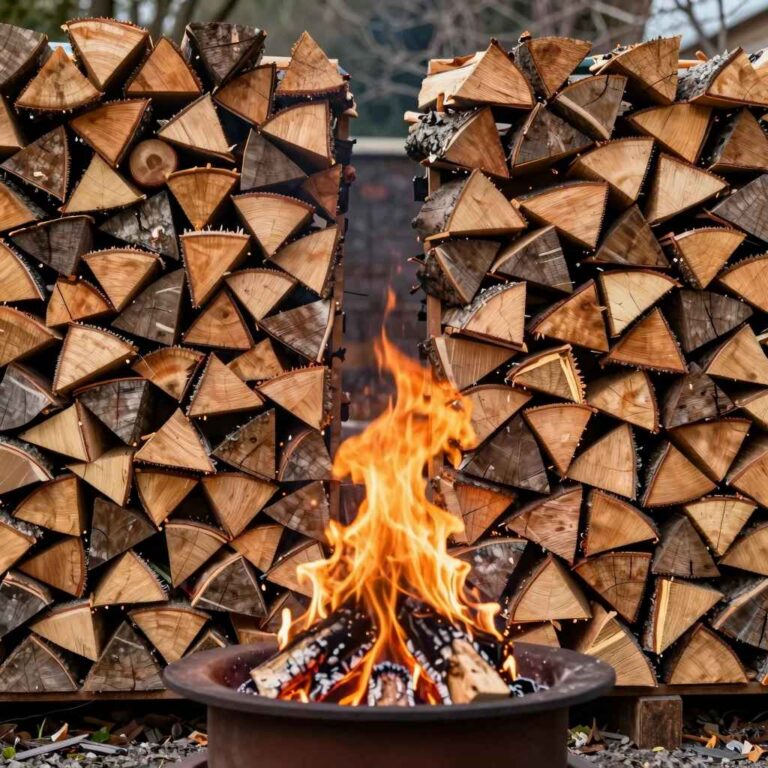
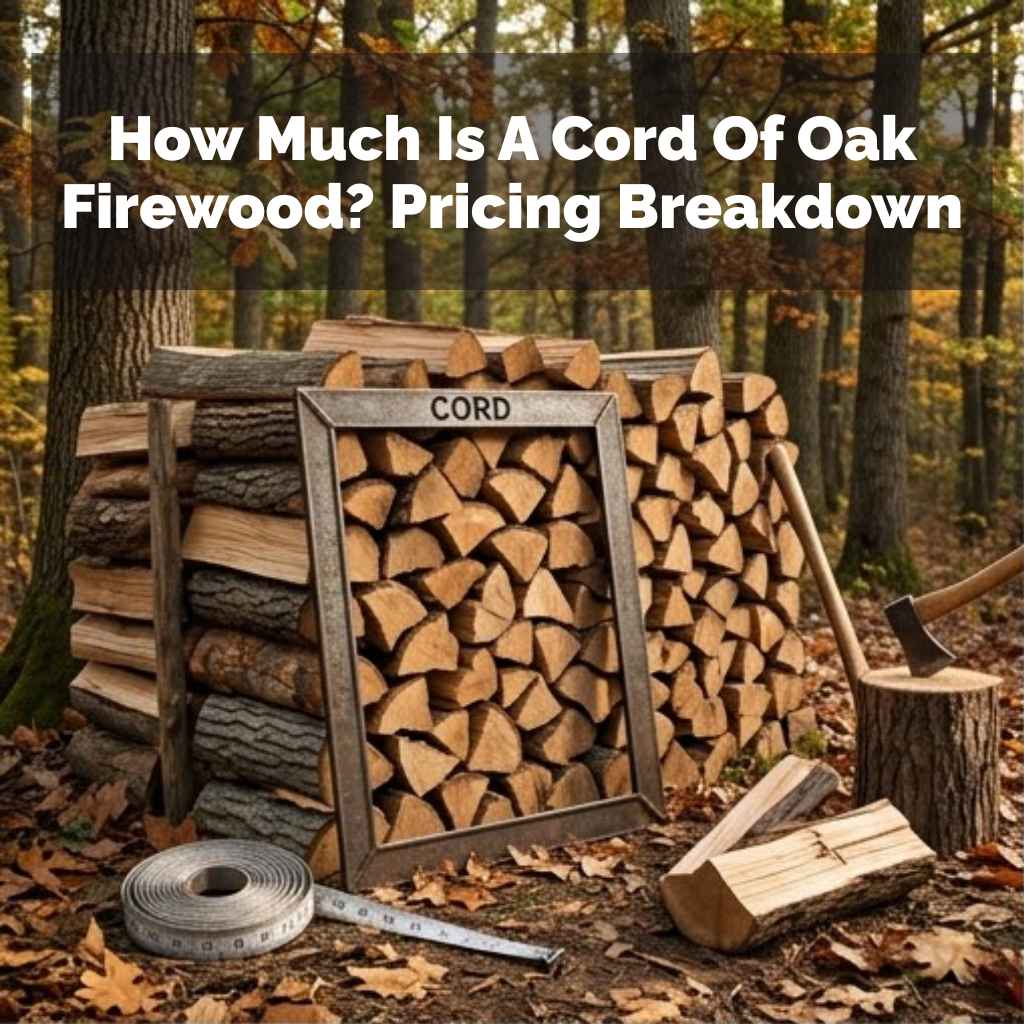
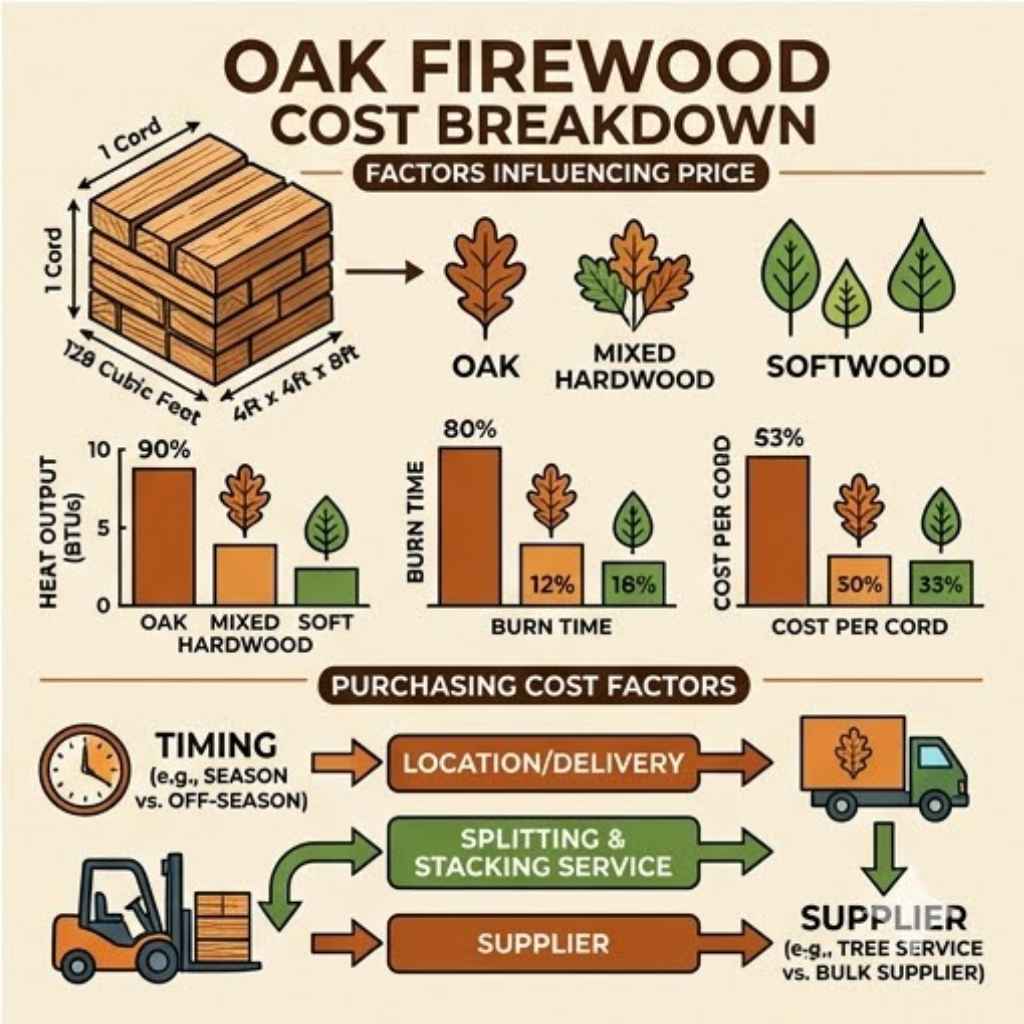
Before we dive into costs, let’s make sure we’re on the same page about what a cord is. A true cord of firewood is a stack of wood that measures 4 feet high, 4 feet wide, and 8 feet long. This means it contains 128 cubic feet of wood.
It’s important to know this. Some sellers might try to shortchange you with smaller, less formal stacks.
When wood is cut and stacked, there’s air space between the logs. So, a cord of wood isn’t solid wood. It’s mostly wood with some air.
This is normal. Just know that a proper cord is a specific, large volume. Always ask if they mean a “true cord” if you’re unsure.
Types of Oak and Their Impact
Not all oak trees are the same. There are many varieties. In the firewood world, we often talk about “red oak” and “white oak.” White oak species, like white oak itself and post oak, are usually denser and harder.
This means they burn longer and hotter. Because of this, they are often more sought after and can command a higher price.
Red oaks, like red oak and pin oak, are also good firewood. They burn well but might produce more ash and not last quite as long as white oaks. They can sometimes be a bit cheaper because they are more common in some areas or easier to split.
The specific type of oak growing in your region will influence local pricing.
Seasoning and Drying Time
Freshly cut wood, called “green wood,” has a lot of moisture. It’s heavy and hard to burn. It also produces more smoke and creosote.
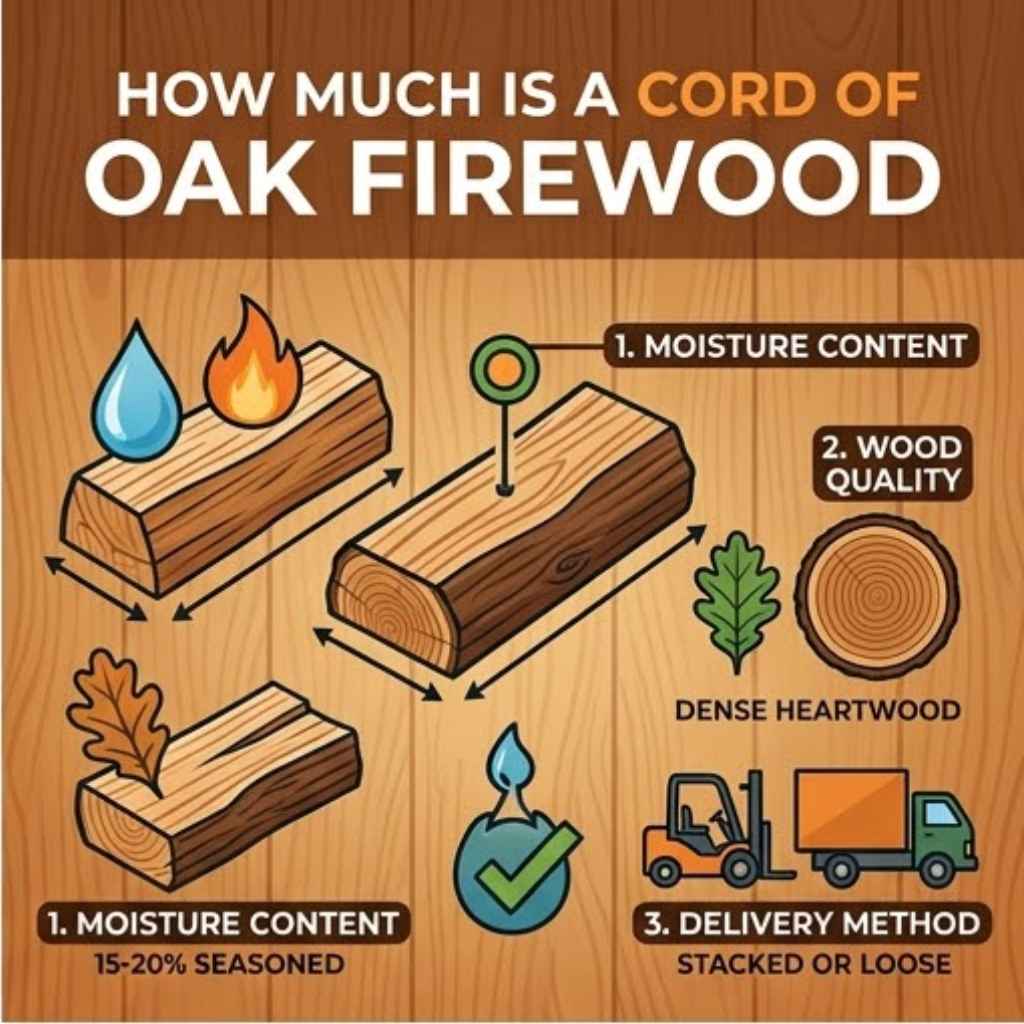
Firewood needs to be seasoned. This means it needs to dry out properly. This usually takes at least six months, and often a year or more, depending on the wood and climate.
Seasoned wood is lighter. It splits easier. It burns hotter and cleaner.
Kiln-dried wood is wood that has been dried in a special oven. This process speeds up drying and kills bugs. Kiln-dried wood is the most expensive.
It’s ready to burn right away. Seasoned wood from a reputable seller is usually a good balance of quality and cost.
When buying, ask about the seasoning. Good sellers will tell you how long it has been drying. They might even show you.
Look for wood that has cracks at the ends of the logs. It might have a lighter color. It should also sound hollow when you knock two pieces together.
Avoid wood that feels heavy or smells damp.
Factors Affecting Oak Firewood Prices
The price tag on a cord of oak firewood isn’t just about the wood itself. Many other elements contribute to the final cost. Understanding these can help you spot good deals and avoid overpaying.
Location, Location, Location
Where you live makes a huge difference. In areas where oak trees are abundant and easy to harvest, firewood is often cheaper. Think of places with large forests.
Conversely, in urban areas or regions where oak is scarce, you’ll likely pay more. This is due to transportation costs and higher demand relative to supply.
For example, firewood prices in the Southeast United States, where oak is plentiful, might be lower than in the drier Western states. Your local market conditions are a primary driver. It’s always best to get quotes from a few local firewood providers.
Delivery Fees and Distance
Most people don’t pick up their own firewood. It’s heavy and bulky! Delivery is a common service.
However, this service comes at a cost. The further the delivery distance, the higher the fee. Some companies offer free delivery within a certain radius.
Others charge per mile or a flat fee.
Consider if you need the wood stacked. Some delivery services will just dump it in your driveway. Others will stack it neatly for you.
Stacking is usually an extra service that adds to the cost. If you have a good spot and time, you can save money by stacking it yourself.
How the Wood is Prepared
Firewood can come in different forms. You can buy logs that you split yourself. This is the cheapest option.
Or you can buy wood that is already cut to length. Even more expensive is wood that is cut, split, and seasoned by the seller. The most convenient and costly option is kiln-dried, ready-to-burn wood.
Think about your needs. Do you have a splitter? Do you have the time and energy to split wood?
If not, you’ll pay more for the labor. Most people opt for wood that is already cut and split. This saves them time and effort.
The price reflects this convenience.
Bundles vs. Cords
Sometimes you’ll see firewood sold in smaller bundles. These are often found at convenience stores or gas stations. They are very convenient for a quick fire.
But they are incredibly expensive per cord. A bundle might cost $5-$10 and contain only a few logs. When you do the math, it adds up very quickly compared to buying a full cord.
If you plan to burn firewood regularly, buying by the cord is the only economical way to go. Bundles are for occasional campers or people who only need a few pieces of wood for a very specific purpose. They are not a practical solution for heating a home.
The Season
Like many goods, firewood prices can fluctuate with the seasons. Demand is highest in the fall and winter when people are actively burning. Sellers know this.
They may charge a premium during these peak months. Buying your firewood in the spring or early summer can often get you a better price.
Sellers want to move inventory before the next burning season. They might offer discounts to clear out seasoned wood. Plus, if you buy in the warmer months, you give the wood more time to season if you bought it green.
It’s a win-win. You save money and ensure you have good quality wood when the cold weather hits.
Average Oak Firewood Prices by Region (Estimates)
Pricing can vary a lot. These are just rough estimates for a seasoned cord of oak. Always check local prices.
Regional Price Estimates (Per Cord)
| Region | Estimated Price Range |
|---|---|
| Northeast (e.g., New England) | $200 – $350 |
| Southeast (e.g., Carolinas, Georgia) | $150 – $275 |
| Midwest (e.g., Ohio, Michigan) | $180 – $300 |
| Southwest (e.g., Texas, Arizona) | $250 – $400+ (Oak less common) |
| Northwest (e.g., Oregon, Washington) | $220 – $380 |
| California | $300 – $450+ (Highly variable) |
Note: Prices are for seasoned oak and can vary greatly. They do not always include delivery.
Other Wood Types for Comparison
While we’re focused on oak, it’s useful to know how it compares to other common firewood types. Oak is considered a hardwood. Hardwoods generally burn longer and hotter than softwoods.
They also produce more coals.
Hardwood vs. Softwood Price Comparison (Approximate Per Cord)
- Oak: $150 – $400 (Excellent, long-burning hardwood)
- Maple: $140 – $280 (Good hardwood, burns well)
- Ash: $130 – $250 (Burns hot, easy to split)
- Hickory: $160 – $320 (Very dense, burns long and hot)
- Pine: $80 – $150 (Softwood, burns fast, sparks more, cheaper)
- Fir: $90 – $160 (Softwood, burns fast, good for campfires)
These are general ranges. Oak is usually on the higher end for hardwoods due to its desirable burning qualities.
As you can see, oak is typically more expensive than softwoods like pine or fir. This is because hardwoods are denser. They give you more heat for the volume.
They also burn more efficiently. The effort to harvest and process hardwoods can also be greater.
My Own Firewood Frustrations
I remember the first winter I had my own place. It had a beautiful, old-fashioned fi
He delivered a huge pile of wood. It looked great. Big, solid logs.
I was so excited. That first night, I eagerly built a fire. It smoked like crazy.
It barely gave off any heat. The flames sputtered and died quickly. I was frustrated.
I shoveled out the smoky mess and went to bed cold.
It turned out the wood wasn’t seasoned at all. It was barely dry. It was heavy and damp.
I spent the rest of that winter learning the hard way. I learned to ask about seasoning. I learned to look for the cracks.
I learned to tap the wood together. I even learned to identify the smell of truly dry wood. It was a steep learning curve, and an expensive one.
Now, I’m super picky about where I buy my wood.
Tips for Buying Oak Firewood Smartly
Buying firewood can seem tricky. But with a few smart tips, you can get the best bang for your buck and good quality wood.
Your Smart Firewood Buying Checklist
- Ask About Seasoning: How long has it been drying? Is it stacked in a way that air can circulate?
- Type of Oak: Is it red oak or white oak? White oak usually burns longer.
- Cord Size: Confirm it’s a true 4x4x8 foot cord (128 cubic feet).
- Delivery Costs: Are there extra fees? What’s the radius?
- Stacking Service: Do they stack it for you? Is there an extra charge?
- Payment Terms: How do they prefer to be paid? Cash upfront is common.
- Reputation: Ask friends or neighbors for recommendations. Look for reviews online.
- Inspect if Possible: If you can, look at the wood before it’s delivered or when it arrives.
Don’t be afraid to ask questions. A good firewood seller will be happy to answer them. They want you to be a repeat customer.
If someone seems evasive or unwilling to share details, it might be a sign to look elsewhere.
Finding Reputable Sellers
The best way to find good firewood is through word-of-mouth. Ask neighbors, friends, or family members who burn firewood. They likely have a go-to person they trust.
Local hardware stores or garden centers might also have recommendations.
Online searches are useful, but be cautious. Look for local firewood suppliers with clear websites or social media presence. Check for customer reviews on Google, Yelp, or local community groups.
A seller with consistent positive feedback is a good bet.
When to Buy Your Firewood
As mentioned, buying wood in the spring or early summer is often cheaper. You get ahead of the fall rush. This also gives you the best chance to ensure your wood is properly seasoned by the time you need it.
If you buy wood in the fall, it might still be too green to burn well.
Also, consider buying from sellers who process their own wood. They cut it from local land. This means less transportation cost is passed on to you.
They often have a better understanding of the wood quality and seasoning process.
DIY Firewood: Is It Worth It?
Some people decide to cut and split their own firewood. This is the cheapest way to get wood, by far. However, it requires a lot of work.
You need access to land with standing dead trees or fallen logs. You also need equipment: a chainsaw, safety gear, a splitter (or strong arms and an axe), and a truck or trailer.
Cutting your own wood is a significant time investment. It’s also physically demanding. For many people, the cost savings aren’t worth the effort.
They prefer to pay for the convenience of having it delivered ready to burn. But if you enjoy outdoor work and have the resources, it can be a rewarding way to get your fuel.
Real-World Scenarios and Pricing
Let’s look at a few common situations. This might help you estimate costs for your own home.
Scenario Examples
Scenario 1: Suburban Homeowner
Situation: A family in a suburb of a mid-sized city wants a cord of seasoned oak for weekend fires. They don’t have a lot of space for stacking. They live about 10 miles from the nearest town with firewood suppliers.
Likely Cost: $250 – $350. This includes the cost of the wood, delivery (potentially with a small fee for distance), and possibly light stacking service.
Scenario 2: Rural Property Owner
Situation: Someone living on a rural property in a forested area has plenty of space. They have access to local oak. They can pick up the wood themselves.
They are okay with buying it green and seasoning it themselves.
Likely Cost: $100 – $180. This is for a cord of green oak, likely picked up directly from the seller. They will need to invest time and effort into splitting and seasoning it.
Scenario 3: Urban Dweller with Occasional Use
Situation: A city apartment dweller wants firewood for a few fires a year in a small fireplace. They can’t store a full cord. They might buy a few bundles or a small, pre-stacked amount.
Likely Cost: $50 – $100 for a small, pre-stacked amount (less than a cord), or $5-$10 per bundle. A full cord would be impractical and too expensive to buy if not fully used.
These scenarios show how your needs and location greatly influence the price you’ll pay. It’s not a one-size-fits-all answer. But by understanding the factors, you can make a more informed decision.
What Does This Mean For Your Fireplace?
Knowing the price of a cord of oak firewood helps you budget. It also helps you understand the value of a good fire. Oak is a premium firewood choice.
It’s dense, burns hot, and lasts a long time. The cost reflects these desirable qualities.
If you’re just looking for a quick, cheap burn, oak might not be your first choice. But if you want a satisfying, long-lasting fire that provides consistent warmth, oak is an excellent investment. The upfront cost is higher, but the burn time and heat output can make it more cost-effective in the long run compared to burning more wood faster.
When is a Price Too High?
This is subjective, but if you’re seeing prices significantly above the average range for your region, especially for seasoned wood, it might be worth shopping around. Also, be wary of deals that seem too good to be true. They often involve green wood, undersized cords, or poor quality.
A good deal isn’t just about the lowest price. It’s about getting good quality, properly seasoned wood for a fair price. Compare prices from multiple reputable sellers in your area.
Look at what’s included: seasoning, delivery, stacking.
When is a Price Too Low?
If a seller is offering oak firewood for a price that seems drastically lower than everyone else, investigate further. It could mean the wood is green, mixed with other less desirable species, or the cord size is smaller than advertised. Sometimes, sellers will sell “hardwood mix” and include less premium woods at a lower price.
The bottom line is to trust your gut. If something feels off, it probably is. Always aim for transparency with your seller.
You want to know exactly what you are paying for.
Quick Tips for a Better Burn
Once you’ve got your oak firewood, here are a few simple tips to get the most out of it.
Maximizing Your Firewood
- Start with Kindling: Use small, dry pieces of wood or commercial fire starters to get a good base flame.
- Add Smaller Splits First: Build your fire gradually. Start with smaller, split pieces of oak, then add larger logs as the fire grows stronger.
- Proper Airflow: Don’t pack your fire too tightly. Fire needs oxygen to burn well. Adjust your damper and any vents on your stove.
- Burn Hot: Oak burns best when it’s burning hot and efficiently. This means less smoke and creosote buildup.
- Store Properly: Keep your firewood dry. A wood shed or tarp over your stack will protect it from rain and snow.
These small habits can make a big difference in how effectively you use your firewood and how clean your fireplace or stove stays.
Frequently Asked Questions About Oak Firewood Costs
Is oak firewood expensive compared to other woods?
Yes, oak is generally considered one of the more expensive firewood options. This is because it’s a dense hardwood that burns hot, long, and clean, making it highly desirable. While more expensive upfront than softwoods like pine, its burn time often makes it more cost-effective per hour of heat.
What is the difference in price between red oak and white oak firewood?
White oak species (like white oak, post oak) are often denser and burn longer than red oak species (like red oak, pin oak). Because of this, white oak can sometimes be slightly more expensive, but the difference is often minimal and depends heavily on local availability and seller practices.
How much does a cord of kiln-dried oak firewood cost?
Kiln-dried oak firewood is the most expensive option. Expect to pay anywhere from $300 to $500+ per cord, sometimes even more. The price reflects the significant energy and time required for the kiln-drying process, which ensures the wood is extremely dry and pest-free.
Can I get a better price if I buy more than one cord?
Yes, often you can get a discount when buying multiple cords. Many firewood suppliers offer tiered pricing. Buying two or more cords at once can sometimes reduce the per-cord price, especially if you can coordinate delivery with a neighbor.
What is the cheapest time of year to buy firewood?
The cheapest time to buy firewood is typically during the spring and early summer months (April to June). Demand is lowest then, and sellers may offer discounts to clear inventory and prepare for the next season. Buying early also ensures you have plenty of time for the wood to season.
How can I tell if the firewood I bought is truly seasoned?
Seasoned firewood is lighter in weight, has cracks on the ends of the logs, and sounds hollow when you knock two pieces together. It should not smell damp or moldy. Green wood is heavy, often has a shiny or darker appearance, and can be difficult to split.
Final Thoughts on Oak Firewood Costs
The cost of a cord of oak firewood is an investment in warmth and ambiance. While prices can seem high, remember you’re paying for quality. Oak provides superior heat and burn time.
By understanding the factors that influence price and following smart buying tips, you can get a great value. Enjoy those cozy fires!