How Long to Acclimate Solid Nail-Down Hardwood Before Install
Solid nail-down hardwood needs a minimum of 3 to 7 days acclimating in the actual installation room before it goes down — longer, up to 10 days or more, for wide-plank boards (3 inches or wider) or in unusually dry or humid climates. But the calendar isn’t really the test: acclimation is done when a moisture meter shows the wood is within 4% of the subfloor’s moisture content for strip flooring, or within 2% for wide-plank, not just when a set number of days have passed. Below is the actual NWFA-based process, the numbers to check for, and the mistakes that cause gaps, cupping, or popped nails months after a rushed install.
Why Solid Nail-Down Hardwood Still Needs to Acclimate
Best Moisture Meter for Checking Acclimation Readiness
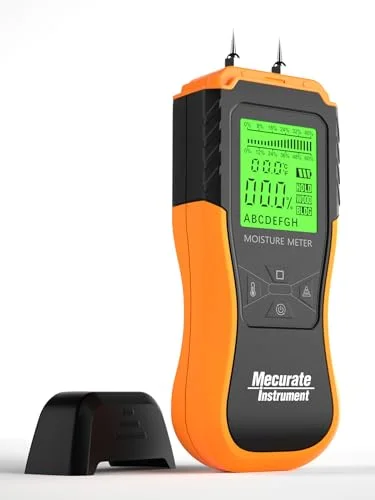 |
Mecurate Digital Pin-Type Wood Moisture Meter – $27.99 Confirms your flooring and subfloor are actually within the NWFA moisture-difference range before you nail a single board down, instead of guessing by the calendar.
|
A common assumption trips up even experienced DIYers: because nail-down flooring is mechanically fastened, it feels like the nails should hold the wood in place and acclimation matters less than it does for a floating or glue-down installation. That’s backwards. Nails don’t stop wood from expanding and contracting with humidity — they just change how that movement shows up. A floating floor that wasn’t acclimated tends to gap. A nailed floor that wasn’t acclimated is more likely to cup, crown, or work individual nails loose as the boards swell or shrink against fasteners that won’t let go. Skipping acclimation on a nail-down job doesn’t avoid the problem; it just trades one failure mode for a more expensive one, since a cupped nailed floor usually means sanding or replacing boards, not just re-nailing.
How Long to Acclimate: The Moisture-Content Rule, Not Just Days
NWFA (National Wood Flooring Association) guidance treats acclimation as condition-based, not time-based — a specific day count is a rough estimate, not the actual finish line. In practice, most solid nail-down flooring reaches equilibrium in 3 to 7 days once the room is held at normal living conditions: 60–80°F and 30–50% relative humidity, with the HVAC system running for at least 48 hours before the clock even starts. Wide-plank boards (3 inches or wider), unusually dry climates, high-humidity regions, or a subfloor that’s still damp from recent construction can all push that out to 10 days or longer.
The actual pass/fail test is a moisture-content comparison between the flooring and the subfloor, not a calendar date. For solid strip flooring narrower than 3 inches, the flooring’s moisture content should be within 4% of the subfloor’s. For wide-plank solid flooring (3 inches or wider), that gap should be no more than 2%, since wider boards move more per percentage point of moisture change. Flooring itself typically reads 6–9% moisture content once acclimated, while subfloor readings commonly run 6–12% depending on your region and the subfloor material — which is exactly why the comparison matters more than either number alone.
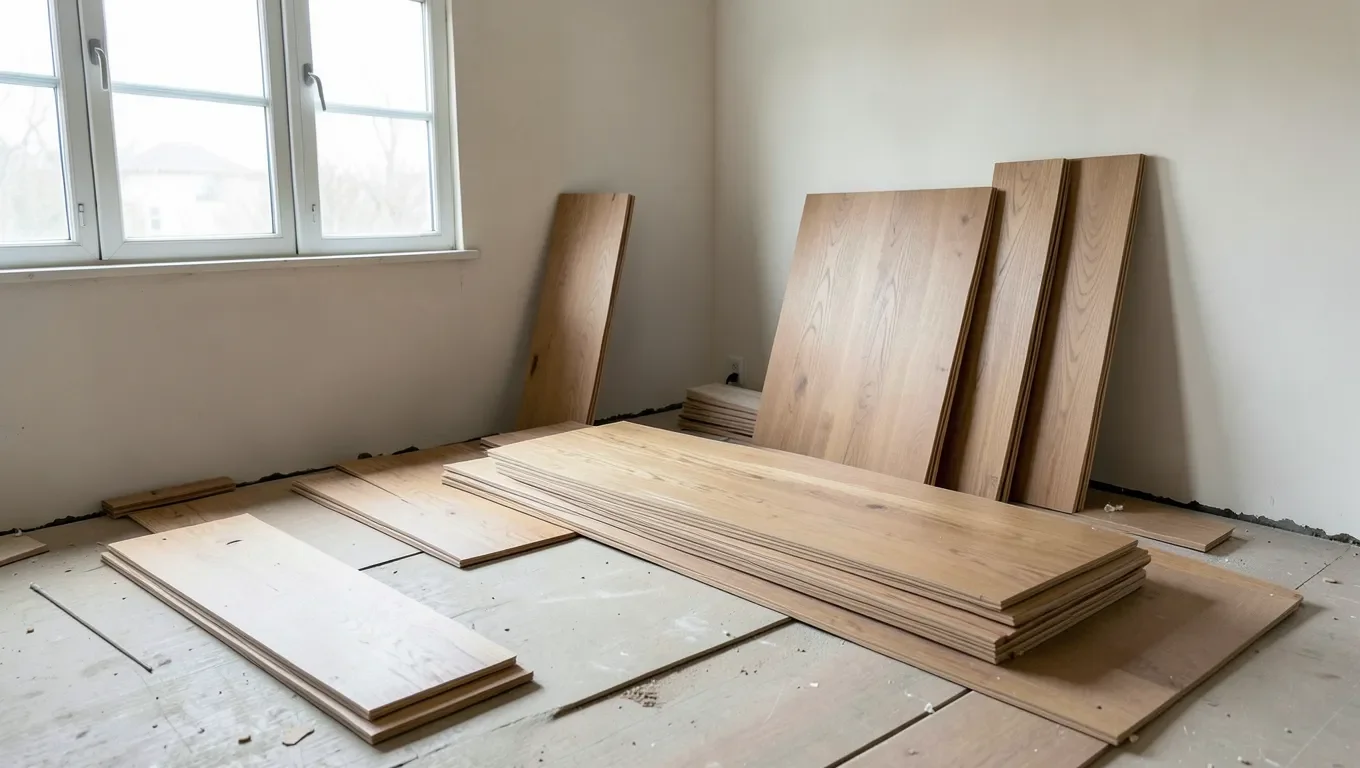
Season and region change how long that process actually takes, even though the target moisture-content gap stays the same. A house acclimating in the middle of winter with forced-air heat running can drop indoor relative humidity into the teens or low 20s, which pulls flooring moisture down faster than a mild spring install — but it also means the floor needs a slightly larger expansion gap at the walls to handle the swelling that comes back in summer. In humid Gulf Coast or coastal climates, the opposite problem shows up: subfloors and framing can hold onto moisture longer after new construction, so the subfloor reading, not the flooring reading, is often what’s still out of range past day seven. That’s also why a concrete slab subfloor deserves its own check — a slab that looks and feels dry can still be releasing moisture from below, which is why installers use a dedicated slab moisture test (calcium chloride or an in-situ relative humidity probe) rather than a pin meter made for wood, before ever setting hardwood on top of it.
Step-by-Step: How to Acclimate Solid Nail-Down Hardwood
- Run the HVAC first. Have heating/cooling running normally in the finished space for at least 48 hours before the flooring is even delivered, so the room is already at living conditions, not construction conditions.
- Deliver into the installation room itself — not a garage, basement storage area, or covered porch. A room with different temperature and humidity than the final install space doesn’t count as acclimation, even after a full week there.
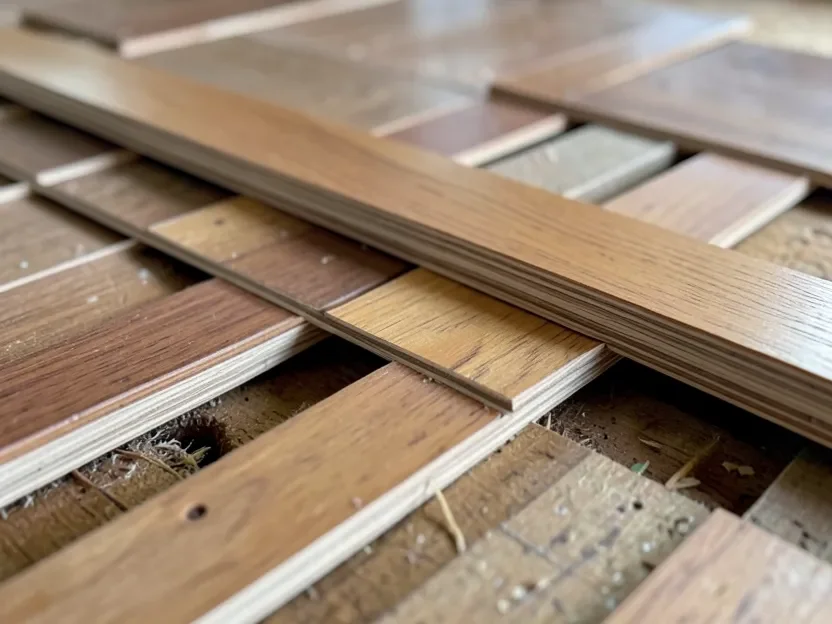
- Open the cartons or stack loosely. Sealed, stacked-flat boxes trap moisture unevenly and slow the process. Sticker-stack the planks in crisscross layers on thin spacers, elevated a few inches off the subfloor, so air reaches every board on all sides.
- Check moisture content daily on both the flooring and the subfloor with a pin-type meter, testing plank ends or hidden edges rather than the center of show faces.
- Install once you get two consecutive daily readings within the 4% (strip) or 2% (wide-plank) target — not on the first reading that happens to look close, since conditions can still be settling.
For the physical stacking method in more detail — spacer sizing, stack height, and how to sticker wide-plank boards without bowing them — see our full guide on how to stack solid hardwood to acclimate it. Once boards are in range and you’re ready to fasten them down, our flooring nailer buying guide covers the tool side of the actual installation.
Common Mistakes That Cause Gaps, Cupping, or Popped Nails
- Storing flooring in a garage or uninstalled area instead of the actual room, then moving it in right before installing — this skips acclimation entirely even if the boards sat around for weeks.
- Starting the acclimation clock before the HVAC has run for 48 hours, so the “days acclimating” are really days sitting in construction-site humidity, not living conditions.
- Ignoring subfloor moisture, especially on a concrete slab or a subfloor installed shortly before the flooring arrives — a subfloor that’s still drying out will keep shifting the target after the hardwood is already installed.
- Treating wide-plank the same as strip flooring. A 5-inch-wide board moves more per percentage point of moisture change than a 2¼-inch strip, which is why its acceptable moisture gap is tighter (2% instead of 4%).
- Installing on the first reading that “looks close,” rather than two consecutive days in range, when conditions may still be trending rather than settled.
If you’re working with prefinished boards rather than site-finished solid hardwood, the acclimation targets are the same, but handling changes slightly since you can’t sand out surface damage after install — see our guide on acclimating prefinished solid wood floors for those specifics.
Frequently Asked Questions
How long does solid nail-down hardwood need to acclimate?
Most solid nail-down hardwood needs a minimum of 3 to 7 days in the installation room, extending to 10 days or more for wide-plank (3 inches or wider) boards or in extreme dry or humid climates. Acclimation is finished when the wood’s moisture content is within 4% of the subfloor for strip flooring (2% for wide-plank), confirmed with a moisture meter, not simply after a set number of days pass.
Does nailing hardwood down mean I can skip acclimation?
No. Nail-down installation resists lateral shifting but doesn’t stop wood from expanding and contracting with humidity changes. Skipping acclimation on a nailed floor still causes cupping, crowning, or popped nails as the boards fight the fasteners instead of moving freely.
What moisture content should solid hardwood be before nailing it down?
There’s no single fixed number — what matters is how close the flooring’s moisture content is to the subfloor’s. NWFA guidelines call for no more than a 4% difference for strip flooring under 3 inches wide, and no more than 2% for wider planks, checked with a pin-type moisture meter on both the wood and the subfloor.
Where should hardwood flooring acclimate before installation?
Hardwood should acclimate inside the actual room where it will be installed, not a garage, covered porch, or uninstalled part of the house. HVAC should be running for at least 48 hours before delivery so the room’s temperature (60–80°F) and humidity (30–50%) match normal living conditions.
How should hardwood planks be stacked while acclimating?
Open the cartons (or leave them loosely stacked, not sealed) and sticker-stack the planks in crisscross layers on thin spacers, elevated a few inches off the subfloor, so air can reach all sides of every board. Leaving planks flat in sealed boxes slows acclimation and can trap moisture unevenly.
Sponsored / affiliate links. As an Amazon Associate I earn from qualifying purchases. I may earn additional commission from eligible campaigns.