How to Apply Boeshield T-9 on Shop Tools
Clean the metal fully, remove any rust or old corrosion before application, dry it completely, shake Boeshield T-9 well, spray a thin, even film from about 6 to 8 inches away in a well-ventilated area away from flames, sparks, and heat, then let it dry before use; wipe off excess only if the part needs to stay slick and dust-free. Leave it wet, and the coating can hold grime, blur rust checks, and affect tool accuracy. This guide shows the exact application method for shop tools, hinges, fasteners, and winter rust control.
Boeshield T-9 uses a solvent carrier with a paraffin wax coating that dries to a clean, waxy, waterproof film. It is made for rust prevention and waterproof lubrication on shop metal, including cast iron, stainless steel, brass, copper, and aluminum. For painted or powder-coated parts, test one hidden spot first.
What you’ll need

- Dries to a thin waxy protective film
- Penetrates and displaces moisture
- Works on shop tools and hardware
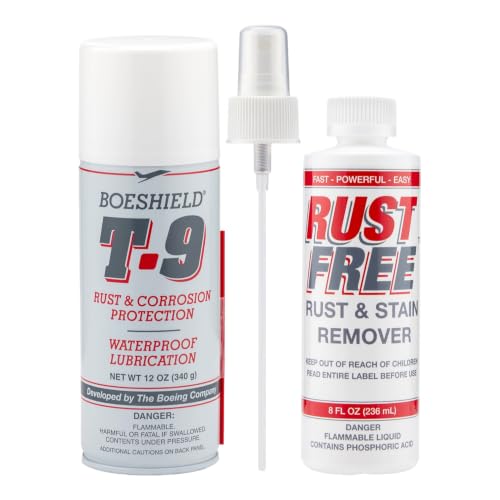
- Boeshield T-9 aerosol can or drip bottle
- 12-oz or 4-oz aerosol spray can for larger surfaces and machine parts
- 4-oz bike drip bottle or 1-oz drip bottle for small parts and tight spots
- Clean, dry cloths
- Mineral spirits or a degreaser for cleanup
- Rubber gloves
- Protective eyewear
- A clean rag for final wipe-off where a lighter film is needed
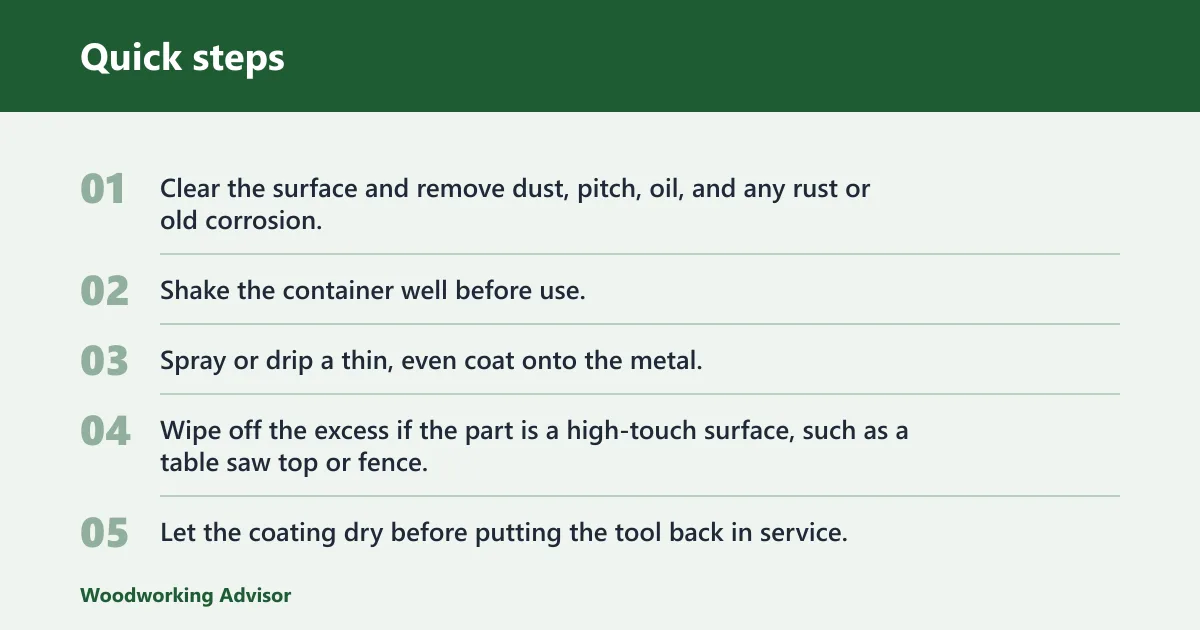
- Clear the surface and remove dust, pitch, oil, and any rust or old corrosion, then dry it fully before you start.
- Shake the container well before use. That matters because the wax and solvent need to mix evenly.
- Spray or drip a thin, even coat onto the metal. Hold the aerosol about 6 to 8 inches away so the film lands light and controlled.
- Wipe off the excess if the part is a high-touch surface, such as a table saw top or fence. Leave a very light film, not a wet layer.
- Let the coating dry before putting the tool back in service.
- Add a second coat for storage protection if the tool will sit unused through winter. Let that layer set instead of wiping it away.
Say your table saw top has been wiped clean but still feels slick from a previous cleaner. A light mist of Boeshield T-9, followed by a dry cloth pass, is the better choice than a heavier coat. That keeps the surface protected without leaving enough residue to affect workpiece feed or layout work.
When should you use a light coat or a storage coat?
Use a light coat on parts you touch and measure against every day. Use a heavier storage coat on machines, vises, or hand tools that will sit through damp weather. The goal is different in each case: active tools need a thin film, while winter storage needs more complete coverage.
High-touch machine surfaces
Apply a light film to table saw tops, cast-iron wings, jointer beds, router tables, and fence faces. These surfaces need rust protection without adding drag or residue that could change how stock feeds or how a gauge rides across the metal.
Longer winter storage surfaces
Use a fuller coat on hand planes, clamp bars, vises, hinges, and other items that will not be used soon. For those parts, spray and let it set. Do not wipe it down to bare metal unless you want to remove most of the protection.
Shop metal application checklist
| Surface type | Prep step | Application amount | Wipe-off? | Dry time | Recoat interval |
|---|---|---|---|---|---|
| Table saw top | Clean dust and resin; dry fully | Light mist, then one pass with a cloth | Yes, to leave a thin film | 4 to 24 hours | After repeated cleaning or when water no longer beads |
| Cast-iron wings | Wipe off oil and moisture | Thin coat across the full surface | Yes, if the wing is in daily use | 4 to 24 hours | As needed during humid weather |
| Hand planes | Remove shavings dust and old residue | Light coat on sole and sidewalls | No for storage; yes for active use | 4 to 24 hours | Before storage and after heavy handling |
| Vises | Clean screw, jaws, and exposed metal | Small controlled amount on moving metal | Usually yes on exposed faces | 4 to 24 hours | When motion feels dry or winter damp returns |
| Router tables | Clear dust, pitch, and wax buildup | Thin even coat on metal only | Yes | 4 to 24 hours | After cleaning or if rust spots appear |
| Jointer beds | Wipe clean and dry before coat | Very light film across the bed | Yes | 4 to 24 hours | When stock no longer slides freely |
| Clamp bars | Remove sawdust and glue specks | Light coat on steel only | No for storage; yes for active clamps | 4 to 24 hours | Before long storage or after cleanup |
| Hinges | Open, clean, and dry the knuckle | Controlled drip or light spray | Usually no on hidden joints | 4 to 24 hours | When squeaks return or after cleaning |
How long does Boeshield T-9 need to dry?
Let it dry until the solvent carrier has flashed off and the surface no longer feels wet. The product is designed to leave a clean, waxy, waterproof film after that happens. If the surface still feels wet, it is too soon for precision work.
Use temperature and humidity as your guide. A warm, dry shop will set the film faster than a cold basement space, and heavier coats always take longer than light ones. If you must return a tool to service quickly, apply less product and wipe the excess sooner.
Common mistakes to avoid
Most problems come from too much product, poor prep, or spraying where the coating does not belong. Boeshield T-9 works best on a clean dry surface, and it should stay on the metal, not on belts, blades, plastic parts, or measuring faces. A spot test matters on painted or powder-coated parts.
Too much spray or wipe-off left behind
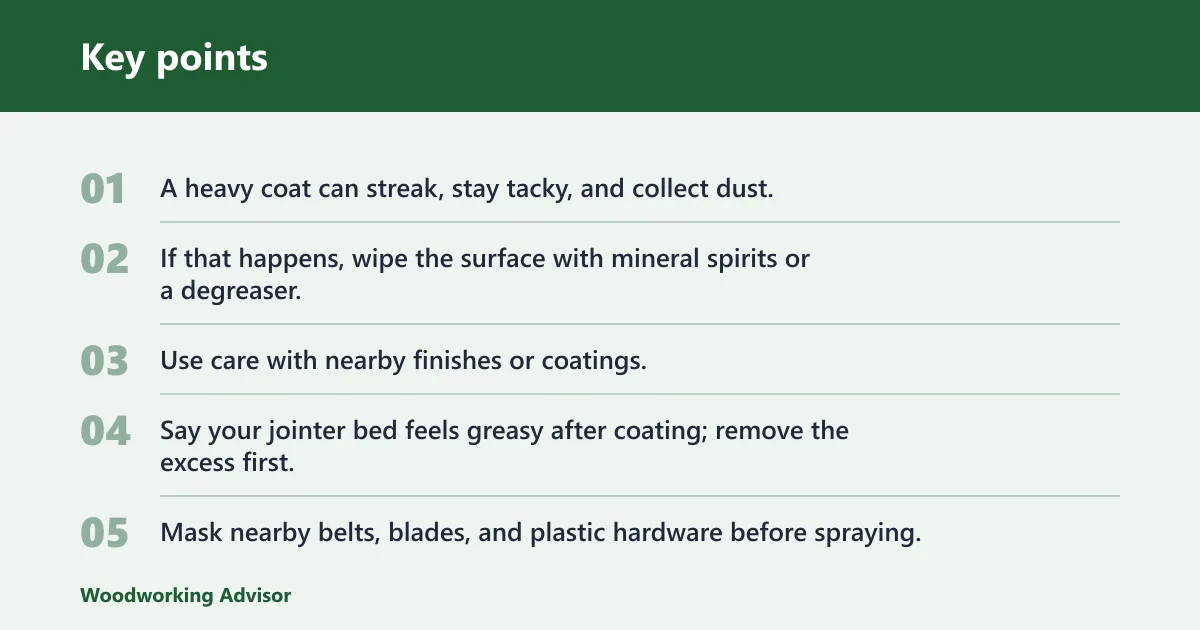
A heavy coat can streak, stay tacky, and collect dust. If that happens, wipe the surface with mineral spirits or a degreaser, then reapply a thinner film. Use care with nearby finishes or coatings, since some cleaners can affect them if they spread beyond the target area. Say your jointer bed feels greasy after coating; remove the excess first, then leave only enough to protect the iron.
Overspray on belts, blades, and plastic parts
Mask nearby belts, blades, and plastic hardware before spraying. Keep the nozzle aimed at the target metal, not the full machine. Overspray on workholding faces or blade teeth can create slip, residue, or cleanup work you did not want. For blades in storage, a light protective coat can be used if it is removed before the blade goes back into service.
Skipping a spot test on painted or powder-coated surfaces
Boeshield T-9 is generally safe on painted or powder-coated surfaces, but a hidden test spot is the smart move. Apply a small amount, let it dry, and check for softening or haze before you cover the whole part.
Picture a clamp rack with painted steel arms and bare steel bars. Coat the bars normally, but touch the paint with only a tiny hidden test first. That single step avoids a surprise finish change on a part that never needed full coverage anyway.
Frequently asked questions
How do I apply Boeshield T-9 on shop tools?
Clean the tool, protect nearby belts and blades, then coat only the metal that needs rust control. Use a cloth on broad surfaces and a drip bottle for tight spots. Finish with a light wipe on active faces so the tool keeps its original feel and fit.
Should I wipe Boeshield T-9 off after spraying?
Yes, on surfaces you touch, measure, or slide across every day. Wipe off the extra so only a thin film remains. Leave it alone on storage parts, where the heavier coating is useful and does not interfere with immediate use.
How long should Boeshield T-9 dry before use?
Let it dry until the solvent has flashed off and the surface no longer feels wet. Cooler, damper air slows it down. If you need the part back faster, use a lighter coat and keep the environment as warm and dry as practical.
Can Boeshield T-9 be used on a table saw top?
Yes. A table saw top is one of the best uses for a light film, because the coating helps resist rust without adding much drag. Wipe the top after application so the surface stays slick enough for feed and accurate enough for layout.
Does Boeshield T-9 attract dust in a woodshop?
A heavy, wet coat can collect dust, but a light, even film dries to a cleaner working surface. That is why wipe-off matters on active machine tops. Use just enough product to protect the metal, then remove the excess before dust starts to settle.
How do I remove Boeshield T-9 if I apply too much?
Use mineral spirits or a degreaser on a cloth, then wipe the part until the residue is gone. If the film is fully dried, repeat the cleaning pass. After that, reapply a thinner coat and leave only the amount the surface actually needs.
Is Boeshield T-9 safe on painted or powder-coated surfaces?
It is generally safe, but you should test an inconspicuous spot first. Painted and coated finishes can vary, and a short spot check tells you whether the finish stays stable. If the test passes, continue with the rest of the part.
When should I reapply Boeshield T-9 for storage protection?
Reapply when the film no longer beads moisture well, after a cleaning pass, or before a long damp stretch in winter. A common storage routine is to refresh exposed metal before the tool goes away and again after any degreasing or heavy handling.
Sponsored / affiliate links. As an Amazon Associate I earn from qualifying purchases. I may earn additional commission from eligible campaigns.